
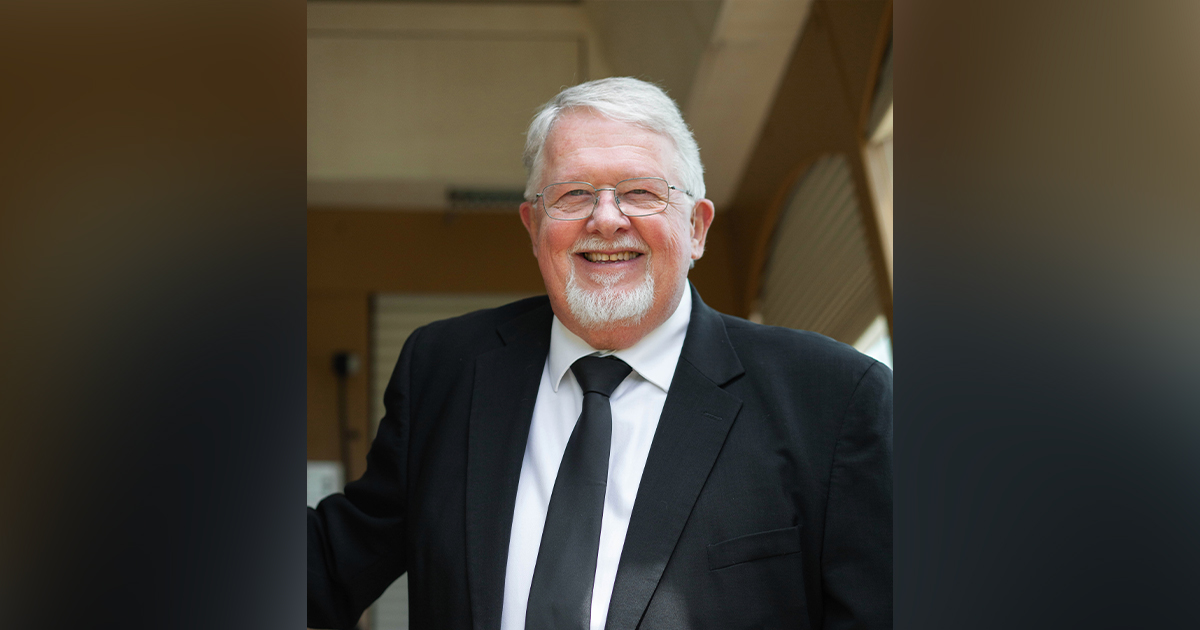
Balsam Range’s Marc Pruett
Master of the 5-String Banjo
Photo by Caty Smith
Balsam Range banjo powerhouse Marc Pruett has spent 59 years gracing stages, playing bluegrass music. He has recorded and/or appeared in concert with Balsam Range, Bill Monroe, Jimmy Martin, Ricky Skaggs, Marty Stuart, James Monroe, Lester Flatt, Jerry Douglas, Peter Rowan, Tony Rice, Emmylou Harris, Mac Wiseman, Ralph Stanley, Everett Lilly, Rhonda Vincent, and the list goes on and on. Personally, he’s a humble, personable, lovable guy that you’d want to have over to the house for dinner. That same spirit transcends to the stage when he straps the banjo on. Inside, though, when he’s facing the crowd, his look can be deceiving.
“If you’ve seen me on stage, I always try to look like I’m having fun, and people say, ‘You look like you’re having a great time!” And I say what I do is an intense professional obligation, but when I have fun is after the last song is played and I know I’ve done my best job and people have enjoyed it. Then, I can relax and think back on the high moments or where I’ve made mistakes.”
Of course, Pruett does enjoy playing banjo, but always his strong dedication to his musicianship keeps him intensely focused while the fans enjoy the outcome. That has paid off with the respect and acceptance of fellow musicians and bluegrass lovers.
“One thing that sets Marc apart from other banjo players is his cheerful stage presence,” says The Grascals banjoist Kristen Scott Benson. “I admire that so much! He grins and has an infectious spirit about him. Banjo players aren’t known for that, but Marc’s pleasant demeanor is contagious on and off the stage. My dad used to take me to Stanley’s BBQ in Asheville to watch Marc play. I was just starting, and my dad would say, ‘Now this man is one of the best, so you sit right in front of him and watch everything he does.’ I took away a lot of things from Marc’s playing, but the biggest was his attack and timing. He played so confidently, and that’s a hallmark of all the greats. I think it’s important to realize that there weren’t many resources when Marc was coming up. It’s hard for young people to imagine, but guys like him figured this out the hard way, no videos and very limited access to music. Unless you owned a record or could see a player in person, you had no way of hearing the music and figuring it out. It greatly increases my respect for people like Marc who were able to play so authentically without any help.”
“You know how he’s got that smile and laughing thing going on stage,” Balsam Range bandmate Tim Surrett says. “It’s that way all the time. He’s just a happy-natured guy, and it’s contagious when he plays or whatever it is. We have a ton of fun on the road. He still has a drive about him. He was going somewhere yesterday to get [another] banjo. I don’t know how many he has. He needs a 12-step program for banjo. He’s got a problem,” Surrett says with a laugh.
“I love his playing because the joy that is part of his inner being and his true self merges in every solo that he takes,” explains fellow banjoist and friend Bill Evans. “If it’s a barn burner, it’s like the clouds have cleared in a storm and the sun is shining down. The energy and joy he brings to playing and the explosive quality of what he does with his right hand is really just—I’ve never heard anything like it. It’s a marvel to witness. He’s got a power that very, very few players have today or have ever had. And again, I think it emanates from just who he is as a person.”
“Marc is one of the most solid banjo players of our time just by virtue of being from North Cackalacky,” said Pruett’s longtime friend Jerry Douglas, who has shared the stage and joined recording sessions with him. “There’s something in the water there.”
Douglas continued, “Marc has had the sound of Earl Scruggs in his ears from early on in his life. There is something about the internal clock Marc has that gives him the gift that draws others to want to play with him. He’s joyous and that is infectious. Marc has always had the touch, tone, and when the situation needs it, the ‘play like it’s the last solo you’re ever gonna take’ approach. He is one of the five banjo players on Earth capable of pulling all of that off. And the whole time he’s grinning like he has a secret.”
Six Decades of Bluegrass Life
Born in Waynesville, North Carolina, in 1951, Pruett was raised under the leadership of solid, down-to-earth parents in the days when there was no interstate and only one channel on the television. He enjoyed the outdoor life as a kid, camping, fishing, hunting, and hanging out with his buddies. When he turned 10-years-old Marc started listening after school to WHCC’s country radio program, The Cornbread Matinee with a DJ named Peg. One day, she featured Lester Flatt and Earl Scruggs on the show.
“I asked my mom, ‘What is that instrument that man is playing?’ She said, ‘Honey, that’s a banjo.’ And I said, ‘Boy, I’d love to get one for Christmas’.”
That’s exactly what was under the tree when Santa made his deliveries.
Leonardo da Vinci said, ‘The love of anything is the offspring of knowledge, love being more fervent in proportion as knowledge is more certain.’ I was like that with the banjo when I first heard Earl Scruggs play. It just went into my heart, and the Lord was saying to me that’s part of who you are, too.”
In those days, there were no banjo teachers around, but his mom loved to sing Stephen Foster folk songs. “I can remember picking some of those tunes out with one little finger. And I can remember being really discouraged.”
Fortunately, for Marc, his family ran across banjoist Roy Kirkpatrick to guide him along and introduced him to three-finger style banjo. Next, Marc met Edward “Shorty” Eager, who played with Jimmy Martin. When he heard Shorty’s power picking, he knew the direction he wanted his playing to go.
A 15-year-old Pruett got his first professional job while in high school to play at the tourist destination, Ghost Town, in Maggie Valley, North Carolina.
“They had a mountain show, and we played six forty-five-minute shows a day, six days a week. I played the upright bass half the time. I played the banjo the other half of the time. But, boy, I tell you what, I got a schooling in stamina those three summers I played at Ghost Town. That money I made at Ghost Town helped me to go to college.”
To add another layer to his learning, in August of 1969, Marc got to hang out with legendary banjo man and capo innovator, Tom McKinney, at the Bascom Lamar Lunsford Festival in Asheville, North Carolina. “He took me under his wing and showed me so much about how to set up a banjo and how to be a professional musician,” Marc says.
McKinney also referred Pruett to a gig with James Monroe in the summer of 1973. Landing that job led to a pristine opportunity to play on Bill Monroe’s renowned double live album that was recorded at Bean Blossom, Indiana. “I played a song on that record called “Train 45,” and James introduced me on the record,” Pruett recalls. Snuffy Miller, who produced the album for MCA, left the introduction in the record’s final mix because of Marc’s excellent performance. Pruett said, “I’ve had a number of people over the years say the first time I ever heard of you was on that Bean Blossom record. It’s amazing how small things like that can advance a person through the ages.”
All while pursuing his passion of music, Pruett was studying Geology at Western Carolina University, and in 1974, he graduated with a B.S. degree. He and his brother Matt opened a music store in Asheville, North Carolina, that was associated with Pick ‘n’ Grin of Knoxville. During his 12-year stay, Marc taught the banjo to hundreds of folks while continuing to soak in the advice of respected musicians like Doyle Lawson, who at that time was a sideman with the Country Gentlemen. Pruett recalls, “He said the way to get better is to pick with people that are better than you and to pay attention. I’ve always remembered that. Little statements like that can guide a person through a lifetime.”
Pruett worked some with artists like the Whites, the Kingsmen, Ricky Skaggs, Billy Edd Wheeler, and Jimmy Martin. Filling in on several gigs for Martin, Pruett debuted on the Grand Ole Opry at the Ryman Auditorium during the old country radio DJ convention. He also performed with the King of Bluegrass at Lincoln Center in New York. Pruett said, “You talk about a guy that knew music inside and out. Jimmy had a way about him. He was a real forceful person, real opinionated, real independent. It’s like my friend, Marty Stuart, said about Jimmy Martin. He said, ‘A visit with the King of Bluegrass is not for the faint of heart.”
Marc remembers one of his earliest memories of working with Martin. “If you went to work for Jimmy Martin, the first thing he would ask you is, ‘Do you know my songs?’ I mean, that’s an important thing.”
Pruett thought he knew Martin’s songs, practicing them diligently before his show with him in Columbus, Ohio, at the Country Palace. “They knew I was driving up there by myself. I parked my car, and Ray Martin came out, shook my hand, and said, ‘Welcome to the Sunny Mountain Boys!’ We all sat down and had a big meal, and we didn’t rehearse any, which was a mistake. We all got dressed up and got on stage in front of a huge crowd. Jimmy looked at me and said, ‘Can you kick off “My Walking Shoes”?’ I knew it was in [the key of] B, and I said, ‘Let’s do it.’ Jimmy didn’t write a set. He just called songs off or started off something. So, I kicked off “My Walking Shoes, and it was too fast for him. He looked over at me while he was playing his guitar, and he said, ‘Where are you going to hoss? A fire!’ With his guitar, he slowed down to where it would fit with him, and then everything locked in. But I found out real quick. I didn’t know Jimmy’s music as good as I thought I did. I studied and studied and studied, and I listened and tried to figure out what he wanted. Once I got them down, he wasn’t on my back anymore. He would get on somebody else.”
In the summer of 1973, Marc ran into the man who would become another future boss at Ralph Stanley’s Hills of Home Festival in McClure, Virginia. “I had played a set with James [Monroe] that afternoon, and I walked up that long hill where the cars and buses were parked, carrying that heavy banjo. I heard a guy holler out in a kind of high voice. He said, ‘Hey buddy! I sure liked your banjo playing down there with James, and I looked over, and it was Ricky Skaggs. He was selling at the product table for the Country Gentlemen. I knew [back] then he was a star. I had seen him in Lavonia, Georgia, with Keith Whitley and Ralph Stanley the year before that, and everybody was talking about those kids that sounded just like Ralph and Carter. So, when Ricky called out to me, man, I went right over there, and we developed a friendship, and talked and played music.”
The next year, Skaggs asked Marc to play on his Rebel Records heavily instrumental album, That’s It. Fast forward to 1995, and a request for Marc to fill in at a show for Martha White Bluegrass Night at the Ryman. That led to a 2 ½ year affiliation with the first configuration of Skaggs’ Kentucky Thunder band.Marc went on to record with Skaggs on five albums, including the Grammy-winning album, Bluegrass Rules.
“Ricky’s country career had kind of tapered off, and I had been doing some bluegrass shows while he had still been doing some country shows. He said, “Boys, I’d like to do a bluegrass album. We might sell a few of them now that I’m doing more bluegrass.” So we did it, and it was just so much fun when you play music with people like that at that level. Now, I’ve never been in a gunfight, but it was just like, you walk in wide-eyed, and you’re intently aware of why you’re there, and it’s to deliver a top-quality product.”
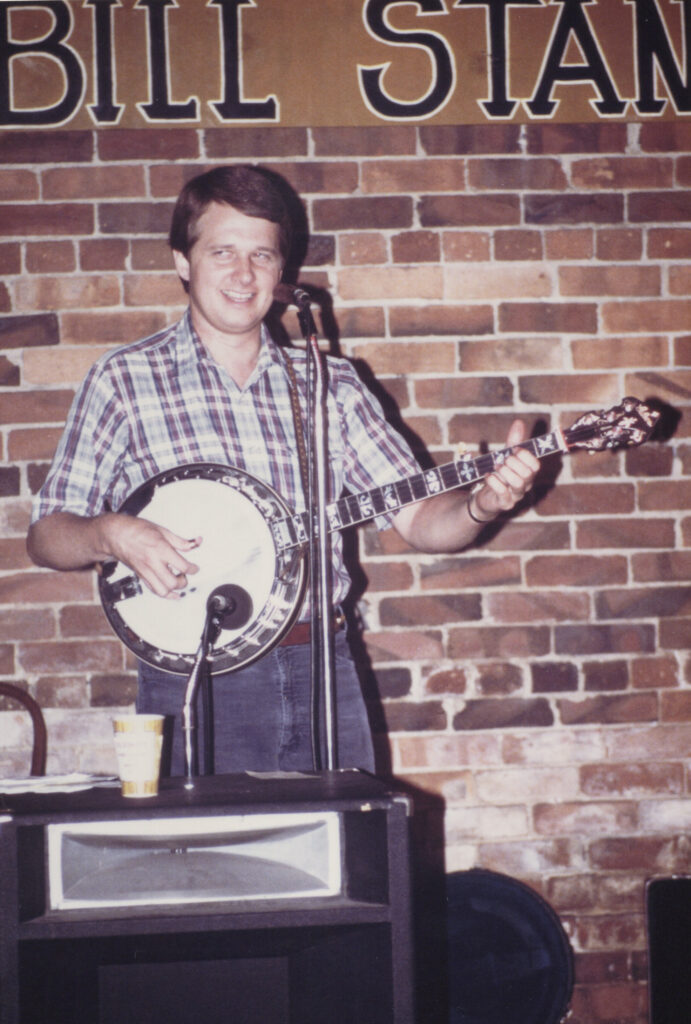
Marc went on to record with Skaggs on five albums, including the Grammy-winning album, Bluegrass Rules. Over the years, Marc has led his own band, playing as part of a cultural exchange tour during the American bicentennial year, performed in every show with the Southern Lawmen, and for 9 years, his band was the house band at Bill Stanley’s BBQ and Bluegrass Restaurant.
Balsam Range
Eventually, the road led to Marc teaming up with several other friends from the area in the two-time IBMA Entertainer of the Year band Balsam Range. Since 2007, Pruett has played alongside bandmates Buddy Melton, Tim Surrett, Caleb Smith, and now Alan Bibey. Darren Nicholson, who is pursuing a solo career, was with the band from 2007-2022. “It’s amazing to me how much people love that band, and we’ve been in a lot of places in the world, the Yukon and Europe. The way that I feel about it came from my late friend, Bill Sullivan, who had First Quality Music Company. We were talking one time, and he said, ‘We’re all just bluegrass friends.”
Among Pruett’s accomplishment with Balsam Range are IBMA awards for Vocal Group of the Year (2014, 2015), Album of the Year in 2013 for Papertown and in 2017 for Mountain Voodoo, and Song of the Year for “Trains I Missed” (2011), “Moon Over Memphis” (2015), and “Richest Man” (2021). But along with the highlights have come a few down times, like a few years ago at a venue in Redlands, California. Pruett fell and shattered his left wrist before the performance. “I only had one finger that would work, and there was nobody there to help the band. In addition to that, I suffered a complete plateau fracture in my left knee. I could walk, but I stood there and suffered through that two-hour set. My right hand was fine. With my left hand, I’d hold that one finger down on the second fret on the fourth string and just hammer it. My roll was good, but I couldn’t get any chords. I did a lot of Chuck-A-Luck, as they called it that night.”
The accident left Marc out of commission for several months, but following a serious operation on his left wrist, Marc rebuilt his playing skills. “I’m okay. I can still play. I say it’s 95% back, and I can fake that other five percent,” Marc says with a grin.
Still Going Strong
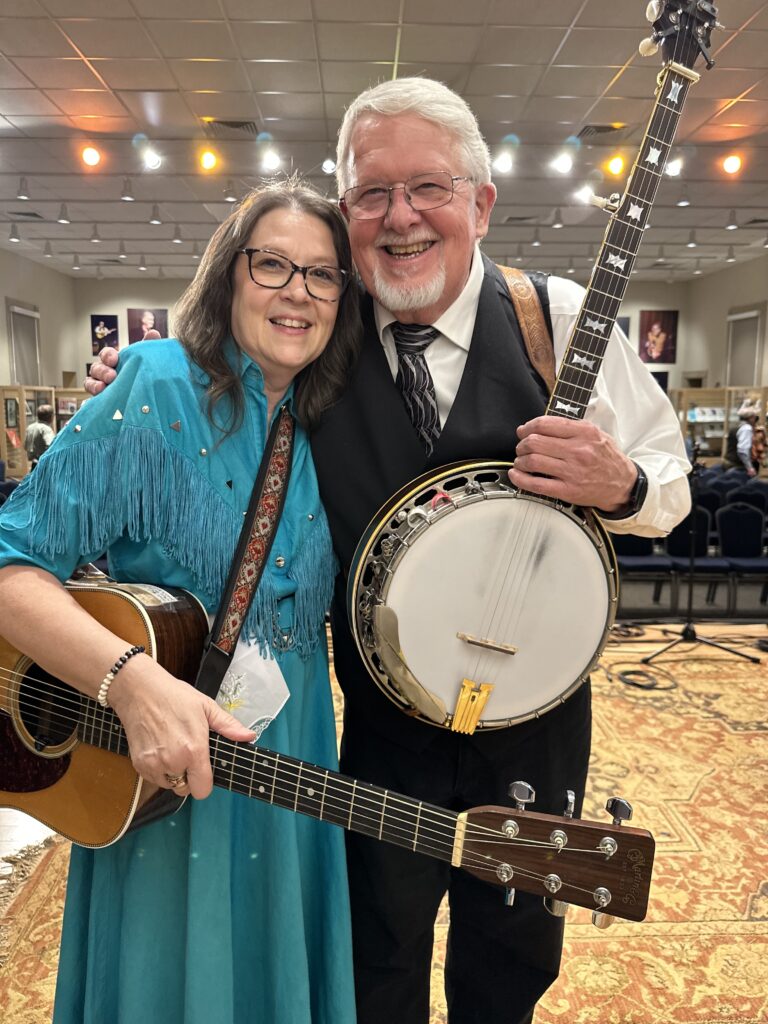
At this stage in their lives, the guys of Balsam Range decide how busy they want to be on the road. Off the road, Marc still loves to stay active. He has written a book called Rascally Mountain Boy. For 20 years, he has taken a deep dive into his hobby of watercolor painting. While he obviously loves playing the banjo, he also is excited to put on a Dobro or play the lap steel guitar. He puts those musical skills on stage often in duet shows with his wife, Anita, who is likewise a great banjo player as well as singer. They perform honky tonk country music, and bluegrass. Marc would love to record a CD with his wife of songs they’ve written, and he continues to keep his songwriting muse busy.
Their son, Zack, who has his master’s in engineering physics, also plays banjo and mandolin. Their daughter, Callie, was a lobbyist for Congress for science issues, but these days she stays busy with the couple’s first grandchild, Maggie, named after the bluegrass classic, “Little Maggie” that Pruett recorded with Skaggs.
Marc is thankful for the awards and accolades he has received over the years, including his induction into the Blue Ridge Music Hall of Fame, the honorary Doctor of Arts that was bestowed upon him from his alma mater, and the prestigious Grammy award for Bluegrass Rules. Pruett smiles and says, “People say, ‘Man, what was it like to win a Grammy?’ My answer for that, up until about 10 years ago, was ‘I thought Grammy lived with Papaw’.”
“The biggest award that I could possibly have is to get back out on the stage with some friends on a new night in front of a good crowd and have fun playing music. [Famous French filmmaker and oceanographer] Jacques Cousteau said, ‘The road to paradise is paradise.’ The act of playing music is its own self-gratification, and I think there’s a truth in that if you seek it and you enjoy it. You’ll follow it to the level which you love it. And I don’t know that I’ve ever found the end of that yet.”
While he moves onward, looking for new depths to his music knowledge, Marc is a grateful man, loving life. He said, “If there’s anything you’ve learned about me, it’s that I try to keep things up by trying to love music and trying to love people. I’ve had a blessed life.”