Annie Staninec
Fiery Bluegrass Fiddler
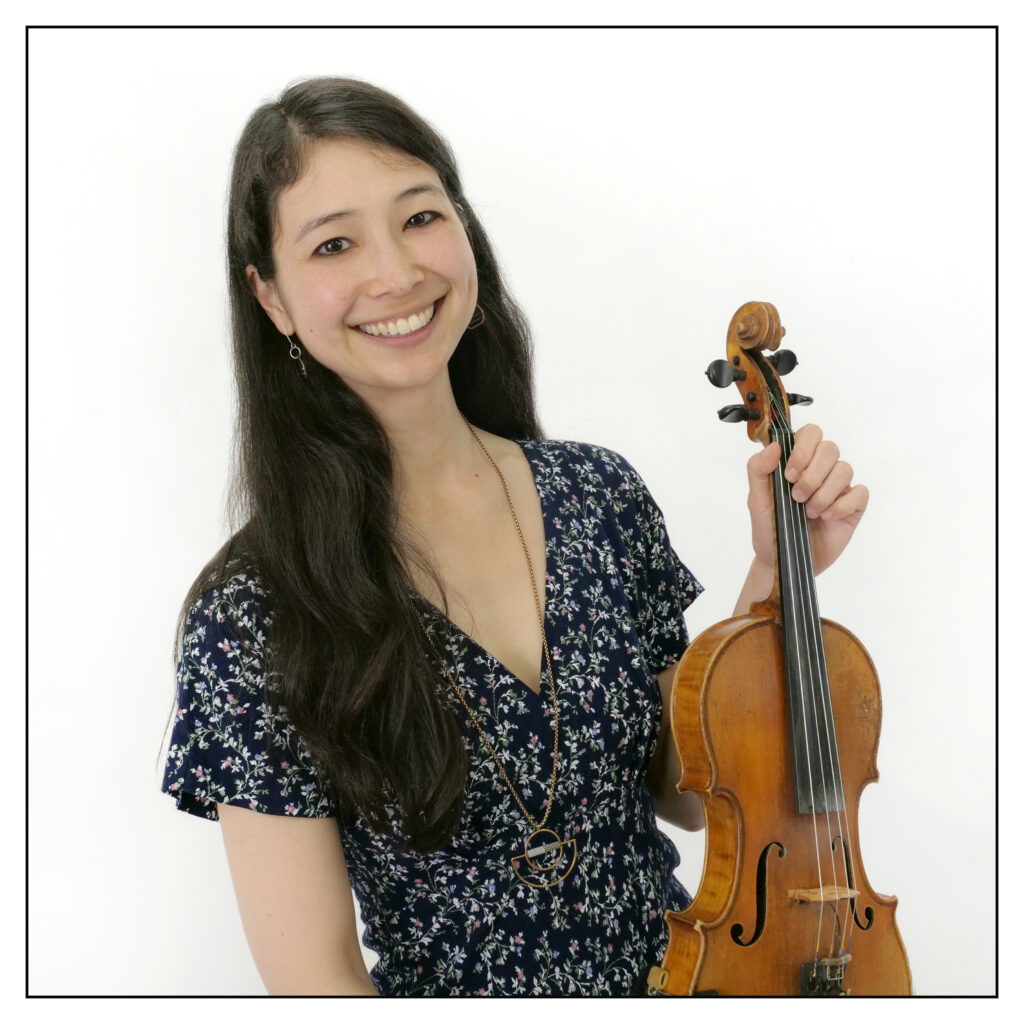
Annie Staninec has a lot going for her. First, she has what might be the biggest smile by several inches of anybody except possibly Doug Dillard. Second, she is a fiery bluegrass fiddler, perhaps the “grassiest” fiddler of them all.
I was honored to interview her for this article. I chose to do it on Annie because her fiddling simply knocks my hat in the creek. She is animated and captivating on stage and off. Our interview took place long distance; Annie in her music room and studio in Portland, Oregon, and me on the front porch of my Civil War era log cabin in the high secluded mountain of Grayson County, Virginia. Annie doesn’t mind sharing that she is a young 38-year-old, while I am older than Dirt!
As Grant Turner used to say as he introduced musicians on the Grand Ole Opry, “Let ‘er go boys, let ‘er go!”
BU: How often do you practice? At your high level, do you even need to practice?
AS: Ha! Yes, I do! I hope to practice for the rest of my life.
BU: My fiddling plateaued decades ago. How do you keep progressing?
AS: The word ‘practice’ could potentially make it sound like work, and even though it may be a form of work, I think it’s endlessly interesting and fun to explore music. It seems like more of a mindset to me, because as you learn more about a subject, that world continues to expand to reveal how much you don’t know. But that seems like a positive thing because one never gets bored. Progress may sometimes seem incremental and it’s a personal journey, but it seems like all of us can continue to progress in some way if we have a curious mind and a drive to play.
One of my favorite stories is about a famous violinist, 93-year-old Pablo Casals. When asked why he continued to practice, he responded, “I’m beginning to notice some improvement.”
BU: Your father is from the Czech Republic and your mother is from Japan. I know there are strong bluegrass scenes there. How did they get into bluegrass? Have you been to the Czech Republic?
AS: I have been to the Czech Republic twice as a child to visit relatives. It was beautiful. I’ve heard many great bluegrass musicians from there.
My mom was enamored with American culture from the time she was little. Most of her exposure was through the television, and music was part of that. My dad always liked folk music, and when he came to Los Angeles when he was 13, he was exposed to musicians like Doc Watson and Norman Blake—he would go see concerts at McCabe’s and the Ash Grove. Once he learned about the music, he started collecting records and going to festivals, and he got into bluegrass and early country from there.
BU: Do your siblings play? Do they have your abilities and drive?
AS: My sister Katherine plays fiddle, and my brother Matthew plays the mandolin. They’re very musical and have a lot of talent for sure.
BU: I can clearly hear the unique fire of Scotty Stoneman in your fiddling that apparently comes from your careful study of his hot fiddling. I was lucky enough to live near the famed folk club, the Ash Grove in the sixties. I didn’t have the ear to learn many of his licks, but somehow I was able to catch his burning fire. I hear that intense fire in your fiddling, Annie.
I’ll tell you a quick story. I was in a pick-up bluegrass band in the late ‘70s at the Grayson County fiddlers convention in Elk Creek, Virginia. We played a song that I barely knew, and I took an adlibbed fiddle break that I had given no thought to. As we left the stage, a middle-aged woman came up running all out of breath, and asked me if I was the fiddler who just left the stage. She looked like she had just seen a ghost! She introduced herself as Roni Stoneman of Hee Haw fame and she said she heard my fiddling from way across the field and felt she had to find out who sounded just like her late brother, Scotty. As she walked away, I could tell she was quite moved by hearing what she perceived as the fiddling of her brother Scotty, returned from the grave. That was a powerful experience, to say the least.
AS: That’s an amazing Scotty story!
BU: You studied classical violin. Why didn’t that ruin you as an improvising fiddler? Was it hard not to be paper-trained? And when teaching, how do you deal with paper-trained classical people? Shock therapy?
AS: I was always playing fiddle music simultaneously as I was taking classical lessons. I probably preferred fiddle in many ways because it was less structured, there was more freedom, and the social aspect was fun. My ear was always stronger than my reading skills, so I relied heavily on listening even as I was playing in orchestras and ensembles. Learning to improvise was (and still is!) an interesting journey, and I had some wonderful mentors like Chad Manning to help me by teaching me fiddle tunes along with many variations to those tunes. It was interesting to kind of rebuild my very basic knowledge of music theory and see how it applied to what I was doing when improvising. I had never made that connection when I was playing classical music.
I love teaching folks who have a strong classical background because they have great technique and knowledge about theory. It’s very fun to help them apply it to build fingerboard fluency when picking up melodies by ear.
BU: I’ve heard that you try to channel Scotty, Kenny, and Vassar. How do you do that? How do you interject their stuff into yours so you can feel you are being creative?
AS: My friend Paul Shelasky has always been a mentor, and I was always amazed that he sounded like a completely different fiddler when he played bluegrass versus jazz. When I asked him how he practiced, he told me he transcribed breaks, meaning he learned breaks note-fornote. I started doing that to learn how some of my favorite fiddlers composed their solos. Once I’ve learned a solo, I try taking a piece of vocabulary and seeing where else it can fit. At first, I try not to change the context too much, meaning, if it’s a lick over a D chord I don’t worry about transposing it and just try that lick when I come across a D chord in a progression. Or it can be a rhythmic piece of vocabulary or a double stop. I try not to bite off too much at once and take a long time to explore how one idea can fit into many different contexts. So basically, I’m doing that with solos I learn from Scotty, Kenny, or Vassar – I’m taking a little piece of something I learned from a solo of theirs and overusing it to find out where it can go! Eventually, the ideas become a part of your vocabulary so you can use them when you’re telling a story.
BU: When you’re taking a break you haven’t practiced, do you think ahead a few seconds, or do you improvise in that very moment? Do you pre-plan your breaks? Do you prefer tunes or songs or backup to play?
AS: I sometimes feel like I’m thinking ahead and being deliberate, but sometimes I feel like I’m not really thinking, and I take chances and see where the music takes me. That is riskier, but I think it’s good to take risks and get out of your comfort zone. I guess that’s where the hours of practice come in handy—you have lots of things internalized so you can feel like you don’t have to think so hard and allow yourself to be more creative in the moment. But what I do when I improvise is informed by what I’ve practiced and listened to.
I think the only time I really ‘preplan’ a break is if I want to quote someone if a song comes up in the same key as the break I learned from the record since it’s fun to pay homage to the fiddler. But most of the time I would say I’m improvising on some level. I try to do melody-based improvisations because the breaks always feel more cogent the more familiar I am with the core melody.
I enjoy tunes and songs alike. I love backing up bluegrass songs. The interaction between the singing and fiddle is so fun because the fiddle is almost like another voice.
BU: How do you teach improv? For many people, it’s impossible.
AS: I teach improvisation in a combination of ways. I initially help people build some vocabulary, so they have a toolbox to draw on. Then I show examples of ways licks can be used in different contexts, have them try that, and then encourage people to try it on their own in a different song. We also play scales and arpeggios and discuss how those patterns relate to the melodies and progressions over which we’re playing so that they can build knowledge to add double stops, change a melody note, or add passing notes. Sometimes we take one phrase and see how many different ways we can play it. I like to simplify melodies and take them down to the bare bones. If you keep the most important melody notes and explore different ways of getting to them (by playing different pickup note runs, for example), you’re starting to build an improvised solo that retains the core melody so that it will still bear some resemblance to the song we’re playing.
BU: When teaching improv, do you play a song on the phone or a recorder and use that?
AS: When teaching improv, my students and I often listen to recordings of songs or fiddle tunes, both to learn the core melody and also for inspiration and ideas for our own improvisation.
BU: What do you admire most about the great fiddlers you have studied? What legendary fiddlers have you seen in person? I am old enough to have seen all of them, starting in the early sixties. I know you have met Chubby. That’s probably enough!
AS: I’ll always remember seeing Chubby Wise. He was my first favorite fiddler and continues to inspire me to this day. I got to see Vassar play with Doc Watson in Los Angeles, which was incredible and extremely memorable. He was so gracious when I met him. I’ve also had the honor of being on staff at Kaufman Kamp with Bobby Hicks. His effortlessness and creativity with double stops blew me away. I don’t know if I can pinpoint what I admire most in each of these players (and there are too many more to list here), but I think it comes down to having soul.
BU: Are you ever intimidated playing on stage with great players?
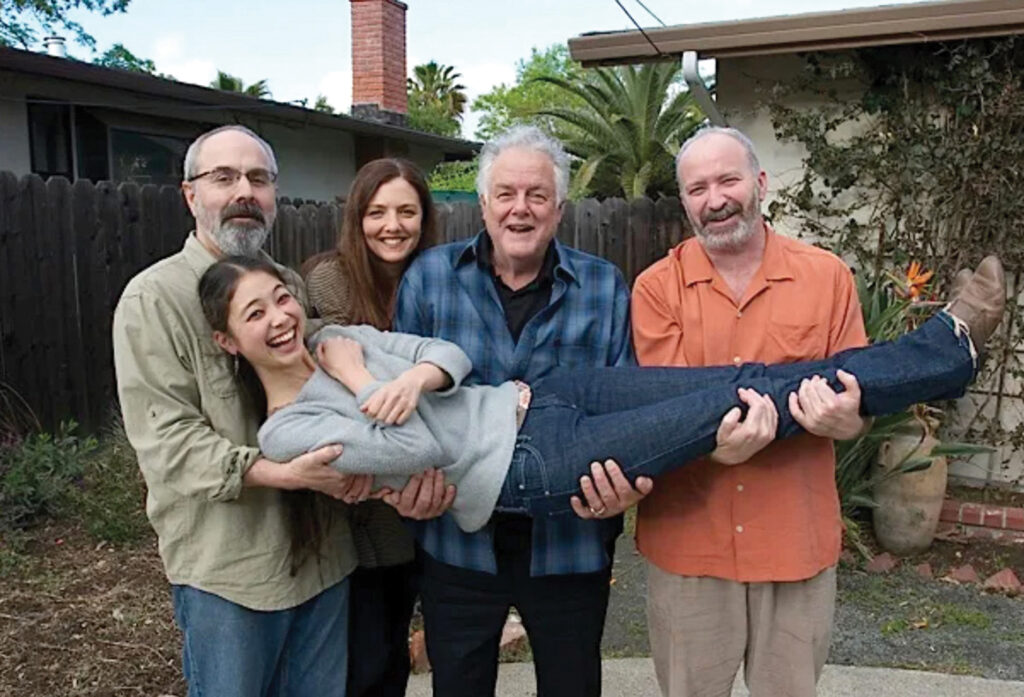
AS: I definitely know how it feels to be nervous or intimidated around amazing players— I think most of us have felt that at some point. It doesn’t happen quite as much these days, probably because my mindset is that if we’re playing/performing together we’re a team, and it’s not a competition. In my experience, the greatest players make it easy for other folks to play with their support. They are confident in their abilities so they’re not trying to prove anything, and we are all working together in service of the music. I play better when I can set my ego aside, focus on the moment and the music, and allow myself to be inspired and respond to amazing musicians instead of being intimidated. I know my abilities and limitations, which are not going to change in the moment if I get nervous or try harder, and I have to accept that. We all have difficult experiences where we may be nervous or unhappy with our performance, but the audience is there to be entertained, and keeping that in the forefront of my thoughts helps me to feel more comfortable and connected to both the audience and the folks I’m performing with.
BU:Since you are adept at transcribing exact arrangements of the masters, is it hard for you to refrain from their exact versions rather than making up your own?
AS: It doesn’t feel hard to refrain from playing somebody’s exact version of a solo or a tune — on the contrary, it’s probably harder for me to remember exactly how they played it! Haha. It takes a lot of practice and repetition for me to remember exact versions. But learning those in turn inspires me to change little things and try new ideas that are based on the way those fiddlers originally played that song or tune.
BU: Becky Buller said you have a lot of power. Is that your fiddle or is it you?
AS: I’m so flattered to hear that Becky says my fiddling has power—she is such a powerful fiddler herself! I think the power is a combination of the fiddle and the player. I love that quality in other fiddlers, so I’ve definitely worked on power, tone, and dynamics in my own playing, which is mostly focused on how the bow is used.
BU: Have you competed at fiddlers conventions? There’s money in that.
AS: I’ve competed a handful of times when I was a kid, but it was never my main deal. At the time I was doing a few competitions, I hadn’t developed the focus or drive yet to truly do my best. I was also more into bluegrass than the competition culture, and the two fiddling styles are significantly different. I still immensely enjoyed watching amazing Texas fiddlers, and Chad Manning with whom I took lessons as a kid is an incredible Texas fiddler.
BU: How do you avoid playing a break the same way every time? Do your creative juices ever dry up?
AS: Playing little variations on melodies feels like it comes naturally. I guess kind of like how you might tell the same story slightly differently each time. The challenge for me is coming up with variations that I really like or landing on my feet when I take chances. There are plenty of times I’m uninspired by things that I come up with, and when that happens, I look to other musicians for inspiration and ideas. Sometimes I make up games to get out of ruts, like asking myself how one of my favorite fiddlers might approach this tune or break, or I might try changing elements of the melody by focusing on different aspects like rhythm, phrasing, double stops, passing notes, or dynamics.
BU: We lost some great fiddlers lately, Bobby, Byron, and Tracy. How do you feel about stepping into their shoes? We’re the old-timers now.
AS: I agree – it’s sad to lose great musicians, and it definitely feels important to honor and preserve their influence and legacy. I tell students to listen to them. When asked about my influences, I refer to them. I teach their solos in private lessons and at music camps. There are no replacements for anyone, but these are some great ways to keep their music alive and for these fiddlers to continue to impact future generations.
BU: Tell me about playing in Rod Stewart’s band.
AS: It was an adventure! He and his team were great to work with, and it was interesting to see a bit of the inner workings of such a big production. The music and shows felt comfortable, but the things that were new to me were the costume changes, stage techs, the logistics of traveling with a large group, and self-care on a 9 1/2-week Europe tour. One of the scariest things was learning how to walk in high heels! Rod was fun. Although he had his hits that he’s been performing for decades, he really fed off the audience and liked being spontaneous and silly. Once he saw an ad with a model that he thought looked like me, so he had the cameraman put the picture up on the jumbotron during a live show and asked me if I’d been taking side jobs. Another time when he found out I had a pretty good dog bark, on the next show he had me bark into his microphone. He also showed genuine hospitality to his fans and band members—he would invite fans backstage sometimes or take the band out to dinner once every tour.
BU: Who’s fiddling tone do you prefer? Chubby?
AS: Chubby Wise is absolutely up there as far as tones I try to emulate! Kenny Baker and James Price also come to mind. I also enjoy some more rustic tones, like Curly Ray Cline’s, and it’s fun to try and capture his vibe on the Ralph Stanley repertoire.
BU: Finally, who’s in your current band? Do you cotton to being a band leader? Why not?
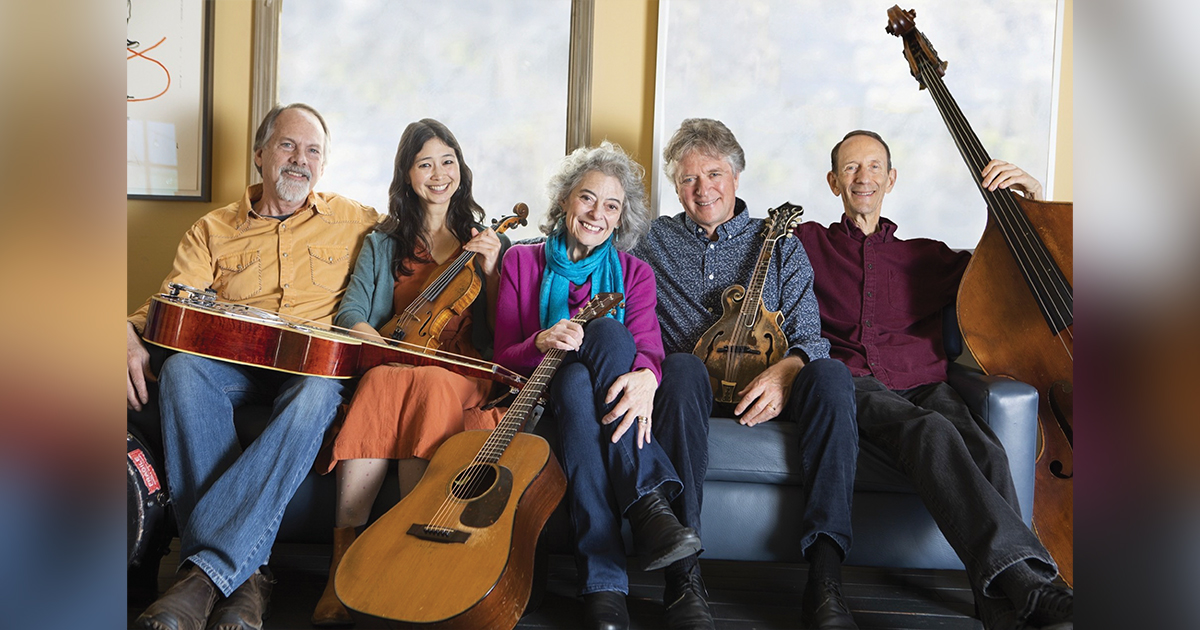
AS: Oh OK! Just learned something new—I hadn’t heard that before. I’ve never really seen myself as a band leader, although I’ve definitely organized, and led sets and shows. I think mainly being a band leader isn’t generally my personality, although I love collaborating and bringing ideas to the table. Whiskey Deaf is a Portland-based band I have with my partner John Kael, and we’ve been playing a bunch with Jeff Smith (mandolin) and Patrick Lind (bass), and often Jered Widman (guitar/vocals). It’s a ton of fun.
I’ve also been fortunate enough to play in Kathy Kallick’s band for almost twenty years with Tom Bekeny (mandolin), Greg Booth (Dobro/banjo), and Cary Black (bass).
BU: Do you ever get tired of bluegrass and Celtic, or “Septic,” as someone who called me once said?
AS: I can’t imagine ever not playing music, and I can’t imagine not playing bluegrass. But I love Cajun, old-time, jazz and swing, Eastern European fiddling… there’s more music out there than I could ever learn in a thousand lifetimes. I wish I had more time to study/explore/become more fluent in any of those styles, so I suppose if I wasn’t playing bluegrass that’s what I would do!
BU: So well put. Do you think ahead a few seconds when improving or do you just play in that moment?
AS: Sometimes I think a few seconds ahead, but sometimes it feels like I’m improvising in the moment. When things are flowing it feels like whatever’s happening in the moment leads into the next thing, hopefully creating a narrative, and some ideas work out better than others. I think it’s fun to take chances to try and continue to push myself and see what happens.
BU: Have you studied the Western swing fiddlers?
AS: I’ve barely studied Western Swing fiddlers but it’s an area that really interests me. I’ve somewhat recently learned a bit of Johnny Gimble’s licks and tunes—I think he was a genius. “Gardenia Waltz,” which my friend Dennis Fetchet inspired me to learn, is such an amazing example of a composition comprised almost entirely of double stops.
BU: Did you ever meet Kenny Hall, my mentor?
AS: Kenny Hall used to stay at our house when he had shows in the Bay Area. I remember he taught me “Little Rabbit.” I always enjoyed listening to him and spending time, but I was pretty young and never got to know him really well.
BU: Darol Anger called you “the Nuclear Option.” What do you think he means by that?
AS: Haha!!! I think only Darol knows what that means.
BU: Any final words or advice would you give a beginner or advanced fiddler?
AS: I guess I would advise people to never lose sight of what initially drew them to the music so that they can continue through tough times like we all sometimes experience, whatever form that might take. Music is a long-term, complicated, unique, and personal relationship for each of us. For me, it’s beautiful, and traditional bluegrass sounds like home to me in many ways because it’s what I grew up listening to. It’s a special thing when something brings you so much joy and also provides a form of expression and communication. Through music, you can build relationships and share that joy with others, and I try not to take that for granted.
BU: What’s next for you?
AS: I’m continuing to play local gigs and festivals around the Northwest, teach in-person and online lessons, and record on projects out of my home studio. This June I’ll be sitting in with the Good Old Persons to play the 50th Father’s Day Bluegrass Festival in Grass Valley, California, and from there going to Tennessee to teach at Kaufman Kamp. Whiskey Deaf is playing at the Columbia Gorge Bluegrass Festival and the Mount St Helens Bluegrass Festival this summer. I have a couple of gigs with Kathy Kallick and Laurie Lewis in the Bay Area in August, and I’ll also be playing at Dare To Be Square (a square dance festival) with the Stumptown Stringband in the Bay Area in November. This is all in addition to local shows I play around Portland and the occasional livestreams I do with John on the Muddy Rudder Down Home Music Hour Facebook group page. You can find info about gigs, products, and lessons on my website. Annie can be reached at anniestaninec.com.
Wayne Erbsen is a bluegrass musician, professor, author, recording artist, radio host, and publisher. He divides his time between his rustic home in Asheville, North Carolina, and a Civil War-era log cabin in Elk Creek, Virginia.