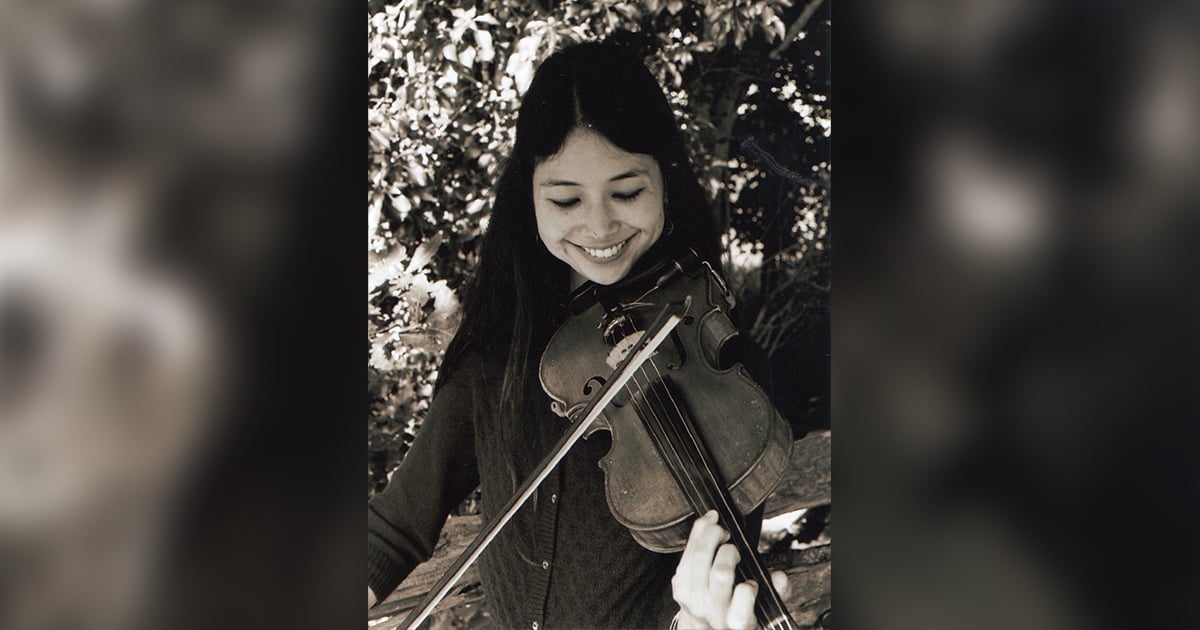
Annie Staninec
Photo by Amanda Rowan
Annie Staninec (featured in Bluegrass Unlimited, May 2017) is a stellar bluegrass fiddle player of Japanese/Czechoslovakian descent who grew up in San Francisco, California and currently lives in Portland, Oregon. She learned to play the fiddle at a young age and became interested in bluegrass because her father played the guitar and was a big fan of the music. Annie’s father had immigrated to the United States from Czechoslovakia when he was 13 years old. Her mother had immigrated from Japan when she was in her twenties.
Although Annie says that her attraction to different styles of bluegrass has gone through phases over the years, she loves traditional bluegrass because “It feels like unpretentious music that is soulful and accessible to everyone.” Traditional fiddlers who she has studied include Chubby Wise, Curly Ray Cline, Vassar Clements, Scotty Stoneman, and James Price, to name a few. She said, “The other kids who I went to school with had posters of the Spice Girls over their beds. I had a poster of Chubby Wise. Chubby was my first favorite fiddle player.” She also credits Paul Shelasky as being a mentor.
When asked about diversity, inclusion, and equality in bluegrass music, Annie said, “I have been lucky because I’m not easily offended, and I don’t think that I’ve lost any opportunities because of my race or gender. Most of what I have encountered is what I would call benevolent racism. No one was ever mean spirited. Most people are just surprised seeing an Asian person playing traditional bluegrass. Their world is a little rocked by it and they seem confused. But, I like exposing people to that, making friends, and building on that connection. Music brings people together who may never interact otherwise. It is a reminder that we are all similar. That is a very powerful thing because even if it is weird in the beginning, the weird stuff melts away and people connect through the music and have a good time. I think diversity makes everything stronger and more interesting.”