Andrea Roberts
Leading Others to Bluegrass Success
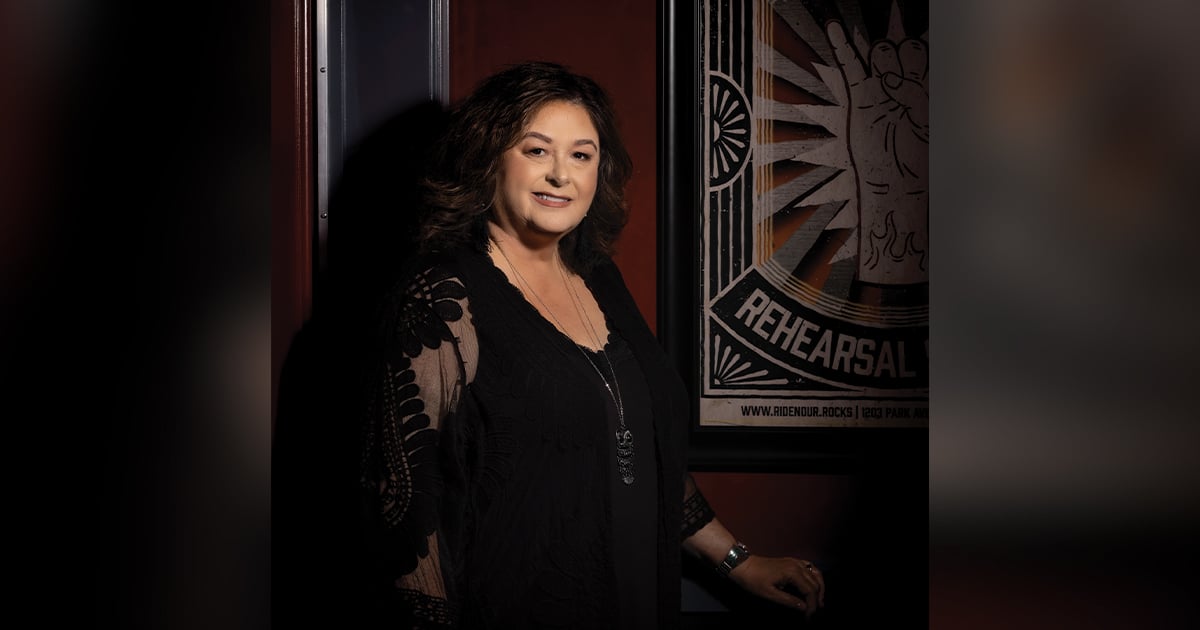
Photo by Shelly Swanger
Longtime performer turned business owner Andrea Roberts lived an enviable existence as a bluegrass musician the first part of her life. Her impressive resume includes fronting one of the first all-female bluegrass bands Petticoat Junction and playing alongside some of the genre’s most legendary figures including Bill Monroe, Jimmy Martin, Jim & Jesse, Ralph Stanley, Larry Sparks and Mac Wiseman. Not only did she gain a wealth of knowledge as a player, but her all-consuming love of bluegrass motivated the remarkable founder of The Andrea Roberts Agency to learn the ins and outs of the business side of bluegrass. She began cultivating her knowledge with Petticoat Junction.
“I learned so much during that time – how to be a band leader, booking agent, manager, schedule travel and advance shows, take care of vehicle maintenance, and on and on – all before I was 25 years old,” Roberts tells Bluegrass Unlimited. “I wouldn’t trade those times for nothin’!”
Roberts was busy touring with a number of bands into the early 2000s with no sights set on the business world. “I did not plan to start my own talent agency but sometimes things just happen, and you realize that it has nothing to do with what you’ve set out to do but what God’s plans are for you. The Andrea Roberts Agency is exactly that.”
She and her husband Danny Roberts, mandolin player for The Grascals, had a bundle of joy enter their world in April 2001 when daughter Jaelee Danielle was born. “I went back out on the road to tour when she was about 4 months old, and it was extremely difficult to do,” Roberts said. “Danny and I didn’t have any family that lived in Tennessee, and he was playing on the road also, of course, as well as working at Gibson OAI. In order for me to play I would have to first take Jaelee to Kentucky or Indiana and then come back to Tennessee and go do the show(s) and then go back and pick her up, so a decision needed to be made about me continuing to play music. That’s where things got out of my hands and the most perfect situation was designed for us.
“The Grascals started as a band in 2004 and although they had a contract with Rounder Records and recording had begun, none of the booking agencies that they reached out to would take them on. The band was prepping for CMA Music Fest where they were going to have a booth and needed to have information for a booking contact. I was asked if I had any interest in representing the band and I figured that since I had booked my own band I ought to be able to do it, so I said “yes.”
Since she would be talking with promoters and pitching to festivals for The Grascals anyway, she thought it would make sense to add other bands to the roster and become a full-service booking agency. Over the years the agency has represented many of the premiere bluegrass artists and the current ARA roster is no exception with new artists and seasoned veterans: The Grascals, Seth Mulder and Midnight Run, The Caleb Daugherty Band, Wildfire, The Daryl Mosley Band, and Jaelee Roberts. Being an “all-in kind of gal,” she strives to represent and support her artists in every way possible.
“Andrea doesn’t do anything half-way,” says Sister Sadie’s Gena Britt, who shared the stage with Andrea during Petticoat Junction days. “If you see her name attached to anything, you know it was done right. And with integrity and professionalism. I’m not surprised at the success she’s had on the business side of things in our music.”
“There is a benefit to your booking agent having traveled themselves,” says The Grascals banjo player Kristin Scott Benson. “They have a better sense of what they’re committing you to do because they’ve been there and understand what it’s like. Andrea’s whole life revolves around bluegrass. She’s constantly reading about it online, listening, booking bands, attending festivals. Anytime I’m around her, I feel like I must live in a hole because I’m largely oblivious to all the goings-on but Andrea always knows what’s happening. She’s persistent and I don’t think she ever sleeps.”
“I am basically on call 24/7 and the work is truly never done,” Roberts says. “And I love it! When an artist is on the ARA roster, they really are getting agent/manager/artist support all wrapped up in one package with the help of my long-time office manager and artistic right-hand girl, Jessie (Law) Allen. Jessie keeps everything behind the scenes operational and is outstanding with web design, graphic art and social media marketing. The most important thing to me is for the artist to feel like they have an advocate and somebody that’s really in their corner and for the promoters to feel like they are working with a friend.”
Roberts was honored to receive the IBMA Mentor of the Year at the 2015 Momentum Awards. It was a tearful moment for a lady who has devoted her life to helping others. “I was so surprised, and my heart was so full that I don’t have any idea what I said or if I could even be understood over my crying,” Roberts says. “I proudly display that award on our fireplace mantel, and I could never receive any recognition that would mean any more to me.”
“I do love to help folks, and I especially love to encourage young folks. I received a lot of encouragement when I was a young person, and I think that made all the difference in cultivating my desire to make bluegrass my life for the long-haul so I hope that in some small way I can do or say something that will encourage that in someone else for their future.”
One significant example of her mentoring is the incredible successful group Flatt Lonesome. She had a huge hand in putting their incredible career on the map. “What did she not do for Flatt Lonesome!” says Flatt Lonesome fiddler Charli Robertson Shuler. Flatt Lonesome was scheduled to make their first ever performance as a band at the SPBGMA Band competition in 2011, and Charli says they didn’t know what was going on.
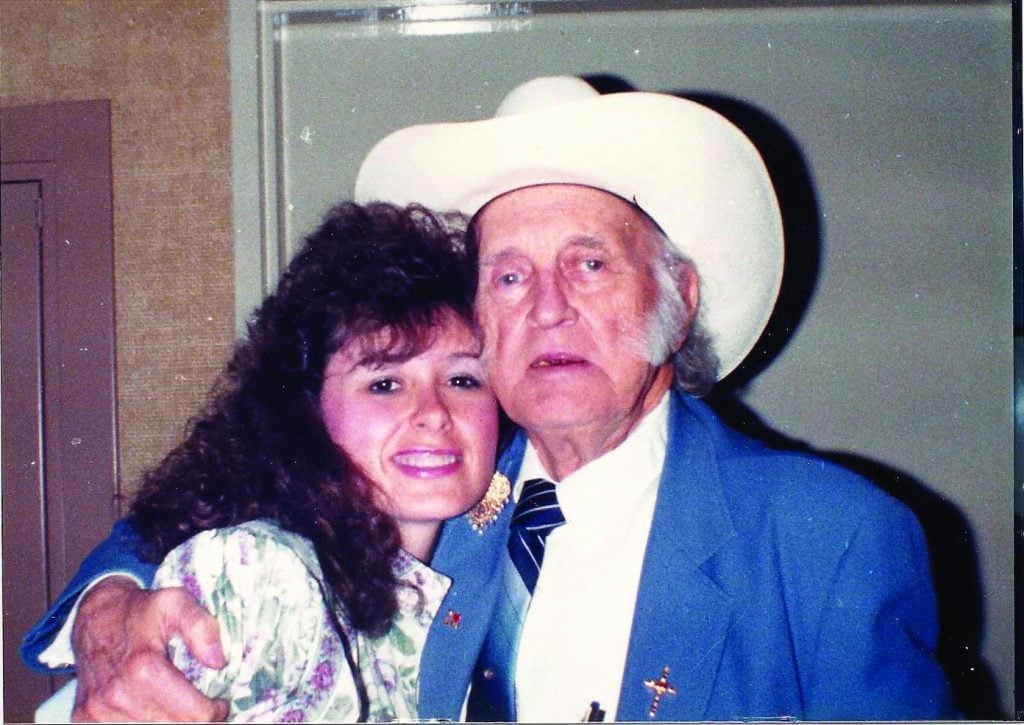
“We hadn’t even stepped on a stage; we didn’t even know where to stand” says Robertson Shuler. “She was there from the very beginning showing us what to do, how to do it, how to organize things, helped us figure out whose taking what break where, etc. She was our booking agent and our manager. She helped us grow in music. Andrea is the type of person who is friends with everybody. It helped us because people thought if we were associated with Andrea and Danny, then they must be a decent band.”
“Flatt Lonesome was something extra special, and I don’t know that bluegrass music will have another band quite like them,” Roberts said.
Roberts is able to balance business with family and for the last seventeen years, she has represented The Grascals. “Danny and I have spent our entire marriage being supportive of one another on our musical journeys whatever they have been, and it brings me great joy to be in a role that can help him and his bandmates in The Grascals. When the band has success, I have success, too.”
Married nearly 30 years, the two worked together temporarily on stage at times when she filled in with his band New Tradition, but she says the couple has never contemplated being in a band together. “We work very well together—separately,” she says, laughing. “That’s not meant to be derogatory in any way, but we figured out early in our marriage that playing music together on a full-time basis was probably not the best scenario for us. I did, however, play bass on his first solo project Mandolin Orchard and that was so much fun. Danny writes excellent instrumental songs! I also recorded a gospel song “I Went Down a Beggar (But I Came Up a Millionaire)” on his second solo project Nighthawk on Mountain Home. That’s the most special recording I’ve ever been part of because it’s Danny, Jaelee and I together, plus I really love the message of that song.”
Roberts now works for her daughter, who was part of the initial reason ARA was born. In addition to a budding solo career, Jaelee joined bluegrass super act Sister Sadie earlier this year. “It’s amazing to watch Jaelee grow musically and to see her career in the music business begin to get off the ground,” her mom says. “Danny and I are so proud of her. She has known that she wanted to be a singer, songwriter, musician since she was a very little girl, and this is all about her and not her momma and daddy. Jaelee puts in the work and has the talent and as a parent (not speaking as a professional right this moment) it is very fulfilling to see her making great strides. As a music professional and a parent, I will always be supporting and encouraging her.”
Andrea Roberts Start in Bluegrass
Although she didn’t come from a musically talented family, her parents—Bernard and Donna (Washam) Mullins—raised her in a music loving family. “I attended a lot of traditional country and southern gospel concerts with my parents. We also listened to a lot of records and tuned in to the Grand Ole Opry whenever we could hear it through the static. My mom loved to sing, and after discovering bluegrass festivals, my dad bought a guitar and tried to learn, but I confiscated it from him pretty quickly. And bless his heart, he just couldn’t carry a tune in a bucket, but he did love to lend his not-so-good-voice to the “I hear you calling me” part of Jimmy Martin’s song “Tennessee”, which garnered a lot of smiles and laughs.”
Andrea fell in love with bluegrass music when she was 11 years old after attending her first bluegrass festival in Martinsville, IN in 1977. “That festival was truly a life-changing experience for me, and I’ve never wanted to do anything else but play and be part of bluegrass music since that time. That chance festival attendance introduced me to live performances from Bill Monroe, Ralph Stanley, The Osborne Brothers, Jim & Jesse, Jimmy Martin, The Country Gentleman, Larry Sparks, The Seldom Scene, Mac Wiseman and basically ALL of the top bands of that time (which were the pioneers that became my heroes). The impact that live bluegrass music had on me is hard to put into words and the musicians that play the music and the wonderful fans that listen to it started becoming my family at that very moment.
“I left there begging for a banjo. My dad was so thrilled that I wanted to play the banjo that very little time passed before I had one in my hands and was taking lessons. One of the last things my daddy did before he passed away in 1980 was take me to our favorite music store – The Bandstand in Wabash, IN – and let me pick out a Gibson banjo so I could have the best he could afford. Unfortunately, I did not stick to playing the banjo beyond my upper teens, but I do still have my banjo.”
After Roberts started learning to sing, she felt more comfortable accompanying herself on the guitar and less self-conscience jumping into a jam session with the guitar in her hands. Her love for the bass came at age 13 when a man nicknamed “Red” introduced her to the instrument at an Ohio festival’s campfire jam session.
“He handed his acoustic bass to me and said, ‘Here, play it” to which my response was ‘I don’t know how.’” He smiled at me and said, ‘You will know how when you’re done with this jam,’ and I took it and those kind folks allowed me to begin to figure it out. I had blisters that ended in blood (bass players will know what I mean) and yet I couldn’t think about anything else except how I was going to buy a bass and have one at home,” Roberts said.
“I absolutely love everything about the bass—the role it plays in the band, how it looks and how it sounds. Playing the guitar and the acoustic bass (my main instruments) has given me a lot of joy in my lifetime and I’m very grateful for the wonderful kind people that took me in when I was a kid and encouraged me to play and sing. That was a gift that has truly made my life was it is!”
As a teenager in Indiana, Roberts played with The Bluegrass Rebels, Southern Comfort and regional bands like Talmadge Law & The Bluegrass Sounds and The Moore Brothers. As an 18-year-old she landed her first professional gig with the Detroit-based group Gary Adams and The Bluegrass Gentlemen before a two-year stint with Wendy Smith and Blue Velvet.
“I was the very first ‘Girl in the Blue Velvet Band’ as was always said. Wendy is an amazing songwriter and having the experience of playing with someone that performed original material and was very focused on delivering a great show was very impactful on me. I stood on the stage of the Grand Ole Opry for my first time as a member of Blue Velvet playing Bill Monroe’s Early Bird Show. That trip to Nashville also allowed me to visit the World Famous Station Inn for the first time.”
Petticoat Junction
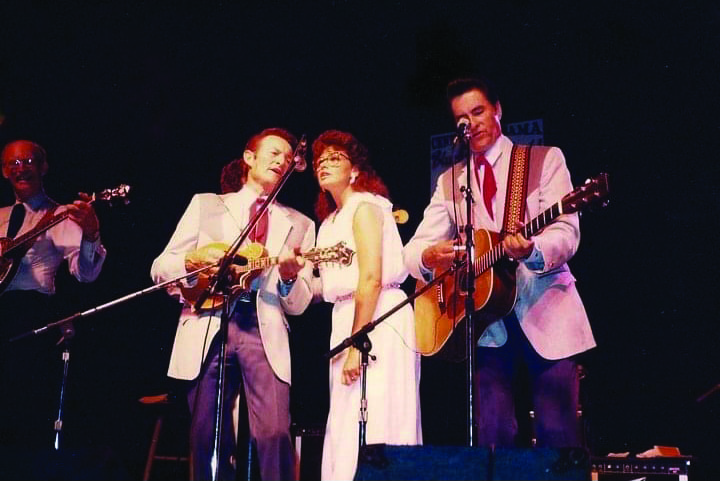
The most memorable role for most fans that Roberts starred in on stage was with one of the first all-female bluegrass bands, Petticoat Junction. Named after the Flatt & Scruggs tune, the band’s conception was in 1987 when Roberts ran into her childhood friend, Sonya (Yoder) Rutledge, at the IBMA Fan Fest in Owensboro, KY.
“We talked with our friends Russell Moore and the late Ray Deaton who were playing with Doyle Lawson & Quicksilver. They encouraged us to start a band and mentioned that there were only a couple of all-female bands that were in our region and maybe we should consider doing that.”
The two scouted for talent for the new band including talking to Martie and Emily Erwin, who had also just started their own all girl group, The Dixie Chicks. Roberts donned her business cap and sought out advice from a variety of professionals like Bluegrass Hall of Fame member Lance LeRoy.
“Looking back that’s really pretty impressive for a 21-year-old girl and an 18-year-old girl to have the courage to dive into a male-dominated music genre.”
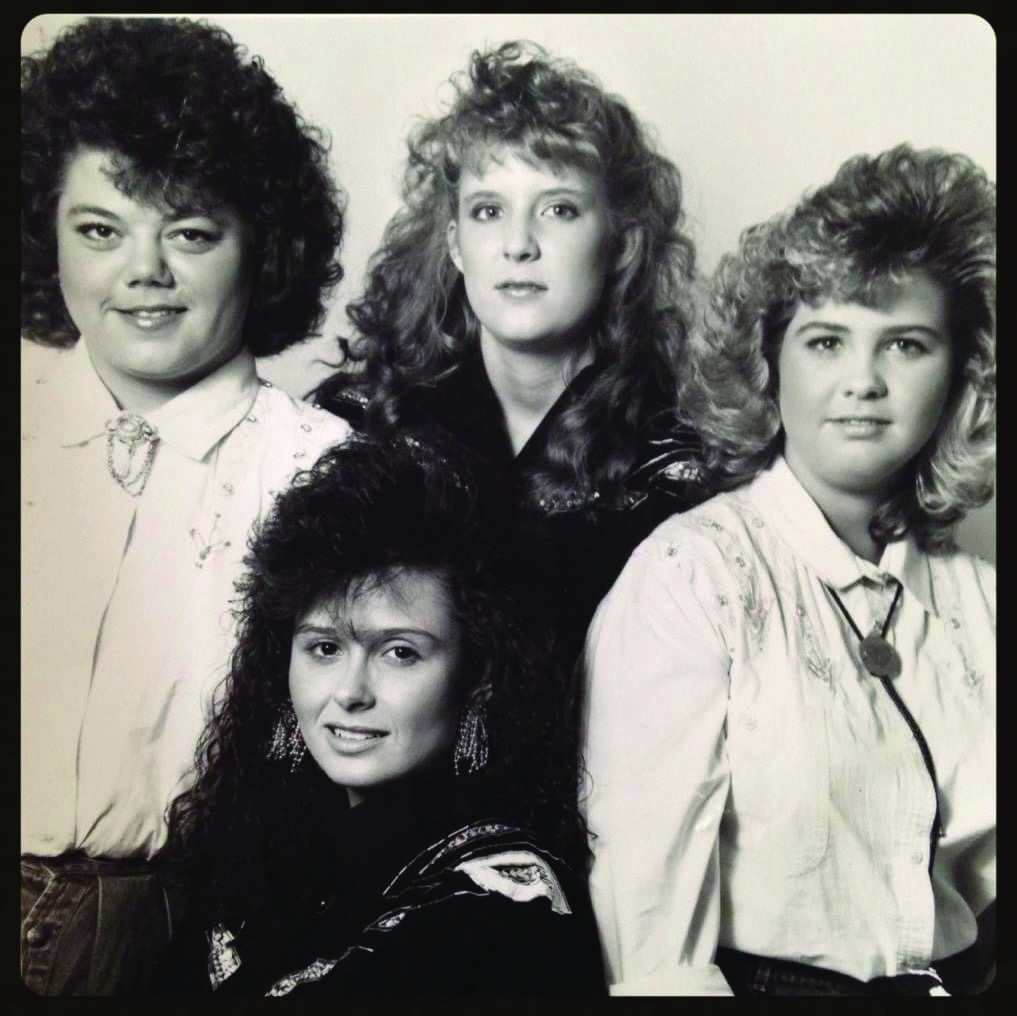
Petticoat Junction played its first festival at Bean Blossom in 1988 followed by the Grand Ole Opry’s Early Bird Show with special guest fiddler Alison Krauss. About a year later Roberts brought on board Robin (Roller) Thixton on fiddle, Gail (Rudisill) Johnson on fiddle, and Lori (Harman) Cummins on bass. “We were playing all of the biggest festivals in the US and Canada and making a lot of professional headway in the industry.”
When Lori left the band in 1990, Gena Britt joined on bass, forming the band configuration that people consider Petticoat Junction’s classic lineup. “Andrea was the consummate professional bandleader,” Britt recalls. “There was never a worry whether anything was left undone, because she took care of everything. When we were playing music together, it fit natural. She studied the first generation bluegrass singers and musicians and knew what it was supposed to sound like. Our voices matched together well, and it was the experience of a lifetime being in a band with her on and off stage. When I was in the band, I played bass, and Andrea played guitar. She’s a great guitar player and knew exactly when and how to accentuate the music. When I joined the band, I didn’t even know how to play bass because I had been playing banjo. Andrea showed me the basics and some of the most important lessons in music that I still use today. So, she’s the reason that I even know how to play acoustic bass.”
Petticoat Junction recorded two CDs for Pinecastle Records—Hand of the Higher Power and Lonely Old Depot both of which have just recently been reissued. “We laid down some strong bluegrass music and were even recording Harley Allen songs before the rest of the world caught on. We traveled a lot – just the four of us girls in a minivan all over North America having the time of our lives.”
A couple of significant band changes followed with Sally Jones joining on guitar and Kristin Scott (now Benson) showcasing her five string chops on banjo with Andrea changing to the acoustic bass in the band lineup. “She was a go-getter and still is,” says Kristin Scott Benson, a member of The Grascals,” says of Roberts. “I got quite an education in the Petticoat Junction van as a high schooler and only some of it was musical! Andrea and the other ladies taught me a lot about many different things, and it was such a fun time.”
Finally, in 1997, Petticoat Junction played its final show at the IBMA Fan Fest in Louisville, KY. “Due to a lot of life changes and people having different goals and plans, which is the nature of the business, I made the very difficult decision for Petticoat Junction to come to an end,” Roberts said.
“One of the things that I am proud of is having the opportunity to have worked with so many talented women that have gone on to have great careers and leave big impressions on our genre of music. The thing I look back on and remember the most about the band is that that we were welcomed and respected within the industry from the very beginning and that for the most part it was never really a big deal that we were an “all-girl” band. We played good music, worked hard and had a lot of loyal fans and we had our place in bluegrass music.”
Next stop for Roberts was playing bass for Special Consensus, an opportunity that stretched her musically. “Playing with Special Consensus was a huge time of learning for me on many levels. One, I was playing some music that was a little outside of my comfort zone, playing with symphonies, teaching workshops and I had to overcome some doubts/fears that I could do it, so it was a tremendous time of musical growth for me. Two, until playing with Special Consensus I had never spent so much time on the road and really, really traveled in the way they did which included a 30-day tour of the UK in 1998.”
“There are just not enough great adjectives to use to describe [Special C band leader] Greg Cahill. He is a professional’s professional and a great band leader.”
Greg Cahill said, “Andrea Roberts was a joy to work with and a true professional in every way as a member of Special C. She was a total team player and she always shared her positive insight and perspective to any situation, from “strongly advising” us to get air conditioning installed in the van (thank goodness) to convincing us to better prepare for an album cover photo shoot (including location, wearing makeup, choice of what we wore, etc.) to “strongly requesting” me to use a capo at the 5th fret to play a song in the key of C (which was the first Special C song to appear on the Bluegrass Unlimited chart). We traveled nationally and internationally and we had fun making music together and making new friends around the world. We became great friends throughout the journey and will be “friends forever.”
After a few years with the band, Roberts made the difficult decision to come off the road to take care of her ailing mom. “Unfortunately, just three days after I played my last show with Special C, my momma passed away. That was a difficult time for me because my mom was my biggest cheerleader and fan, and it was hard to think of her not ever being in the audience of another show.”
In time, Roberts returned to the stage, playing in various bands, until she decided to set aside the bass and use her business acumen with ARA while raising her daughter. “I haven’t performed professionally in 15 years, but I do play sing and occasionally play bass at church. I definitely miss traveling and playing music and had started practicing the bass in hopes of finding a group that could use a bass player but…2020. After everything went completely haywire with the complete music shutdown, I kind of lost my focus on trying to reenter the touring musician world. If I were to play music on the road again, I would want to do it in the role of bass player only and not be a band leader or main vocalist – only as a supporting member.”
Roberts humbly admits she doesn’t long for the spotlight. She prefers to shine the attention on her artists that she longs to see have great success. “Bluegrass music is the heart of ARA, and we love doing all that we can to help reach new audiences and to treasure the fans already in on bluegrass music at its best.”