
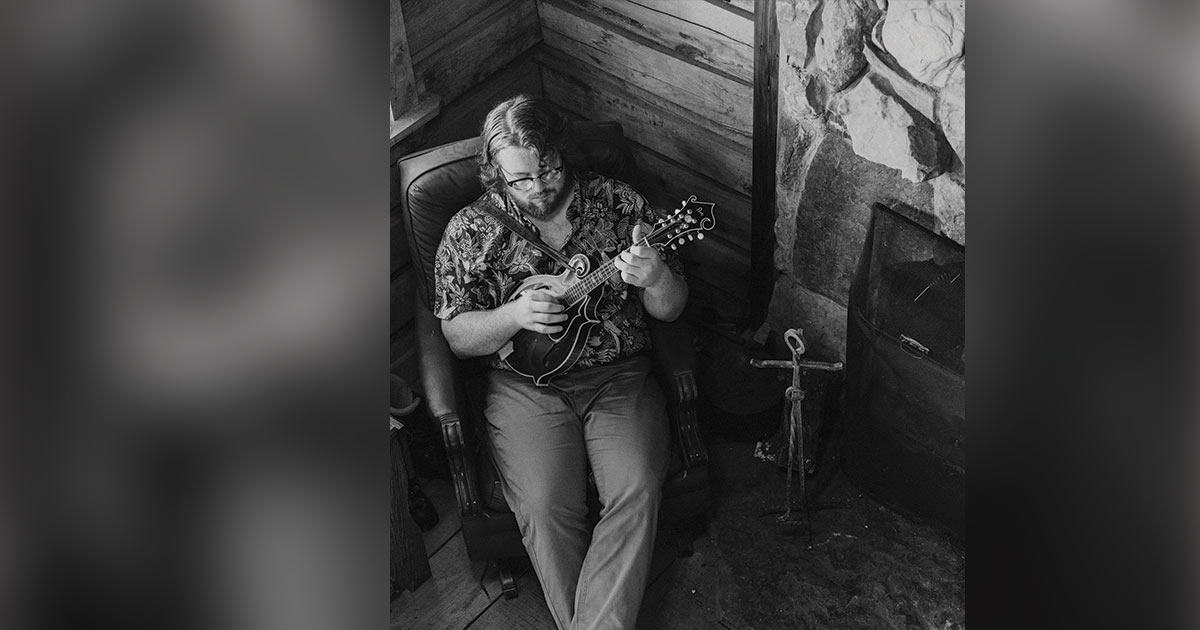
An Interview with Special Consensus Mandolinist
Michael Prewitt
Special Consensus mandolin player Michael Prewitt grew up on an old tobacco farm in Whitley County, a 45-minute drive east of Somerset. It wasn’t until he left Eastern Kentucky for an English degree at grad school in North Dakota that he began to reexamine his bluegrass roots.
“As far as making a conscious choice to seek out Kentucky traditions and integrate them into my personal life and mental health—the first time I ever did that was when I moved away and was homesick,” he says.
He’s been a musician his whole life. He started playing fiddle at 6 or 7 and picked up the mandolin at 12. A couple of his teachers sponsored an after-school bluegrass band called Colonel Strings. They let students check out instruments, and Michael decided to go for the mandolin. “When I first picked up the mandolin, it just made so much more sense (than the fiddle). I think because of the frets—you could actually see them,” Michael says.
That was when he got started. According to his bio, he went on to play bluegrass with an Eastern Kentucky group called Mountain Drive but then took a hiatus as he went to college. He only recently started playing music full time. In North Dakota he briefly taught English as an adjunct at the University of North Dakota while also getting into “the small but healthy bluegrass scene” in the region. During the pandemic he lost his teaching job and was working as a mail clerk in Minneapolis when he got the call to join The Special Consensus.
Michael had previously worked with a former Special Consensus band member, Chris Jones. Chris played in the band in the 1980s. He was an old friend and Michael would fill in for Chris on mandolin occasionally.
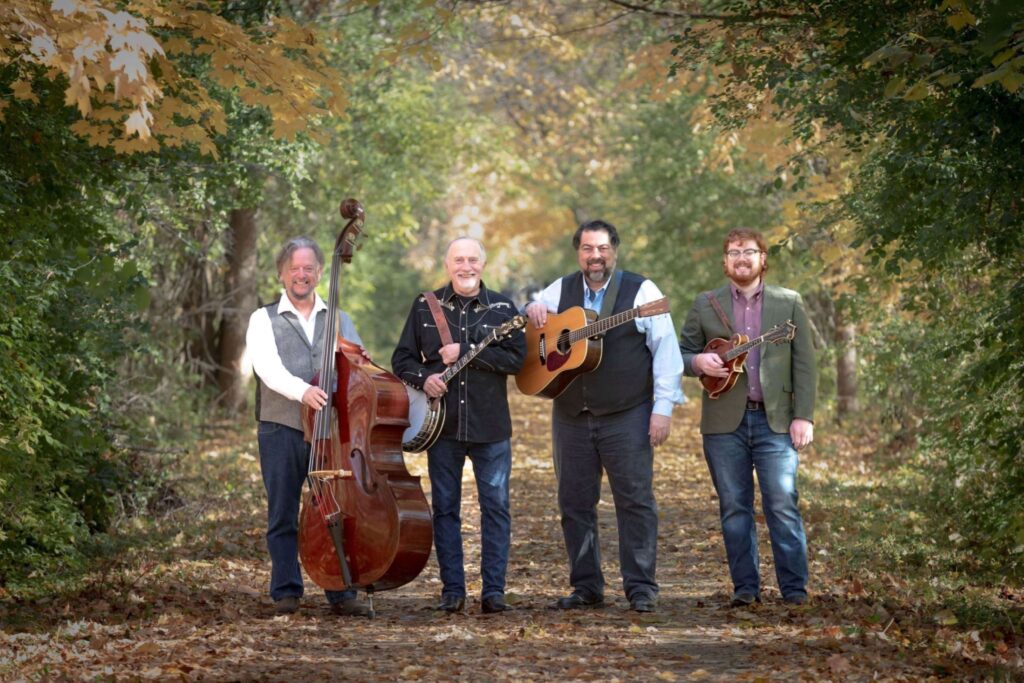
The Special Consensus has been going since 1975. It kicked off in Chicago on Lincoln Avenue, where, at the time, everything was happening. Gradually the band morphed from Chicago-based to international. Michael jokes he’s probably the 50th band member, and they have welcomed many fantastic musicians over the years.
“When the mandolin job became available, Chris had mentioned my name to (co-founding member, banjoist) Greg Cahill. So then I just got this call one day and worked out the details. It was good,” Michael says. “I was sort of at the end of my rope, like, ‘I’ve got to do something different. I want to play music. I don’t want to be a mail clerk.’ So that happened. And it’s been great.”
The band never stops touring, with approximately 100 tour dates a year. Michael has now been playing with them for three years, and when he’s not doing that, he teaches and plays music in and around his current home of Portland, Tennessee, located in the outskirts of Nashville. Michael released a new album on February 9th of this year titled The Peerless Mountain Sessions.
He thinks bluegrass music is heading in a good direction. “The word ‘bluegrass’ has a lot of energy attached to it, a lot of meanings, especially depending on where you are. But more and more things are falling under the umbrella of bluegrass. In the beginning it meant a very, very specific thing. And now you’ll see a cello in a band that calls itself a bluegrass band, or you’ll see a band that has drums or keys. If you say ‘we’re going to a bluegrass festival’ in people’s minds it means chill, but fun, camping, not very hierarchical and very open, a community-focused thing,” he says.
He mentioned musicians like Billy Strings, and Molly Tuttle who are turning into rock stars, and how people who wouldn’t necessarily come to a bluegrass festival are now packing out arenas to see bluegrass artists. He thinks that streaming is really good for bluegrass.
“There’s lots of musicians who have very different opinions on streaming. I’m all for it. Because I think the music has gotten better in the last 10 to 15 years. Not only do you have access to what’s commercially available right now, but also you have access to a 1957 concert from Flatt and Scruggs that anyone, from their home, can bring up and just learn from it and be inspired by it. The democratization of the internet, it’s only good for it.”
He discussed controversial country artist Oliver Anthony, who recently exploded in popularity but also highly divided the public. Michael joked, “He thinks he’s great for guys with red hair and thick beards.” Sharing a US perspective on Oliver’s runaway hit, “Rich Men North of Richmond,” Michael kindly responded to the loaded question.
He thinks the song’s popularity right now is telling. “I don’t like how, as a culture, we are responding to art based on how our self-defined side responds to it. You have to either like or not like something based on the political valence that’s contained in this piece of art. The reason I don’t like his music is not necessarily because it’s really offensive to me. It’s just there’s really nothing at the heart of it except for politics. There’s some types of that music that I do like, but it all depends on what your politics are. I think the politics of that song are really unclear for one; It’s just sort of vague resentment,” he says.
Michael mentioned modern folk artists like Tyler Childers, Chris Stapleton and Sturgill Simpson. He wonders if Oliver Anthony might be a natural byproduct of that music.
“He’s nowhere near their level of artistry, but that is what is being seen as authentic now—especially in masculine-coded music. And people were like, ‘He’s from the Blue Ridge Mountains. He worked in a factory, he sings about working people,” Michael says. He said aesthetically, Oliver’s vocals are really hollering, and everybody is doing it at the moment, especially guys in their 20s or early 30s who want to be seen as legitimate.
“They have to put on a work jacket and work boots and scream about drugs, alcohol or being poor into the microphone. There’s room for all of that, if it’s done well.”
Michael’s style of singing is heavily influenced by Willie Nelson, one of his favorite singers. He said many people think of the soft, nasally vocals Willie sings with as “not working class,” when it actually is. He said so much of modern music comes down to the fascinating quest for authenticity.
“There’s all sorts of ways of being authentic. And if you’re trying to hew to any sort of standard, I think that gets rid of authenticity in the process. Of course, you don’t want to try to be unique either; you just want to be who you are,” he says.