
A Wonder From Down Under
Photo by Bud Osborne
Over the last four decades, Australia’s Paul Duff has earned mention in mandolin and bluegrass circles as one of the premier mandolin-family builders. His instruments, which range from an A4-style mandolin to outrageous feats of luthiery like recreating one of Orville Gibson’s early, highly ornate archtop guitars in exacting detail, reflect his passion for not just superb luthiery, but also his passion for bluegrass instrument evolution.
Along with Will Kimble, Duff serves as “camp doctor” at the annual Monroe Mandolin Camp hosted by Mike Compton and Heidi Herzog. There, Paul has the opportunity to discuss all things mandolin with a cadre of mandolin fanatics and examine everything from PacRim instruments to the very best.
This month’s review mandolin is a fine F5 recently purchased by Indianapolis-based mandolin instructor Jim Richter, host of the innovative annual Mandolin Camp For The Rest Of Us camp. “This mandolin was greatly influenced by the Duff F5 that (Mike) Compton has and used on the recording with Norman Blake and then his solo mandolin album. I was with Paul and was playing Mike’s mandolin and said “make me one like that,” Jim told Bluegrass Unlimited..
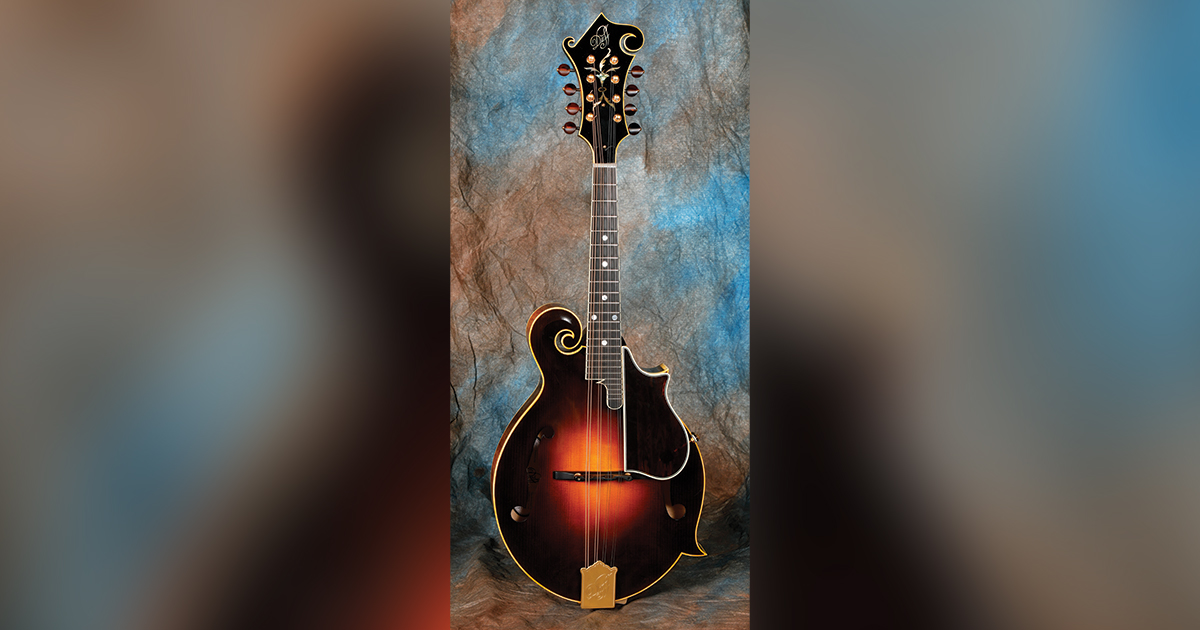
The review instrument, as anticipated, showcases top-of-any-line materials and outstanding workmanship. The red spruce top sports densely packed grain lines under the bridge, spreading to more wider grained material in the wings, a combination frequently seen on the best f-hole mandolins. Flipside has as gorgeous a one-piece sugar maple back as I’ve ever seen. At Richter’s request, Duff crafted a three-piece laminated neck made from sugar maple with a slightly rounded profile from the Loar-inspired “V” neck profile and what’s termed ‘sidebound’ binding in ivoroid, just like Big Mon’s July 9, 1923 Loar-signed Gibson.
I asked Duff to elaborate a bit on how he approaches a bluegrass instrument such as this without trying to perfectly replicate the Loar F5 sound. He replied:“The entire discussion of the ‘Loar sound’ is an interesting one. They actually all have their own individual sound and do vary quite a bit. However, I also believe there is, unquestionably a ‘character’ of tone that comes from these mandolins from this particular period. Those characteristics are probably more of what I’m chasing than trying to capture a specific instrument’s tone. I’m going for the best aspects of many of those classic instruments. I actually like to have a slightly more rounded quality to the notes and perhaps a warmer midrange. The definition between notes is very important and this gives that ‘chime’ quality that your wife picked up in the instrument.”
The rest of the spec sheet includes all the usual suspects: Lightly radiused ebony fingerboard with 1 1/16” nut width and MOP dot fret markers; a Cumberland Acoustic ebony Loar-style adjustable bridge; a fine Bill James gold plated tailpiece with the Duff logo engraved.
Paul included a full-size, handmade traditional pickguard with gold plated hardware to match, including a lovely bit of TS material on the outer part of the pickguard mounting bracket, a lovely, elegant touch, One interesting detail is the tuning machine buttons are not metal, wood or ivoroid. Instead, Duff asked Stewart-Macdonald about whether the new Waverly guitar tuner buttons in tortoiseshell material could be available in a mandolin set, and they happily complied. All inlays are hand-cut by Duff, not CNC’ed by an outsider, in mother of pearl and abalone, concluding beautifully in Paul’s lovely ‘Cascading Fern’ headstock inlay, plus the Duff logo. This mandolin, Duff says, “is finished in the classic walnut Cremona sunburst. All my instruments are finished in French-polished spirit varnish.” For the test, it was strung with new phosphor bronze in medium, a typical bluegrasser’s setup.
Priced intentionally at the mid-range of the custom mandolin market at $11,500 base (the one-piece back and other upgrades bring the total to $12,450 for the test instrument), a builder like Duff has to make a series of choices to meet that price-point. To keep his instruments relatively affordable for the hand-built mandolin world, Paul puts his greatest time and attention to critical issues like carving and voicing the top and proper playability that directly benefit the sound and utility. The interior, for example, is as clean as a NASA assembly room. But that also means he can’t afford to be absolutely picky about every last small detail, such as the obvious fault in the binding around the headstock curlicue where the two strips of ivoroid binding do not come together seamlessly. But other than that, this instrument is as beautifully crafted as anything in this price range.
When I tuned it up and started playing, my wife (who has a great ear) told me, “It sounds very chimey.” Indeed, this F5 exhibits all the crunchy upper harmonics and immediate “bite” to the attack that so many mandolinists chase the dragon to find. It possesses more than ample clear, bright tones, lofted by a glorious harmonic bloom and sparkle in the upper registers. This brand new mandolin sounded a tad muffled on the bass end, which is to be expected, a small deficiency that will disappear after some serious play time.
As you’d expect, this is the kind of mandolin you get lost playing, each note, double stop, and chop chord draws the player in, rewarding solid technique and offering tantalizing glimpses of a best yet to come.“As with all of my builds, the greatest joy comes when the person who has ordered the instrument is totally happy with every aspect of the build. I am a builder who likes to keep in close contact with the person who has ordered the instrument so I can gauge what they are looking for. To have them say they love the instrument once they have it in their hands is always the ultimate reward.”
Clearly, Duff’s reputation is unquestionably backed by his immense body of work over 40+ years, and this instrument doesn’t disappoint in any way. Let’s just say that any day you receive a new Duff mandolin is a g’day, mate.