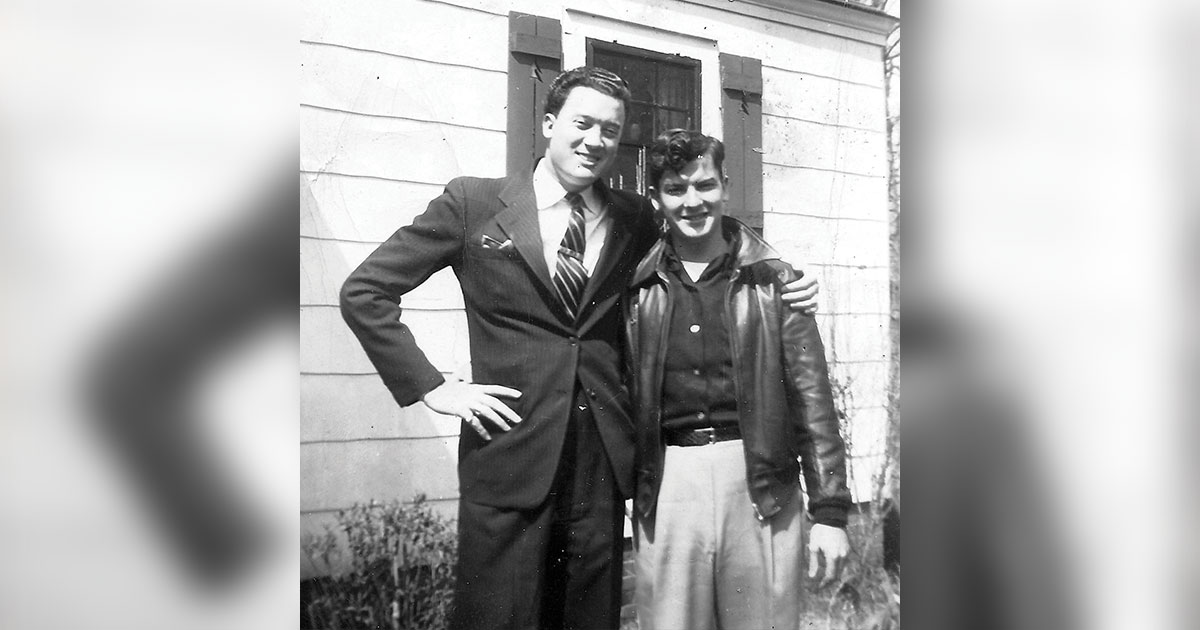
A Singular Fiddler and More: The Music and Times of Jim Lunsford
Part Two: Early Bluegrass Fiddling, Music Row Songwriting, and a Creative Family Band
Fiddler Jim Lunsford’s musical pursuit of excellence and innovation in music took him all over the map, from his native Southeast to Nashville’s music industry, from California’s dancehalls to Vietnam’s U.S. military bases. By the early 1950s, some of the musicians Lunsford worked with in Knoxville and Asheville had included Chet Atkins, Carl Story, the Morris Brothers, and Red Rector. Later in the ‘50s he played with the legendary bluegrass bands of Don Reno & Red Smiley and the Tennessee Cut-Ups, and Jim & Jesse and the Virginia Boys.
The versatile fiddler had also worked with future Country Music Hall of Fame members Roy Acuff, Marty Robbins, and Don Gibson as well as rockabilly singer Tommy Sosebee, Western star Johnny Mack Brown, and other regional acts.
Beginning in the 1960s, his songwriting career would result in cuts by the Country Gentlemen, Charley Pride, the Cox Family, Ronnie Milsap, Hank Williams III, George Hamilton IV, and Gary P. Nunn. In the late ‘60s and 1970s, the last decades of his life, Jim led an innovative group featuring contributions by three of his daughters. The Lunsfords’ mix of bluegrass, folk, country, jazz, and pop attracted music executives such as Mary Martin, who introduced Bob Dylan to the Band, and John Simon, producer of classic records by Janis Joplin, Simon and Garfunkel, the Band, and many others.
Making second-generation waves
During his stints with both Reno & Smiley and Jim & Jesse in the 1950s, Lunsford was at hand for new twists on bluegrass music as founded by Bill Monroe, Flatt & Scruggs, and the Stanley Brothers. With these slightly younger acts, the music grew rich with new sounds and approaches. During Jim Lunsford’s time with Reno & Smiley, their recordings featured:
• Early use of twin fiddles,
• The far-reaching banjo style developed by Reno,
• Adapted jazz pieces such as “Limehouse Blues”
• The first recorded recitation in bluegrass, and
• The first use of electric bass and drums in the style.
(As I wound up this story, none other than Bob Dylan posted praise for Reno’s playing on social media: “No offense to Earl but Don was more innovative. Chordal runs, tremolo picking, guitar-type strumming, jazz, swing, early rock, and roll — it’s all there in his playing.”)
Jim Lunsford’s work with Reno started as early as 1949 in an early Cut-Ups lineup in Roanoke, Virginia. A photograph from this period shows Don Reno and the Tennessee Cut-Ups when broadcasting over WESC in Greenville, S. C., with Reno, Lunsford, (possibly) Boomer Pruitt, Bill Haney, Don’s nephew Verlon Reno, and an unnamed announcer. “Smiley was from Asheville, so Jim had known him,” Jim’s widow, Frances Lunsford, told me in 2021. “And Reno was from outside Greenville, South Carolina.”
Lunsford’s job with Reno and Smiley as a duo got started in 1952 when Smiley invited him to join a group with Reno, Smiley, and bassist Tommy Faile. In 1953, Reno and Smiley brought Lunsford and his friend Red Rector along to record for Cincinnati-based King Records. “Jimmy Lunsford played fiddle on those recordings and sang bass in the quartets,” Rector said. Reno had played with Arthur Smith on his 1954 recording “Feudin’ Banjo,” a much wilder performance musically than heard in the movie Deliverance as “Dueling Banjos.”
Making History with Reno & Smiley
Lunsford’s playing on more than 40 Reno & Smiley recordings served as a model for later Tennessee Cut-Ups fiddlers, according to High Fidelity’s Jeremy Stephens and fiddler/country music historian Eddie Stubbs. “I really think what Mack Magaha did later was modeled a lot after this guy,” Stubbs said in liner notes for a 1993 King boxed set compiled by Gary Reid.
“Listen to the fiddle playing on ‘Talk of the Town’ and those slides and blues things that he does,” Stubbs said. “There’s different names for them, but he uses a lot of seventh notes and ‘outlaw’ type chords as [D.C. bluegrass pioneer] Buzz Busby would call them. Like on ‘Love Call Waltz’ and ‘I Can Hear the Angels Singing,’ there’s some extremely soulful fiddle on those tunes.”
Stephens is another Jim Lunsford believer. “I find Jimmy Lunsford’s style to be very integral in the early sound of Reno & Smiley,” he told me. “What Jimmy Lunsford did was just perfect for Reno and Smiley at that time.” Frances Lunsford remembered the way fans and musicians praised Jim’s sensitivity to the overall sound of singers and bands he played with, always enhancing the overall sound. “Everybody loved Jim’s way of playing, and all his fills,” she said. “He knew when to come in as a backup fiddle player. Everybody loved that about the way he could blend in and hit his part of the playing.”
As a Tennessee Cut-Up, Lunsford’s name became more familiar to fans when Reno gave shout-outs to him and Rector during their solos on the instrumental “Choking the Strings.” The recording appeared as the B-side “I’m the Talk of the Town,” a single strongly promoted by King Records. “Choking the Strings” became a sort of instrumental standard as recorded by Bill Evans, Bill Emerson, Mac Martin and the Dixie Travelers, and Reno’s sons Don Wayne and Ronnie.
‘Dixie Breakdown’ Endures
However, “Dixie Breakdown,” the tune Lunsford wrote with Don Reno, became even more popular. The number’s chord progression and stop-time sections have been heard countless times both on record and in back-porch sessions and live shows.
“Dixie Breakdown” got several workouts by star pickers in their younger days. Young Mark O’Connor tore it up on guitar and the acoustic fiddle and banjo stars Stuart Duncan and Alison Brown cut it in their early duet.
The pioneering country-rock band known as the Flying Burrito Brothers often played the tune live, with former Byrds member Chris Hillman on mandolin. “Dixie Breakdown” shows up on two live Burritos albums recorded in the early 1970s, giving the number a high profile among fans who came to bluegrass from rock ‘n’ roll.
Kenny Wirtz, a co-founder with Hillman of the Scottsville Squirrel Barkers band, plays banjo on Last of the Red Hot Burritos, Hillman told me in 2025. The Authorized Bootleg CD features banjo by founding Eagles member Bernie Leadon, whom Wertz had mentored, Hillman said via email from California. “‘Dixie Breakdown’ was so much fun to play on stage, with the descending line, and breaks,” Hillman said. “Especially Roger Bush’s bass solo on Last of the Red Hot Burritos.”
Reno and Smiley had recorded “Dixie Breakdown” in 1954. As noted in Part One of this article, Lunsford used the old-time fiddle tuning AEAC#, sometimes called “calico,” to create a mind-bending set of double stops. Like most of the act’s material during this period, “Emotions” was a Reno composition marked by distinctive chord changes and harmonies. Jim Lunsford made the most of it with rich double stops on the C major to E major section, an unusual change for bluegrass vocal harmonies of the day. On “I Can Hear the Angels Singing,” a recording that’s both devout and bluesy, Lunsford is heard both singing bass in a “Beautiful Life”-style quartet and playing a stately, ascending fiddle solo.
Lunsford’s recordings with Reno & Smiley came during the years when the band worked mostly as a studio outfit, as Smiley had become a state employee in North Carolina. In 1953, Jim was diagnosed with Hodgkin lymphoma but was cured through experimental radiation treatments of a disease that proved fatal for most patients of the era. Despite this trauma, Lunsford continued to record with Reno and Smiley until 1954. Another long-time country fiddler, Mack Magaha, known for playing with Opry star Porter Wagoner, joined the act for sessions where he and Lunsford recorded some of the earliest twin fiddling in bluegrass.
Parts played by Lunsford and Magaha on the 1954 recordings “Cruel Love,” “I’m the Biggest Liar in Town,” and others work well and sound appealing. However, they lack the note-by-note precision of later twin-fiddling with matched bow strokes and fingering. Reno noted in the boxed set notes: “If you listen, those fiddles never work together.”
Stubbs agreed. “This was in the days before overdubbing, and there wasn’t an opportunity to go back in and [correct] the mistakes. It sounds great, I think. I love it. But from a technical standpoint, their choice of notes and direction of their bows weren’t all running together at the same time.”
Backing Cecil Campbell
During the years of his Reno & Smiley sessions, Lunsford and his family made one of many moves of that period, this one to Charlotte, North Carolina. That’s where Lunsford joined the Tennessee Ramblers band led by Cecil Campbell, a singer and steel guitarist.
During a career that dated back to 1932, when the Ramblers were led by Dick Hartman, Campbell later specialized in Hawaiian guitar instrumentals, but also played a broad variety of styles that Lunsford could nail. A 1954 photo shows Campbell, Lunsford, Millard Pressley, and Roy Lear as band members for twice-weekly 7:15 p.m. spots on Charlotte television station WBTV. The band also appeared at movie theaters alongside the Western film star Johnny Mack Brown.
Picking, Joking with Jim & Jesse
Lunsford seemed always to be in demand as the music not yet called bluegrass continued to expand. His next band job, with Jim & Jesse McReynolds, took Lunsford and family to Florida for a steady job with another creative bluegrass act.
Born in Coeburn, Virginia, Jim & Jesse had traveled through a string of different towns and musical approaches since starting on the radio in 1947 at WNVA in Norton. Jesse developed an innovative mandolin style and sang lead, while brother Jim played rhythm guitar and sang a high tenor part. Jim Lunsford went to work with Jim & Jesse when the notable fiddler Joe Meadows left the band in 1956 to play with Bill Monroe. It was another example of the way a few pickers rotated through the top bands of bluegrass. Sadly, no recordings or videos of Lunsford with Jim & Jesse survive, but the lineup surely sounded great. A passage in Nelson Sears’ self-published 1975 book, Jim and Jesse: Appalachia to the Grand Ole Opry, sheds light on the hijinks bands used to draw audiences.
“These included pretty girl contests and bathing beauty pageants,” Sears wrote. “Those bathing beauty pageants were really something else. Jim and Jesse and the boys in the band would dress up like girls and the fans would applaud for their favorite ‘beauty.’”
As a Virginia Boy, Lunsford was determined to place first in one such contest. “He got some long underwear and trimmed the arms and legs off a bit,” Sears wrote. “He put the suit on and then got ink and began painting decorative stripes on it.”
Jim McReynolds, watching Lunsford prepare, pointed out that the-inked decoration was soaking through the suit. “Well, it sure was,” Sears wrote. “When Jimmy Lunceford (sic) got out of his bathing suit he looked like he was well on the way to entering a zebra look-alike contest.” Near the end of his life, a smiling Jesse McReynolds recalled Lunsford as a good man and a good fiddler.
An Appearance on the “Big, Big Show”
As part of his decades of show business jobs at many levels, Lunsford won exposure on the March 2, 1958, Ed Sullivan Show before an audience estimated at 11 million. Along with the banjo innovator Bobby Thompson, Lunsford and others played a tune that sounded like Hank Garland’s “Sugarfoot Rag,” but was billed as “Cornbread, Molasses and Sassafras Tea.” Lunsford stands out in a surviving video fiddling behind a troupe introduced as the Smoky Mountain Cloggers. The Sullivan show gave this mountain brand to a school-age group previously called the Otto Cloggers, from Otto, North Carolina. “The dancers were locals,” daughter Nancy Lunsford said. “Many of them had never traveled outside North Carolina. They got on the Ed Sullivan Show because the scheduled guest had canceled and they were fortuitously in the right place at the right time.”
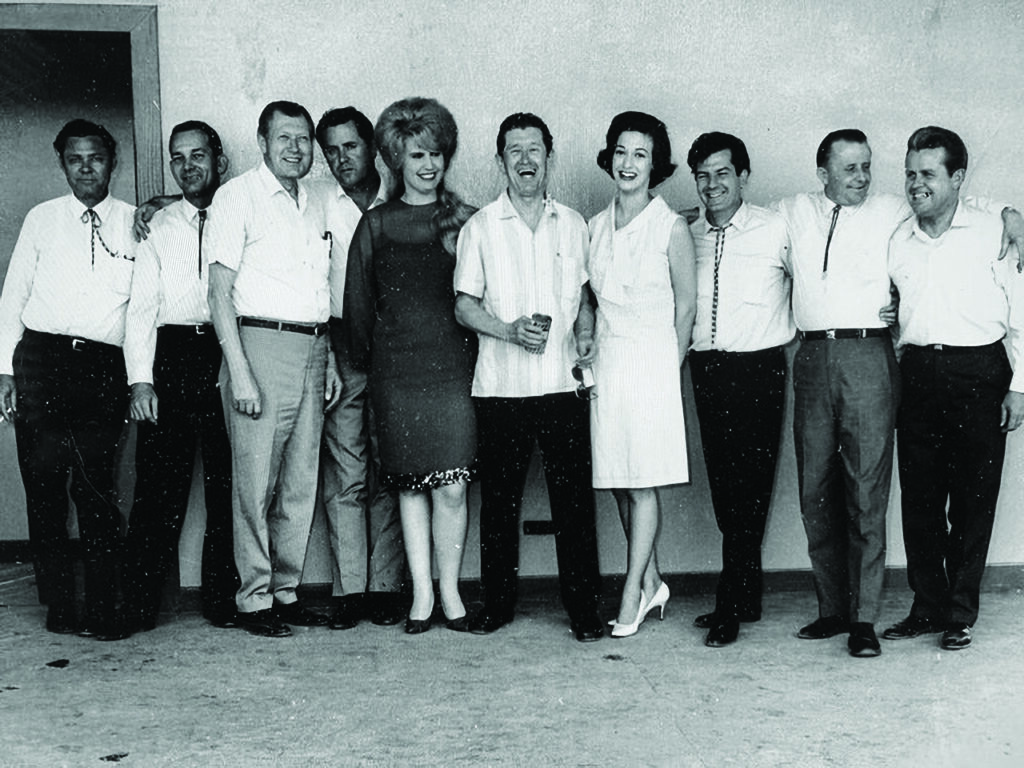
The entire Sullivan show that week seemed a little odd, billed as Ed’s effort to show off Southern culture. The Everly Brothers gave a dancing performance of the Ray Charles hit “This Little Girl of Mine.” Also appearing were the Johnson Family Singers, a country-gospel act that included pop singer Betty Johnson, who charted that year with the cutesy novelty song “The Little Blue Man.”
The cast showed that Southern musicians had links to all sorts of other styles, and worked hard to use them to make a living.
The next Saturday found Lunsford and band making the most of their television exposure, joining the Otto Cloggers for two shows at Asheville’s Motorama venue.
Home on the Dude Ranch
In the early 1960s, Lunsford continued to explore all sorts of gigs, including a series that involved a man named Jim Brown, an entrepreneur who opened a dude ranch in West Palm Beach. “We lived in Lake Worth outside of Palm Beach,” Tomi Lunsford recalled. “And then we went back to Asheville and the next year moved to another dude ranch in Orlando opened by the same businessman, Jim Brown.
“Jim (Lunsford) organized and headed the band and was entertainment emcee. He also was the announcer for the rodeo.”
Jim and Frances Lunsford encountered their share of the hard times that came knocking, as in their second stay in Florida. “Daddy had taken a job selling Gerber baby food just to pay the bills and we ended up eating a lot of the sample jars of baby food,” Nancy said. The period ended with the family driving back to Asheville in a hurry, low on food and cash, she said: “From there we eventually moved to Nashville.”
Whatever the circumstances, music arose to outweigh bad luck. Tomi Lunsford calls herself lucky as a musician to have grown up in a household where great players frequently came knocking. “There were always musicians practicing and working up material at our house when I was a kid,” she said. “You can’t help but be influenced by that environment.”
A New Direction as a Music City Songwriter
In 1963, Jim and Frances Lunsford moved their clan to Nashville. The fiddler was phasing out the sideman gigs that he played for more than 20 years. But even after the family moved to Nashville, he worked with two of the town’s finest, Marty Robbins and Roy Acuff, both top acts of the Grand Ole Opry. The family remembers that Lunsford played bass for a while with the versatile performer and songwriter Marty Robbins, who excelled in styles including cowboy music, rockabilly, folk-country, and country-pop.
Billboard’s “Country Music Corner” column noted on Feb. 8, 1964, that the hit country act Tompall and the Glaser Brothers had signed Jim Lunsford to an exclusive songwriting contract with their Glaser Publications company.Lunsford became a friend and music buddy of another Glaser songwriter, a fiddler and banjo player who was about to write a world-beating hit. “When we lived on Granny White Pike [in Nashville] across the street from Sevier Park in the mid-sixties, John Hartford used to come by nearly every day for a while to learn fiddle tunes from Daddy,” Nancy Lunsford said.
“Hartford was with Glaser Brothers publishing at the time, as was Daddy. It was the ‘60s and the beginning of the counterculture, free-love scene when Dr Zhivago came out and they talked about that movie a lot— Daddy liked the theme song and played it on the fiddle. It was kind of radical in the Bible Belt at the time for a major movie to portray the romantic, non-judgmental, love story between a married man and his mistress. It was the inspiration for Hartford’s song ‘Gentle on my Mind.’” Hartford later told Rolling Stone that the feeling he got from watching Dr. Zhivago spurred his writing of the career song.
During this period, Lunsford became one of Roy Acuff’s Smoky Mountain Boys. Lunsford played USO tours with Acuff for six weeks in early 1966 and from March 15 until April 5, 1967, when fiddler Howdy Forrester took extended breaks from his long-standing gig with the band. The 1967 Vietnam and Thailand shows featured Acuff and a band that included stalwarts Bashful Brother Brother Oswald on banjo and Dobro, all-around entertainers Onie Wheeler and Jimmie Riddle, and others.
Back home, the Smoky Mountain Boys gig put Jim Lunsford square in the middle of the Music City scene. He fiddled with Acuff on June 5, 1966, at one of the Tennessean newspaper’s popular Centennial Park concerts. “He played the fiddle for me for quite a while,” the King of Country Music said in Lunsford’s Tennessean obituary. “He was a good musician and a very fine young gentleman.”
Tomi Lunsford recalled, “After moving to Nashville and getting a gig playing with Roy Acuff, someone who inspired him as a kid, Jim decided after reaching that goal it was time to give up the fiddle and switch to songwriting.”
Crafting Unique Songs and Sounds
In 1971, Jim and family members entertained at the Three-Star Forum Banquet put on by the Tennessean for people who had written letters to the editor that earned three stars. “Doing things together as a family is important to us,” Jim told the newspaper. “The children have shown an interest in all types of music — classical, country, pop, folk, spiritual, but what we do as a group is essentially folk with a touch of country or spiritual.”
In 1974, Lunsford bought a farm near Lynchburg, Tennessee and moved the family there, becoming a highly regarded member of the community while enjoying success as a songwriter. “He wanted to be a musician,” Frances Lunsford said. “He didn’t want to be a sideman. He wanted to do something for himself. And that’s when he started just writing songs for Tom Collins.”
Tomi Lunsford recalled: “The decision to focus on songwriting was when I had the opportunity to sing with him regularly. Eventually, Nancy, Teresa, and I sang on most of his demos for pitching to publishers. This led to us singing together as a group.”
Producer and publisher Tom Collins ran the show at Pi-Gem, a company started by country star Charley Pride and his manager Jack D. Johnson. When Lunsford showed up to perform his material live, Collins and his associate David Conrad were intrigued. “He came to the office and played me some songs, and when he played ‘Blue Ridge Mountains Turning Green,’ I said, ‘I love it,’” Collins said recently.
Collins was a prolific producer of chart hits with a direct line for Pi-Gem songs to star clients including Pride, Ronnie Milsap, and Barbara Mandrell. Billboard noted in October 1973 that Charley Pride’s Jack-Clement-produced single release “Amazing Love” had an excellent flip side in “Blue Ridge Mountains Turning Green,” written by Lunsford.
In 1975, Pride recorded Jim’s gospel story-song “Next Year Finally Came,” for his album, A Sunday Morning with Charley Pride, produced by Music Row mainstay Jerry Bradley.
North Carolinian Milsap also recorded “Blue Ridge Mountains Turning Green,” as did the hit country duo Jim Ed Brown and Helen Cornelius.
Old time fiddle that I hear/plays the song that I love so dear, Lunsford sang in the number. It’s characteristic of his catchy, deeply thoughtful songs from the era. In “Blue Ridge Mountains Turning Green,” “Streets of Gold,” “The Wind Blew Cold,” and a stack of others, Lunsford joined Western North Carolina heritage with an ultimately hip mindset. Everything came together in his individualistic chord changes, even in the clothes he wore.
Up Front at Last
“This was Americana way before we ever even heard the word, except in literature,” said Conrad, a Music Row notable who headed up Almo/Irving Music here and served for years on the board of the Country Music Foundation. “He had this (black) hair, tied in a ponytail, and he’d wear moccasins. It was almost like you expected him to show up in buckskin.”
Lunsford shifted from road and radio work to focus on songs that spoke of love, loss, and a sense of place. “I think a lot of his music had a melancholy sound or a yearning feeling,” Tomi Lunsford said. “He wrote a lot about nature and North Carolina, love songs and missing somebody and the human condition.”
Nancy Lunsford posted on Instagram about this period: “Always proud of his Appalachian roots, but curious and eager to experience the wider world, he was a songwriter and active in local theater, performed in a Japanese kabuki drama and each year planted a lush garden to feed his 13 children.”
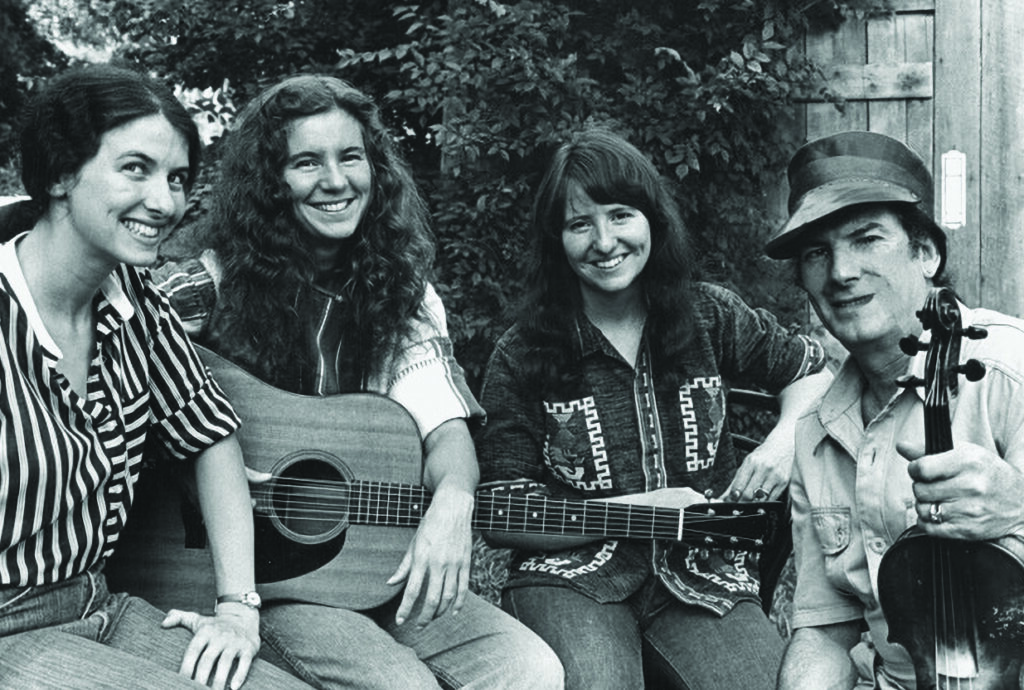
Jim Lunsford, writing at home on solo guitar, found unique backing in the voices of Nancy, Tomi, and Teresa. The daughters’ singing, arranged and led by Tomi, contained elements of country, bluegrass, and gospel. The precise, lush blend also referenced the sound of pop music’s legendary Andrews Sisters. Informally, the women might follow the 1938 Andrews hit “Bei Mir Bist du Schön,” with the gospel favorite “On the Jericho Road.” Led by Jim, the act called the Lunsfords became favorites at Nashville venues including the Old Time Pickin’ Parlor and the Exit/In, showcase rooms that had opened in the ‘70s. With one guitar and four voices, they presented Lunsford’s bag of new songs along with some material by Tomi and Nancy.
Music That Was Ahead of Its Time
“If they were really hitting it today, they’d be Americana and probably be a total smash,” Tom Collins said in early 2025. In 1977 and 1978, guitarists Mac Gayden and Chris Leuzinger, banjo man Bobby Thompson, and others appeared on full-band recordings of the Lunsfords at Music Row’s LSI Studios.However, the closest to a major label career for the Lunsfords came when influential Warner Bros. Records executive Mary Martin persuaded the label to finance tracks produced by John Simon, whose credits included albums for the ages by the Band, Janis Joplin, Simon and Garfunkel, and Leonard Cohen. The master-level sessions took place at Music Row’s hot Quadraphonic studios, where Neil Young, Joan Baez, and countless others cut hits. The recordings Simon produced there have not been released, but contain original, captivating tracks that could have made a major dent in American popular music.
It seemed that good things were about to happen for Jim Lunsford and his family. With assistance from Nashville booking agent Bobby Cudd, the quartet played for audiences for whom their sound was new and captivating, in New York City, Boston, and other destinations. After more than 30 years of making his living with the fiddle and bow, Jim backed the sisters and himself on acoustic guitar. “As a musician he was versatile,” Tomi wrote. “He had a great ‘ear.’ He was fluid, creative, and expressive. He could have a tender gentle approach to a song or a strong powerful approach using his deep resonating voice. He was a curious musician. He loved all kinds of music from Roy Acuff’s early wild days to Stephane Grappelli and Django Reinhardt to Fritz Kreisler.”
‘I Said, “What’s Wrong?”’
In the midst of great expectations, on Sept. 13, 1978, Jim Lunsford’s mountain spring of love, creativity, joy, and art tragically ran dry. It happened when Frances Lunsford was coming back from a jog near their Lynchburg house. Jim had gone on a walk. “When I came back up over the hill, there was an ambulance there,” Frances said. “I remember the sheriff, who was a friend of ours, was there, and I was wanting to see what was happening.
“He said, ‘You don’t want to go there.’
“And I said, ‘What’s wrong?’
“And he said, ‘Jim fell dead on the street.’”
The sudden attack had stopped the creative heart and career of James Camille Lunsford at age 50. “When Jim died, that was it,” family friend and adviser Bobby Cudd remembered. Jim Lunsford’s death came as he’d earned real success as a Music Row songwriter with cuts by country and bluegrass stars. “It was a shock because I never really took in the fact that he wasn’t going to be around,” Frances Lunsford said, more than 40 years later. Mama Frances kept the home fires burning for decades, up until her death in 2021.
In a Country Music magazine obituary, writer John Pugh summed up Jim Lunsford’s legacy: “It has been written that the only justification for existence is to leave something that will outlive you. Jim Lunsford’s music more than justified his life. His love for his fellow man multiplied it a thousandfold.”
The Lunsfords’ music endures
Tomi, Nancy, and Teresa Lunsford have been listening to the old Lunsford tapes with the idea of releasing them online or elsewhere. Jim Lunsford’s fiddling can best be heard via streaming services on dozens of tracks on a four-CD Gusto release, Reno & Smiley: Early Years 1951-1959. Numerous artists’ recordings of “Blue Ridge Mountains Turning Green,” “Streets of Gold,” “Dixie Breakdown,” and other tunes are available on streaming services.
In 1979, the Country Gentlemen recorded “Blue Ridge Mountains”for Sugar Hill with an all-star lineup that included Charlie Waller, Doyle Lawson, and Mike Auldridge. The Bluegrass Alliance also cut it. And versions of “Dixie Breakdown” have often appeared, by John Hickman, the New Kentucky Colonels, guitarist Tommy Emmanuel, several overseas bands, and even the bands of Lester Flatt and Porter Wagoner.
In 1995, the Cox Family, produced by Alison Krauss, included Jim Lunsford’s“Streets of Gold” on their Grammy-nominated Beyond the City album. The Cox Family’s “Streets of Gold” features background vocals that closely follow the parts Tomi created for the sisters on Jim’s 1970s demo of the song.
On a 2012 album, Hank Williams III, son and grandson of foundational country artists, recorded Jim’s song “Wind Blew Cold” in a rousing bluegrass-rock style.
For a sampling of The Lunsfords’ music, go to Lunsfordmusic.com. A compilation of The Lunsfords’ music is being prepared for release later this year by Delmore Recording Society (Delmorerecordings.com).
Where are they now?
Tomi Lunsford earned a degree in classical voice and has continued to perform locally, answer calls for studio sessions, write songs, and release albums. She recorded Jim’s “Wind Blew Cold” on 1997’s High Ground. Nancy, an artist, moved back to Middle Tennessee after living for decades in New York City and abroad, renovating an old barn as a workspace. Teresa lives in Montreal, heading her relocation company singing in choirs and “at the local country music club.” The lives and careers of the other siblings, several with music careers of their own, would require another story. Jim Lunsford lies buried in his beloved mountains, at Forest Lawn Memorial Park, Candler, North Carolina.Thomas Goldsmith’s publications include The Bluegrass Reader (2004), and Earl Scruggs and Foggy Mountain Breakdown: The Making of an American Classic (2019), University of Illinois Press, Music in American Life series. He’s a writer and musician who has known the Lunsford family since 1972.