A Half-Century of High Country with Butch Waller
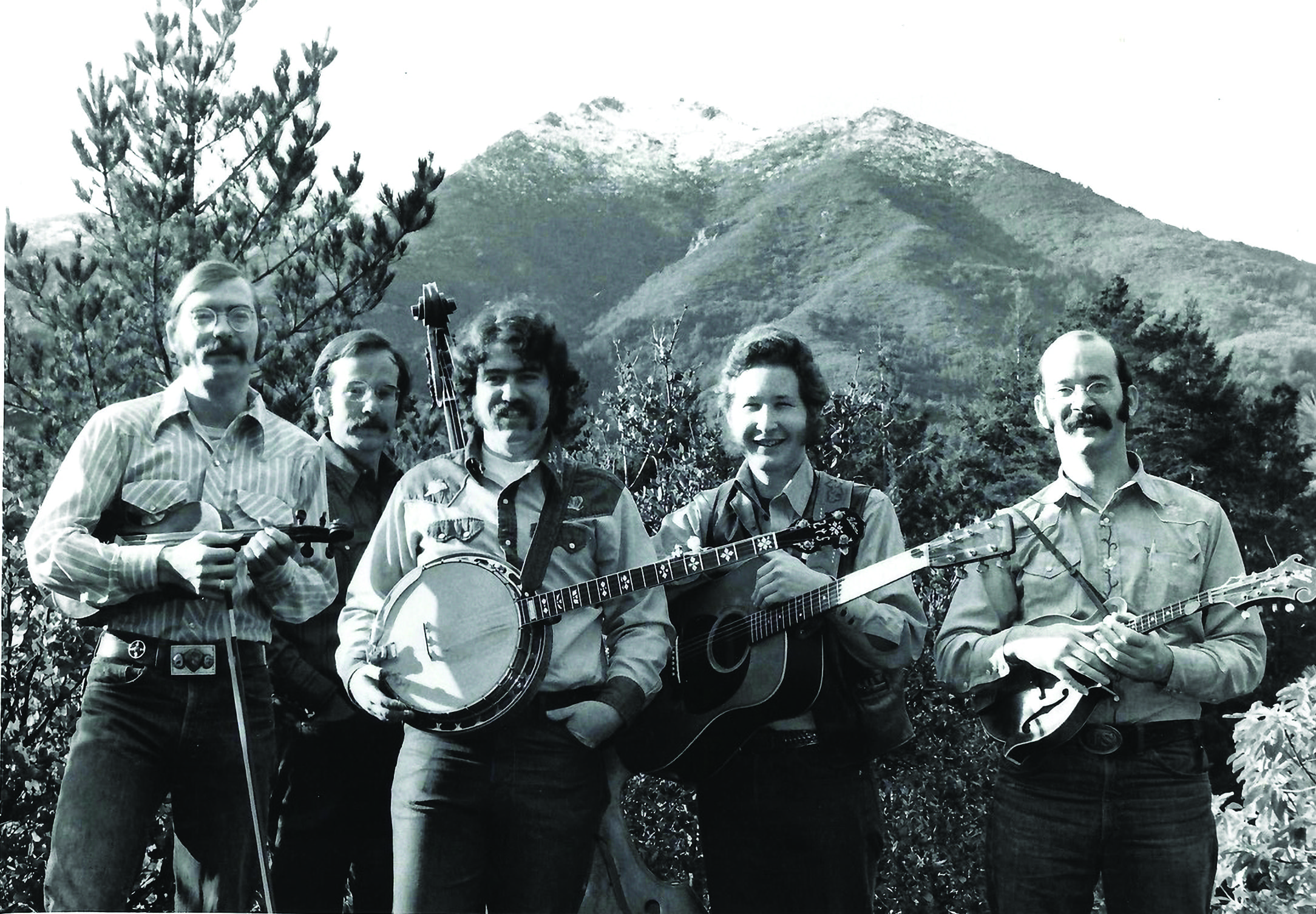
There aren’t many people who have led a working bluegrass band for 50 years. Bill Monroe did it, with his Blue Grass Boys. Mac Martin did it in Pittsburgh, with his Dixie Travelers. And Butch Waller has done it in San Francisco, with High Country, an outstanding traditionally oriented bluegrass band now in its fifty-third year.
High Country has been the standard bearer for traditional bluegrass music in northern California for that entire time. “I don’t know that this continues to be true,” says Butch Waller, “but people back east used to expect California bluegrass to be progressive, but it sure has produced an army of fine traditional players.”
High Country has recorded eight studio albums, toured Europe and the South Pacific, opened for the Grateful Dead and the Youngbloods, played at festivals across the country and influenced countless bluegrass musicians on the west coast. The one constant for the band throughout that entire time has been mandolinist Butch Waller.
Henry Waller III has been known as Butch since he was born on January 19, 1944, in Berkeley, California, just across the bay from San Francisco. He received a guitar—a brand-new Stella—for Christmas one year and he was off to the races.
“I started playing guitar when I was 11 or 12,” he remembers, “and, with my friend Herb [Pedersen], started playing and singing what we heard on the radio. We paid particular attention to the Everly Brothers and Buddy Holly, and later on to the Kingston Trio. Berkeley at the time was home to all kinds of folk musicians, a couple of stores that specialized in guitars and banjos, and it would have been hard to spit without hitting a coffeehouse.”
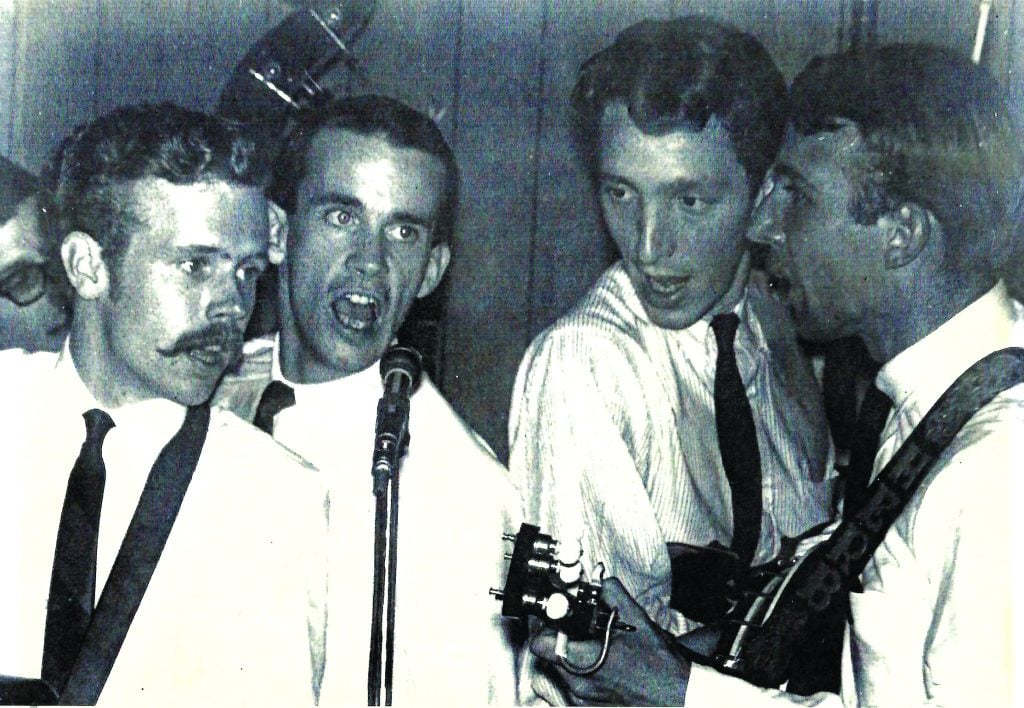
When the folk music revival hit the west coast in the 1950s, Butch and Herb began playing the commercialized folk music of the Kingston Trio, the Limeliters and other such groups. Pedersen bought a banjo and, with another high school friend, they formed a folk group called the Westport Singers. That lasted until they heard bluegrass for the first time.
“Our introduction to bluegrass came in the form of the Redwood Canyon Ramblers [Neil Rosenberg, Mayne Smith, Scott Hambly and Pete Berg], northern California’s first bluegrass band,” says Waller. “We heard them playing at a shopping mall one fine day, and were changed forever. I remember thinking, ‘I wanna do THAT!’ Our folk group gradually morphed into a bluegrass band called the Pine Valley Boys.” Waller started playing the mandolin at that point. “We moved to Los Angeles in 1963,” Waller says, “because we wanted to ‘make it in the music business’ and LA was where the action seemed to be. The band at that time was Herb Pedersen, Rich Conley, Dale Hollis and me. We lived in a two-bedroom house, just this side of starvation.
“We were taken on by the Troubadour to host their jam night, a job one step above janitor, and we did it for a few months. We also played a lot of other gigs around town and met the Kentucky Colonels at a big bluegrass show we played at the Ice House. We got to hang with the Colonels from time to time and learned a lot.”
The Pine Valley Boys didn’t play much outside California, but the band did have a couple of memorable trips “back east.” Butch recalls that, “A fairly shady promoter [Hal Zeiger], who was interested in the possible money-making potential of young folk-type acts at the time, was running “hootenanny” tours of groups around the country. He flew us to New York at one point and put us on a show at Carnegie Hall, I guess to impress us. It worked. “We also were on another tour called, “Hootenanny 63” (I think), that took us through the deep South, giving us an up-close look at Jim Crow. [Separate] black and white drinking fountains stuck in my young mind. That tour ended when we got the news that [President] Kennedy had been shot.” Two things happened in 1963 that would shape Waller’s music for years to come: he found the mandolin he has played ever since, and he met Bill Monroe. Since then, Waller has played a Gibson Lloyd Loar F5 mandolin, built on July 9, 1923. “I got it in 1963,” he says, “so it’s nearly 100 years old, and I’ve had the good fortune to have been playing it for well more than half its life. I bought it from the old-time musician and collector Harry West.”
Waller met Monroe at the Ash Grove, Los Angeles’ premier roots music club, where Monroe and the Blue Grass Boys were doing a multi-day booking. As Waller told journalist Dave Berry a year or so ago: “We had no money then and couldn’t afford more than one show, but the [Ash Grove’s] owner Ed Pearl—bless his heart—allowed us to hang out in the lobby every night where we could hear the music. My friend Sandy Rothman was there as well, and he knew Bill Keith, who was playing banjo with Monroe at the time. He met up with Keith…told him about my new old Gibson mandolin, and asked me to bring it in.
“Keith had a look and went backstage, returning with Monroe. Bill played on it a bit, handed it back to me and told me to play something. I fumbled through a fiddle tune, way too nervous to summon whatever skill I had at that point. I asked him about ‘Rawhide,’ and he showed me some things.” The Pine Valley Boys broke up in 1967, when Herb Pedersen left to play with Vern & Ray, a highly regarded traditional bluegrass duo based in Stockton, California. Waller enrolled in art school and didn’t play much music for the next couple years, until a friend coaxed him back into the fray.
“In August 1968,” Waller relates, “Mylos Sonka and I got together and did some shows under the name High Country. Mylos and I were booked at the Freight and Salvage Coffee House in early 1969, when weeks before the gig, Mylos was seriously hurt in a car accident. I pulled together a band, played the show and went on from there.
“I met Rich Wilbur at art school in 1967, and after playing the Freight show, Rich and I played some with various pickup bands. Peter Wernick was in town for that summer and played banjo. In 1970, Ed Neff and Bruce Nemerov were hot to pick after returning from the Fincastle, Virginia, festival and became full-time “HC boys.”
“Chuck Wiley came on as bass player soon after, to be followed by Lonny Feiner. Rich Wilbur left the band in mid-1971 and was replaced by Chris Boutwell. Sue Ericsson sang with us on many shows while Rich was in the band and was on that album as well.”
High Country recorded its first album, also called High Country, for Raccoon Records in 1971. The band on the record was Waller (mandolin; lead and baritone vocals), Bruce Nemerov (banjo; bass on one cut), Ed Neff (fiddle; mandolin on one cut; lead vocal on one cut), Rich Wilbur (guitar; lead and tenor vocals), Lonny Feiner (bass; guitar and lead vocal on one cut) and Sue Ericsson (tenor vocals). Rich Wilbur left during the recording of the album and was replaced by Chris Boutwell, who played on five cuts and sang lead on two.
The album was produced by Banana (aka Lowell Levinger), whose day job was playing guitar and electric piano with the Youngbloods, best known for their anthemic 1969 hit, “Get Together.” “Banana approached me at a gig someplace 1970,” Waller remembered, “introduced himself, and said that the Youngbloods were starting their own record label, Racoon Records, backed by Warner Bros., and would we be interested in doing some recording. Sure enough, six months later, he called me, and the album High Country came out in early ’72, followed shortly by Dreams. Racoon also released a High Country single, pairing Waller’s original tune “Pow Wow” with a cover of the Del McCoury song “Dreams.”
“We also did our first tour in ’72, which took us all the way to Vermont. By virtue of the fact that the album was distributed by Warner Bros., it was well distributed. Many people here and in Europe have said that High Country or Dreams was their first bluegrass record.” Being a bluegrass band in San Francisco in the late-1960s and early-1970s was different from being a bluegrass band in, say, Cincinnati. The audiences were different—younger, higher, urban and non-southern—and the venues were different, too.
“We opened for the Grateful Dead at Winterland [Ballroom] in San Francisco and at the Palomino Club in Los Angeles, and also played some tour dates with the Youngbloods,” says Waller. “The audience responses ranged from tepid to enthusiastic. We played a lot of community colleges in California and Arizona and were always well received. I remember playing at Humboldt State [in California] when, after he sang ‘California Blues,’ a young woman rushed the stage and kissed Lonny smack on the lips.”
The Bay Area bluegrass scene back then was vibrant and multi-faceted. Bluegrass radio programs were beginning to appear on local public and community radio stations. Clubs like the Freight and Salvage and Paul’s Saloon presented both local and touring national bands. And there were dozens of local bluegrass and old-time country bands: the Styx River Ferry, the Phantoms of the Opry, Dr. Humbead’s New Tranquility String Band, the Diesel Ducks, the Arkansas Sheiks, and many more. “My memories are probably highly romanticized,” Waller admits, “but that time period was (for me) really the ‘golden era” of bluegrass in the Bay Area. Paul’s Saloon opened in ’70 or’71, and we started playing there sometime in ’72. Paul not withstanding, it was a great scene—more than a gig. It was home to bluegrass in San Francisco and a comfortable hangout.
“We played there three nights a week at one point, and we were one of many bands who honed their chops on Paul’s stage. Bill Monroe and Ralph Stanley came by and played after their shows when they were in town, and J.D. Crowe and the New South, the Bluegrass Cardinals and other touring bands had gigs there.”
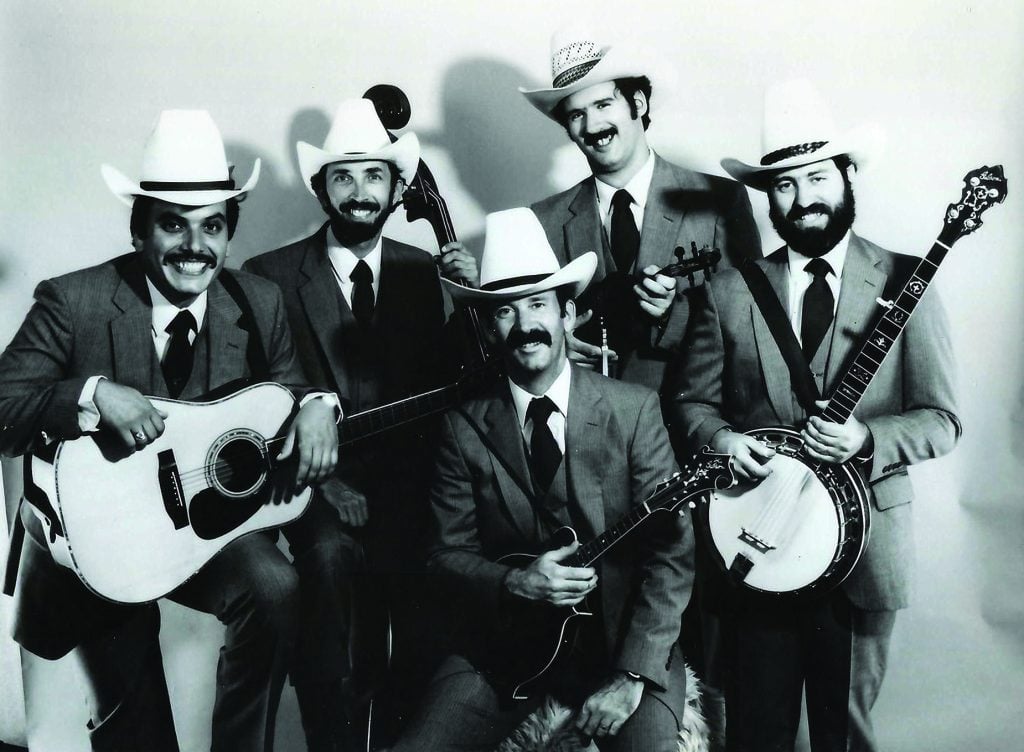
High Country took a few years’ hiatus from recording, but returned in 1979 with Rough and Rocky (Storm). By the mid-1980s, the band had recorded two more albums Home to Me (Swallow, 1984) and Blue Highway (Turquoise, 1985). Each album welcomed new players to the High Country ranks. Rough and Rocky introduced banjo picker Larry Cohea, fiddler Jim Moss and brothers Dave and Kevin Thompson, on guitar and bass, respectively. Home to Me saw the arrival of Keith Little (guitar), Jack Leiderman (fiddle) and Steve Pottier (bass and lead guitar). The only newcomer on Blue Highway was guitarist Alan Senauke, though fiddler Ed Neff returned to the fold for this album.
High Country has served over the years as a training ground for many bluegrass musicians, most but not all from California. People who have played alongside Waller in High Country have gone on to work in the New Riders of the Purple Sage, Hot Rize, the Country Gentlemen, the Nashville Bluegrass Band and the Vern Williams Band and bands led by Ricky Skaggs, Kathy Kallick, John Reischman, Laurie Lewis, Chris Jones and Bob Paisley.
Larry Cohea, a native of Springfield, Tennessee, who grew up in Bakersfield, California, joined High Country in 1972. He started as the band’s bass player, but moved six months later to the banjo, where he’s been ever since. In addition to being a great boss and bandleader in Cohea’s opinion, Butch has been a patient and sharing mentor to him over the years. “I learned to play bluegrass in High Country,” says Cohea. “I was so green when I joined the band. I had mostly just played at home, never in a band. But Butch, and Ed Neff, already knew it—how bluegrass works in a band, how to take solos, how to play back-up—and they played the exact kind of bluegrass that I liked to play, that traditional Bill Monroe and Flatt and Scruggs kind of stuff. Butch was always so patient with me as I was learning.”
Though High Country has never been a full-time touring outfit, the band has covered some ground in its day. “We’ve gotten to tour in Europe several times,” Waller says, “and Ireland has always been great fun with wonderful audiences. We also played in the South Pacific and those gigs were some of the strangest—for us and for those audiences that were just totally unfamiliar with the music. We were the backup band for Mac Wiseman on one of our trips east, and for Kenny Baker and Josh Graves at the Grass Valley Midsummer Festival.”
Steve Pottier, who played bass and guitar with High Country throughout the 1980s and early ‘90s, remembers the band’s first European tour as especially rewarding. “What was particularly gratifying about the trip,” he says, “was how well we were received. Folks from all walks of life, from businessmen to punk rockers, would come to see us with no preconceived notions about our music being ‘hillbilly’ and therefore not real music. It felt like they would listen and take it in.”
High Country has performed at numerous prestigious bluegrass festivals around the country, including Bean Blossom, Bill Monroe’s annual festival in Brown County, Indiana—ground zero for the Cult of Monroe. “I guess it was 1980,” Butch remembers, “when our fiddler at the time had a friendship with Kenny Baker, and while visiting Kenny, met Bill and told him about High Country. So, I called Bill and we set it up. We played there three different times.
“I had met Bill in 1963, but I doubt he remembered me in 1980. However, over the following years, a friendship developed, both back there and when Bill would tour out here. He never offered an opinion of the band that I know of but always seemed to be supportive. He had us out to the farm for a picking session one of the times we were back there.”
High Country’s other notable festival appearances include Gettysburg (PA), Music in the Mountains (Summersville, WV), Bill Monroe’s bluegrass showcase that was held during DJ Week in Nashville, and most of the festivals in California, including the Midsummer Bluegrass Festival and the California Bluegrass Association’s Father’s Day Festival (both in Grass Valley, CA).
High Country has recorded three albums since 1990: Sunset on the Prairie (Turquoise, 1990), The Earthquake: Bluegrass from California (Strictly Country, 1997) and Perfect Companions (Squirty, 2009). As was the pattern, each album introduced a new HC boy or two. Sunset on the Prairie welcomed to the fold dobro/guitar player Jim Mintun and fiddlers Greg Spatz and Tom Bekeny. Earthquake introduced bass player Glenn Dauphin. Butch’s brother Bob Waller was aboard on guitar for Perfect Companions.
The First 25 Years, released on Big Chicken Records in 1994, collects a whopping 44 songs and tunes from the High Country’s first quarter century, drawing from the band’s first six albums. In his liner notes, album co-producer Sandy Rothman says the double-CD was not meant to be a “best of High Country,” but it sure sounds that way to me. It’s a perfect introduction to one of the west coast’s premier bluegrass bands and the primary keeper of the high lonesome flame in northern California.
In addition to the albums with High Country, Waller has also recorded a pair of solo albums, Golden Gate Promenade (Rebel, 1999) and Waltz Collection (Big Chicken, 2015), and an album with his younger brother, Bob Waller, The Old Photograph (Strictly Country, 2008). The solo albums are all-instrumental projects featuring a number of Butch’s original tunes, with support from some old friends.
Golden Gate Promenade is a truly great showcase both for Waller’s Monroe-inspired mandolin playing—there’s some Bobby Osborne in there too—and his ability to write old-sounding tunes. In addition to the HC boys, the cast of players on the album includes some of the west coast’s finest pickers: Herb Pedersen, Kathy Kallick, Sandy Rothman, Laurie Lewis, Brian Godchaux, Jim Nunally, Avram Siegel and Ed Neff.
Waltz Collection is, not surprisingly, a collection of six waltz tunes written by Butch. It’s a beautiful recording and a bit of an outlier in a world where mandolin players are often rated mostly by how many notes-per-second they can play and how far outside they can go. In his liner notes, guitarist Jim Nunally writes, “Butch Waller is to California bluegrass what Bill Monroe is to Kentucky bluegrass…not only a virtuoso instrumentalist, [but] also a crafter of fine songs.”
Brothers Butch and Bob Waller have been playing music together for decades (and Bob now plays in High Country), but The Old Photograph is their first record together. It’s the most unexpected, surprising album in Butch’s oeuvre, and it is superb. Really good. While a couple of cuts would have fit easily on a High Country recording, the bulk of The Old Photograph is old-school brother duets, circa 1940: guitar, mandolin and two voices.
While High Country is most definitely a “traditional” band, Waller has always stressed original material in the band’s repertoire. He’s contributed dozens of originals to the band’s recordings, both songs—“Blues for Your Own,” “Blue Highway,” “A Voice on the Wind,” “Left Here Alone,” and “Sunset on the Prairie”—and tunes: “Pow-Wow,” “Big Hendy Grove,” “Battle Mountain,” “Arachnid,” “Long Hollow Getaway,” “The Long Road” and “Redwood Country.” HC boys including Rich Wilbur, Keith Little, Steve Pottier, Glen Dauphin, Alan Senauke, Jim Mintun and Tom Bekeny have also had songs recorded by the band.
Butch’s song “A Voice on the Wind” was covered by Hot Rize on its album Take It Home. “Blues for Your Own,” the first song Waller wrote, was recorded by Sally Van Meter and then heard by the producer of the mid-1980s TV series Northern Exposure, who used a snippet of the recording on the program. Though it was barely audible, playing from a radio or jukebox deep in the background, it earned a decent licensing fee. “That paid the rent for a while,” notes Butch.
Keeping a band together for fifty-plus years is an astonishing feat, requiring an array of talents. Butch has needed to be a bandleader, friend, teacher, diplomat, booking agent, keeper of the vision and momentum, sounding board, the band’s institutional memory and much more. Plus, as Larry Cohea puts it, “Nobody can beat him on Monroe-style mandolin. He’s a great baritone singer and he’s the finest mandolin player you could play with—great chop, great rhythm inventive tunes and solos. He plays right in the pocket.
“Butch is the fairest, most democratic bandleader I’ve ever played with. He’s always been really giving and sharing. I’ve never seen him lose his temper. And I can’t remember a single heated argument within the band during my time. It’s the friendliest band I’ve ever been in. And that’s all down to Butch. He’s just a great boss.” Steve Pottier seconds that notion: “Butch was a great bandleader in a mostly democratic band. He took care of business, almost to a fault. If someone hired High Country, Butch made sure we always held up our end of the deal, even though a few promoters did not hold up their end. Butch made sure to feature every member of the band, and he encouraged all of us to write songs and create arrangements.”
Now retired from a career in the addiction treatment field and with the band on COVID hiatus, Waller has had time to just play music for fun. “I have been getting together recently with my brother Bob and Sandy Rothman to pick the high lonesome. Sandy is a seasoned player and singer in the lineage of Blue Grass Boys. Having toured with Bill, he knows bluegrass from the source. It has been a good learning experience.”
When asked if High Country was still active, Waller replied, “Is anybody, in the age of COVID? As with most musicians, the pandemic has not been kind. I feel bad for those who are trying to make a living on music; it was hard enough before COVID. But we have only played one show in the last two years. We have a couple of gigs coming up, and with the virus seeming to be slowing down, we’ll see what develops.
“I can’t say I ever had an intent or aim other than generally wanting to play bluegrass. Since my late teens, I’ve wanted to play bluegrass mandolin, and I’m still working on that. Bluegrass is a much bigger world now, and the name strains under the load.
“So, the bluegrass I know and love hasn’t basically changed much. But the music that most people associate with the term has evolved, as music does. The young people coming up are pretty amazing musicians, and I am hopeful that those who enjoy this music will also be interested in its beginnings.”