20 Years of Celebrating the Music and Culture of Southwest Virginia
I have spent many hours driving through the Southwest Virginia region. In recent years, that has meant traveling to the Galax Old Fiddlers’ Convention on the east side of this unique section of the commonwealth, or while on another journey, spending three days at the newly-created Blue Highway Fest in Big Stone Gap, which is located in the ultra-beautiful Powell River Valley in the western corner of the state.
In both cases, my travels included the now-familiar yellow, green, brown and light blue roadside signs that highlight The Crooked Road Music Trail. In the first road trip, when I drove out of Western North Carolina on Route 16, following the historic New River to the Virginia border, I soon hit Route 58, which leads to Galax. When you make that right turn heading east, you soon see a Crooked Road Music Trail sign on the right.
When I drove to Big Stone Gap, after once again leaving Western North Carolina and crossing the corner of East Tennessee while heading north on Route 23, the Crooked Road Music Trail signs appeared yet again as I crossed the Virginia border.
Many of those signs lead to pullovers that feature a wayside exhibit. These historical markers display information on the history of the music that was born in that particular area, and some of them include a five-minute audio recording that enables visitors to hear the music described at the roadside stop.
A little over two decades ago, however, the concept of the Crooked Road Music Trail was nothing more than an idea. Under the leadership of founders such as Joe Wilson, the trail is now celebrating its 20th anniversary as a go-to roots music destination. There is no substitute for seeing and hearing the distinctive live music of a particular region of the world, and that is where this trail excels.
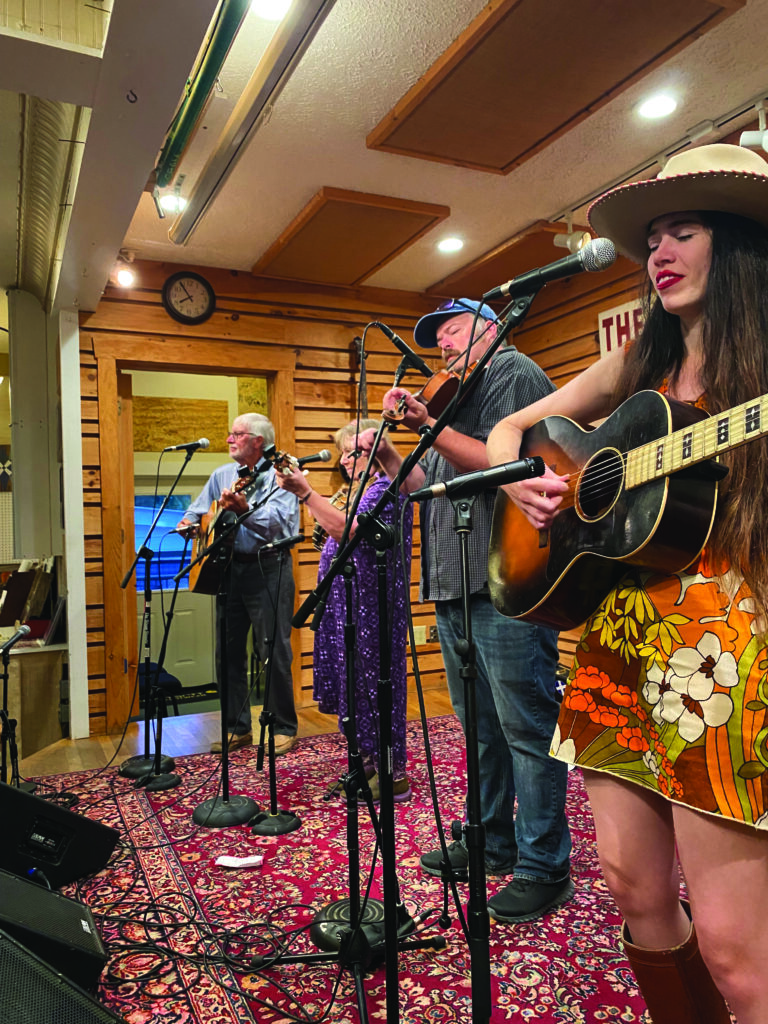
These days, what is officially called The Crooked Road – Virginia’s Heritage Music Trail has become a cultural pathway that features a wide array of destinations featuring live bluegrass, old-time and country music as well as flatfoot dancing and square dances, and travelers from around the globe are beginning to notice.
Some of the bigger music and arts venues found on The Crooked Road include the Ralph Stanley Museum in Clintwood; the Floyd Country Store in Floyd; the world-famous Carter Family Fold in Hiltons; the Birthplace of Country Music Museum in Bristol; the Country Cabin II in Norton; the annual Old Fiddlers’ Convention and the historic Rex Theater in Galax; the Southwest Virginia Cultural Center and Marketplace in Abingdon; the Blue Ridge Institute and Farm Museum in Ferrum; and the Blue Ridge Music Center located in-between the Blue Ridge Parkway and I-77.
Along the trail, there are also a ton of small-town music jams and dances where visitors can watch the musicians or join in and dance or play some tunes. Informal dance halls abound along the trail as well.
The key to the success of The Crooked Road is that the whole route has become a true journey unto itself—where the music and art of Southwest Virginia that has been cultivated in those mountains for centuries can be experienced and accessed.
In 2014, The Crooked Road – Virginia’s Heritage Music Trail was created as a non-profit 501(c)3 organization. The trail is officially 333 miles long and includes nineteen counties, four cities, over 50 towns, five regional planning districts, two tourism organizations and over 60 affiliated music venues.
Tyler Hughes is the Executive Director of The Crooked Road organization. The Big Stone Gap native is also a musician, dancer and dance caller who is a proud graduate of the Bluegrass, Old-Time and Country Music Studies program at East Tennessee State University (ETSU). Along with being the leader of The Crooked Road, Hughes is also an adjunct professor at Mountain Empire Community College.
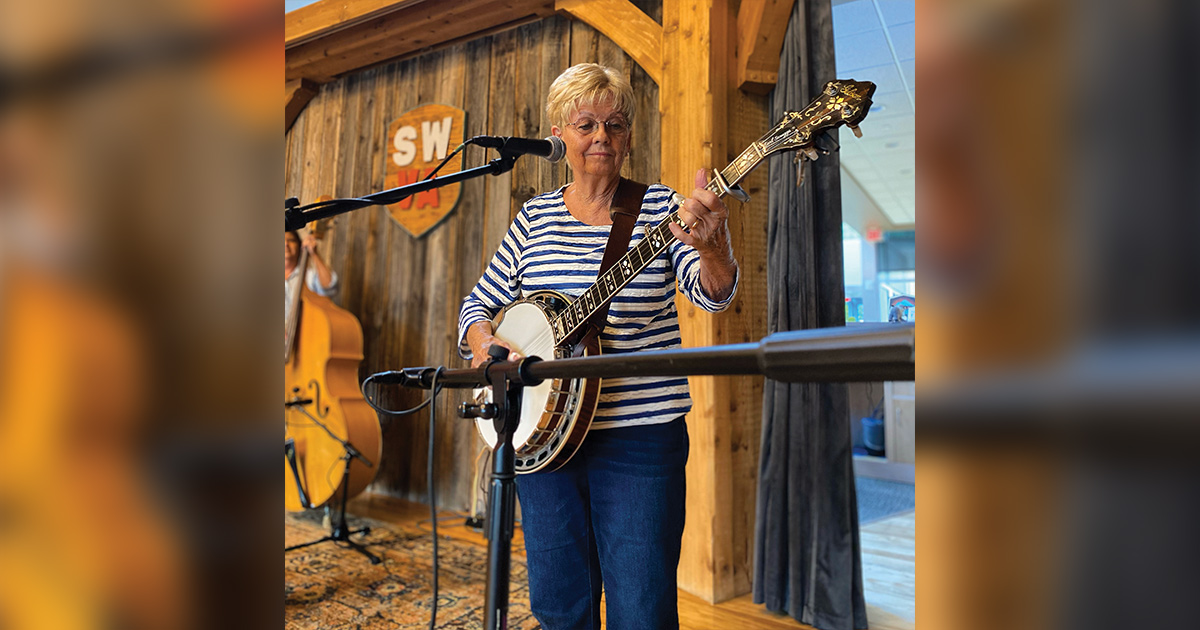
“I became the Executive Director in August of last year, although I’ve been involved with The Crooked Road organization for a long time, serving on the board years ago and helping with a lot of the educational programming that they offer,” said Hughes. “And, I play the clawhammer banjo and can call dances, so I have performed at Crooked Road events over the years as well. I took part in the Crooked Road On Tour series, where we took two or three acts and traveled and played across Virginia. I graduated from the ETSU Bluegrass and Old-Time program in 2015 and while I was there, I played with the school’s Old-Time Pride Band and also helped to organize contra dances and square dances on campus.”
Mostly, however, his job with The Crooked Road organizations keeps Hughes very busy, especially as the project continues to expand and grow in popularity. “A lot of people may overlook what is going on in the far corner of Southwest Virginia,” said Hughes. “We really do have such a rich multitude of things to experience here. I personally got into this music about 20 years ago when I started learning how to play the guitar and the banjo. I knew about The Crooked Road when I was growing up, so it has always been a part of my life and that is why it is a true honor to now lead this organization. I’ve always been a proponent of Southwest Virginia and the music and culture here and what it means to the world, so I feel like I have a big responsibility when it comes to The Crooked Road, for sure.”
The goal of Hughes and The Crooked Road team is to keep it real and to not turn the music and culture of Southwest Virginia into an amusement park side show. “That is what I like to tell people who are thinking about coming to experience the festivals and venues here in Southwest Virginia, as in you are going to get a truly authentic experience,” said Hughes. “We are trying to showcase what life is really like here. The way that people get together and visit with one another and play music together, we want our visitors to be able to get immersed in that atmosphere and not have to deal with an overly-commercialized experience. That way of doing things is something I brought to the table because I grew up going to places like the Carter Fold and The Country Cabin and the Dock Boggs Festival. So, I realized and recognize that all of these places that we now consider to be destinations for visitors began as community and cultural institutions. They started as authentic, home-grown places run by real people, and we hope to keep it that way.”
Outside of the festivals and venues, visitors of The Crooked Road can choose to briefly stop at the aforementioned wayside stations to get even more insight into the region. “Now that we have come out on the other side of the pandemic, we see things like the Blue Highway Fest being started, so there is still a great deal of interest and investment when it comes to The Crooked Road area by the communities and local musicians and the event organizers that live here,” said Hughes. “It is an encouraging thing for me to see that 20 years on, people are still proud to be a part of The Crooked Road. One of the hallmarks of our progress as an organization has been that when you do drive throughout the region, you will see those road signs with the big banjo on them that let you know where you are at. In almost every community, you can stop and visit a roadside kiosk and find out what happened there musically throughout the history of that place.”
The plan is working, and the visitors continue to come in from near and far.
“I was just at the Carter Fold last Saturday night and there were people there from Switzerland and from Panama,” said Hughes. “They come to Southwest Virginia because we have such a high concentration of talent here, and there is so much musical history that can be found in a small area and that makes for a really enticing place to explore. That is why we certainly believe in investing in the next generations of old-time, bluegrass and country music musicians that we hope will keep rising up.
“That is why we work closely with the Junior Appalachian Musicians program, and we gladly support them,” said Hughes. The JAM instructional program is one of the ways that the music is passed on to younger generations, in addition to families doing so. “We also host our Youth Music Festival every year in Abingdon, Virginia, which has transformed in recent years into a youth fiddler’s convention. That way, we can give younger folks a taste of what it is like to compete at a bigger music conventions, and to experience the camaraderie that comes from those events.”
The Junior Appalachian Musicians program was started in western North Carolina and is now headquartered in Independence, Virginia. The organization hosts weekly and bi-weekly instructional classes for youth where they get to learn how to play bluegrass and old-time music. With about 1,000 students being taught at any one time, JAM hubs are found in over 60 small towns and communities in North Carolina, East Tennessee, Upstate South Carolina and Southwest Virginia with new hubs being created now in Kentucky and West Virginia.
In the Crooked Road area of Southwest Virginia alone, JAM instructional music hubs can be found in places such as Big Stone Gap, Wise, Wytheville, Galax, Floyd, Bland County, Bristol and more. Information on the program can be found at jamkids.org.
On top of the music and culture aspects, any trip to Southwest Virginia puts you in some of the most beautiful mountains in the Appalachian chain, and that includes lakes and rivers and hikes, such as the wonderful mountain trail that leads up to a unique place called The Channels that features an unusual array of miniature slot canyons just north of Abingdon. “I’m just trying every day to invite folks to come and dance, sing and play music with us, or just to watch great musicians perform,” said Hughes. “It is a really immersive experience. You can just listen if you want to, yet the dance floor is always open. And, we have other attractions like the Wayne Henderson Center for the Arts in Marion, named after the famous musician and luthier, where you can learn to build a guitar with Wayne or other fine luthiers from the region. If you are anywhere near Coeburn on a Friday night, famous for being the small town down the mountain from the family farm where IBMA Hall of Famers Ralph and Carter Stanley grew up, you will experience flat foot dancing and performances by string bands on occasion. And the road goes on from there.”
Hughes is thrilled to be able to work for and lead such an important home region organization.
“I didn’t really feel like I was removed from anything while growing up in the small town of Big Stone Gap, although now that I am an adult and can reflect on it more with a level head, I feel fortunate to have been raised here,” said Hughes. “Not only is it a beautiful place, nature-wise, the town really helped to make me the person that I am, with the values passed on and the community and the culture and the art being a big part of my life since I was a teenager. That has all really shaped my viewpoint of the world and of the kind of person that I want to be. So, I feel really fortunate that I grew up in Southwest Virginia.”
More information on directions, music venue schedules and festival dates on The Crooked Road – Virginia’s Heritage Music Trail, please go to thecrookedroadva.com.