20 for 20
Two Decades of Life, Music, and Personal Growth for the Infamous Stringdusters
“Life is a constant journey, always changing, always presenting challenges and always forcing you to evolve,” says Infamous Stringdusters banjo-picker Chris Pandolfi. Pandolfi is reflecting on twenty years of the Infamous Stringdusters as a band. In those twenty years, the Stringdusters established themselves at the forefront of the progressive jamgrass bluegrass scenes. Even with all their success, just as important to the Stringdusters as their musical development over those twenty years is the band’s personal development through their time together in the Stringdusters. That personal development has been one of the most important influences on the music they make and the band they have become.
“We’ve been a band through some very formative years of our lives,” continues Pandolfi, “from our mid-twenties into our mid-to-late forties. We even have a few guys who are hitting the big fifty, which is crazy to think about, especially because we still have so much energy and passion for the music. But we have changed so much as humans, and that is reflected heavily in our art. The themes, the way we play and approach the show, and even the overall goal of being in a band have all evolved. These days, we strive primarily to bring people together and bring joy into the world. We have never needed it more.”
Pandolfi’s bandmate, fiddler Jeremy Garrett, agrees, “Just like a marriage or friendship, for a band, things can and will change, and you can never stop that, so for us it seems best to embrace that energy. What began as an outlet for all of us to bring our music to light and new songs into the world has become a more refined craft between each one of us, and a lot of that has to do with giving each other the trust and freedom to stretch out and push ourselves musically speaking and hopefully beyond.”
The Stringdusters came together in 2006, when music students Pandolfi, Dobro player Andy Hall, and guitarist Chris Eldridge first met. The three soon relocated to Nashville and added Garrett, mandolinist Jesse Cobb, and bassist Alan Bartram. Over the next couple of years, the band’s lineup was in flux, as they added bassist Travis Book to replace Bartram, replaced Eldridge, who departed to join the Punch Brothers, with guitarist Andy Falco, and in 2011 saw Cobb leave the band. The chemistry quickly crystallized among Book, Falco, Garrett, Hall, and Pandolfi, and it was clear they had something special with the lineup. “Like most bands starting out, we were young and very excited about music and the chemistry we had together,” says Pandolfi. “We just loved playing and the prospect of being in a band. We got a great response from the people who came out to see us early on, and that definitely added fuel to the fire.”
The unique chemistry of the band was instantly apparent to Garret. “We knew early on in forming this group that this was going to make a really great band,” says Garrett, “We could tell the energy for this group was going to be high. Turns out we were right. It was the right combination of guys and attitudes and entrepreneurial spirit that would be what it takes to make something like this fly.”
The Stringdusters found success quickly, but also realized success would be short-lived unless they created a forward-thinking plan that would allow the band to survive the long haul and not simply become the flavor of the month band. Garrett recalls, “Early on, we were headlining bluegrass festivals pretty quickly. A lot of times we would have top billing and such, but in a way, we kind of needed more room for growth than that could allow. So, we ended up going back to the clubs and doing word of mouth, selling hard tickets, and creating our own crowd and demand for what we do in order to build value for our ‘business.’ I remember those being some pretty lean years, and sometimes we questioned what we were doing, but it turned out it really paid off in the long run to do it that way.”
It would pay off in 2007 when the band won the International Bluegrass Music Association’s (IBMA) “Song of the Year,” “Album of the Year,” and was named “Emerging Artist of the Year.” It was a huge accomplishment for a band less than two years old and showed the unlimited potential of the band. “Winning those IBMA awards was a huge shot in the arm,” says Pandolfi. “We really knew we had something, and we had a scene that was propping us up, and that scene had a lot of built-in fans that we quickly gained access to after winning those awards.”
Even with that initial recognition, the Stringdusters recognized that while their music was clearly rooted in traditional bluegrass, their approach to songwriting and their improvisational live shows had an even greater appeal to fans more attuned to a jamband sound. Pandolfi remembers, “We figured out that we could have open-ended sections in the music where we would take chances and improvise as a band, and it was in those moments that the show truly came to life. Not always, because this part of the music is risk-reward, but it opened the door to new heights, in terms of the energy of the shows.” For the Stringdusters, the defining moment of what was possible came to life in 2010 while on tour opening for Railroad Earth. “Those shows had a huge impact on us,” says Pandolfi. “We were playing in front of open-minded fans, who were standing and dancing, and adding to the energy of the show. A lot of what we experienced early on at shows was more subdued. It was more of a bluegrass crowd. Nothing against those fans, but what they do primarily is sit and observe and appreciate the music. But those shows opening for Railroad showed us that there was something bigger out there, and that the music could come to life if the audience played more of a part in the concert. It really sent us on a new trajectory in terms of the music that we were writing, how we brought that music to life in the shows, and what those shows could potentially look like.”
Bassist Book agrees, “We had been playing bluegrass shows to small groups of people sitting, and this was our first big ‘rock’ show, and we were like ‘this is what we’re going to do now.’” Their live shows became a raging swirl of energy and improvisation, with each night a wholly unique event, with the setlist and sonic nature evolving and changing from show to show. For the Stringdusters their ever-changing, always evolving live shows have become a point of pride. Pandolfi says, “If any of us show up to tour unprepared, you are going to get left in the dust because there are gunslingers everywhere you look on stage.”
The Stringdusters would find a home in the progressive jamgrass scene among bands like Leftover Salmon, Yonder Mountain String Band, Greensky Bluegrass, and Billy Strings, who, while rooted in tradition, have a rock ‘n’ roll edge in their music and approach to the business. Success would continue to come for the Stringdusters. Collaborations with some of the band’s legendary idols, like the Grateful Dead’s Phil Lesh, members of Phish, and Ryan Adams, would prove to be true “pinch me” moments for the band.
In 2017, the Stringdusters would find mainstream recognition when they won the Grammy for Bluegrass Album of the Year, for Laws of Gravity. “Viewed through one lens, awards do not really mean that much. The real gratification is in the music and the connection with the fans. But there is a legitimacy that comes from winning a Grammy that you cannot put a price on,” says Pandolfi.
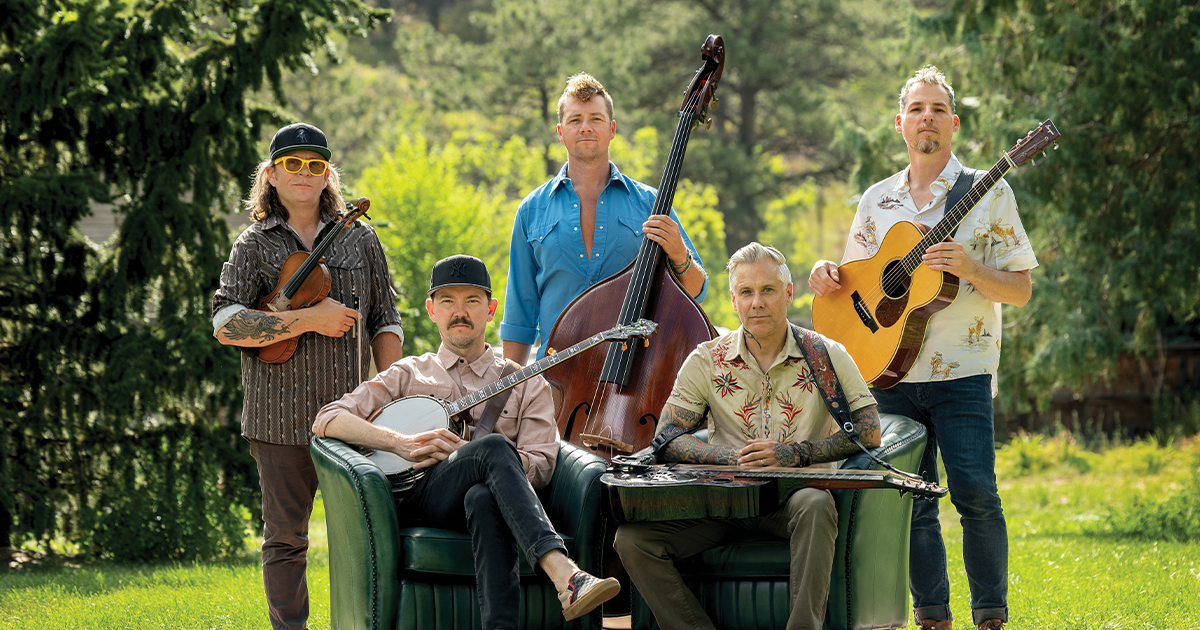
Despite the recognition, the band never let up. Since 2007, the Stringdusters have released twelve studio albums, played over 1600 shows, and established themselves as leaders of the progressive jamgrass scene. Much of their success and longevity can be attributed to what Book calls, “stubbornness and a shared vision.” But for a band to achieve what the Stringdusters have, and more importantly, to create the lasting body of work they have, there is more than just simply “stubbornness.” At the core of the band’s longevity is the personal relationships between Book, Falco, Garrett, Hall, and Pandolfi that have powered the band through twenty years. While they do not always share the exact same vision, they deeply respect and value each other’s vision. Garrett says the Stringdusters are, “five people who are like-minded and close like brothers.” It is a band where everyone feels that their voice is heard. “We are a true democratic band,” says Pandolfi. “I have one musical focal point, but that is just not us. We have five independent artists who all write and sing, and play. We share the spotlight, and we share the responsibilities. I think that is a huge part of what has kept us together. It is not always easy, and we have definitely had to work on it, but we are also very lucky to have a pretty natural balance in that way.”
As the Stringdusters approached their twentieth anniversary as a band, they conceived an ambitious way to celebrate two decades of the Stringdusters. “We wanted to record something very special for our fans,” says Garrett. “We decided it was best to go ‘all out’ in a more in-depth and lengthy project when everything in the industry seems geared towards short-release content, records, and what have you. We were going for a much richer approach with this record to go along with us celebrating twenty years as a band and give the people twenty of our absolute best songs.” For a band as prolific as the Stringdusters, who tour endlessly, regularly guest with other bands, while still indulging in their own various side projects, the thought of such a massive project seemed par for the course.
The idea for such a big album evolved naturally as everyone in the band had been writing steadily since the last record, and the group had a lot of material from which to work. The Stringdusters knew they wanted to push the envelope in terms of writing, and that meant writing more songs. “There was no preconception,” says Book, “we were all always chasing the muse, or staying open to it, trying to write whatever comes to us.” Their muse proved plentiful, an endless fountain of music and stories, allowing the Stringdusters to write more songs for this album than for any other of their albums. Previously, they may have written fifteen or twenty songs and narrowed that down to eleven or twelve for the record. For this record, they wrote close to fifty songs and narrowed it down to twenty.
“When we started out,” explains Pandolfi, “we had no idea that the album would be so long, but as the songs piled up, and we started to make arrangements for them, we just had a lot of good material on our hands. That informed the vision, to create this longer piece of art that was not about fitting into any preconceived notion of what an album is, or how long it should be, but rather loading the listeners up with new stuff.” Garrett concurs about the natural evolution of the album, “I don’t think any of us had that in mind as we were writing our songs for this, but once we started seeing how things were developing and how many great songs were coming together, we pushed hard for twenty songs. We weren’t sure if we were going to be able to make it because of time constraints and everything going on in our lives, but we really pushed for it and we think it was very worthwhile in the end when we were able to pull it off.”
The resulting album, 20/20, is a worthy testament to the Infamous Stringdusters’ twenty-year journey as a band. It showcases all the elements one has come to expect from the Stringdusters: unparalleled musical virtuosity, thought-provoking lyrics, a relentless, infectious energy, and music that transcends genre. More importantly, 20/20 highlights the personal growth and evolution of the Infamous Stringdusters that has powered the band over two decades and made them one of the most important bands of the progressive jamgrass movement. It is an album the band has taken immense pride in, knowing they have crafted a grand statement with twenty songs for twenty years.
For Pandolfi in particular, he felt the album was special personally, as it is the first time he has written for an album. “This album is cool for me because it is the first album that features songs that I’ve written. I have written many tunes or instrumentals for the band over the years, and I have sung some, but we have a bunch of singers, and only a finite amount of airtime. But with a goal to write great songs, I jumped into the mix because I knew I had something to say on that front. I wrote a song for this album called ‘Up from the Bottom,’ that is very personal. Travis sings it, as it is better suited to his voice, but it is a very personal song for me and something I’m really proud of. I had a moment listening back to that song when we were in our recording sessions, where I had that feeling, like all the hard work had really paid off. Being a professional musician is such a huge commitment. Yes, it is amazing, and the payoffs are many, but the sacrifices are many too, and we do not get too many condensed moments that allow us to sit back and enjoy the fruits of all that hard work. Mostly, we are hard on ourselves and always pushing the envelope. But for me, there is a payoff in listening to this new album that is really gratifying.”
For the five members of the Infamous Stringdusters, their time in the band has spanned nearly half their lives. Twenty years ago, they were young men with an unknown future in front of them. Now they are seasoned musicians nearing their fifties with families, who have left an indelible mark on the history of bluegrass music. “It’s made for such an incredibly rich life, and I’m so grateful to be a part of it,” says Pandolfi. “In the end, it is the people that make it, both the musicians and the fans. I think at the start, it was so focused on the music and being the best that we possibly could be. We still chase that goal, but I think a bigger goal has emerged that reflects our growth as human beings. I hope that growth continues for many years to come. We all strive for great, happy, gratifying experiences in life, but it is the challenges and how you react to them that really make you who you are.”
Book simply sums up the life-changing experience of being in the Stringdusters and how it transcends the music. “We love each other, and we know what it’s like to not be in this band, working for other people, not playing our own music. It doesn’t get any better than being in a band with your best friends.”