
The Falling Man
By Liz Hengber, Tammy Rogers, Jerry Salley
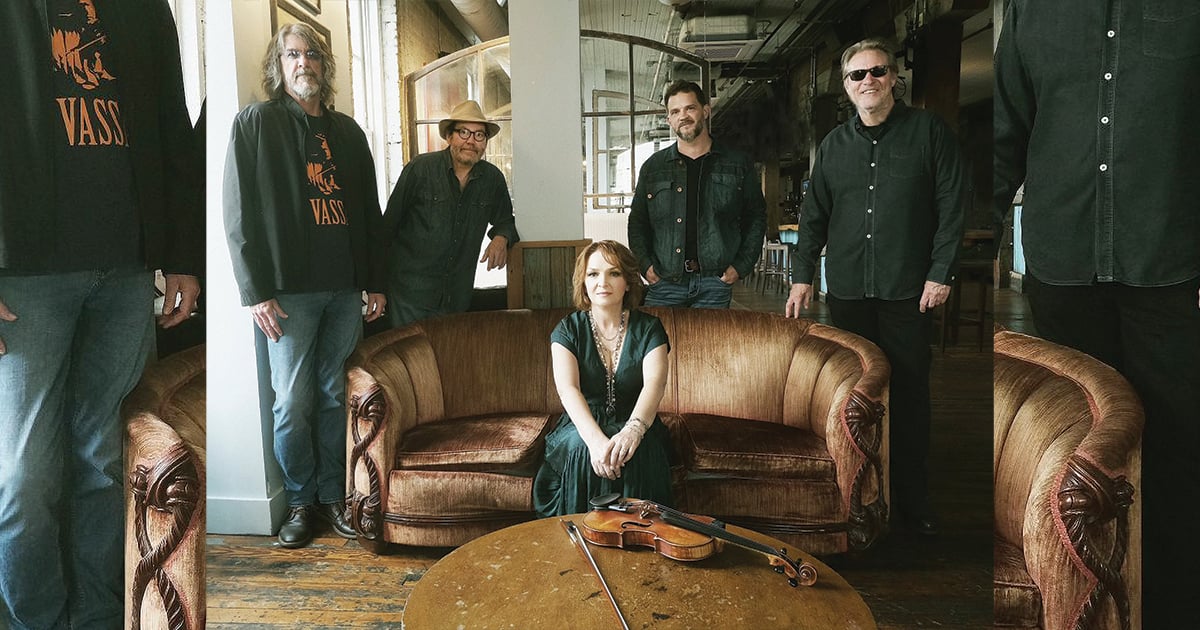
Some songs demand to be written. That was the case with “The Falling Man,” cut by The Steeldrivers (Bad For You, 2020) and written by Liz Hengber, Tammy Rogers, and Jerry Salley. Inspired by the famous 9/11 photograph also titled “The Falling Man,” the song describes the haunting photo and reveals the humanity behind it.
Not having been released as a single, the song “The Falling Man” isn’t necessarily well-known, according to Steeldrivers founding member and fiddler Rogers, who hopes that eventually changes. “We haven’t played it live consistently yet,” she noted, “but every 9/11, we post a link to ‘The Falling Man.’ It’s a significant song, and it’s important to our nation’s history to commemorate that event.”
It was September, within days of the anniversary of 9/11, when Hengber, a native New Yorker, came into the scheduled writing appointment with Rogers and Salley, an idea weighing on her mind. “The day before, I had watched a special on 9/11 and on The Falling Man,” she recalled. “The photograph captured how the man fell in a Zen-like yoga position—almost like an ‘acceptance.’ The program was about who he could have been … speculation is that he might have worked as a sound engineer at Windows of the World, the restaurant at the top of the World Trade Center, but they’ll never be certain now. It brought tears to my eyes because, to me, he represented all 3000 of them who had to make a choice that day. You know, it was either burn or jump, and he jumped. So, I came into the room and said, ‘I feel like I have to write this, and I want to call it ‘The Falling Man.’ If I hadn’t brought it to those two people, I would have written it on my own, and it wouldn’t have been the song that it is.”
Rogers reflected on first hearing the title. “As long-time friends and cowriters, when somebody walks in with a solid idea like that, it’s smart to go with it, and we were all inspired by it,” she said, adding that the three go way back when it comes to writing together for the Steeldrivers. “In many ways, I consider Liz and Jerry silent Steeldrivers.”
Salley added, “We’ve been friends for longer than I want to admit. I knew Tammy long before there was a Steeldrivers, and I started writing with Liz—man!—25 years ago. She had not written a lot of bluegrass when we all began writing together, and she brings in a fresh perspective … ‘The Falling Man’ is a splendid example—that was an idea that had to come from somebody outside of bluegrass, you know?”
Despite its atypical subject matter, the song turned out to be a perfect fit for The Steeldrivers. “I love this about the band,” said Rogers, who didn’t write that day with The Steeldrivers in mind. “We just set out to write the best song we could. You don’t think about most bluegrass bands covering this subject matter, but as soon as they heard it, the guys totally ‘got’ it and wanted to figure out a way to do it and include it on that album. They loved the writing, the melody, the message.”
The Writing, the Melody, the Message …
According to Rogers, the three wrote the chorus first. In the process, they found the spot for the song’s weighty title. “Sometimes when you’re writing from a title, you come to a decision about structure early on,” said Rogers. “With this one, we decided that it was stronger to place the title—not at the beginning of the chorus or even in a verse—but right at the end of the chorus.
“With that photo, he’s frozen in midair and that image will never die. Obviously, the physical man did, but the chorus is a description of the photo (I’ll never die / I’ll never land / Keep me alive / Call me what I am / The falling man).”
While keeping the symbolic man’s identity general, these writers used the verses to bring out his humanity. Verse one offers a glimpse of who he could have been (I once had a home / I once had a life/ Now I’m just a soul / Without wings to fly … ), while verse two gets more personal in its possibilities (Somebody’s son, somebody’s dad / Somebody’s love, who ain’t coming back …).
“The next two lines still give me chills,” said Rogers of the lines ending the second verse: My God was there / When I had to choose / Whispered a prayer / Stepped into the blue. “To me, they put you right there, in the building, just before the fall.”
Hengber reflected on the same lines. “It’s stark, honest, heartfelt,” she said. “These were not people that were born brave or who thought, coming to work that morning, that they would have to make that choice. That’s the line that tears were coming down our faces and we were like, ‘is that too sad for the song,’ and it was ‘no, that is the song.’”
As a well-placed bridge can do, the bridge in “The Falling Man” fills in the blanks for anyone still unsure of the subject matter: Septembers will come / Septembers will go / I’ll still hear the voice of 3000 souls. Rogers explained, “We tried to be as clear as we could without saying ‘this was 9/11.’ There are times when you just say it clear, but we’re always looking for the most creative way to say something. I’m unbelievably proud of how this was built and structured. It’s not a dense lyric in that we didn’t take 12 verses to tell the story. The language is simple and conversational, but it has a poetic quality that is beautiful.”
Another quality that adds beauty to the song is the melody, which, from the first note, puts the listener in the right place emotionally to take in such powerful lyrics. That fitting melody, Rogers shared, started with Salley. “I believe in marrying a melody to a song,” Salley confirmed, “and as we were sitting there discussing the lyrics and the fact that nobody knew initially who this poor fellow was, I wanted something plaintive sounding. So, the feeling and chord progression resulted from the somber lyric. Of course, we wanted to make it—I hate to use the word cascading—but we wanted to capture the sound of somebody going through that situation. I remember a lot of emotion in the writing room. We did some studying about that song, much like we did when the three of us also wrote ‘The River Runs Red.’ Both songs are historically correct. I can’t imagine another group recording ‘The Falling Man.’ The Steeldrivers nailed it, and it’s one of those important songs for their catalog that people can identify with. Even for them, it’s not your typical subject, but they are one of the few in our industry that can pull that off and make it believable.”
… and the Arrangement
Of The Steeldrivers’ arrangement, Rogers added, “It wasn’t necessarily an easy song to get together, but it turned out great. I love Brent’s mandolin part, and I was happy that I put a string section on it. It added an eerie quality and made it bigger and broader than if I had just played a simple fiddle part. And one of the guys had the idea to have me keep playing it out at the end and have the strings by themselves … I thought that was fitting to just let it float off and away.”
When Hengber heard The Steeldrivers’ take on the song, she was touched by the haunting beauty that, like the song, seemed meant to be. “Tammy is amazing and what she did on that fiddle broke my heart. It was a perfect cut. I’m prouder of that cut than probably any other song I’ve written. It’s beautiful, and it should be heard by a lot of people.”