Herb Pedersen
California Bluegrass Pioneer
Herb Pedersen’s life was utterly transformed—in the blink of an eye—in a record store on Telegraph Avenue in Berkeley, California. There he was, a fresh-faced, guitar-playing teenager flipping through records in the folk music section, studying the newest release by the Kingston Trio. Suddenly, a stranger was standing by his side. He said, “You like the banjo? Try this one.” And then mysteriously drifted back to wherever he’d come from.
What young Herb had been handed was Country Music, the second album by Flatt & Scruggs, released in 1958. He bought the record—which included the instrumentals “Foggy Mountain Breakdown,” “Farewell Blues” and “Pike County Breakdown”—took it home and put it on his parents’ record player. Game over.
“The first song, the first bluegrass I heard,” Herb remembers, “was ‘Salty Dog Blues,’ with that Benny Sims fiddle intro. It was unbelievable. My jaw just dropped. My life changed right then and there. I never looked back. I knew I needed to learn more about this music. I knew this was the kind of music I wanted to make.”
Herbert Joseph Pedersen was born on April, 27, 1944, in Berkeley, a city east of San Francisco, across the Bay. His first interest in music was kindled around 1956 by the Everly Brothers, particularly their harmony vocals, which “hit him like a ton of bricks.” From there, it was the Kingston Trio and the Limeliters and their folk revival brethren. Bluegrass was the logical next step in his musical development.
Herb’s first banjo was a cheap instrument, perhaps homemade. It was an open-back banjo with a five-string neck. Well, actually a four-string neck; where the fifth-string tuner should have been, there was only a nail to attach the string to. It wasn’t much, but it was enough to get him started. After several months, he upgraded to a Gibson RB-250, and he was on his way.
Berkeley at that time was the perfect place to hear, learn about, and play bluegrass. Beginning with an August 1960 concert by the Redwood Canyon Ramblers at Washington School, Berkeley became a bluegrass hotbed. Dozens of coffeehouses featured the music at open mics. Bigger concerts presented Bill Monroe, the Stanley Brothers and Vern & Ray. The Berkeley Folk Festival, begun on-campus in 1958, presented in its early years such traditional musicians as Doc Watson, the Greenbriar Boys, the New Lost City Ramblers, Roscoe Holcomb and J.E. Mainer’s Mountaineers.
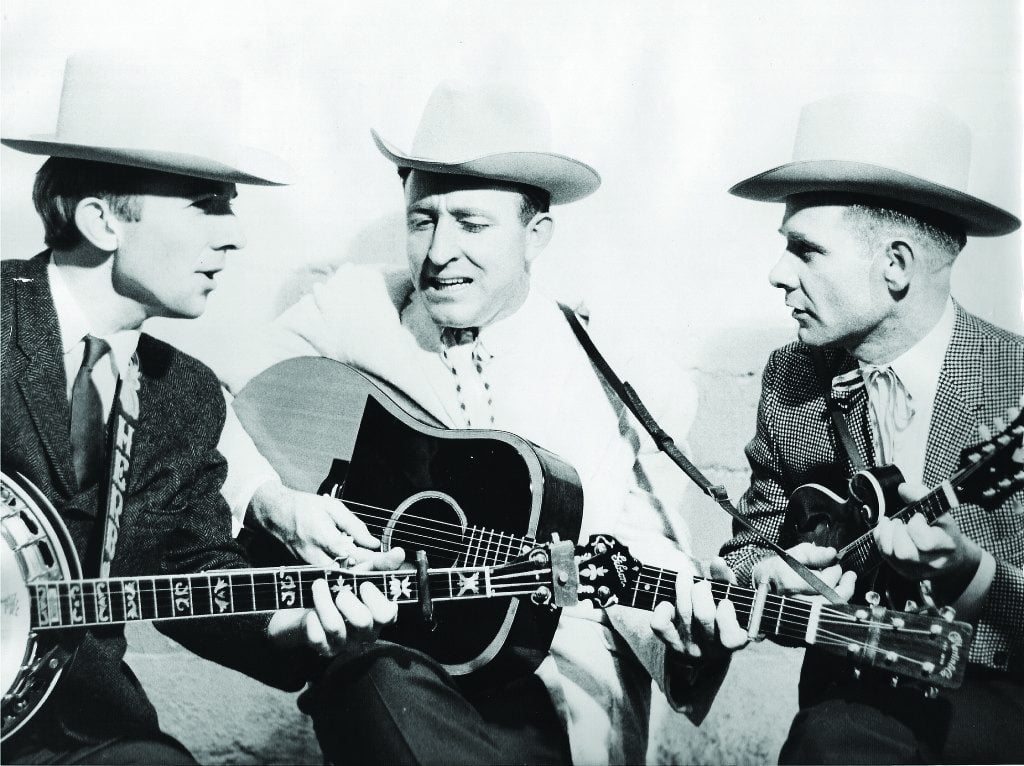
In 1963, shortly after graduating from St. Mary’s High School, Herb and his longtime friends Butch Waller (mandolin) and Rich Conley (guitar) formed a band called the Pine Valley Boys. Dale Hollis was soon hired to play bass. The quartet gigged extensively throughout the area, honing their chops at countless coffeehouses.
The band rarely left the Bay Area, but did make a trip to Los Angeles in 1963 to play the Troubadour, one of California’s leading folk music clubs. “We packed up the car,” says Herb, “and drove down there with the bass strapped on the top. We played Monday night, which was ‘Hoot Night.’ He [Doug Weston, the owner of the club] really liked us a lot, and asked us to be the house band and run the ‘Hoot Nights’ for him. Which meant we’d have to move there.”
Based now in Los Angeles, the band played there and back in the Bay Area, wherever they could get gigs. Late in 1963, the band was invited by Hal Zeiger (an old-school local promoter who had caught a show at the Troubadour) to appear on a folk festival-type show at Carnegie Hall in New York City. For the same promoter, the band did a tour through the south called “Hootenanny 63” that was curtailed when President Kennedy was killed.
Not long after that, the Pine Valley Boys moved back to the Bay Area and picked up where they’d left off. Conley exited the band and was replaced by David Nelson, a Clarence White-style guitarist who would go on to co-found the New Riders of the Purple Sage. Fiddler Richard Greene was hired then, and the PVB worked as a quintet. Greene lived in Los Angeles and flew to the Bay Area for gigs (Pedersen remembers a ticket from Burbank to the Bay Area cost “twelve or thirteen dollars.”)
The band ended its run in 1964, when Pedersen left for another job; the PVB never recorded. A few years later, in 1968, Butch Waller formed High Country, a hard-core traditional band that’s still going strong fifty-four years later.
Herb next played with Vern and Ray, a duo revered in northern California to this day. As Butch Waller puts it: “For many of us bluegrass pups on the West Coast in the early and mid-1960s, Vern and Ray were our connection to ‘the real thing.’ We were pretty isolated out here. Vern and Ray were not only the genuine article and a source of inspiration, but were very supportive of the efforts of the local pickers to learn to play the music. We owe them a lot.”
Mandolinist Vern Williams and fiddler/guitarist Ray Park were both originally from rural Arkansas, but were living in Stockton, California, when they began playing together in 1959. Working with Clyde Williamson (guitar), Luther Riley (banjo) and Bill Carter (bass) as Vern & Ray & the Carroll County Country Boys, the band cut a four-song EP that was released by Starday in 1961. It included “Bluegrass Style,” “Carroll County Breakdown,” “Thinking of Home” and “Cabin on a Mountain,” a song written by Vern that’s become a bluegrass standard.
Vern and Ray had a powerful duet vocal sound. “Our voices blended like moonshine and spring water,” said Park. With Herb’s third voice and banjo, the band had a spirited, high-octane sound as powerful as any traditional bluegrass band in the country. The trio is captured on three cuts—“Old Dick Potter,” “Touch of God’s Hand” and “Twenty Second Rag”—on Vern and Ray’s only album, Sounds from the Ozarks, released in 1974 by Old Homestead.
A more extensive outing is heard on a recent live CD (released by Arhoolie) called San Francisco – 1968. Recorded at a performance at the annual folk festival at San Francisco State College, the CD presents 15 cuts by Vern, Ray and Herb (with Howard Courtney on bass), including one of the band’s classics, “The Touch of God’s Hand” and several other fan favorites: “How Many Times,” “Sweet Fern,” “Muleskinner Blues,” and “I Wonder Where You Are Tonight.”
Vern and Ray and Herb (and their families) moved to Nashville in 1967 to be closer to the country music establishment. One of the main goals was to land management and a recording contract, but that never worked out; bluegrass just wasn’t commercially viable in Nashville at that time. The trip didn’t work out very well for Vern and Ray, and they all moved back to California in a year or so, but Herb got the experience of a lifetime while in Music City.
With the blessing of Vern and Ray, Herb had taken a job playing banjo with Carl Tipton & the Midstate Playboys, which had a weekly television program on Saturday afternoon in Murfreesboro. Herb was at home one night when his phone rang. The caller said he was Earl Scruggs and that he’d seen and liked Herb’s playing on Carl Tipton’s show. Herb was convinced it was one of his Berkeley pals pranking him, but Earl finally convinced him and asked Herb to come out to the house for a visit. He added, “Bring your banjo.”
“Well, I drove over there,” recalls Herb, “to his real nice place in Madison. I just sat in my car outside his ranch-style home for maybe ten minutes [trying to calm his nerves]. We sat and talked for a spell before playing some. We played ‘Lonesome Road Blues’ and ‘Flint Hill Special.’ It was all just incredible.”
Scruggs needed hip surgery to deal with lingering effects from a horrific auto accident in 1955, and he was hoping Pedersen would fill in for him for several weeks until he recovered. “Earl just played guitar,” says Herb. “He wanted to hear my banjo playing. Then he asked if I knew the Martha White theme song. I said I did and he offered me the job. He said he’d take me down to the Opry on Friday and introduce me to the boys.” Herb just kind of looked at him for a moment. Of course, he said yes, and that led to Herb playing banjo with Lester Flatt & the Foggy Mountain Boys, the most popular bluegrass band in the world, for several weeks.
And then it was back to Vern and Ray and back to northern California. After successful appearances at San Francisco State College and the Ash Grove in Los Angeles, Herb left the band in 1968, and moved to Los Angeles in search of new opportunities. Vern, Ray and Herb had a memorable reunion in 1976 at the first Father’s Day Bluegrass Festival put on by the California Bluegrass Association in Grass Valley. Herb played both in Ray Park’s band and in a Vern & Ray reunion show.
“Vern and Ray’s music and style affected everybody on the West Coast who still plays bluegrass,” says Herb. “I know personally, every time I sing certain lead lines, it’s because of Ray’s phrasing, and when I sing tenor, I think of how Vern might attack it. I was 20 when I started with them back in 1964, and they’re still teaching me things.”
His next band taught him some things, too. The Dillards came west out of Salem, Missouri, and exploded onto the Los Angeles bluegrass and folk scene in 1962. “When they hit town, they completely blew everybody away,” Chris Hillman told the Los Angeles Times fifty years later.
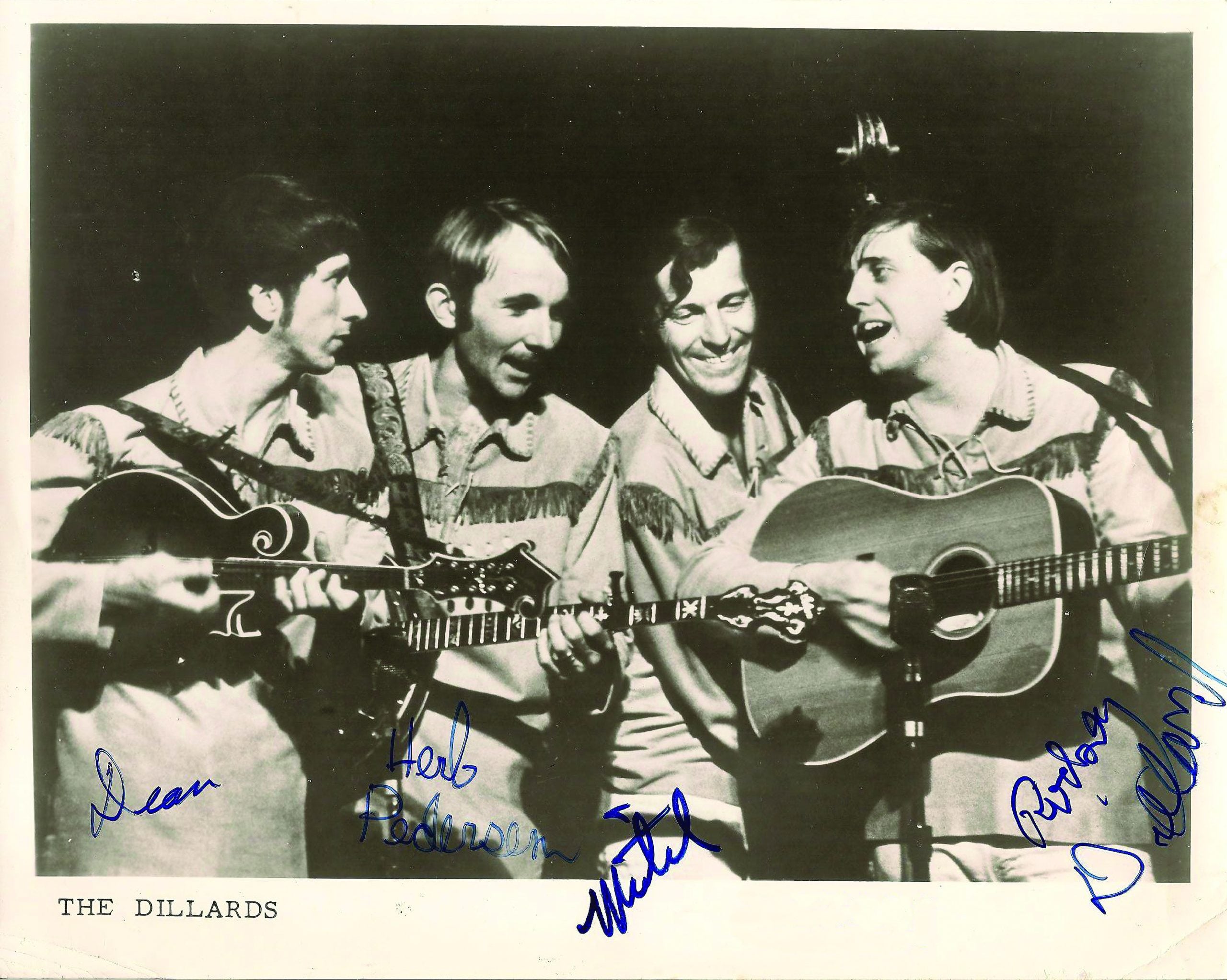
Within three years, the band was the hottest bluegrass band west of the Mississippi, thanks to a string of television appearances as the Darlin’ Family on The Andy Griffith Show and three successful bluegrass albums on Elektra, Back Porch Bluegrass (1963), Live!!! Almost!!! (1964) and the all-instrumental Pickin’ and Fiddlin’ (1965) with fiddler Byron Berline.
By the time Pedersen joined the Dillards in 1968, the band was at a crossroads, fed up with Elektra’s resistance to the band’s desire to expand its music beyond the bluegrass roots. To further up the pressure, founding member and banjo ace Doug Dillard had left the band, apparently wanting to expand his own musical horizons but with a different set of people. That’s when Dean Webb phoned Herb and invited him to join the band.
When Herb linked up with Rodney Dillard (guitar), Dean Webb (mandolin) and Mitch Jayne (bass), the band was already at work on its next album. It’s hard to imagine a successful, established band making such a radical change in sound and direction as the Dillards did between its third and fourth albums—going from the traditional bluegrass of Pickin’ and Fiddlin’ to the bluegrass/folk/country/pop hybrid served up on Wheatstraw Suite, released in 1968 by Elektra, which had apparently decided to let the Dillards be the Dillards.
With that album and its follow-up Copperfields (1970), the Dillards played a major role in the creation of what came to be called “country-rock.” This new sound came mostly from rock bands adding country songs and styles to their sounds, á la the Byrds, Flying Burrito Brothers, Poco, Beau Brummels, Dillard & Clark Expedition (with Doug Dillard), the Nitty Gritty Dirt Band, the New Riders of the Purple Sage and others. The Dillards was one of the very few country-rock pioneers to come at the music from the country side of the hyphen.
Herb made an immediate impact on the Dillards’ music with his singing, playing and songwriting. Though the banjo was featured less prominently than on the band’s early albums, Herb had ample opportunities to show his skills on the five-string on such songs as “Old Man at the Mill,” “Nobody Knows,” “Hey Boys,” “Don’t You Cry,” “Ebo Walker” and the instrumental “Bending the Strings.” He sang the lead vocal on some of the band’s best songs, including “Listen to the Sound,” “Lemon Chimes,” “Copperfields” and “Sundown” and added harmony vocals to a number of other songs
It was while with the Dillards that Herb began writing songs. Rodney Dillard encouraged him to bring his songs to the band and several of them were recorded, including “Copperfields,” “Brother John,” “Little Pete” and “Sundown.” He’s written dozens of songs since, the best known of which are “Wait a Minute,” “Old Train” and Easy Ride,” all of them memorably recorded by the Seldom Scene.
Between the time he left the Dillards in 1970 and the mid-1980s, Pedersen largely stepped back from bluegrass and playing in a band. There were a few exceptions: he played in John Denver’s band from 1977-80, and in 1983, was part of a one-off bluegrass “supergroup” called Here Today. That band, which included Herb, Vince Gill (guitar), David Grisman (mandolin), Jim Buchanan (fiddle) and Emory Gordy (bass), recorded a self-titled album for Rounder covering classic songs by Jim & Jesse, Jimmy Martin, Earl Taylor, and the Stanley Brothers.
For the most part, Herb played on recording sessions during this period. Lots and lots of sessions. In addition to countless commercials and television and movie soundtracks, he recorded with just about everybody who recorded in Los Angeles in those years. A partial list would include: Eric Anderson, Beck, David Bromberg, Mary Chapin Carpenter, Rita Coolidge, Country Gazette, Dan Crary, Rodney Crowell, John Denver, Neil Diamond, Doug Dillard, the Doobie Brothers, Jonathan Edwards, Flying Burrito Brothers, Dan Fogelberg, John Fogerty, Lowell George, Vince Gill, Steve Goodman, Merle Haggard, Emmylou Harris, Chris Hillman, Kris Kristofferson, Nicollete Larson, Gordon Lightfoot, Lyle Lovett, Rose Maddox, Manhattan Transfer, Bette Midler, Michael Martin Murphey, Randy Newman, Gram Parsons, Dolly Parton, John Prine, Charlie Rich, Johnny Rivers, Kenny Rogers, Linda Ronstadt, Diana Ross, Ringo Starr, Stephen Stills, Marty Stuart, James Taylor, Linda Thompson, Travis Tritt, Tanya Tucker, Doc and Merle Watson, Jesse Winchester and Dwight Yoakam.
In his free time, he also recorded three solo albums: Southwest (Epic, 1976), Sandman (Epic, 1977) and Lonesome Feeling (Sugar Hill, 1984). The Epic albums have their moments, including the first recording of “Wait a Minute,” but for the most part it sounds like no one working on the albums had any real idea of what to do with Herb in the studio. Despite the presence of such guest artists as Linda Ronstadt, Emmylou Harris, David Lindley, Ray Park, Dolly Parton and Josh Graves, the records have way too much of that LA peaceful easy feeling and not nearly enough Bakersfield soul.
There’s still a trace of bluegrass and traditional country music there—really good cuts of “Can’t You Hear Me Calling,” “If I Lose” and “Fair and Tender Ladies”—but more of that would have played to Herb’s strengths. The records are pleasant listening, as soft pop-county-rock, but they could have been so much more with the right production.
Lonesome Feeling, on the other hand, is a nearly perfect Herb Pedersen solo album. Herb produced it himself, and the album is a flawless meshing of material, recording artist and backing band. The material is drawn from bluegrass (“The Fields Have Turned Brown,” “Your Love is Like a Flower,” “Lonesome Feeling”); folk (“Last Thing on My Mind,” “It’s Worth Believing”); Herb Pedersen originals (“Easy Ride,” “Homecoming”); and a killer cover of the Louvin Brothers’ “Childish Love.”
Backed by an exceptional band that included Jay Dee Maness on pedal steel, Chris Hillman on mandolin, Bob Warford on electric guitar and Dennis Fetchet on fiddle, Herb for the first time was able to masterfully pull together his country, bluegrass and folk influences and meld them into a cohesive, tuneful package that presented a true picture of his musical self. Thirty-eight years later, Lonesome Feeling stands as one of the best California county-rock albums ever recorded.
The Desert Rose Band grew out of an acoustic bluegrass quartet put together by Chris Hillman to tour with singer-songwriter Dan Fogelberg promoting his new bluegrass album, High Country Snows. In addition to Hillman, the band included Herb, bassist Bill Bryson and John Jorgenson, a young mandolin and guitar ace who was then playing in a bluegrass band in Frontier Land at Disneyland. The quartet would open the shows and then return during Fogelberg’s set to play songs from the album.
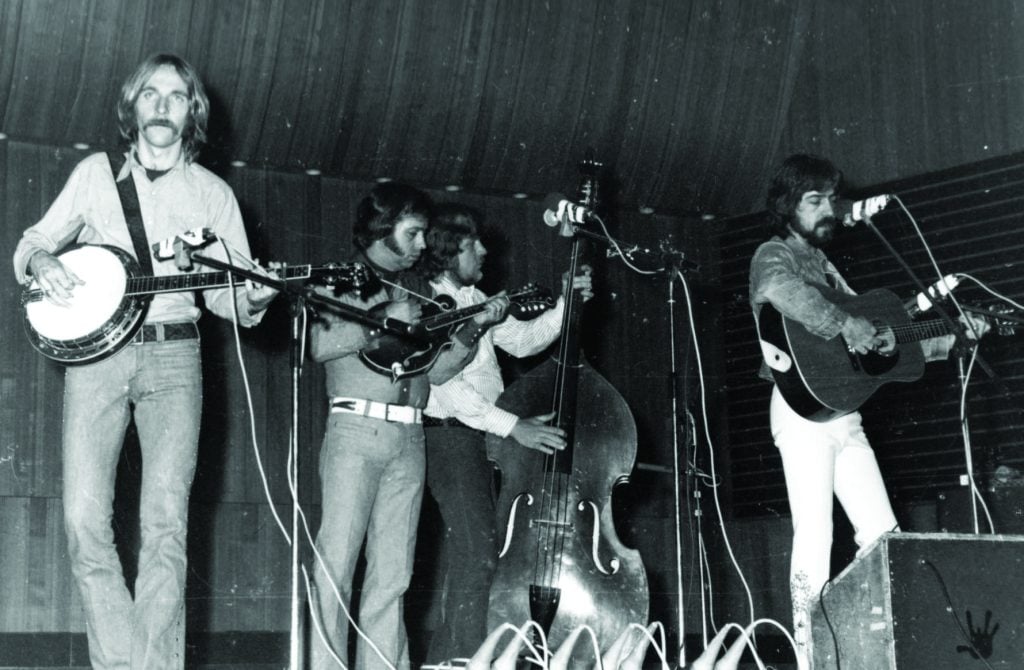
As the tour ended, at Jorgenson’s urging, they decided to form an electric band, with the addition of Jay Dee Maness on pedal steel and Steve Duncan on drums. The Desert Rose Band was an honest-to-God California country band in the august tradition of Buck Owens & the Buckaroos—two outstanding singers in Pedersen and Hillman, two exceptional lead instrumentalists in Jorgenson and Maness, razor-sharp sequined suits by Manuel Cuevas (the “Rhinestone Rembrandt”) and a rock-solid rhythm section.
The band received heavy radio airplay, especially in its early years, and charted several Top Ten singles, including “Love Reunited,” “One Step Forward,” “Summer Wind,” “She Don’t Love Nobody,” “Start All Over Again” and “Story of Love.” Two singles topped the Billboard country chart: “He’s Back and I’m Blue” and “I Still Believe in You.”
Over the course of its decade together, the Desert Rose Band recorded five albums: The Desert Rose Band (1987), Running (1988), Pages of Life (1990), True Love (1991) and Life Goes On (1993). Its discography also includes A Dozen Roses—Greatest Hits (1991) and Traditional (1993), a compilation culled from the previous albums.
The other-worldly success of Garth Brooks changed the country music industry in fundamental ways, and by the early-1990s, the Desert Rose Band was swimming upstream. The guys didn’t wear hats, fly above the stage in circus rigs or rouse the crowds with anthemic singalongs. It was just a damn good country band, but that was no longer enough. The band was history by 1994.
Pedersen returned to bluegrass in the mid-1990s with the Laurel Canyon Ramblers, which included Kenny Blackwell (mandolin), Billy Ray Latham and later Roger Reed (guitar), Gabe Witcher (fiddle) and Bill Bryson (bass). The band recorded three excellent albums, all for Sugar Hill: Rambler’s Blues (1995), Blue Rambler 2 (1996) and Back on the Street Again (1998).
It was an outstanding band of old and new friends. Bryson was on board again. Latham was a founding member of the Kentucky Colonels who later played with the Dillards. Blackwell, a former member of Richard Greene’s Grass is Greener, was an inventive mandolist who had studied with Jethro Burns, one of the world’s best jazz mandolin players. The youngest member of the band, fiddler Gabe Witcher (now the fiddle player with Punch Brothers) had been playing with a family band, the Witcher Brothers.
The Laurel Canyon Ramblers was one of the best bluegrass bands of the 1990s, though it’s never received the acclaim and attention it deserved. The band’s vocal trios and quartets were among the best in the business, with some especially sublime baritone singing. And while it had a crisp, modern sound, the band was firmly committed to traditional bluegrass, covering songs by such iconic acts as Flatt & Scruggs, the Stanley Brothers, Red Allen, the Louvin Brothers, Jim & Jesse, Vern & Ray and the Osborne Brothers.
The Ramblers also showcased a considerable amount of original material, recording a number of Pedersen’s songs, including “Rambler’s Blues,” “To A Heart Always True,” “Heaven Bound,” “Hold On,” “Yellowhead” and “Wait a Minute.” The band also recorded several of Bill Bryson’s best-known songs: “Girl at the Crossroads Bar,” “Roll On,” “Whistles on the Trains” and “Move On.”
Bluegrass Reunion, an all-star album recorded for David Grisman’s Acoustic Disc label in 1991, was another one-off recording that put Pedersen together in the studio with several musicians he had worked with in the past. Legendary bluegrass singer Red Allen was the primary focus on the album and several of the cuts are associated with him, including “Is This My Destiny,” “She’s No Angel” and “Down Where the River Bends.” Joining Grisman on mandolin and Allen on rhythm guitar are Herb (banjo, vocals), Jim Buchanan (fiddle, vocals) and Jim Kerwin (bass).
The song list is deeply traditional, with covers of all the usual suspects: Monroe, Flatt & Scruggs, the Osborne Brothers, Reno & Smiley and Jim & Jesse. In addition to Allen’s several vocals, Jerry Garcia of the Grateful Dead contributes lead vocals and lead guitar to “Ashes of Love” and the Stanley Brothers’ classic “The Fields Have Turned Brown.” Herb sings lead on “Little Maggie” and Buchanan takes center stage on “To Love and Live Together.”
Chris Hillman and Herb Pedersen have known each other and played music together since 1963. They met, at the Ice House, a folk club in Pasadena, where both of their bands had been hired to play at a two-day “Bluegrass Spectaculars,” the first multi-day bluegrass festival in the country. Pedersen was there with the Pine Valley Boys and Hillman was there with the Scottsville Squirrel Barkers. “Chris and I just hit it off immediately,” Pedersen says. “We had the same kind of sense of humor and we liked the same kind of music.”
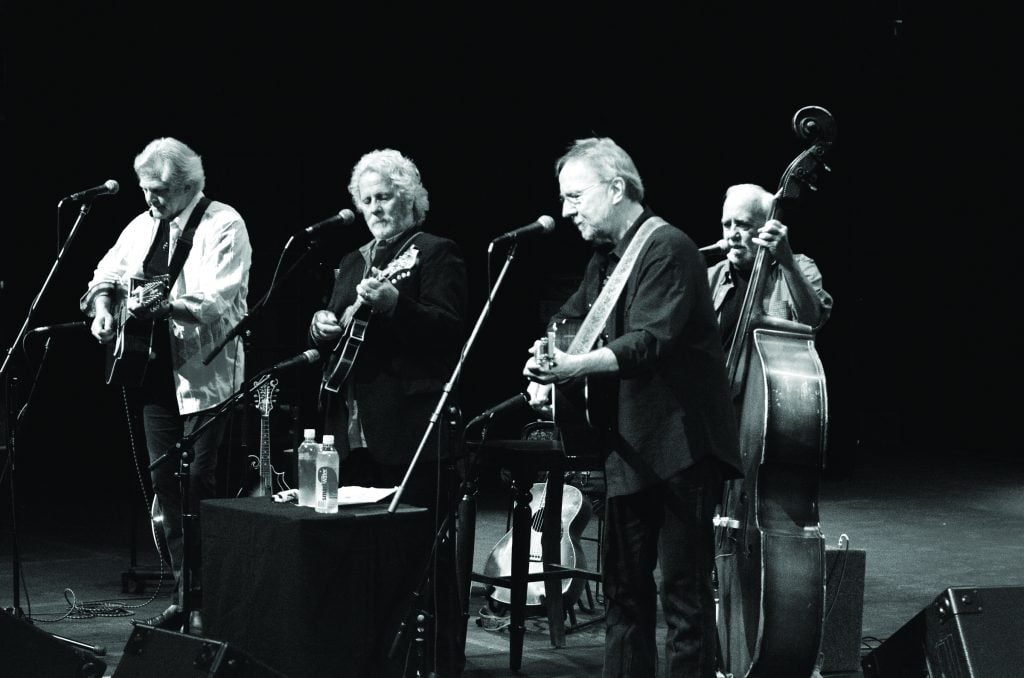
Chris and Herb have played on each other’s solo records and partnered for a decade in the Desert Rose Band. The idea of them doing a duet album is so obvious it’s surprising it didn’t happen sooner. Bakersfield Bound, released in 1996 on Sugar Hill, showed them to be one of country music’s finest duets, worthy heirs to such great pairs as Buck Owens and Don Rich, Jim and Jesse McReynolds, the Louvin Brothers, the Wilburn Brothers and all the other great “brother duets” from the Golden Age of country music.
“Those brother acts sounded so good,” Pedersen told writer Geoffrey Himes, “because they learned to really listen to each other. Chris and I have been singing together almost 40 years now [at that time], so we have some of that same thing. As soon as he starts singing a chorus, I’ll jump on a harmony part, because I know where he’s going to go.”
The duo recorded two subsequent albums, Way Out West (Narada/Backporch, 2002) and the live At Edwards Barn (Rounder, 2010). Working with a familiar group of musicians including Jay Dee Maness, Bill Bryson, Kenny Blackwell, Larry Park (son of Ray Park) and Gabe Witcher, Hillman and Pedersen created a bunch of great music playing in that sweet spot where bluegrass meets Buck Owens. Those were the two main sounds that inspired young pickers like Chris and Herb and their whole generational cohort of California bluegrassers.
Larry and Tony Rice were working as a duet at the annual CBA Father’s Day Festival in Grass Valley in 1995, when Larry had a conversation with Herb, there working with the Laurel Canyon Ramblers. Rice reminded Herb of the first time they had met, at the Ice House bluegrass festival, in 1963. Larry was playing in a band called the Haphazards, a group that included his younger brothers, Tony and Ronnie. (Others playing at that two-day festival included the Kentucky Colonels, the Dillards with Glen Campbell, and the Golden State Boys.)
As they reminisced about that Ice House festival, Larry suggested that Herb and Chris Hillman get together to play some with Tony and him. They did that, and it sounded good. Really good. Tony had stopped singing by then because of medical issues, so the vocals were split between Larry, Herb and Chris. Tony played exquisite lead guitar, of course, Herb played banjo and guitar, and Larry and Chris traded off on mandolin and guitar.
Self-described as an “anti-supergroup,” Rice, Rice, Hillman & Pedersen recorded three excellent albums (all for Rounder) that expertly blended bluegrass, acoustic country, country-rock and folk: Out of the Woodwork (1997), Rice, Rice, Hillman & Pedersen (1999) and Running Wild (2001). Brothers Rickie (fiddle) and Ronnie Simpkins (bass) add solid instrumental support on all three albums. About half of the songs on the albums are originals by Larry and Chris. The covers were eclectic and diverse—Richard Thompson, the Louvin Brothers, Aretha Franklin, Utah Phillips, the Grateful Dead, Norman Blake, the Beatles and Buck Owens.
Old and in the Way, which included Peter Rowan (guitar), David Grisman (mandolin), Jerry Garcia (banjo), Vassar Clements (fiddle) and John Kahn (bass), recorded one of the best-selling bluegrass albums of all time. The self-titled live album, recorded in 1973 and released two years later, has been the entry point into bluegrass for countless thousands of bluegrass fans and musicians over the years—and it still is today.
Garcia had died in 1995, and five or so years later, Grisman, Rowan and Clements wanted to do a near-reunion album in tribute to Garcia. Grisman called Herb and asked if he’d be interested in taking on the banjo duties. Herb said yes, Bryn Bright was added on bass, and thus was born Old & in the Gray.
The band’s one album, Old & In the Gray on Acoustic Disc (2002), is a good-hearted romp through several bluegrass classics drawn from the catalogs of the Stanley Brothers, Reno & Smiley, the Country Gentlemen, Flatt & Scruggs and Bill Monroe and newer songs by Peter Rowan, John Hartford and Townes van Zandt. The album was quite successful, making the Billboard Country Albums chart and earning a top ten spot on the Billboard Bluegrass Albums chart.
Herb’s next two bands reunited him with some old friends. Loafer’s Glory—which consisted of Herb (guitar), Tom Sauber (clawhammer banjo, fiddle), Patrick Sauber (banjo, mandolin) and Bill Bryson (bass)—gave Herb the opportunity to work with a couple of long-time associates, plus a new one he would continue to work with in the future.
Tom Sauber, perhaps best known for his lengthy associations with fiddler Earl Collins and banjo player Eddie Lowe, has also played with Tom Carter and in trios with Alice Gerrard and Brad Leftwich and Dirk Powell and John Herrmann. A long-time mainstay of the traditional music scene in southern California, Sauber appeared in the film The Long Riders and played on its soundtrack album.
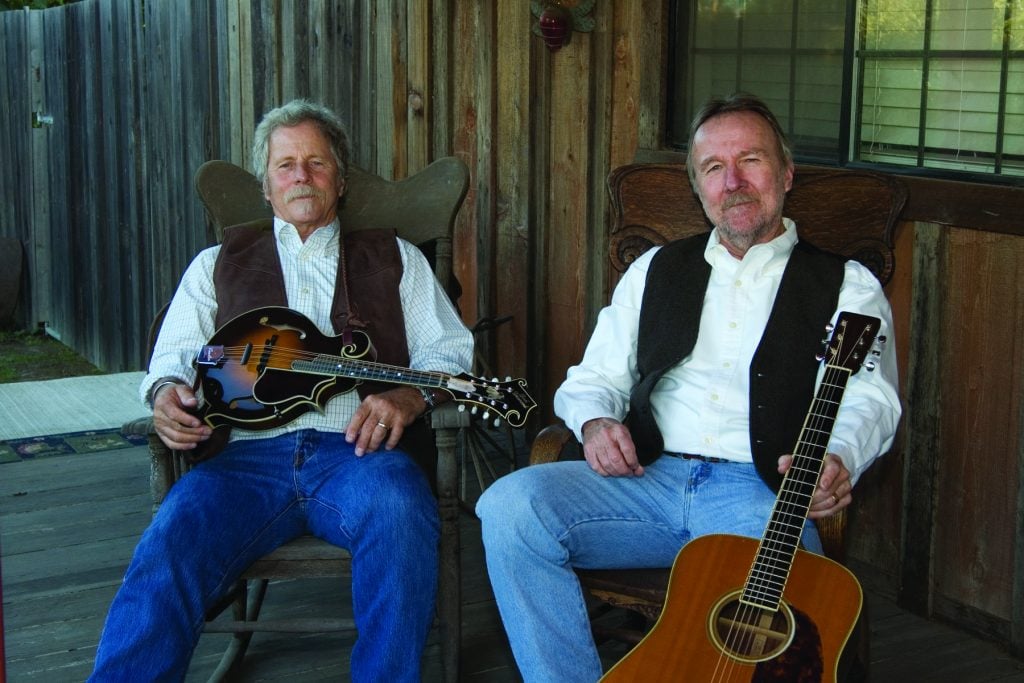
His son Patrick Sauber has been playing music all his life and has worked with such esteemed musicians as Peter Rowan, Tim O’Brien, Doc Watson, Laurie Lewis & the Right Hands and, currently, John Reischman & the Jaybirds. He appeared in the film A Mighty Wind and played on its soundtrack album. Though he doesn’t play guitar on this album, he is especially highly regarded for his mastery of the complex flatpicking style of Clarence White.
The band recorded one album, Loafer’s Glory, in 2012 for Arhoolie. Presumably due to Tom Sauber’s influence, the sound and repertoire on the album is much more old-time oriented than anything else Herb has recorded. Among the pre-bluegrass treasures are “Let Me Fall,” “Otto Wood, the Bandit,” “Sweet Heaven in My View,” “Banjo Pickin’ Girl,” “Milwaukee Blues” and the fiddle tune “Crow, Little Rooster.”
There’s still plenty of bluegrass on the album, including a great version of one of Bill Bryson’s best songs, “Ridin’ the L & N.” Of course, there are also classics from two of Herb’s perennial touchstones, Flatt & Scruggs (“Legend of the Johnson Boys,” “Is There Room for Me”) and the Osborne Brothers (“I’ll Be Alright Tomorrow,” “May You Never Be Alone”).
Herb’s next outing was the John Jorgenson Bluegrass Band (J2B2) an all-star quartet of award-winning musicians: John Jorgenson (mandolin, guitar, vocals), Herb (banjo, guitar, vocals), Patrick Sauber (guitar, vocals) and Mark Fain (bass), probably best known for his 13-year stint in Ricky Skaggs’ band, Kentucky Thunder. Described in an IBMA review as a “fresh band of legends,” J2B2 has appeared on the Grand Ole Opry several times, toured Norway and the UK, and played major festivals from coast to coast.
The band recorded its debut album, From the Crow’s Nest, in 2013; it was released as part of a limited edition 3-CD set, Divertuoso, that showcased three of Jorgenson’s musical interests—bluegrass, Gypsy jazz and electric guitar instrumentals. The album was re-released by Cleopatra in 2018 as a stand-alone album. A review in BU hailed it as “great music [that] will appeal to those who like their bluegrass newgrass-style…fine music from a powerful quartet.”
“I feel what this group does is quite traditional, compared to a lot of people,” asserts Jorgensen. “It’s not jamgrass. It’s not Americana. It’s bluegrass. There are folk elements and all those other things, of course. But really, my touchstones for that style of music are all the classics: the trio harmonies of the Osborne, and the slightly softer Seldom Scene and Country Gentlemen sounds, the early Dillards, the Country Gazette and the whole Southern California sound.”
Herb Pedersen was 78 in April and can look back over a rich and artistically adventurous musical career than spans nearly sixty years. His work can be heard on thousands of records. He’s made his mark in several music genres. He deserves a spot in the Bluegrass Hall of Fame someday. And he’s still playing, in a bluegrass band called the Grateful Dudes, in which he plays guitar and sings most of the lead vocals.
Pedersen has built an enviable legacy as a singer, songwriter, multi-instrumentalist, session musician, sideman and bandleader. Whatever the project, whatever the role, his contributions have displayed a consummate sense of musicality, a commitment to appropriateness and rightness and a willingness to fearlessly mix old and new. He’s long been a calm, steady presence in an often-crazy world.
Asked to look back over his career and its high points, he says the time he spent playing with Lester Flatt and the Foggy Mountain Boys was definitely one of the peak moments. “I got to ride on the Martha White bus,” he exulted, “and I loved it. It was interesting: there was no bathroom and the beds were army cots bolted to the floor—and I loved every minute of it, especially the conversations in the bus after the shows. It was really kind of a surreal experience, and I wouldn’t trade it for anything,”
Herb Pedersen has gained a ton of wisdom on his bluegrass journey. “One thing I learned from Earl was it’s not just the notes you play,” Herb told the Los Angeles Times in 1998. “It’s the notes you leave out. When you’re young, you like to play fast and furious. But as you develop your skills, you want a sound that’s more true and fat.”