
Ben Greene
Bluegrass Sideman
Photos By Laura Ridge
“I am very blessed to have spent my whole life doing what I love with deepest passion,” Ben Greene professed after a recent show.
What has he been doing his whole life? Playing music, mostly picking banjo for his livelihood. Greene has played the last sixteen years with the same band. That is an anomaly in bluegrass. The professional musician is a mainstay in Lorraine Jordan and Carolina Road and has become Lorraine Jordan’s resident sideman.
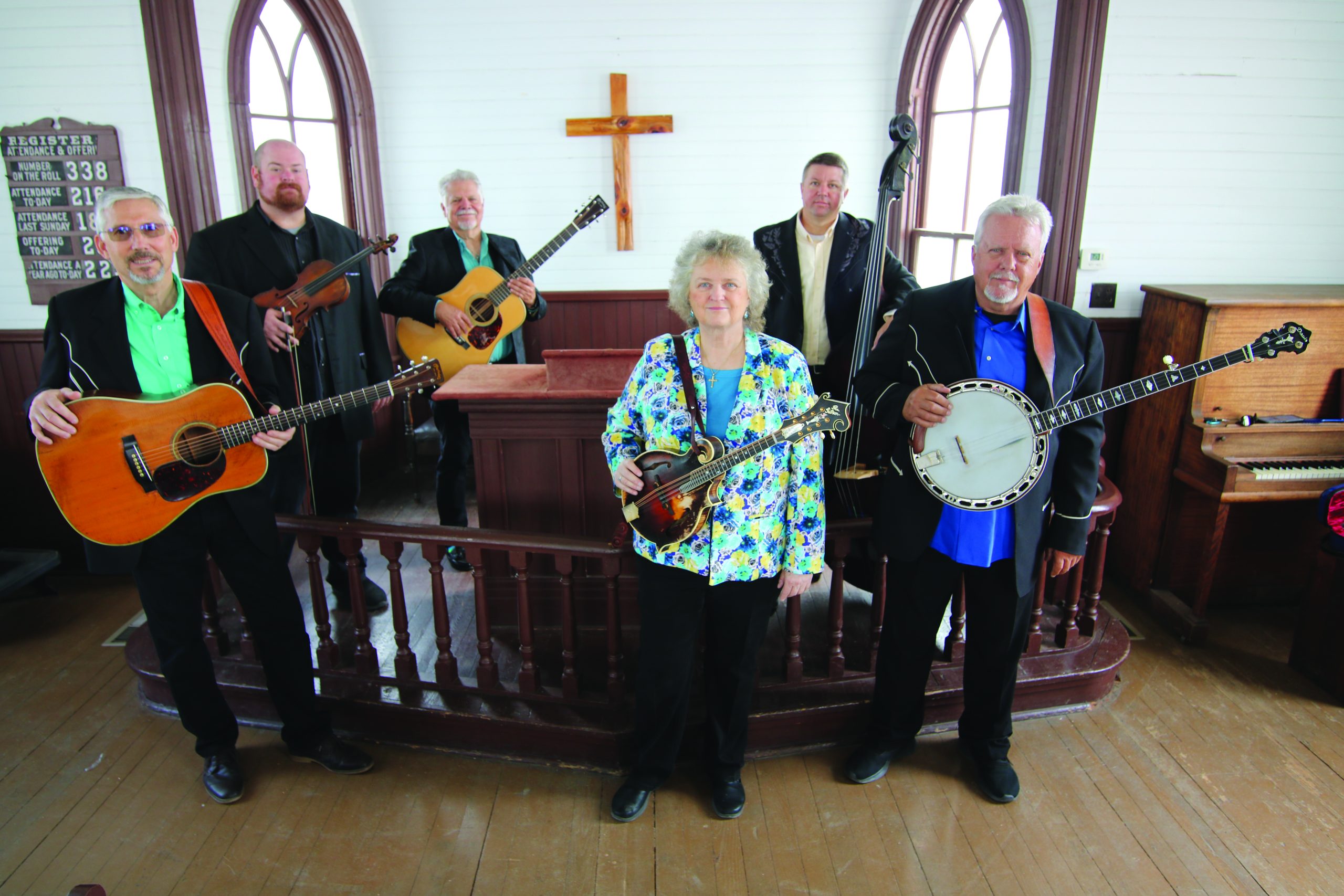
“Ben Greene is the most loyal dedicated band member anyone could ever ask for. Ben is very consistent. The way you hear it on a recording is the way you will hear it on stage each time. Just a few notes and you know that it is the sound of Ben Greene. Always the first one dressed and back stage prior to the show, Ben has become my right hand man and one of my best friends. When he retires, Carolina Road will retire. He’s the rock and that important to the band,” stated Jordan (Band leader of Carolina Road for twenty-one years).
The professional banjo-picker was raised and still resides near Monroe, NC. He credits his family for his affinity to music. “My grandmother influenced me. She played music and loved music. She showed me chords on the guitar. Her dad was a fiddler and played for corn shuckings. Granny Blanche lived to be 104.”
At age 12, Greene first started playing guitar. “I had a cheap guitar. My father told me if I learned to play, he’d get me a better one.” Greene learned and his dad purchased him a Gibson J-45. When he was 15 years old, Greene started picking the five-string. Self-taught, he had an inner drive. “My dad had an old Harmony banjo in the closet that he’d bought years before. The fifth peg was gone. We got it out and made it playable. He said the same thing, if I learned to play; he’d get me a better banjo.”
The budding musician learned to pick “Cripple Creek” and “Cumberland Gap.” “We started out with Scruggs. You need to learn from the masters. You need to go back to your roots. That’s what I did. I’d fall sleep with the banjo in my hands. Eventually, I got a better banjo. It was Japanese made, but definitely a step up. The late CE Ward (a famous NC luthier) set it up for me,” he fondly recalled.
Bill Emerson was one of the young banjoist’s beginning influences. “I loved his finesse. I thought he was cock of the walk. And Crowe’s four-piece band (with Larry Rice, Doyle Lawson, and Bobby Sloan) captivated my ears.”
His first job was picking with Frank Poindexter and the Appalachian Music Makers. Terry Baucom was the fiddler. They all lived in Union County, NC. “In the mid 80’s, I played in Japan with Frank and Ray Atkins. Frank played guitar and a little Dobro. Ray was the comedian. Terry played fiddle and we’d swap out on banjo. When he played banjo, I’d play mandolin. My brother, Randy, played the bass.”
Poindexter, Tony Rice’s uncle and Dobroist with Deeper Shade of Blue, recalled, “Benny was still in high school. Gene Yow (mandolinist) and I went to his house. He came out with a Japanese banjo and auditioned under a shade tree in his parents’ yard. We were blown away. One of our first shows, we backed up Mac Wiseman in Monroe (NC). Ben was so shy; I had to keep pushing him up to the microphone.”
The Appalachian Music Makers became the first bluegrass band to play at the Charlotte area theme park, Carowinds. It became a regular gig and they entertained park goers for the first couple of seasons of the amusement park.
“He is like family and means a lot to us,” Poindexter continued. “Ben doesn’t get enough attention. He is a giant and so solid in his picking.”
Greene’s first professional job was with Charlie Moore (1973-1979). His neighbor and former band mate, Terry Baucom, helped facilitate the audition. “Ben and I have been good friends since we were in school together. We only lived about 5 minutes apart, so we would hang out often and jam. When I was working with Charlie Moore, playing fiddle, Butch Robins was leaving the band, opening up the banjo position. I told Charlie a friend of mine was doing really well on banjo and would appreciate the chance to tryout. Charlie told me to bring him with me the next weekend and he got the job. That was a fun time and gave us both our professional starts in bluegrass. Ben is a great, straight ahead, solid player—not only on banjo, but guitar, too! He has made an impact in several bands over the years on stage and on recordings. He is still a great friend and we enjoy picking a tune together whenever we get a chance to.”
Greene recorded an album per year with Moore for a total of six albums. He learned how to compliment the vocals by using tasteful back-up on the banjo. “When I played with Charlie, he taught me a lot. He told me, ‘Look, when I’m singing, I’m telling a story, and if you can’t hear what I’m saying, you’re playing too loud.’ That taught me about dynamics. You know, fill in the holes when he wasn’t singing. I think a lot of players just listen to themselves. They don’t listen to the overall sound. The magic to me is the dynamics.”
Moore passed away in 1979. Greene began playing with Curley Lambert, Leon Morris, and the Bluegrass Associates in the DC area. Interestingly enough, the he then took almost a 15-year hiatus from bluegrass to play electric guitar in country and dance bands.
Greene returned to bluegrass in the mid 1990’s. The multi-instrumentalist began by playing electric bass for the Bluegrass Cardinals for a year. He resumed his role as a banjoist and played with numerous bands. Starting with Junior Sisk, he then played with Lost and Found, David Parmley & Continental Divide, and the James King Band.
Parmley praised Greene for his musicianship and character, “In my opinion, Ben is one of the best traditional banjo players in the business today. I enjoyed traveling with him and consider him to be one of my best friends.”
Greene eventually settled down with Lorraine Jordan and Carolina Road. “I went from touring in a van to a bus,” the 66-year-old musician confessed about his transition to the Lady of Tradition. Prior to joining Carolina Road, he traveled long roads with King. “He was playing so much, three times a year in California, driving straight there in a van, just switching drivers. It was getting pretty weary.”
The professional picker was looking to make a change. Greene had met Jordan at a festival and mentioned that if a position came available, he might be interested. “Lorraine contacted me and said she had an opening on banjo. We met close to my house, she went over the rules, and that’s how I got up with her. I gave James a good notice. I’m not one of those guys that leave you hanging.”
Greene had found his niche. “It was like a breath of fresh air. I’d never been in a band more than four years until I got with Lorraine. She’s very fair to her musicians. She pays you whether she makes the money or not. She is a good person to work for. She has a good heart.”
Greene is responsible for most of the solid baritone singing and much of the drive in Carolina Road. During their salute to the military while Royce Jordan (Lorraine’s dad) narrates, Greene leads the instrumentation and expertly plays a medley of anthems of all the service branches. It is an emotional presentation and an impressive feat. Not only does it draw well-deserved attention to those who serve and have served our country, but it truly demonstrates Greene’s creative genius and versatility on the banjo.
His career in music afforded him many great experiences and allowed Greene to travel the globe. “I’ve played in every state. I’ve played in seventeen foreign countries, and forty or more times in Canada. While I was with James (King), we played overseas nineteen days in a row—ten days in Ireland and nine days in Europe. It was a good trip, but very tiring.”
The traveling picker has lots of road stories to tell. While in Germany, he became ill and sought a doctor. “I told him, ‘I speak no German.’ He looked at me, smiled, and said in English, ‘Shame on you.’ He gave me some medicine and didn’t charge me anything! He came to our show.” On another tour, he recalled, “I saw a guy wearing a Flatt and Scruggs tee shirt in Japan! I had my picture made with him.”
A memorable venue for Greene was playing the Grand Ole Opry with Eddie Raven and Lorraine Jordan. “We also played a show at the Ernest Tubb Record Shop with Eddie Raven. If it hadn’t been for music, I’d never have traveled like that.”
Carolina Road fiddler, Matt Hooper, interjected. “Having spent many hours on the road with Ben, I have really learned to appreciate his wealth of knowledge and experience with not just his style of playing, but even from hearing some fantastic road stories. He is a fun fellow to tour with and I’m looking forward to whatever 2022 holds.”
Although he has appeared on many projects, including one with Parmley and one with King, plus numerous with Jordan (most notable: True Grass Again in 2018 and Country Grass in 2015 with an all-star country line-up), the banjoist recorded two of his own albums. In 2007, Greene recorded a banjo instrumental album titled, On Watson’s Cove. In 2010, Ben recorded and produced an album titled, Banjo Sideman on Blue Circle Records. The latter project included vocal numbers from each band that he had previously been a member of. Personnel included: Greene on banjo, Greg Luck on guitar, Alan Perdue on mandolin, Billy Gee on bass, and Ron Stewart on fiddle. Vocals were performed by Lorraine Jordan, Junior Sisk, James King, Russell Moore, Danny Stanley, Allen Mills, David Parmley, Dan Wells, Timmy Massey, and Randy Graham.
Graham, his current and former band mate, reflected, “I’ve known Ben for more years than either of us would probably care to admit. Carolina Road is actually the third band we’ve played in together. (Others were Bluegrass Cardinals and David Parmley & Continental Divide.) I’ve had the honor to share the stage and road miles with many talented people, and Ben is among my favorites. Not only is he a crackerjack musician and singer, he is uproariously funny and a genuinely good man, on and off stage.”
Ben works his banjo to fit the song or situation. He cited a specific incident. “Eddie Raven’s songs are country and we turned them into bluegrass. I used a lot more melodics than I do on the standard stuff. If you get away from the melody, it takes away from the song. If you take his song ‘Who Do You Know in California’, you can do a melodic riff, especially on the backup. It works really well. When I play the melody, I try to make it sound like the words to the song. For me, playing the melody is more difficult than doing a big long scale. It took me several years to figure it out. It’s a discipline thing.”
Fellow banjoist, Greg Cahill of Special Consensus, acknowledged Greene’s banjo prowess. “I believe his time spent playing country music on electric guitar definitely influenced his unique banjo playing style. It is so tasteful and right on the money.”
Greene’s expertise on the five-string garnered him SPBGMA’s “Banjo Player of the Year” in 2015. He currently owns five banjos: a 1928 Granada, a 1941 Gibson 00, a 1957 RB-100, a Hatfield celebrity model, and a Davis. “These days I play a lighter banjo because of my back. There’s no tone rings in any of them, but the Granada,” he admitted. “And I don’t play out with it.” Regarding finger picks, he shared, “I use two old Nationals and a Blue Chip thumb pick.”
So who does a professional picker listen to? “The best music I’ve heard recently is the Earls of Leicester. That kind of stuff inspires me because it’s old school and it’s done so well.”
The veteran musician offered advice for aspiring pickers. “It’s your right hand that makes the sound. Get your right hand trained before you ever add your left hand. Do all your rolls until you get comfortable, then add your left hand. A lot of people want to play a song on their first day. You can’t learn rolls and left hand at the same time.” Sage wisdom from a man who has made his living doing what he’s loved and doing it well, we should all be so lucky.