Remembering Country Music Icon Don Maddox
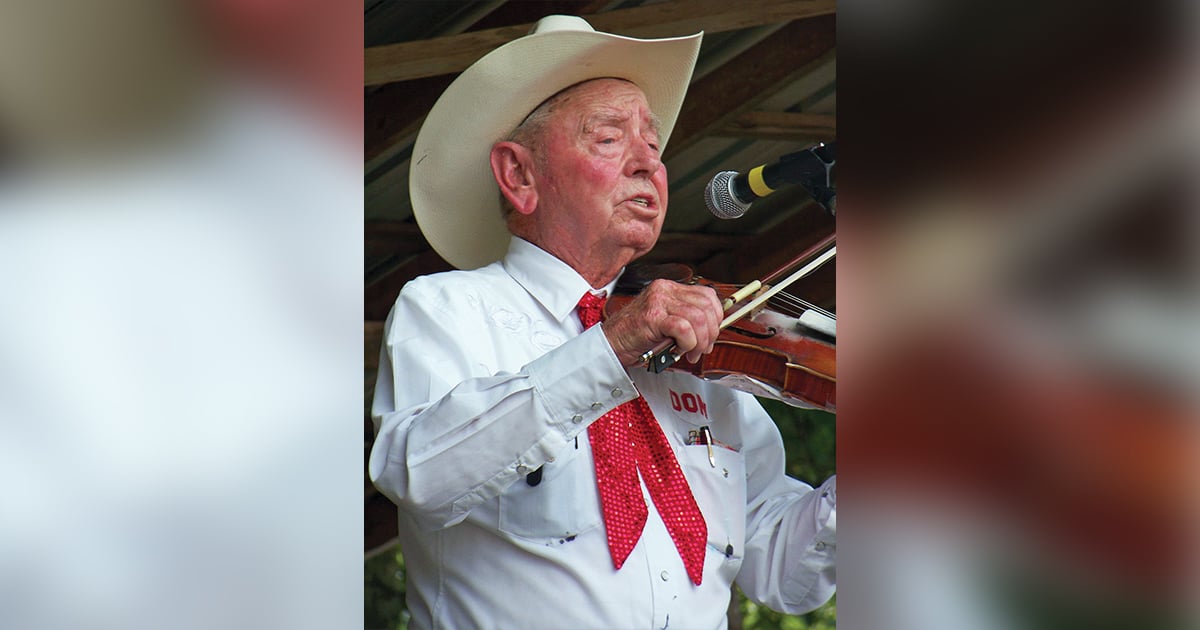
Country music legend Don Maddox has passed away, at age 98, on September 12, 2021. The last surviving member of The Maddox Brothers and Rose, Don was a fiddler and singer who certainly leaves a lasting legacy and impact on the genesis of country music.
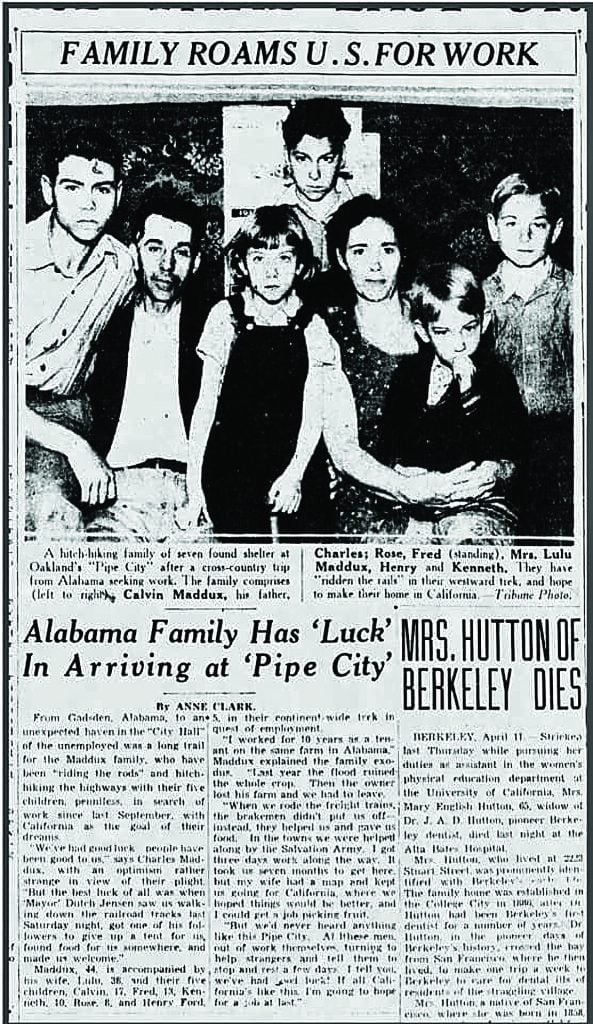
Don Maddox was born on December 7, 1922. At a young age, Don moved west from Boaz, Alabama with his family when drought and hard times forced them off their sharecroppers’ farm. His sister Rose Maddox once told me, “Mama decided we were going to California where you could just pick the gold off the trees. She thoroughly believed that there was gold on the trees out there.” With a pittance realized from selling most of their possessions, the Maddox family set out with the hope and aspiration of finding a better life during the Great Depression. The title cut on one of her albums, Rose Maddox once recorded a song (written by David Price) about their story called “$35 and a Dream.”
The family started their westward journey by hitchhiking to the rail yard in Meridian, Miss. There were many homeless Americans on the road in 1933, but few had children with them, jumping on the moving boxcars of freight trains. Railroad workers sympathized with their plight and helped them hide from the railroad bulls (cops). The Salvation Army fed the wayward family. In Oakland, Ca. (the end of the line), they settled temporarily in “Pipe City,” a homeless community located in big sections of unused sewer pipes.
After picking fruit during the day in California’s San Joaquin Valley, the Maddoxes spent evenings picking banjos and guitars around the campfire for other “fruit tramps.” Don’s father, Charlie, played the five-string banjo for his own pleasure. Don’s mother, Lulla, played mandolin and sang. All five of Don’s siblings (Cliff, Cal, Henry, Fred and Rose) eventually learned to play various instruments. One of Don’s uncles was a music teacher, and he’d taught his brother Cliff to play, who in turn taught brother Cal to play. And, so on down the line.
They became professional musicians when Fred tired of working and decided that music was an easier way to make a living. He talked non-stop for a half hour to a furniture store sponsor of a radio show in Modesto who agreed to host the band. Little did he know that Fred only played the jew’s harp, nothing else. Eventually Fred also learned to play bass. The sponsor insisted that the band have a girl singer, and Fred assured him that they had the “greatest girl singer in the world.” That’s how Rose Maddox, at age 11 in 1937, began her professional career in music that spanned over six decades. Fred once said, “I didn’t know if she could sing or not. All I ever heard her do was when she was doing the dishes and bellerin’ just as loud as she could!” Don was a little too young at the time to join the band, but eventually he did.
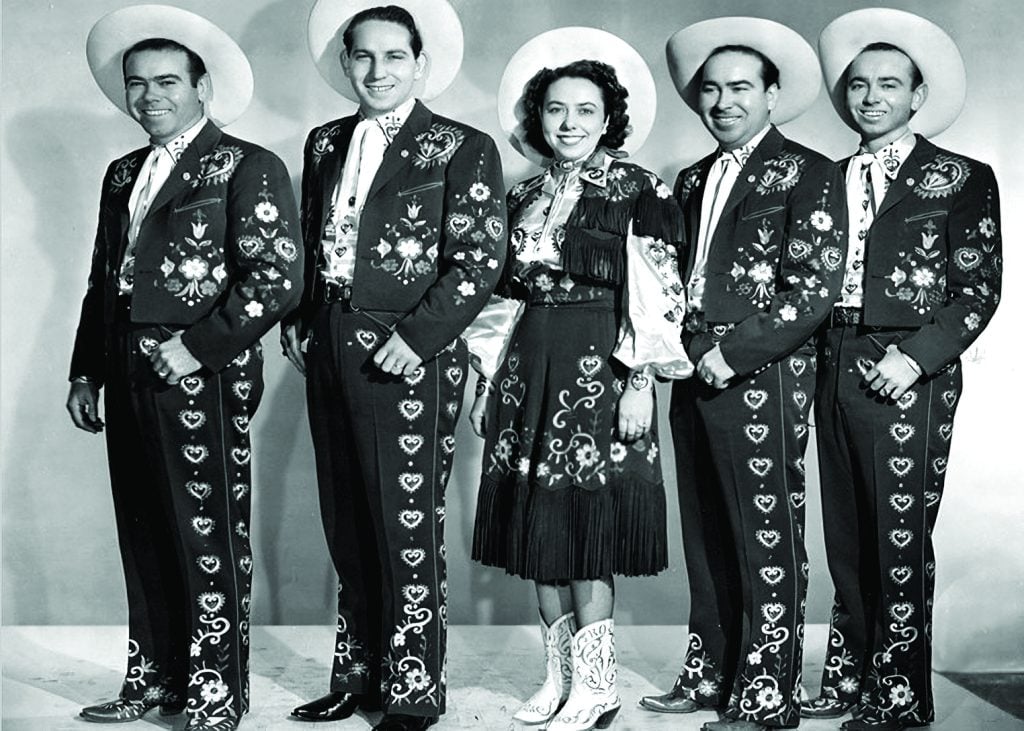
While not paid for their radio appearances, The Maddox Brothers and Rose promoted their dance, rodeo, street corner and saloon shows, entertaining other “Dust Bowl Refugees” like themselves. The band became regulars on the Louisiana Hayride radio barn dance program from Shreveport, La. Before World War II, the band included Cliff, Cal, Fred, Don and Rose. People just called them hillbilly singers, not country musicians, back then. Rose once said she was one of the first women to sing what she sang—country boogie.
Upright bassist Fred Maddox is given credit for developing the slap bass technique. “Well the reason he did a slap bass was because he didn’t know how to play the bass,” Don Maddox once said in an interview with Saving Country Music. “All he was doing was playing rhythm anyhow. He didn’t know the notes so he’d just slap the bass for the rhythm part. Everybody thought he put on a great show and thought he was the best bass player there was.”
With radio appearances, and by playing for tips, the band became one of country music’s most successful and distinctive acts. Besides their singing and picking, they offered entertaining shows full of upbeat spirit and fun. The Maddoxes had outrageous comedy routines, and flashy (almost gaudy) costumes to back up their billing as “The Most Colorful Hillbilly Band in America.”
Don and his brothers served during World War II, while Rose set out as a solo performer. Following the War, the band regrouped and came on stronger and flashier than ever. They began a long recording career on the Four Star and Columbia labels. Their radio shows typically started with their theme song, Wiley Walker and Gene Sullivan’s “I Want to Live and Love,” that Rose once said “tells the story of life.”
Fred would introduce the band … “There’s Cal, the laughing cowboy. And there’s Don Juan and his mule fiddle. Friendly Henry, the working girl’s friend greeting all the working girls. And the two hired hands. And then there’s Rose, the Sweetheart of Hillbilly Swing …” Some sidemen who supported the band included guitarists Roy Nichols, Jimmy Winkle and Gene Breeden, as well as steel guitarist Bud Duncan.
Don “Juan” Maddox was often referred to as “America’s newest singing sensation.” He also provided comedy. His sis Rosie once recalled, “and his fiddle sounded like a mule brayin’.” Besides Cal’s maniacal laughter, one could also hear yelps, screams, howls and spoken responses behind their spirited music. In 1949, The Maddox Brothers and Rose made their Grand Ole Opry debut singing “Gathering Flowers for the Master’s Bouquet” and “I Couldn’t Believe it was True.” The full group would eventually make several appearances on the Opry, and Rose & Cal appeared as regulars for a six-month period. The Maddoxes also played regularly at huge dance halls that dotted the countryside. Eventually the old dance halls closed up.
Back in a 2012 interview with Saving Country Music, Don Maddox related a story about how they were responsible for Elvis Presley adopting his flashy stage attire. “We were playing a show with Elvis in Beaumont, Tx. at the auditorium. A package show. And we had on our fancy outfits, the ones with the bell bottoms on them and all the flowers and all of that stuff. Elvis, he was just coming on the scene at that time. And they came in with their street clothes. That’s all they had at that time. It was pretty hot down in Beaumont so we took off our fancy jackets and hung them in the dressing room backstage. When we came off stage and went back there to get our jackets, Elvis had on one of our fancy jackets and was parading backstage and said, ‘One of these days I’m going to get a fancy outfit like this.’ So eventually Elvis got himself a fancy outfit, not like ours but even more fancier. But it had bell bottoms on it, so the story is he got the idea from seeing bell bottoms on our outfits at that time.”
The Maddox Brothers and Rose disbanded in 1956. For a short while, Fred, Henry and Don performed with Henry’s wife, Loretta. Fred operated a couple nightclubs in southern California. Henry worked in a few down that way. Don bought himself a cattle ranch near Ashland, Oregon. He’d wanted to trade his 1957 pink Cadillac for it but ended up paying $27,500 for the ranch. Cal and Rose stayed together because neither was married at the time. They had moderate success in Nashville but ultimately returned to Oregon and lived out their lives on Don’s Revolution Ranch, known for its legendary Angus bull named “Ben Bond Revolution #73.” Don’s barn, with signage that says “Maddox Revolution Angus,” is a landmark just east of Ashland, Oregon.
With their eclectic and stylistic music, the Maddox Brothers and Rose are credited with being on the forefront of the rockabilly movement. Their innovative musical mix made them sound like a cross between a 1930s old-time string band and a rock-n-roll band of the late 50s. Rose continued performing and recording, with several highly-acclaimed albums in both the bluegrass and country genres. A good read is the 1996 book, by Johnny Whiteside, entitled “Ramblin’ Rose, The Life and Career of Rose Maddox.” Ken Burns’ 2019 documentary about Country Music discussed the contributions of The Maddox Brothers and Rose in episodes two and three.
Cliff Maddox died of kidney failure in 1948 (when just 37). Cal passed away in 1968, and Henry died in 1974. Fred passed on in 1993. Rose passed away in 1998, a few years after her appearances at our Myrtle Creek Bluegrass Festival. I had the honor of playing mandolin at her graveside service, and we jammed at brother Don’s ranch afterwards. I’d occasionally run into Don at jams and concerts sponsored by the Oregon Oldtime Fiddlers’ Assn. While not in the band, Don also had an older sister, Alta Mae Troxel, who wrote several songs recorded by both The Maddox Bros and Rose and Rose as a solo act. Alta Mae Troxel passed away in 2007 at age 93.
Now, in 2021 at age 98, Don Maddox is the last of this seminal band to leave us. What a musical legacy they have left for us to enjoy!