Steve Dilling
A Great Banjo Picker and a Good Person
Steve Dilling is a very humble and thankful man. Instead of listing his many accolades from 40 years in the music industry, he references all those who have helped him along the way. He is reflective, appreciative, and grateful.
His dad, Don Dilling, explained his son’s demeanor. “He always recognizes the ones that helped him along the way. He remembers people’s names.”
Steve talked first of his formative years, “Something drew me to the banjo.” Don recalled his son’s interest. “Steve begged me for a banjo for a long time. He was mesmerized by it. He was totally obsessed with it. Richard Wise, a banjo player (with the Gambling Grass) and electrician who worked for me, invited us to a band practice. That was the first time Steve was exposed to a live banjo. He got to hold it. I told him, ‘If you drop it, I’ll never live long enough to pay it off!’”
His son recalled, “Dad got me a banjo for my 12th birthday. He bought it during his lunch hour. It was a Global, something cheap, that he paid $69 for.” Dilling immediately bonded with the banjo and is appreciative of his parents’ support. “Six months later, he bought me a (Gibson) RB-250 and that cost him $1300.”
The Dillings transported their aspiring musician to compete in regional fiddlers’ conventions. He performed with various youth ensembles called the Bluegrass Young’uns. Bluegrass promoter, Milton Harkey shared, “I have known Steve and his family since he was a teenager when they came to the festival at Denton, NC. His parents, Linda and Don, are two of the finest people you would ever want to meet. Steve wanted to hang backstage and was a big help with bands. He was able to meet the performers and look at their instruments. He saw their emcee work, humor, choreography, stage show, and overall presentation/stage appeal. He saw what worked and what didn’t. He studied every movement of the first-and second-generation bluegrass music stars. We spent many hours discussing why some bands were successful and some good bands ones were not. And just when he thought he had everything together, he heard the crowd as Tony Rice was introduced there in 1982. None among us had ever heard anything like it. It was surreal.”
Dilling’s first structured band was Stony Run with Wes Tuttle, Kim Gardner, John Wade, and Mickey Drye. “My first recording was with that band,” Dilling recalled. “I met Wes while he was a student at NC State. I owe so much to him. He really showed me the basic things in a band. He taught me how to sing baritone.”
Then in 1984, Dilling played a short stint with the young powerhouse band, Summer Wages, joining Rick Allred, Barry and Kenneth Barrier, and Garland Carter. The position opened new doors for the five-string picker. “I took the job after Craig Smith (their banjoist) left. I had my first traveling gigs with them. We even went to Canada.”
A year later, the late John Maness petitioned Dilling to become a Bass Mountain Boy. Dad Don recalled the incident. “We went to see Jim and Jesse at the Big O Jamboree (in Burlington, NC). John came to me at intermission and said, ‘When the show is over, can we talk?’ Afterward, John said, ‘Jeff (John’s brother and Bass Mountain’s banjoist) is taking a job at Duke and has to leave the band. I’d like to ask Steve to play in our band, but due to his young age, I thought I should ask you before asked Steve.’ The next morning I told Steve about it. John had his own festival and his own bus that would provide comfort and safety. I told him that he should take it.”
Steve phoned John Maness and accepted his offer. It proved to be a wise decision. “I played more dates with them and traveled in a bus. I had always dreamed about that. I used to draw pictures of Silver Eagle buses. We played almost every weekend, about 100 shows a year. That’s quite a bit for a band that wasn’t full time. I learned how to be an entertainer and an emcee by watching John Maness. He told me, ‘love the people and they’ll love you back’. I remember that and try to maintain that till this day.”
Mandolinist, Mike Auldridge, nicknamed “Precious” by Dilling, fondly recalled, “Steve is a heck of a musician. The first time I met him was in 1985 when we played in the Bass Mountain Boys. He, his mom and dad, have become family.”
His parents remained supportive. “We bought motor homes and traveled with him. We went to some unbelievable places. It’s almost like a dream.”
In 1992, the Raleigh-based banjoist worked briefly with Lonesome River Band, then returned to BMB. “I took an insurance job with Durham Life. Our daughter, Stephanie, was little. I was doing well, then the company got bought out and I was laid off.”
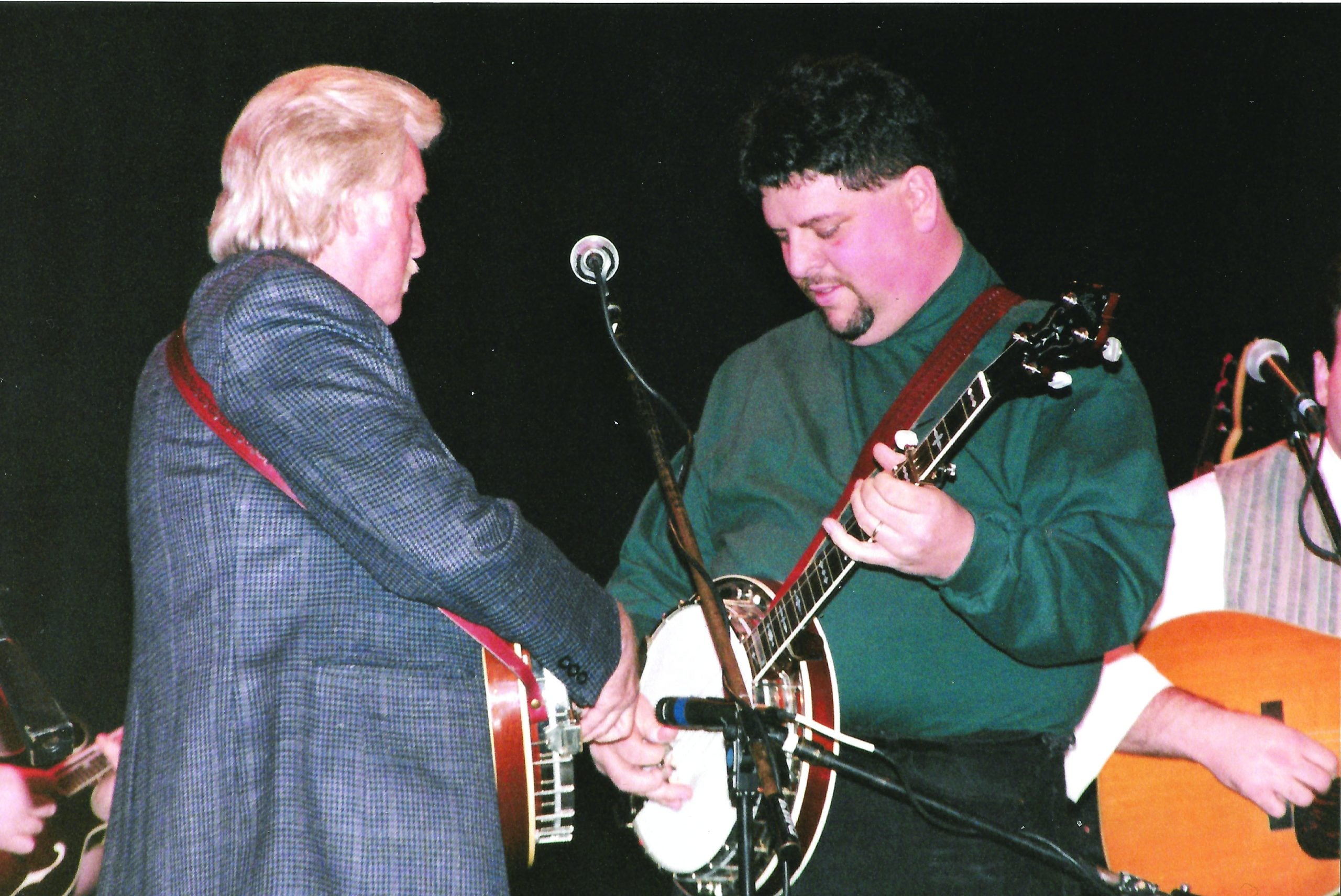
Worried about providing for his young family, Dilling received a welcomed, but unexpected call. “My last week of work, Ray Deaton called and said there was an opening with IIIrd Tyme Out. In July 1993, I went to Georgia and auditioned. Right after that, we went to Cracker Barrel and sealed a deal. I knew I had it made. It was like it was meant to be.
“It was a full time position. They worked a lot. I learned so much and I’m just trying to pass it down. I stayed with them almost 20 years. My last show was Thanksgiving Day (at Myrtle Beach Festival) in 2013. I retired. I had health problems, diverticulitis. It flared up a lot. I was ready to slow down.”
Dilling still receives praise from his co-workers. Russell Moore reflected on his longtime band mate. “Steve was a really good fit for IIIrd Tyme Out. He helped to mold and create the sound of IIIrd Tyme Out. He was good connecting on and off stage with the audience. He would joke and keep them engaged. Steve was a people person and a great ambassador. We had a good 20 years. I’m happy he stayed that long. We remain good friends and still check in on each other. We congratulate the good things going on in life. I wish him continued success in the future.”
“I worked with Steve for 10 years (in IIIrd Tyme Out),” Mike Hartgrove, fiddler with Lonesome River Band, stated. “It was a pleasure to work with him. He’s a great guy and he’s got it together.”
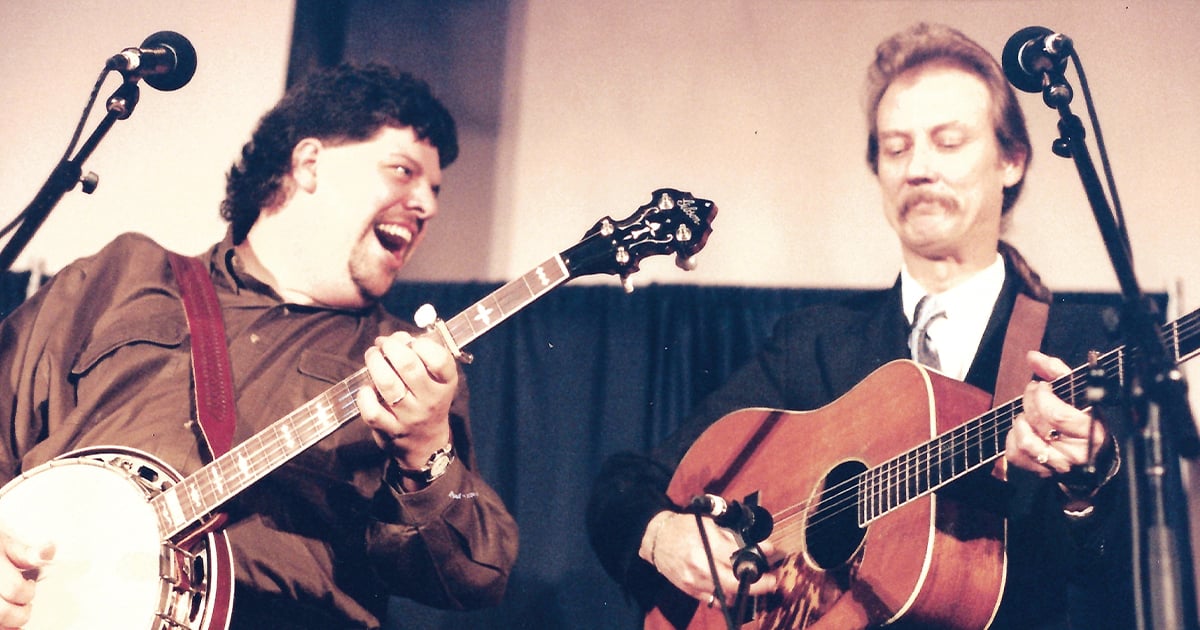
After retiring, in 2014, Dilling had surgery and eleven inches of his colon was removed. He started booking a few shows during December (when most bands were off for the holidays). “I called the band, Sideline. I’d get different people to play like Ron Stewart and John Wade. Skip was dating my daughter and moved to Raleigh. It gave us a chance to play together. Jason Moore played some shows and the three of us became the core of the band. Darrell Webb and Justin Hanes came in and we started playing private events.”
The group recorded a CD. “Loneliness and Desperation,” a Del McCoury tune, received a lot of air play. Sideline got booked on Lil’ John’s Bluegrass Festival (son of BMB, John Maness). “I was working for Lorraine (Jordan) helping with her Coffee House. Sideline started growing. We began to get more dates, 40-50 per year.” Later in 2014, the band cut another album.
“It turned into full time. That was never the intent. We bought a bus. Overnight travel was so hard to do in a van with our gear, instruments, and suitcases. We had all been used to traveling in a bus. We are fortunate to have Jason. He is the guy. He can pinpoint things about a bus. We are so lucky to have him.”
Jason responded, “I have known Steve probably 30 years. We have always been good friends, but it wasn’t until we started working together that I saw how much drive and ambition he has for the music and all of our guys. When you do this for as long as we have, you can get stale in your ideas or overwhelmed by the business end. He always has or wants fresh ideas and stays on the level, business wise. He never gives up or takes no for an answer when it comes to Sideline. His dedication is unwavering and I am proud to call him my friend.”
Then the band acquired a sponsorship with Swaggerty’s Farm Sausage. Dilling explained the process. “I called and got an appointment. We went to Kodak, TN, made out a proposal and met with them. We shot for the moon. Then we had a second meeting with their marketing team in Nashville and came up with a deal.”
Sideline is now in their fifth year of collaboration with Swaggerty’s. “I told them how loyal bluegrass fans were. They quickly found out. We pass out Swaggerty’s coupons on our table. The coupons are coded and the return on them has been great. It is a great partnership. We are good for each other. They stood by us in the pandemic. Fans ordered merchandise and we sent coupons, so we still advertised. We drive a 45-foot billboard bus.”
Dilling, 56, reflected on the highlights of his career as a professional musician. “First, has to be in 1983, when I traveled with the Bluegrass Album Band. I helped with merchandise and set up tables for autograph sessions. What an opportunity! I got to go with Milton (Harkey) to pick up Crowe from the Greenville-Spartanburg airport. We went to Red Lobster. Then (Tony) Rice and (Todd) Phillips came in on Monday.”
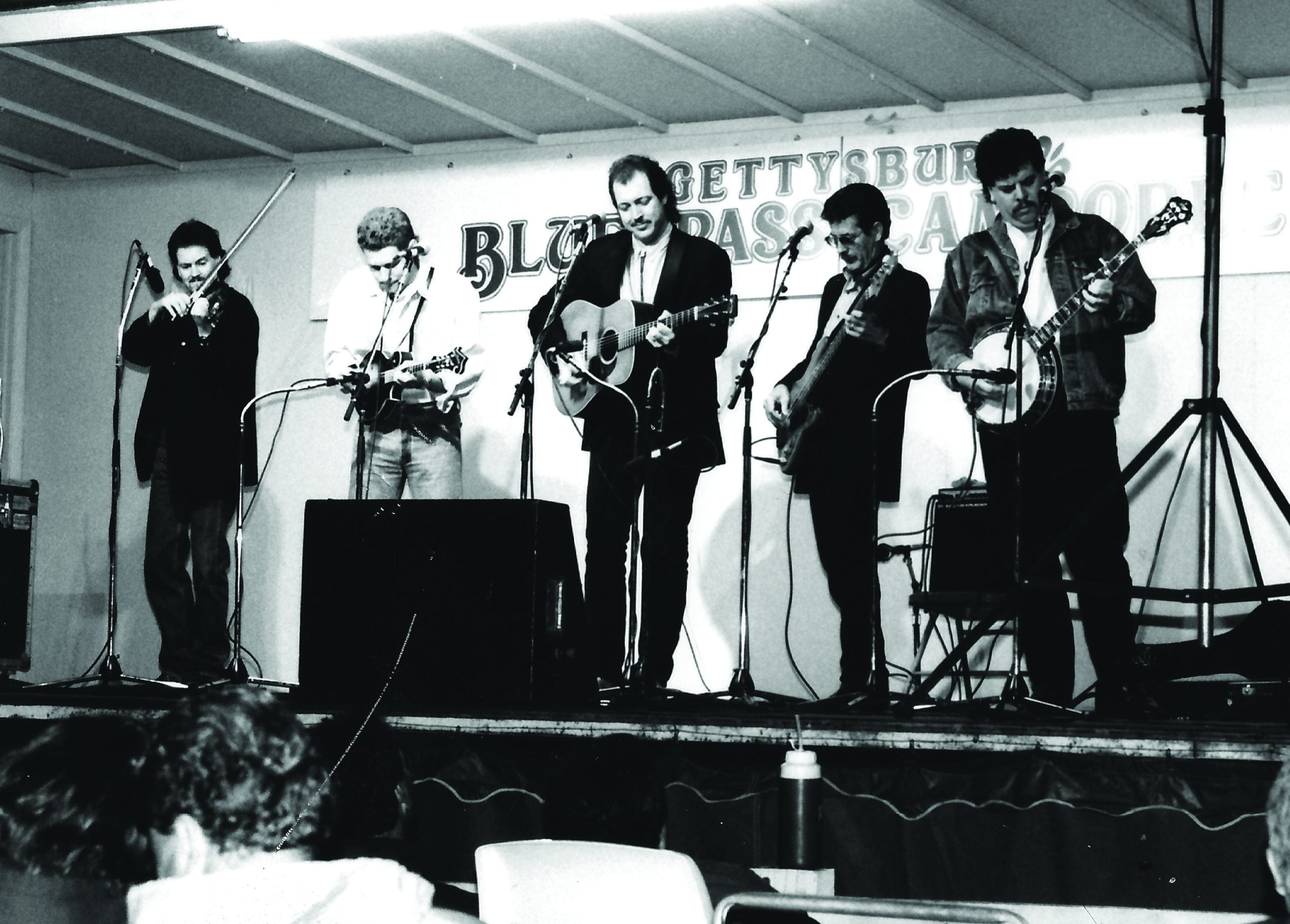
Harkey agreed, “There were many exciting bluegrass moments that we can remember forever like the time Steve and I met Tony at the airport. We watched as people deplaned, then off walks Tony Rice!! We looked at each other and both said ‘SON!’ at the same time.”
Dilling continued, “They were to play Thanksgiving Day at Myrtle Beach. They rehearsed on Wednesday in Milton’s basement. I just sat there and watched that! It was the first tour I’d ever been on, traveling on a bus with those guys. I made lifelong friends.”
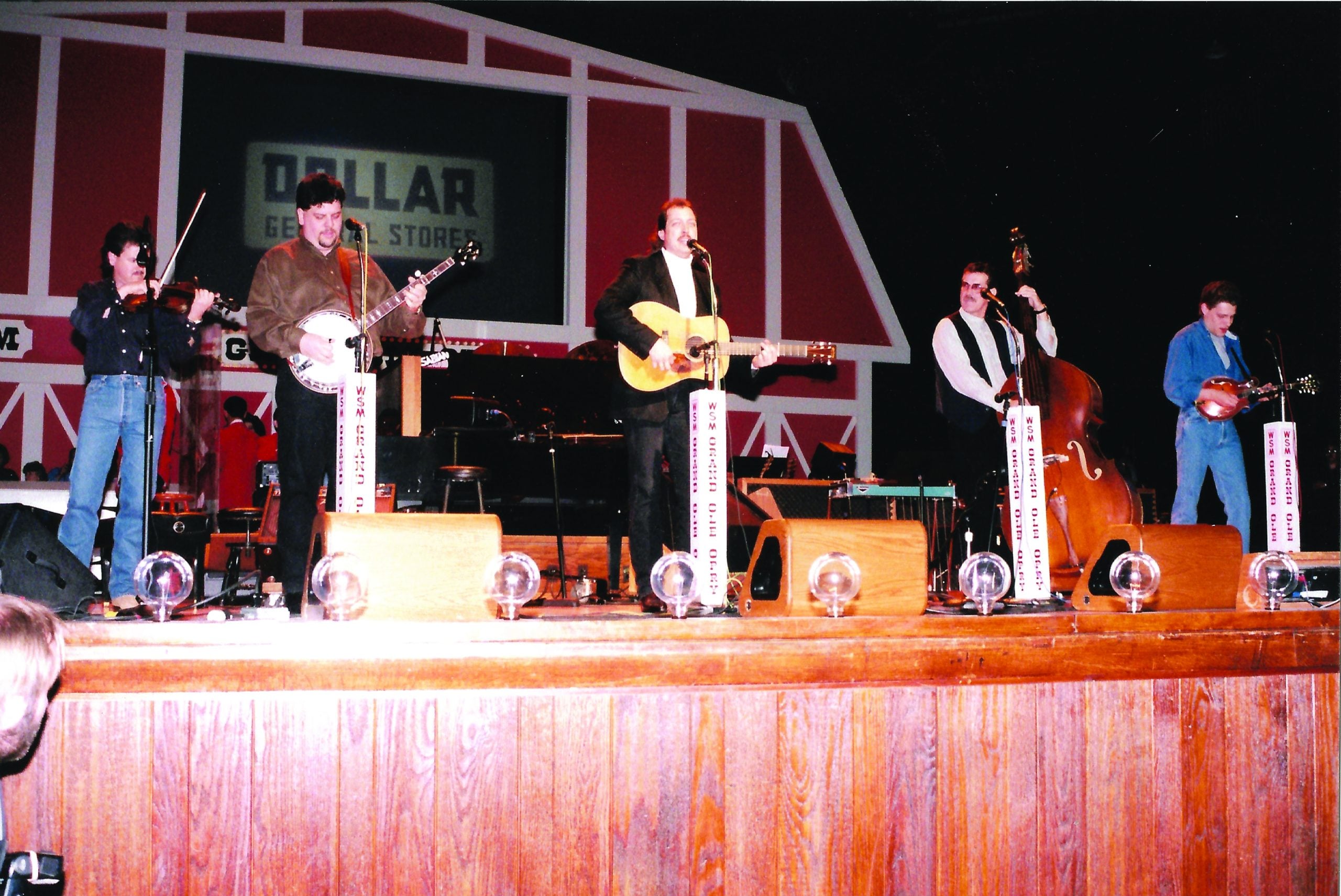
Another milestone for Dilling was performing on the stage of the Grand Ole Opry. “I played my first time there with IIIrd Tyme Out in 1996. I always promised my parents if I played the Grand Ole Opry that I’d take them with me. I took them and we even got an encore. We sang ‘Swing Low Chariot’ and got a standing ovation. Since then, I’ve probably played the Opry 150 times. I’ve also got to the play the Ryman quite a bit. We played Bluegrass Nights at the Ryman on my birthday. I’ve got my backstage pass framed with the date: Aug 5.”
Another memorable time was IIIrd Tyme Out’s last recording for Cracker Barrel in 2012. They had a three-day media tour. “Russell lost his voice and couldn’t talk or sing. We had a CD release party at the Station Inn. Someone called Vince Gill. He was at a ballgame. He came straight from the game and played the Station Inn and then the Opry with us. He is the most down-to-earth superstar.
“The Cracker Barrel CD’s theme was songs that had influenced us. One was ‘Big Spike Hammer.’ Bobby Osborne came out (at the Opry) and sang with us. Another was ‘Farewell Party’ and Vince sang the tenor. What great memories!
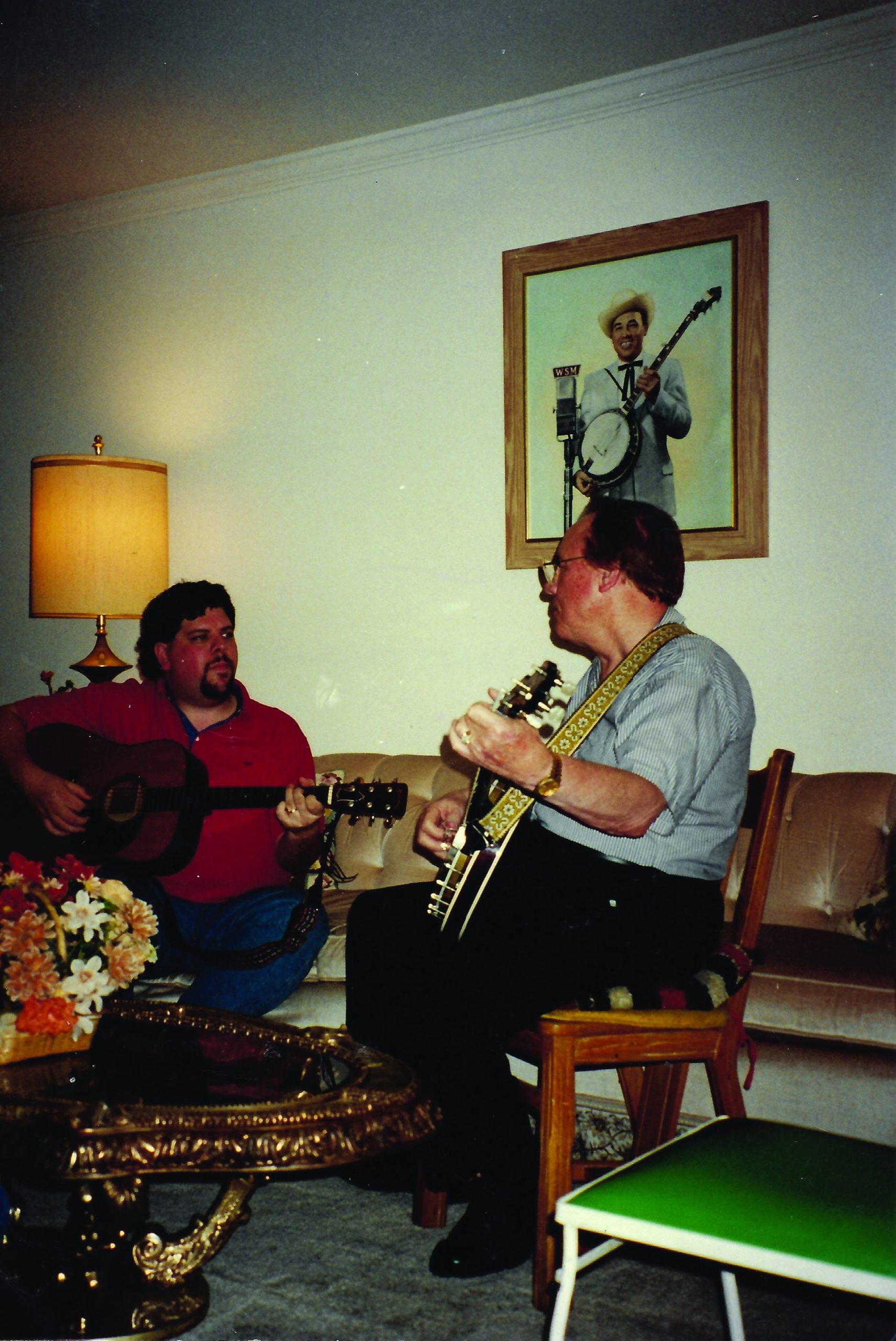
“One of the other highlights of my career was getting to be personal friends with my heroes: Earl Scruggs, Sonny Osborne, JD Crowe, Tony Rice, and Terry Baucom. I am truly blessed because most people can’t say that they are friends with their heroes.”
Linda, Dilling’s mom, laughed. “He called us from IBMA at Owensboro and said, ‘I have Earl Scruggs banjo!’ He was all by himself and Earl had asked Steve to walk with him and carry his banjo. He got invited to Earl’s house and was so excited. We all have so many great memories.”
“I cannot talk about my life without talking about my wife. I married my next-door neighbor growing up in Cary, Macie, in December 1985. She has stuck by me and in later years, she’s been my chauffeur.”
Macie described their relationship, “We are your classic introvert/extrovert. I’m a homebody and Steve likes to get out with people.” Their union has garnered two children, Stephanie and Matthew, and two grandchildren, Aiden and Adeline.
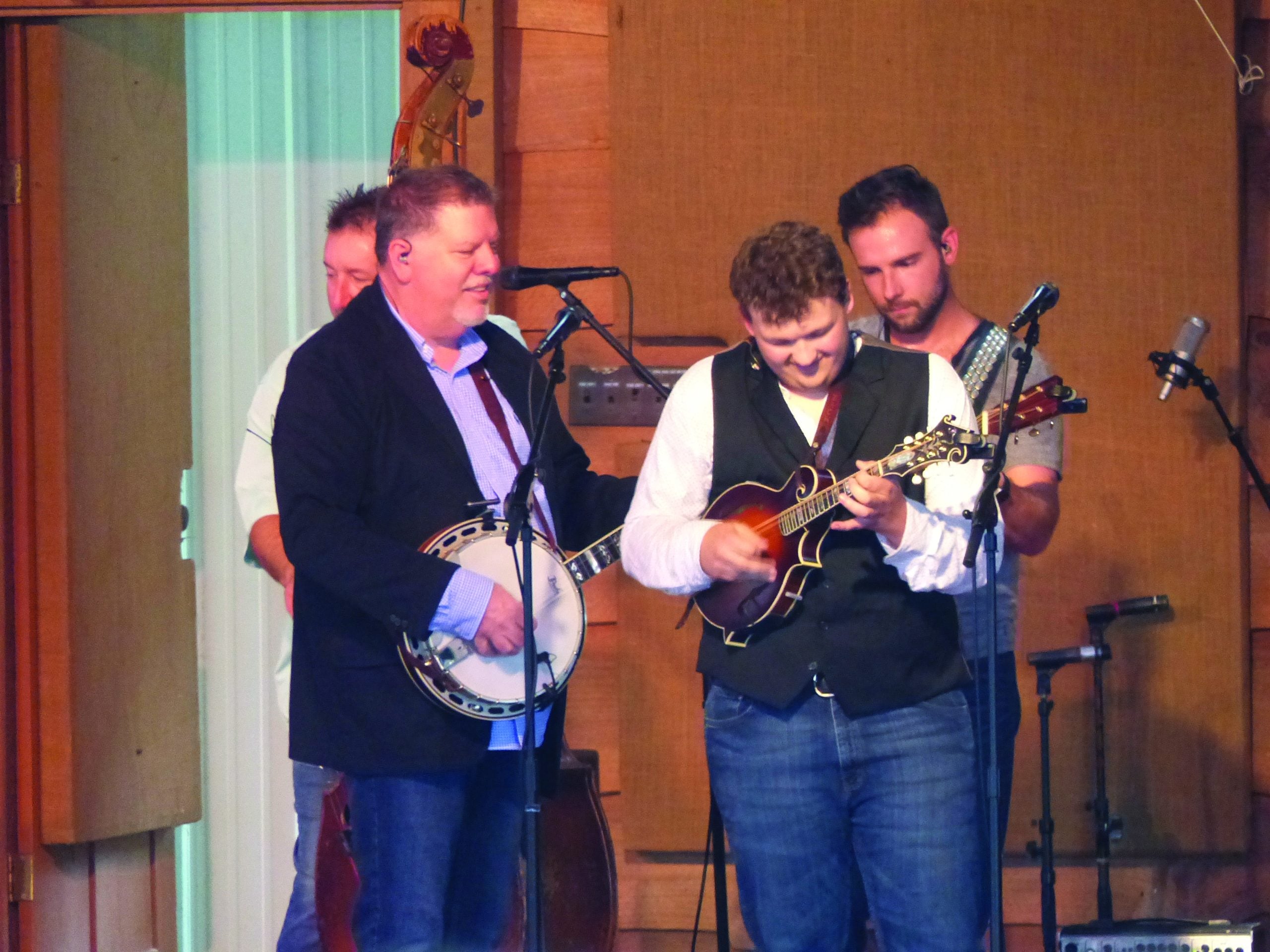
Dilling suffers from an eye condition: macular ischemia, the loss of blood flow that results when small blood vessels in retina close up. “I first noticed losing my eyesight in the spring of 2014. It is a rare eye disease that there’s no treatment or cure,” the big banjo man casually explained.
His dad talked about his eye condition. “He’s legally blind. There he is on stage playing his heart out and three-fourths of the people he can’t even see. It’s tough to see your son like this. I’ve cried over it.”
Macie stressed, “He has a good attitude. He says, ‘this is the hand I’ve been dealt.’” Even with medical setbacks, Dilling has maintained a positive outlook and encourages others in the industry. Harkey stressed, “Steve has put in the practice time to make himself one of the best banjo players in the music. Steve is a valued musician within the bluegrass music community and an excellent teacher.”
Steve’s dad stated, “He is a good man. There’s nothing phony. He is what he is every day: a good human being. That means more to me that anything. I’m so proud of him. He has brought so much happiness to his mother and me.” His mom, Linda, added, “I could just go on and on. I could just bust at the seams. He’s worked so hard for this. We’ve always supported him and he’s never disappointed us. Everybody loves Steve. Another of part of him is he is a Christian. He prays every night. He has a good heart. He’s a great husband, father, and grandfather.”
Macie agreed. “He gets up happy, ready to the face the day. He’s genuine. He never puts on airs. He’s never fake.” Don Dilling concluded, “Steve is a great banjo picker, but I more proud that he is a good person.” And Steve Dilling is just that.