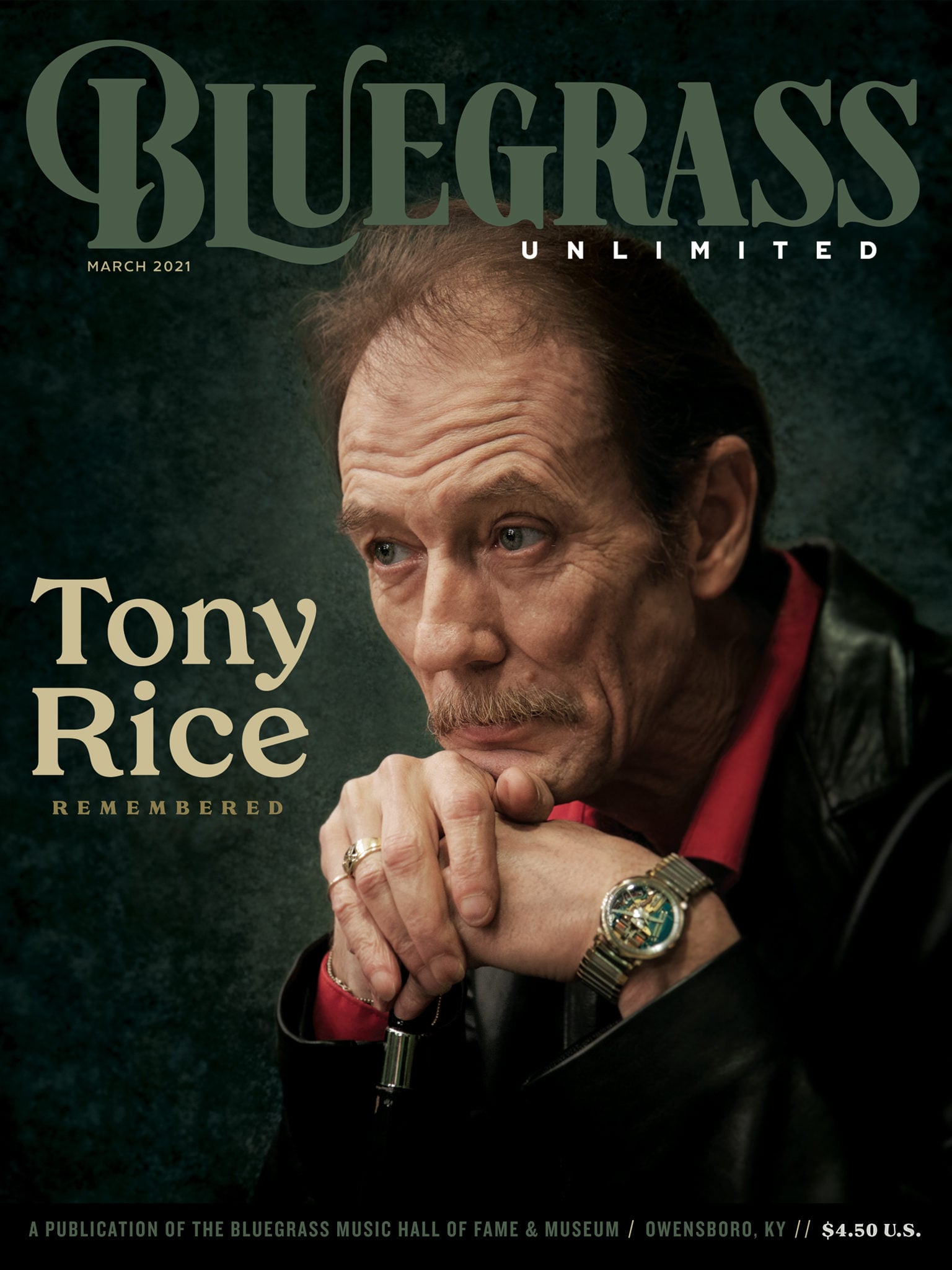
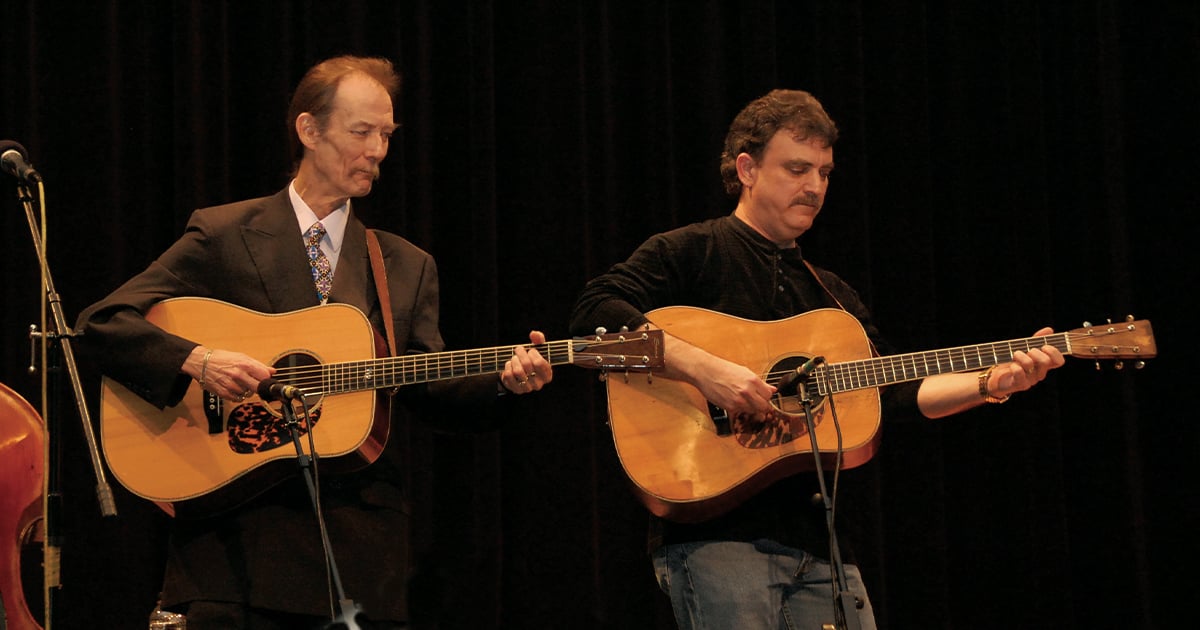
Wyatt & Ronnie Rice Remember Their Brother Tony
or the friends, collaborators and fans of Tony Rice, the unexpected word of his death hit us hard. The response to the announcement on social media, in news print and on the radio was nothing short of astounding as Rice’s music was played relentlessly, and his life story was covered by many outlets.
For the Rice family, however, the personal aspect of losing a loved one was devastating, and it will take a very long time for them to truly process and grieve this loss.
About a month to the day after Rice left this world, his surviving brothers Wyatt and Ronnie Rice found the strength and the words to remember Tony as only brothers can do. The following is a sweet testament to their life as siblings.
Larry, the oldest of the Rice brothers, died in 2006. With Tony’s passing, Wyatt and Ronnie are the last of this impressive quartet. Here, they give insight into their close relative, revealing stories that only brothers can tell.
Wyatt was the baby of the Rice brothers, being 14 years younger than Tony. He began to play the guitar by the time he was 6 years old and that made him want to follow his fellow guitar-playing older brother around even more. The special one-on-one experiences that Wyatt shared with Tony began when he was just a kid.
“For me, playing the guitar from the age of 6 to 10 years of age, the main music for me was playing with my dad, my brothers Larry and Ronnie as well as my uncles,” said Wyatt. “My first time on a main stage happened when I was 9 years old at the Camp Springs festival when Tony asked me to come up and play ‘Salt Creek’ with J.D. Crowe and the New South. A year or two after that, however, Tony had moved to California to play that new music with David Grisman. Somewhere around 1976 or so, when I was 11 or 12 years old, my dad and mom wanted to go out there for a visit. This was right before they cut that first David Grisman Quintet album. After we got to California, that same night Tony told my dad that a couple of guys were coming over for a jam session that evening and it was David Grisman and Darol Anger. That was the first time I had met those two and they picked a few tunes with my dad at Tony’s apartment in Kentfield, California.”
After a few days of vacation, it was time for Wyatt to get back to middle school in Florida. But, the youngster had another plan in mind.
“When it was time for us to go back home, Tony was about to start work on recording his solo album for Rounder Records that was titled ‘Tony Rice,’” said Wyatt. “Tony was recording his own album at the same time he was rehearsing for that first Grisman Quintet record. So, when it was time to go home, I begged my mom and dad to let me stay for a couple of weeks. My dad said, ‘No, son, you have to go back to school.’ But, I think Tony had a talk with my mom saying, ‘Why don’t you let him stay?’ And he convinced my parents to let me hang out with him for a while. I was tickled to death and I wasn’t worried about flying back home by myself. Tony wanted me to stay and experience some things with him.”
Cool events happened quickly and soon. Tony took his wide-eyed younger brother to the studio.
“A day or two later, Tony says, ‘I’m working on this record and Grisman is coming in and we’re going to be recording this song called ‘Rattlesnake,’ so let’s go to the studio,’” said Wyatt. “The session was at Arch Street Studios, where those guys cut a majority of their albums. We got in his car and drove over there and in the control room, I was just taking it all in, looking around and meeting everybody. They recorded the album live so everyone was sitting in their chairs inside the studio. So, I opened up the door and mentioned that I saw an empty chair in there and asked, ‘Can I come in and watch you all play?’ Tony said, ‘Yeah. Come on in and have a seat, but just be real quiet.’”
Wyatt was now sitting in the circle as they recorded, and soon he got one of the most memorable and intense musical experiences of his life.
“I will never forget that while I was in plain sight of everybody, I had a particular sight on Grisman,” said Wyatt. “So, they kicked into the tune ‘Rattlesnake,’ a ‘Dawg’-type of tune that Grisman wrote. I was sitting there, taking it all in and it was a different type of music than I was used to. When it got time for Grisman’s break, I was looking at him because there was just something about him that interested me. He shook his head for a minute and then he looked right at me while he took his whole break. He was grinning, looking at me the whole time like he was playing the break for me. And, that is the break that is on the record. I was so excited just to be sitting there and watching these guys, thinking, ‘Man, this is great.’ I was tickled to be a young kid taking this all in.”
A few days later, Tony took Wyatt over to Grisman’s house where they rehearsed “EMD” and other future legendary cuts that would end up on the inaugural David Grisman Quintet recording. Wyatt was having the time of his life.
A few years later, when Wyatt was a teenager, he got one of the coolest calls of his young career. Big brother Tony was in the midst of recording his landmark Church Street Blues album and he asked Wyatt if he could fly him out to play on it.
“One day out of the blue, Tony said, ‘I got this solo album coming up and I want you to play rhythm on a few tunes for me,’” said Wyatt. “He told me that the tunes would be ‘Gold Rush,’ ‘Cattle In The Cane’ and ‘Jerusalem Ridge.’ He said,’ I am going to get you a ticket and fly you out here so you can play rhythm on those cuts.’ Man, I was so excited, and I can’t even tell you how much.”
Wyatt also helped his brother record the beautiful and underrated Backwaters album. For that project, Wyatt had to learn some different jazz chords than he was used to playing. But, Tony would show him how to play a song and then Wyatt would go into the next room and woodshed until he had it right. It was then that Wyatt knew he wanted to play music for a living, and he also realized that Tony wanted him to play a special kind of rhythm guitar behind his solos. This time together would become the impetus for Wyatt to make music his full-time profession and would lead to him becoming a steady member of the Tony Rice Unit.
Wyatt was out in California for quite a while during this period and some of the highlights of time spent with his older brother included going to the huge Tower Records store in downtown San Francisco to peruse and buy new jazz albums. And, one night, Tony took Wyatt to see the legendary jazz pianist Oscar Peterson play live, which included a meet-and-greet after the show. It became a period of shared memories that Wyatt would never forget.
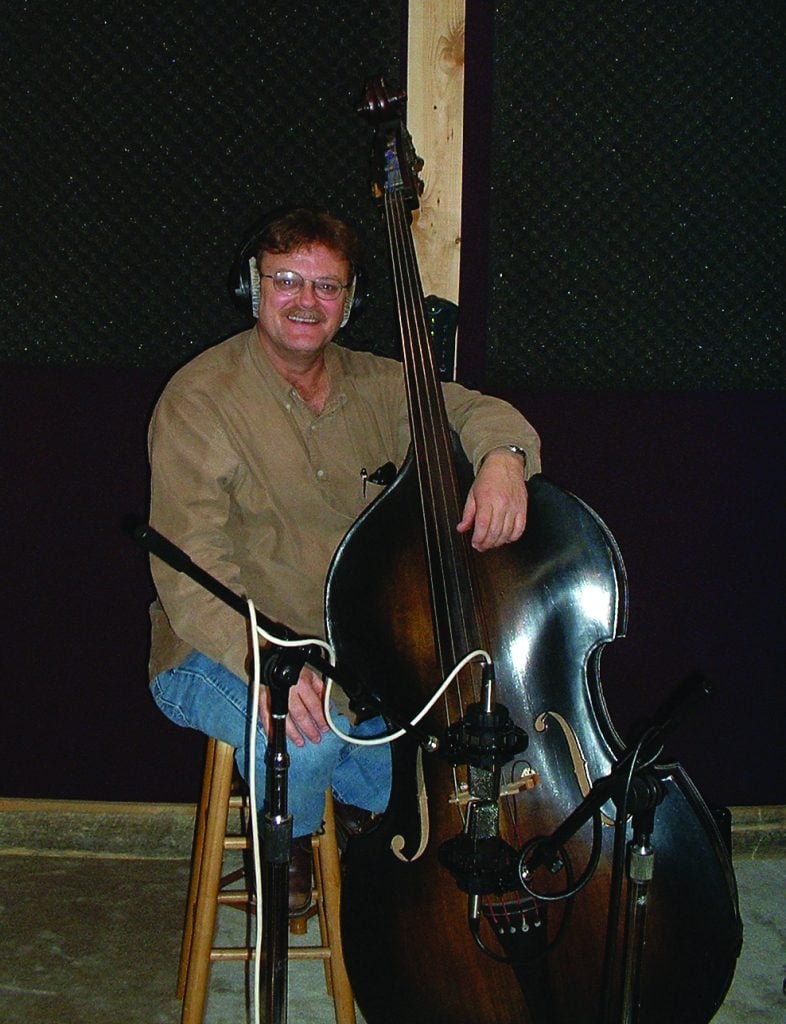
Since then, Wyatt has made albums of his own and has collaborated with artists such as Ronnie Bowman, Richard Bennett, Dan Menzone, David Grier, Kenny Smith, and his own band Santa Cruz. He also recorded two great albums with his siblings as the Rice Brothers and a duet album with his late brother Larry.
Ronnie Rice played a lot of music with his family at a young age when they all lived in California. Many years later, he would also be a part of the two albums recorded by the Rice Brothers in 1989 and 1994. Ultimately, however, Ronnie never had the desire to be on the road continuously as a working musician. So, while keeping one foot in the music business, he worked for 30 years at his day job at the power-generating plant located at the intersection of the Potomac River and Quantico Creek in Virginia. It is the same facility that Ricky Skaggs briefly worked in back in the day.
Ronnie is also an audio mastering contractor who has worked on many notable recordings including two Steep Canyon Rangers albums, albums by Ronnie Bowman and Junior Sisk as well as various projects by a famous legacy record label that produces many late night infomercials on TV.
One side of Tony’s interests that is not often talked about was his love of fishing. Ronnie and Tony spent many a day throwing lures and catching largemouth bass in the Florida sun.
“Tony and I would talk on the phone late at night and we would have the occasional 1 or 2-in-the-morning call,” said Ronnie. “We would sit around and talk about jazz musicians and photography and fishing. Tony was quite the bass fisherman. His favorite lure was the Dalton Special. He didn’t like to use live bait but instead used artificial bait so he could figure the fish out. With us, it was fishing and photography as 15 to 20 years ago, he was heavy into the photography thing, too.”
As far as having a favorite recording by his brother Tony, Ronnie picks the aforementioned Backwaters.
“It’s just absolutely wonderful,” said Ronnie. “It was recorded and produced really well and it had a good tune selection. Tony wound up giving me one of the three lacquers that were cut of that recording. After he listened to them, he gave me one of them and I cherish it. It is still playable. Also, I took the cover photo for that album.”
Once Tony decided to call his new album Backwaters, he recalled a fishing trip with Ronnie and came up with the idea for the cover.
“The cover photo on that album is where Tony and I would go fishing all of the time on the Withlacoochee River in Florida,” said Ronnie. “There is an old railroad trestle on the Withlacoochee that is about a half mile down from Dunnellon and the tracks are no longer there, but the pilings are still there. Off to the right there is a cut through some cypress trees that is wide enough to get a john boat in. When you go up in there, it widens up into two big abandoned lakes that were once phosphate mines in the late 1880s. The cover photo is where the river had been reclaimed. He called me up one day and said, ‘Can you go back to where we would fish all of the time and get a couple of pictures? If they use them, they will pay you for it.’”
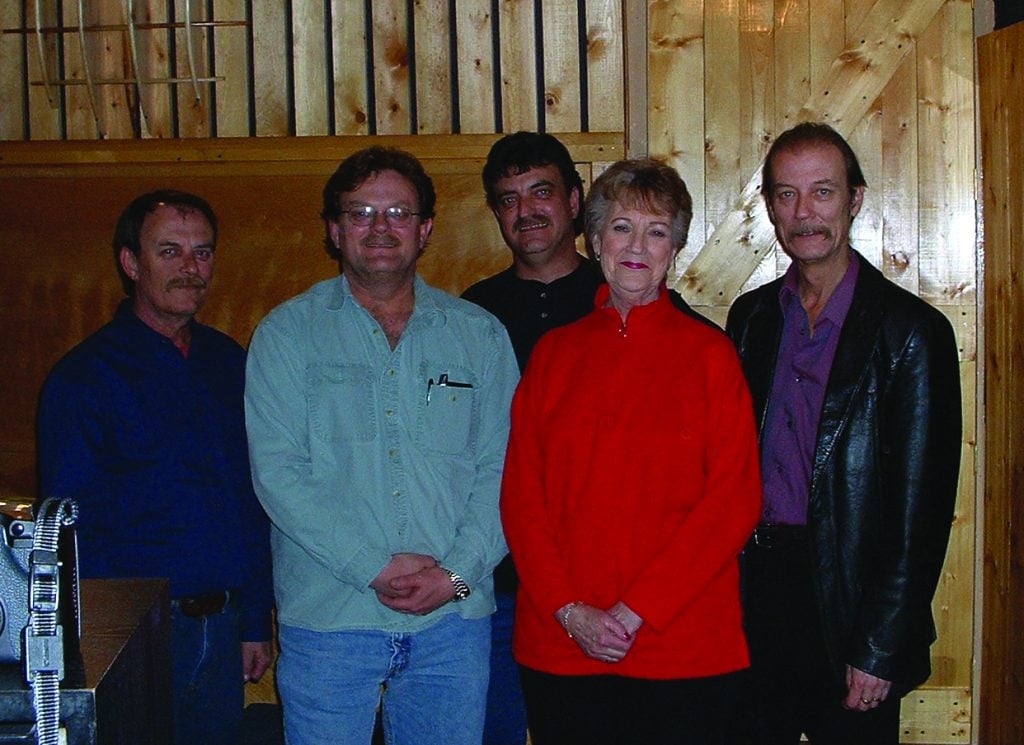
Here is a story that only a brother could tell. Many music fans picture Tony Rice as a serious musician who always looked good with a suit and tie on as he went about being a musical genius. But, back in the day, he was as mischievous as another teenage boy would be.
“When I was 10 and Tony was about 14 years old, Dad rented a place on the river near Dunnellon and about four or five houses down from us was a fish camp, where they rented cottages and boats,” said Ronnie, laughing as he tells the story. “The owner of the camp also sold live bait for fishing, including shiners. Every once in a while, when a customer would come by, this guy would open up the shiner tank and there would be a couple of dead ones in there on top. He would take his dip net and flip the dead shiners out into the water where he had a pet bass. Every time he’d flip a dead shiner out there, that pet bass would come up and grab them. Tony saw this one day and he got smart to the idea of getting a dead shiner and putting it on his hook and casting it over there. As that guy’s pet bass came up and Tony hooked into it and was dragging it in, the owner of that fish camp came running over mad as can be and started chasing Tony as he was trying to land the fish. Tony had caught that guy’s pet bass and he just kept running away from that guy with the fish still in his hands.”
Those are the kind of memories you tend to have when you grow up with siblings. However, humorous stories like that are just a brief respite from reality when a family member moves on. As one would expect, Wyatt and Ronnie are still shaken by the loss of their older brother.
“I’ve heard from quite a few people who have passed on their condolences,” said Ronnie. “I miss him a lot. To me, he is my brother and he was a pretty great guy. He left us a lot of music and his music will live on and will always be out there.”
“It has been overwhelming with all of the friends that have contacted us,” said Wyatt. “The Rice Family would like to thank them all. I know that Tony loved his audience and loved his fans. He was my brother and I loved him. All of us Rice Brothers, Larry, Ronnie and Tony, we had a unique relationship with each other and we all loved each other.”