Notes & Queries – March
NOTES
“In the December 2020 issue, you answered a query about the song ‘Mountain Laurel.’ One recent version is by Open Road on their Rounder album …In the Life. They credit the Bailey Brothers as the source for their version.”
Stewart Evans, Santa Cruz, CA
“Dick Spottswood is right, the song (‘The Martins and Coys’) did have a Disney cartoon short built around it, which was released separately in 1954. The animation had previously appeared, however, as one of ten segments in Disney’s 1946 full-length film Make Mine Music. As a small child, I saw it in this form when it was shown in Britain. Make Mine Music is still available on DVD, but Wikipedia states that ‘this segment was later censored from the film’s U.S. video release due to management’s objections to the film’s depiction of gun use.’ Additionally, the film version of the song was sung by ‘the popular radio vocal group The King’s Men.’ More on this group can be found on the IMDB.com site.”
Richard Hawkins, Dublin, Ireland
QUERIES
Keep those cards and letters coming!
Q: I saw Junior Blankenship on RFD-TV recently. Do you know the name of the band and the names of the musicians he was performing with? Thanks. SF, Alexandria, VA
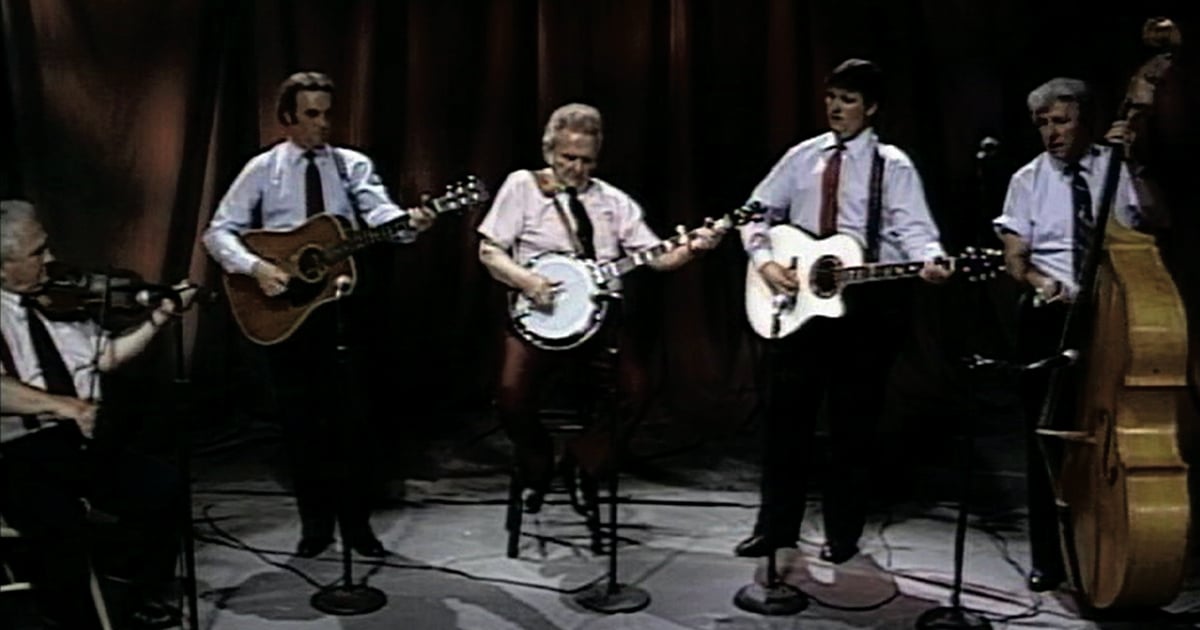
A: We reached out to Junior Blankenship, who surmised that the program in question must have been a long-ago performance with Ralph Stanley and the Clinch Mountain Boys. Additional fact-checking led to the RFD-TV network whose customer service department pointed us to Ronnie Reno, the host of Reno’s Old Time Country Music program. He told us that he recently ran a “25th Anniversary series on RFD in which I played some footage of a Ralph Stanley show that was done in April of 1993. I bet that is the footage she’s asking about. Junior was on lead guitar, Jack Cooke on bass, Curly Ray Cline on fiddle, and Ernie Thacker on guitar and lead vocals.” Ronnie’s program first saw the light of day in 1993 as Reno’s Old Time Music Festival and was available for viewing by an audience in 28 million homes. The program was nominated for a Cable Ace Award for “Best Musical Series.” Today, Reno’s program is available to nearly fifty million homes with a dedicated monthly audience of slightly over one million viewers.
Q: I recently found out that my grandfather, Edwin Arnold, played mandolin in his company’s band, the National Life and Accident Insurance Company of Nashville. Lore has been passed down that he played on the radio. I found out that WLAC was begun a year after its competitor, the Life and Casualty Insurance Company of Tennessee, started WSM. In an effort to keep up with the great success of WSM and its country music format, WLAC added a few country slots in the 1940s. I’m wondering if you know if these insurance companies did indeed form their own bands and if they ever performed outside of their own radio broadcasts? Thanks. – GH, via email.
A: In the 1930s and ‘40s, many radio stations maintained staff bands for the purpose of having live music for various broadcasts. These bands tended to follow mainstream trends of the day, as opposed to being ones comprised of hillbilly musicians. While there were numerous hillbilly bands that appeared on radio during this same time frame, they were not necessarily groups that were organized and sponsored by the stations. Often times, these bands were given free airtime to perform without pay in exchange for the opportunity to advertise their personal appearance dates. Occasionally, bands obtained sponsors who compensated them for their radio efforts.
Michael McCall of the Country Music Hall of Fame offered some additional information: “If I’m reading the note right, the reader has the companies reversed as far as the radio stations and their call letters. National Life and Accident Insurance Co. started WSM in 1925. WLAC was started by the Life and Casualty Company of Tennessee in 1926. Both stations played a variety of music other than the emphasis on country on the Opry shows on weekend evenings. Life and Casualty sold WLAC sometime in the early 1940s; that station leaned toward R&B in time and eventually concentrated on it. If the reader’s grandfather played for National Life and Accident, he would’ve been on WSM.
“I can’t find any info on bands performing under the names of the companies, although they may have been called that while in the radio studios. There was a band called the WSM Players for a while, but I don’t know if they ever performed outside the station under that name. Most of the musicians or bands would want to build their own names when not playing at the station; so, there was the Francis Craig Orchestra and the Owen Bradley Orchestra, and Bradley (who at different times worked for both stations) had a country band called the Dixie Melody Boys. Craig Havighurst’s book on WSM may have more info on all this.”
Q: I’m a big fan of the duet singing of the Whitstein Brothers. I recently revisited one of their albums, Old Time Duets. The album is a gem from start to finish. I’ve always been curious about the final song on the album, “Beautiful Lost River Valley.” In his notes to the album, Doug Green calls it “the only contemporary song on this album,” yet, to me, it fits seamlessly with rest of the songs. What can you tell me about this vintage-sounding song? CBR, via email.
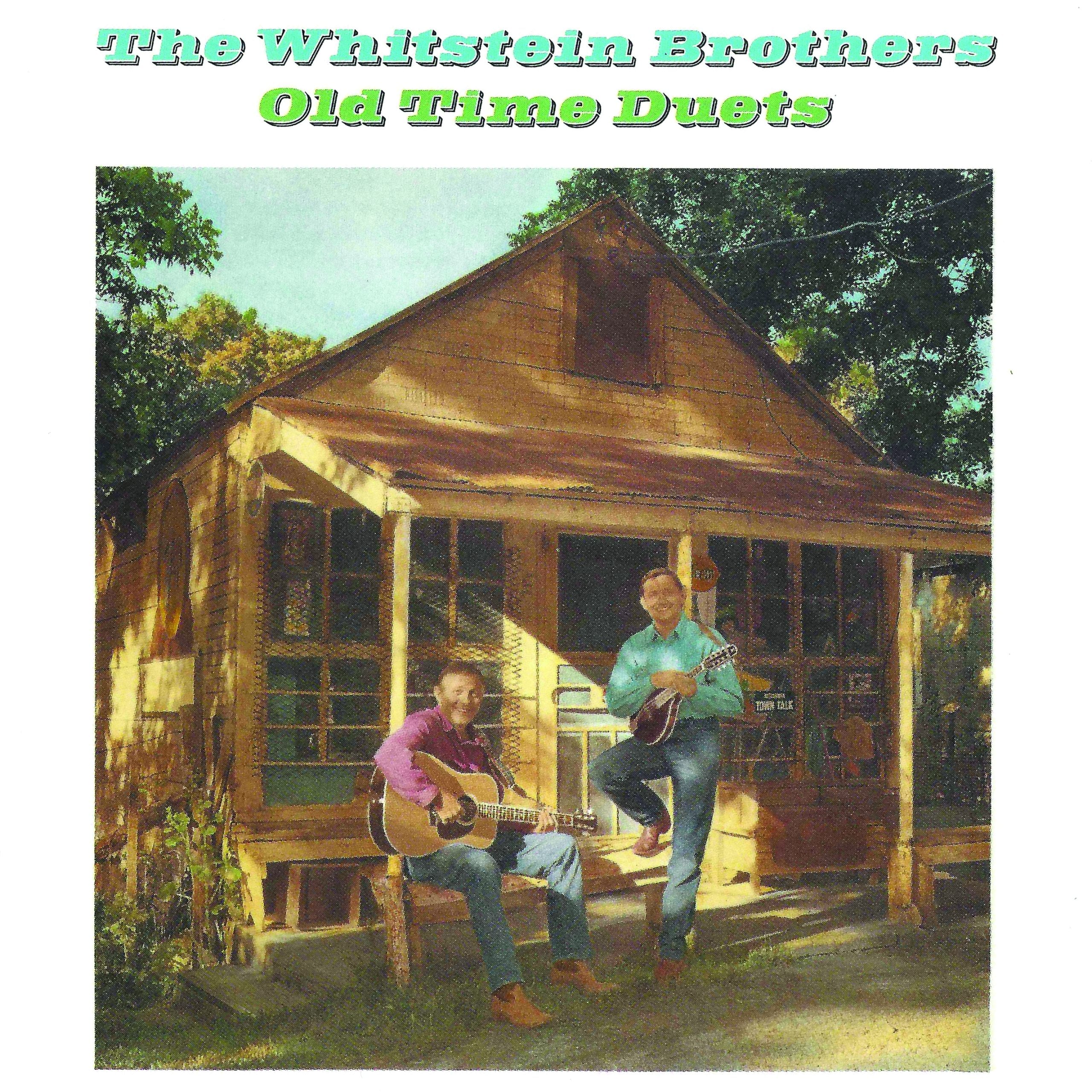
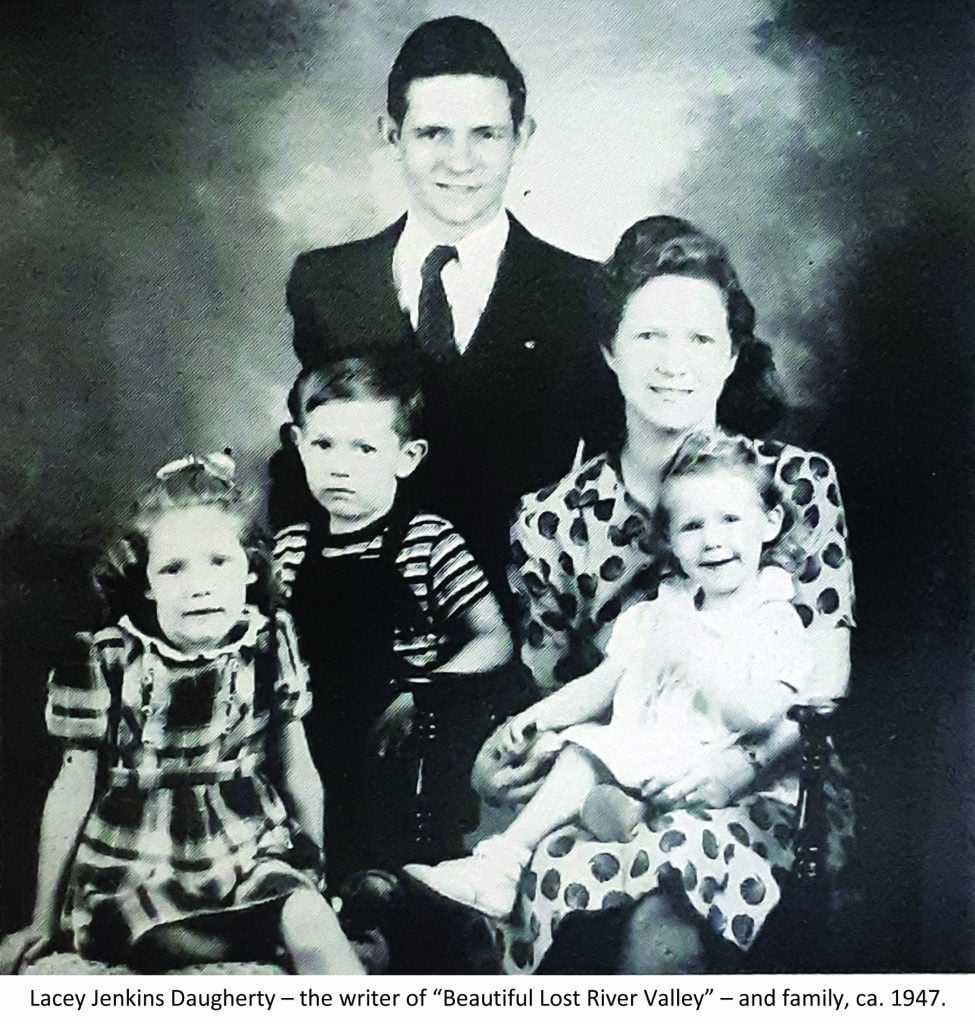
A: In hindsight, perhaps it was somewhat of a misnomer to tag “Beautiful Lost River Valley” as contemporary. The song’s copyright is dated 1983 and that document asserts that the song was created in 1965, all of which would suggest a composition of relatively recent vintage. (The Whitstein’s album was released in 1989.) In truth, “Beautiful Lost River Valley” actually dates back to at least 1947, when the lyrics appeared in a booklet called Mountain Treasures – Songs and Poems by Lacey Jenkins Dougherty (1918-2000). It was one of 16 songs and 29 poems by the author. Curiously, only one of the songs, “West Virginia, I’m Coming Home to You,” was set to music; the rest contained only the lyrics. The song’s 1947 (or earlier) vintage definitely puts it in the same timeframe with other period songs from the Whitstein’s album and “Mansion on the Hill,” “There’s an Open Door Waiting,” “Seven Year Blues,” and “Pitfall” are but a few examples.
The foreword to the Mountain Treasures booklet told that the author was a native of Mathias, West Virginia, and that her work was “an earnest expression of the author’s love of nature and its many wonders and beauties, as prominently displayed in the natural scenes of her own community.” She developed an interest in writing at about age 10 and continued to nurture her talent over the years. Several of her works appeared in Poetry Broadcast and Tribute to Triumph. Mountain Treasures was the first effort of compiling her works into a complete volume.
In the middle 1960s, Mrs. Daugherty came to the attention of Bluegrass Unlimited editor Pete Kuykendall, who arranged for two of her songs – “Beautiful Lost River Valley” and “Memory’s Door” – to be recorded by the husband/wife duo of Ray and Ina Patterson. The two songs were released on a 45-rpm disc on Kuykendall’s Glenmar label. Rounder’s Ken Irwin was a longtime fan of the song and pitched it to the Whitstein Brothers. The Whitstein album appeared on the Library of Congress/American Folklife Center’s “American Folk Music and Folklore Records: A Selected List,” a program to “help promote the best recordings of American folk music and folklore issued by various companies.”
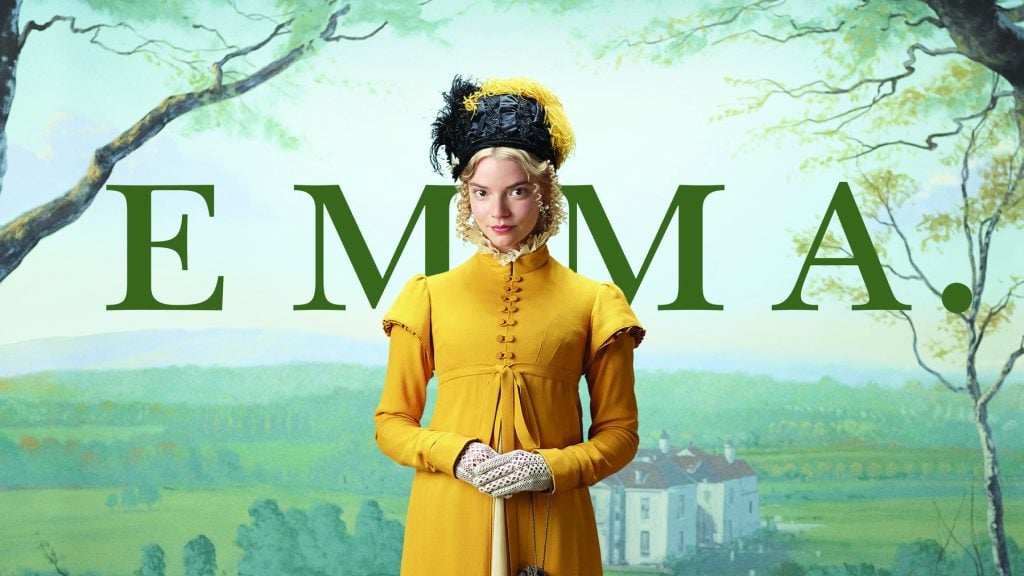
Q: I just finished watching the Prime Video movie Emma, which is a 2020 interpretation of the Jane Austin novel of the same name. I was struck by some of the traditional sounding music that was played during a number of the scenes. It reminded me of the singing that appeared in the movie Cold Mountain a number of years ago. Is there some sort of connection? RT, via email
A: You’re probably referring to the hymn “How Firm a Foundation” that was featured in Emma. The production credits at the end of the film stated that the song was performed by Maddy Prior and The Carnival Band. We reached out to The Carnival Band who had this to say:
“The style of singing we used on that track is influenced by the Sacred Harp tradition. The album Sing Lustily and With Good Courage, from which the track is taken, is a collection of 18th and early 19th century hymns. We used a variety of approaches, according to what each hymn suggested to us, and this one seemed to suit the Sacred Harp style particularly well.” – Andy Watts
The CD soundtrack from Cold Mountain likewise featured two songs – “I’m Going Home” and “Idumea” – that were also from Sacred Harp traditions, so therein lies the connection. Sacred Harp is a unique style of four-part sacred choral singing that originated with the publication of the Sacred Harp hymn book in 1844. It was among the early hymnals to use a series of four different shapes to designate the notes on the musical scale. A series of seven shapes was later adopted and eventually morphed into Southern Gospel; many of the genre’s hymnals from the 1920s, ‘30’s, ‘40s and ‘50s contained songs that became bluegrass standards. A number of congregations, especially in the Deep South, have resisted the move to modernize and continue to use the Sacred Harp for all-day singing conventions.
Wikipedia tags The Carnival Band as “an English early music group. Their broad repertoire focuses on popular music from the 16th and 17th centuries, and traditional music from around the world.” The group, at times, featured the talents of Maddy Prior, the lead singer for the English folk rock group Steeleye Span. Citing the group’s sometimes bending of the rules, the York Press declared that “the purists may have been squirming – the rest of us were having too much fun to care!”
Over Jordan
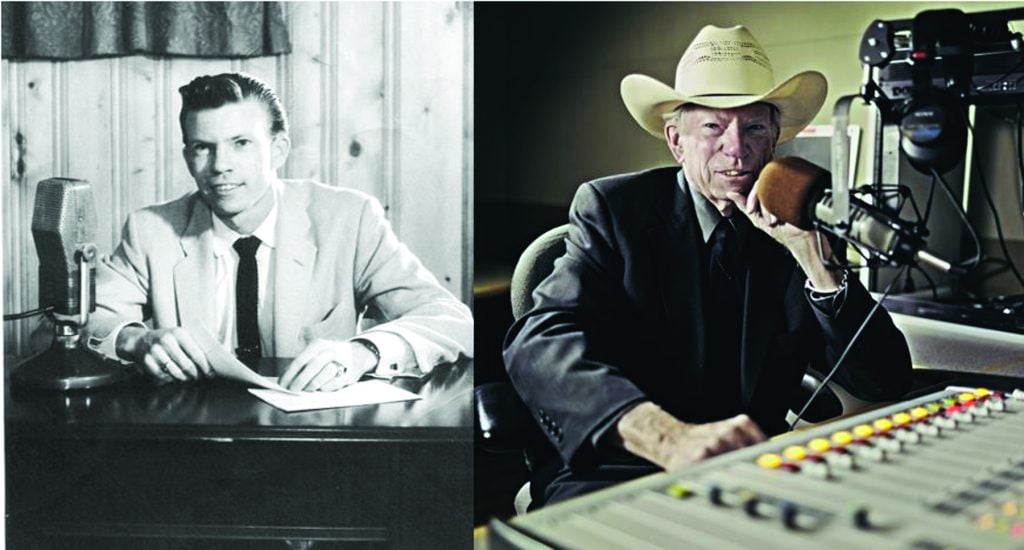
Berkley Olin “Berk” Bryant (June 8, 1930 – December 24, 2020) Berk Bryant was a long-time fixture on the Louisville, Kentucky, bluegrass music scene. He is best-known for his “Sunday Bluegrass” program on WFPK-FM which ran from June 1989 until March 2018. Born in Lynchburg, Virginia, in 1930, he discovered country music as a sixth-grader; his elementary school teacher had a collection of 78 rpm records that included Roy Acuff singing “The Precious Jewel.” His first radio job at the campus station of Virginia Polytechnic Institute in Blacksburg was cut short in 1952 when he was summoned for military duty in Korea. Upon his discharge in 1954, he secured work as an announcer at WWOD in Lynchburg. It was here he took on moniker of The Country Gentleman. When WBRG, also of Lynchburg, signed on the air in September 1956, with an offer to double his salary, Berk became the station’s first on-air announcer. He puzzled more than a few of his listeners on Independence Day in 1958 when he played a medley of Christmas carols; he explained later that they were a public service for “careless motorists who wouldn’t be around to hear them at the regular time.” Berk stayed with WBRG until 1962 and two years later re-joined the Army. While deployed once again in Korea, he secured a program on the Armed Forces Korea Network and continued to spin country and bluegrass recordings. Following his second tour of duty, he settled in Louisville. Discouraged by the lack of bluegrass on the local radio stations, he approached WFPK about launching a bluegrass program. It started out as an hour-long show and eventually grew to three hours; the program ran for 29 years. Concurrent with his radio work, he also wrote a monthly column on bluegrass for the Louisville Music News.
Robert Neal “Red” Cravens (July 4, 1932 – ca. January 11, 2021) was a co-founder of the 1950s/’60s group that was known alternately as the Red Cravens and the Bray Brothers and the Bray Brothers with Red Cravens. He served as the group’s guitar player and shared vocal duties. Despite radio and television exposure and a fairly busy touring schedule, the group had just one album released during their time together: The Blue Grass Gentlemen.
Cravens was born and raised in Tuscola, Illinois, located about 150 miles due south of Chicago. He grew up listening to country music on Tuscola’s WDZ. The station’s “Bluegrass” Roy Freeman was an early influence on Red’s guitar work, which got underway around age 13. Cravens credited his hearing of a Bill Monroe record for his immersion into bluegrass.
By about 1951, Red was heavily engrossed in the music of Bill Monroe and Flatt & Scruggs and had amassed a sizable record collection. He was also playing banjo on an early morning radio program in Urbana, Illinois. His music career was sidelined by a stint with the military during the Korean War; he attained the rank of corporal.
In 1954, Cravens met the Bray Brothers at a square dance not far from his home in Illinois. Red and the Brays hit it off immediately and picked together often. With his sizable record collection and an intimate knowledge of Monroe, Flatt and Scruggs, etc., Cravens was the Brays’ entrée to bluegrass. Within about six months of meeting, the group was performing on radio and also at personal appearances.
The band maintained a busy schedule until the early part of 1957 when Harley and Nate Bray entered the Army for three-year hitches. During this time, Red maintained a day job with the telephone company and became a frequent weekend visitor to the Bill Monroe’s Brown County Jamboree in Bean Blossom, Indiana. He filled in with Monroe’s group on several occasions and, along with Birch Monroe, Jerry Waller, and Kyle Wells, became part of the house band.
Following Harley and Nate Bray’s discharge in March 1960, Cravens and the Brays reunited and became the de facto house band at the Jamboree. They also secured a weekly radio program on WHOW in nearby Clinton, Illinois. Initially, the group traveled to the station to record their programs. Tiring of the frequent travel, they bought a tape recorder and made their own programs which were then mailed to the station. (Years later, these tapes were forwarded to Rounder Records who issued two albums. One, 419 W. Main, took its name from the address where the band of bachelors lived and rehearsed in a communal setting. The other served as an apt descriptor of their environment: Prairie Bluegrass.)
Cravens and the Bray Brothers began attracting some national attention. On June 17, 1961, they performed on the Grand Ole Opry. About the same time, they came to the notice of Liberty Records, who signed them up to record a bluegrass album. They also acquired the services of Jim Denny, a well-known agent in Nashville, to secure bookings for the group.
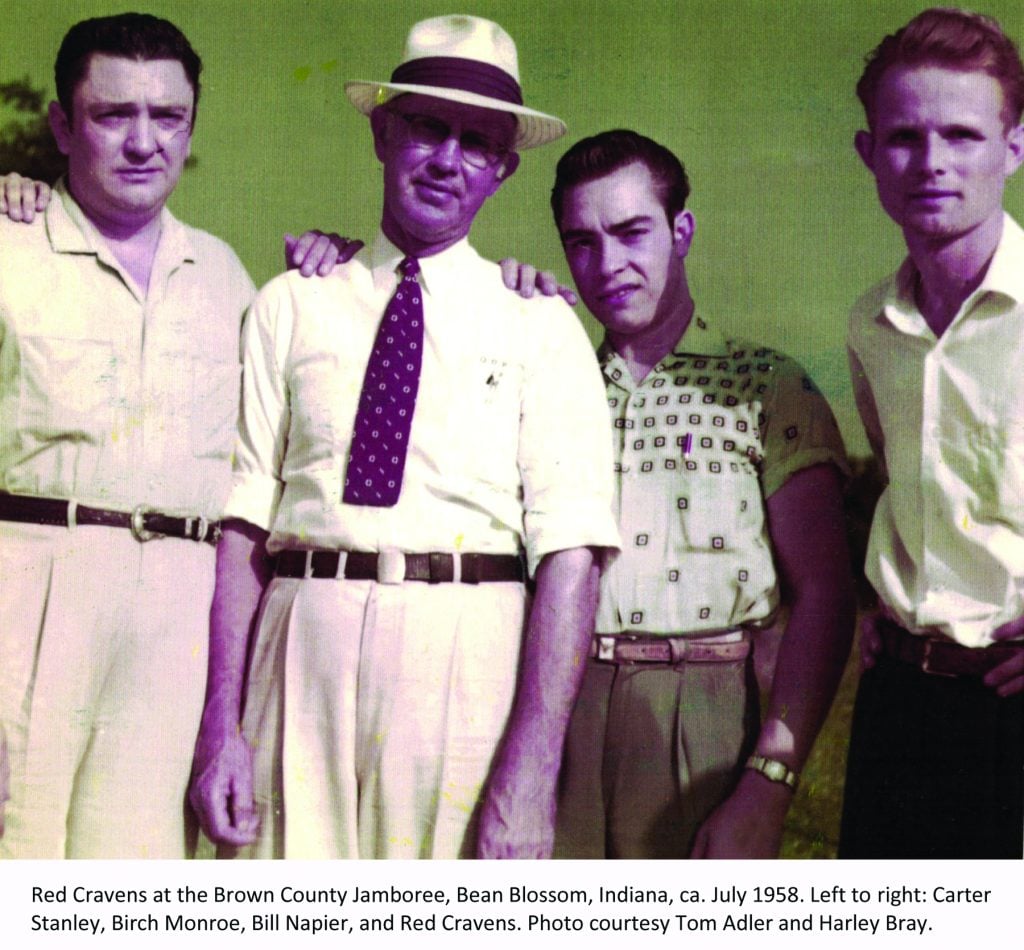
At the behest of Liberty Records, the group changed its name to The Blue Grass Gentlemen and their self-titled album was released in January 1962 to positive reviews. Longtime Cravens/Bray chronicler Barry Brower wrote that the “Blue Grass Gentlemen album was one of the few major label albums available at the time [by] bluegrass groups not named Monroe, Flatt & Scruggs, Stanley, etc.” At the same time, Jim Denny placed the group on a number of country music package shows. Despite the album release and touring, work as a bluegrass band was still not a lucrative way to earn a living. Consequently, in March 1963, Cravens – recalling how much he enjoyed California when he was stationed there in the military a decade earlier – cashed in his chips and headed west.
While Red maintained an interest in music after he moved to California, it was his partnership with the Bray Brothers that constituted his 30 seconds of fame. Harley Bray remembered him fondly as a “high strung guy” and a “sparkplug” who “changed our lives.” Equally adept at lead and tenor vocals, he was a forceful banjo and guitar picker. John Hartford recalled that “Red played right over the hole in his Martin with a great big heavy thumb pick and would push the string strings right into the hole when he picked.” Future sausage king Jimmy Dean once offered Red and the Brays a tongue-in-cheek endorsement: “The thing about you boys is that you have taste!” In the end, it was Red Cravens who best summed up his musical contributions: “Somewhere our success was faithfully being able to go down home and play a square dance all night or being able to go to Bean Blossom and be the staff band and be appreciated.”