Charlie Cline—The Return of a Bluegrass Legend
Reprinted from Bluegrass Unlimited Magazine
May 1996, Volume 30, Number 1
At a recent bluegrass festival one of Bill Monroe’s earliest fiddlers animated himself as a cur hound, then a wounded hound, chased the children around, joked with friends and fans, and sparked life into this reunion of former Blue Grass Boys.
“Hey, Melvin. What makes a balloon go up?” “Hot air, Charlie.” “Well, what’s keeping you down?”
“It’s so hot out here, if a dog were chasin’ a jack rabbit, it would stop and slap the dog!”
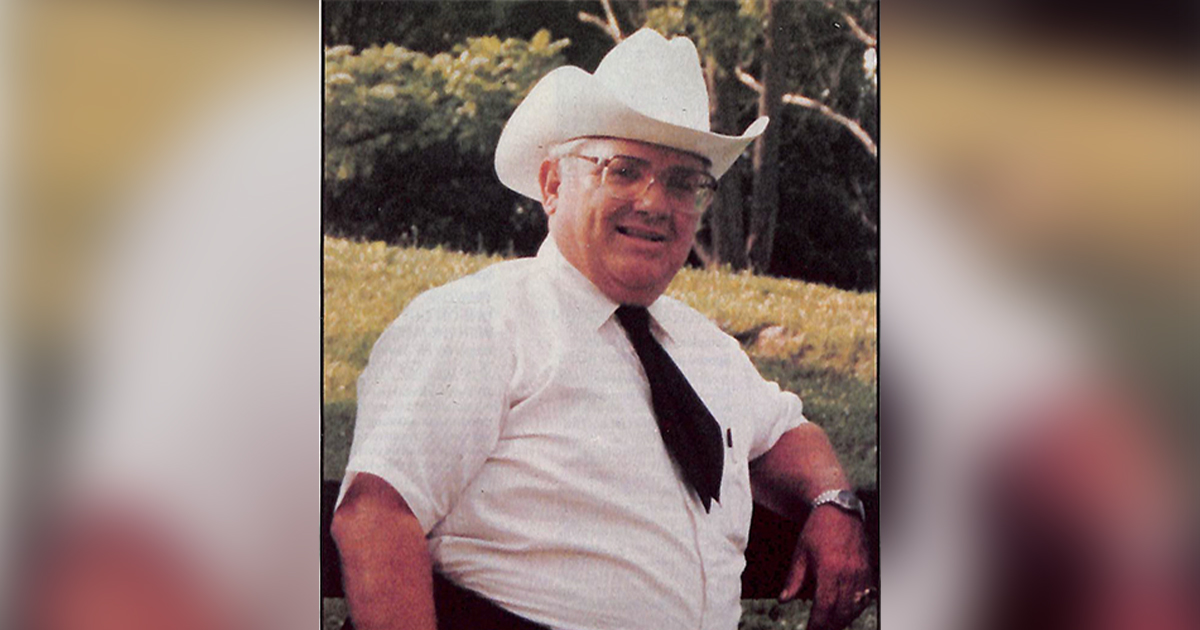
This is Charlie Cline, who after 50 years in the business of playing fiddle, mandolin, banjo, and guitar, is back strong with a tight traditional bluegrass band and a recording label. The loose stage schedule had the man on constant call, and dressed in suit with vest and hat, he kept near the table where the Lonesome Pine Fiddlers’ many recordings were displayed.
Charlie is celebrating half a century of playing bluegrass music. He had a good head start well before 1945. Born into a West Virginian family of musicians in 1931, Charlie was playing guitar by age six. His dad played fiddle, and older brother Curly Ray and cousin Ezra set the stage prior to World War II by forming the original Lonesome Pine Fiddlers. Charlie just fit right in. By age 15 he was performing for radio station WHIS, Bluefield, W. Va., and he listened carefully when Bill Monroe played on the air.
Now, when the Blue Grass Boys get together for an alumni gathering, Charlie Cline enjoys emeritus monroevius status. He went to work for Bill Monroe early in 1952, replacing Gordon Terry on fiddle. By July of that year he was ready for the studio, and with Jimmy Martin, Sonny Osborne, and Ernie Newton, the Blue Grass Boys recorded “In The Pines,” “Footprints In The Snow,” and “Walking In Jerusalem.” Charlie’s contribution to Monroe’s sound came as a technical innovation which he developed in response to Bill’s fondness for twin and triple fiddle arrangements. By using full chord positions on the fiddle neck and bowing die four strings as separate melody notes, he could play multiple parts to a song. The effect was added personnel where only one was needed. With fiddler Bobby Hicks, the two recorded “Wheel Hoss” and “Roanoke” in December of 1954 using a three part arrangement for fiddles.
With Charlie, a band receives many added personnel. His smooth voice can handle any one of a four-part quartet (he is still working on a way to sing twin lines). This veteran Lonesome Pine Fiddler also plays Travis-style guitar, banjo, and mandolin. Bill Monroe broke a collarbone in a car wreck in 1955, and Charlie was a practiced understudy for his boss; he kept the show going while Monroe convalesced. Charlie’s standing with Bill Monroe elevated to the mandolin player’s mandolin player. Back on fiddle, Charlie kept the show going through the better part of the ’50s, until active duty interfered with his career.
Following his tour of duty with the service, Charlie realized that any occupation interfered with his service to the Lord if it lacked the ministry. Charlie first evangelized for the Pentecost Church and later became an ordained minister. “The Lord created the pipes in me,” Charlie will tell you. For over a decade his pipes were heard in the churches where he preached, but rarely outside of the church. Today he serves God in the way the spirit moves him, by helping other people with home Bible study, by recording and performing his bounty of gospel songs, and evangelizing to those he meets on the road. With the pipes the Lord gave him, the Sacred Harp is again heard in full measure whenever the Lonesome Pine Fiddlers play.
Charlie Cline and the Lonesome Pine Fiddlers made their recent debut with Hay Holler Records in the release of “Return Of A Legend.” Charlie, the legend, penned 12 of the 14 cuts on this album. He sings, plays fiddle and mandolin, and is joined by Col. Chuck Carpenter on banjo, Bill Sandlin on guitar, and Willie Grimes on acoustic bass. Says promoter Carlton Haney, “They play the way bluegrass music should be played.” Their touring schedule is filled, the band is tight, and much of their repertoire is penned by Charlie.
Writing a song can be a frustrating endeavor for a musician. Charlie just sleeps on it. In dreams his compositions unfold. When he awakes he writes them down. He has written over 300 songs, many of which came to him in this manner. “This Old House” tells about the old family homestead he was born in. The two story log cabin was built long ago by his German ancestors back in Baisden, W.Va. In recent years it fell to decay and old age. Charlie dreams about it and then writes about it. In another tune, “Hurricane,” the energy of music begins as a tropical depression, then whips up to a full-blown storm of banjo, fiddle, and mandolin, whirling on out to sea in a chaotic maelstrom. “Sugar Creek” completes the water cycle.
Charlie loves to tinker with fiddles. He owns a gang of them, old ones and new ones. No two are the same, he says, and he can change the sound of one in many ways by moving the sound post or by changing the bridge. He likes to set up his fiddle by tuning the pitch of the D-string so that it sounds like a “horn that calls a dog, where it echoes even with your hand on it; just keeps a ringing.” His deep, cutting sound is a Charlie Cline distinction which evolved from methods he has developed for setting up the instrument. He prefers a box that is well carved, not too thick.
In addition to their touring agenda, the Lonesome Pine Fiddlers host Alabama’s Semi-Annual Bluegrass Superjam. Held twice each year in Cullman, Ala., the superjam is a well-organized festival of bluegrass jamming and professional appearances. It is now in its 28th season.
The transformation so many of Bill Monroe’s sidemen have experienced as Blue Grass Boys relates partly to Monroe’s unique sense of timing. When Charlie performs one of his songs there is a strong identity with Monroe’s definition of bluegrass music. Monroe’s spirit haunts the phrasing of Cline’s lyrics. They flow to a different rhythm than what the instruments follow. Monroe’s relentless mandolin chop hammers out the beat of Cline’s rhythm section. The two separate time bases are brothers in the blues soul of the music.
Bill Monroe’s music continues to gather many new flowers from the old beds where bluegrass was cultivated, yet we can still somehow see and hear the original music when Charlie Cline performs.