Yonder Mountain String Band
True to themselves and Good as True
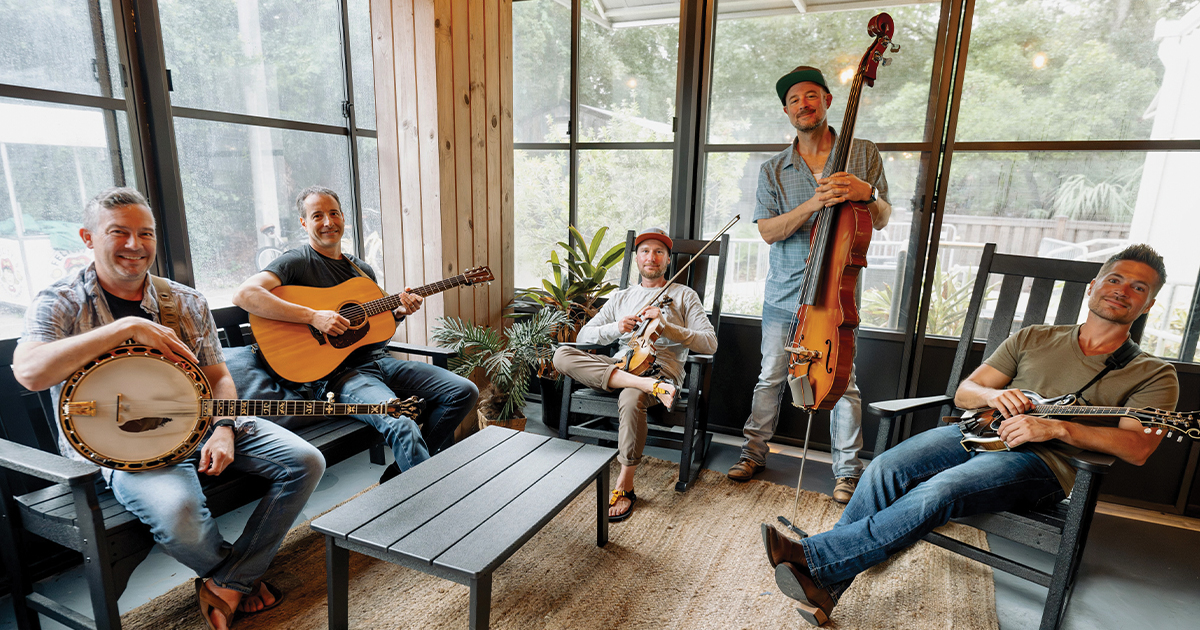
Through their quarter-century together as a band, Yonder Mountain String Band has kicked down the door for string bands and redefined what is possible for acoustic groups in an electrified rock ‘n’ roll world. Yonder emerged from the mountains of Nederland, Colorado in 1998 when guitarist Adam Aijala, mandolinist Jeff Austin, banjo-picker Dave Johnston, and bassist Ben Kaufmann—who were inspired by the progressive bluegrass scene they found in Colorado, led by bands like Hot Rize and Leftover Salmon—came together after discovering a shared musical language.
They were one of the first bands to take a traditional acoustic lineup into a rock setting, paving the way for the next generation of bluegrass-inspired bands. Along the way, they showed how string bands can not only exist but excel in a rock world without drums as they became one of the first acoustic bands to play at theatres, clubs, amphitheaters, and festivals previously thought off limits to similar acoustic-minded groups. While the music they create is recognizable as bluegrass by the broad definition and has clear roots in the traditional genre, their music, which has been called “drive without drums,” refuses to be pinned down and easily labeled. “As far as playing without drums and doing what we were doing plugged in, you had bands before that were similar,” says Aijala, “there was New Grass Revival, McGraw Gap, and the Left Hand String band, but we might have been the first band to not be deep into bluegrass when we started playing. We didn’t really listen to bluegrass growing up. I was listening to Black Flag, the Dead Kennedys, and Metallica. So that really shaped our sounds as all four of us had a different musical upbringing, there was crossover for sure, but it did not really include bluegrass until our adult years.”
When they first started, Yonder’s rebellious approach to bluegrass faced a skeptical glare from the traditional bluegrass community, which was unaccustomed to such wild musical explorations within the normally staid genre. Yonder weathered the harsh scrutiny and, with a defiant resilience, found they were able to introduce a whole new generation of fans to bluegrass, fans who were often out of reach of many of the more traditional bands. Since forming they have released nine studio albums (including the Grammy nominated Get Yourself Outside in 2022), six live albums, and played thousands of shows, including sold-out stops at the famed Red Rocks amphitheater, the legendary Ryman Auditorium, the 2008 Democratic National Convention in Denver, and festival stages from Bonnaroo to Telluride, all while establishing themselves as one of the leaders of the progressive bluegrass and jamgrass movement.
Through that time, the band has seen personal changes but recently settled on a lineup cemented around founders Aijala, Johnston, and Kaufmann, and newer additions Nick Piccininni (mandolin), who joined in 2020, and Coleman Smith (fiddle), who joined in 2024. Even after nearly thirty years together as a band, when asked how it feels to still be going strong, Aijala answers, “Lucky,” before explaining, “I think it’s nice that we are still motivated to make new music. Nick is an amazing addition all around, not only his playing, but the off-the-stage hang. He’s just a solid dude, and we get along with him so well. It’s just easy. And Coleman is just ridiculously good and super cool.” Johnston sums it up simply, saying, “I think where the musical future of the five of us is pointing is really cool.”
That bright future is evident on their latest album, Good as True, released in March. It is an album highlighting the longstanding, open, collaborative nature of Aijala, Johnston, and Kaufmann. Their songwriting relies on shared input and a continuing dialogue with each other. It is a dialogue honed from three decades together. “I come up with ideas, sometimes with scratch lyrics, sometimes with no lyrics, sometimes it’s just a little as a melody and chords,” says Aijala, “then I can go to Dave and say, ‘Dude, this music evokes this sort of vibe and tell him what I’m thinking and then he comes up with ideas and we end up finishing it…We all don’t get to be beholden on any given idea or lyric. That makes it really easy to scrutinize each other’s music, to be able to say, ‘I don’t know about that or I really like that.’ We are all just trying to get the best song we can.”
While there is definitely a collaborative process in place, a process Johston clarifies “from the outside looking in probably looks an awful lot like a routine,” but that is at its core continually changing and adapting to the needs of each song. “Those needs can be the music, the lyrics, the intro, the outro, where the solos go, is it a vocal bridge or an instrumental bridge,” says Aijala. Oftentimes, it is as simple as an idea being brought to the group, where everyone then provides assistance in shaping and contouring the arrangement of the song. Additionally, everyone pitches in with lyrical editorial help. “If something doesn’t feel right or doesn’t sing right or doesn’t land right with the point of view of the song or whatever,” says Johnston, “we all help tweaking and moving things around.” Aijala explains further, “There is no set template for each song. But there is a sort of a commonality to what we are doing and how the band finishes everything, which seems like a pretty efficient way to do it for us being a bunch of procrastinators.”
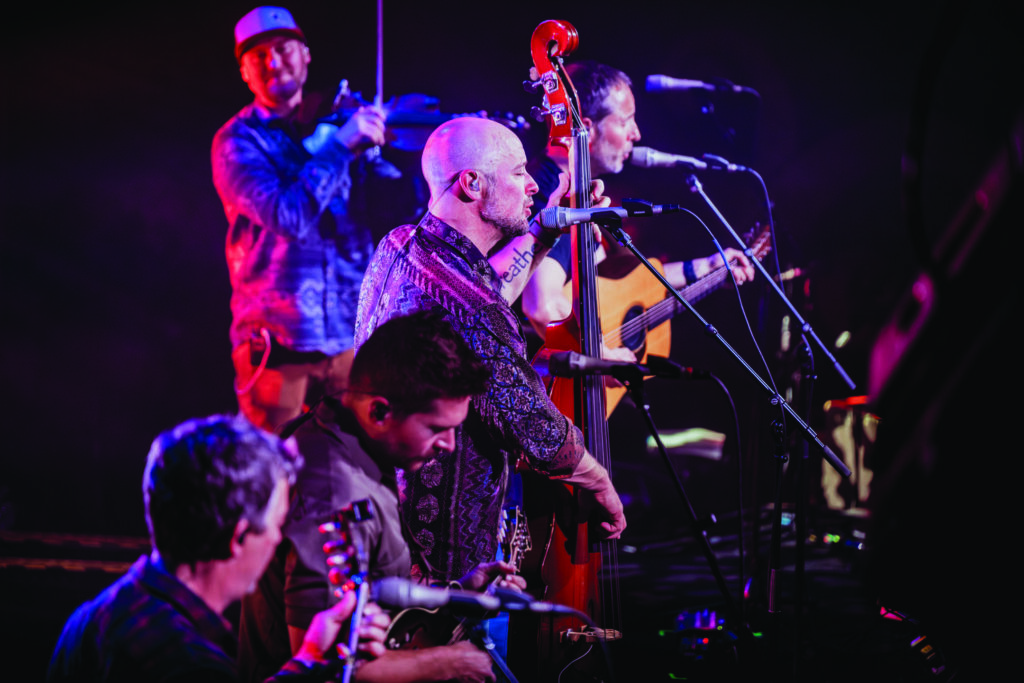
This all-hands-on-deck approach is best exemplified on Good as True by the album’s opening track, “Brand New Heartache.” The song, which was almost going to be on the band’s last album, Nowhere Next, was a struggle to finish and shelved near the end of recording when they realized they would not be able to finish it in time. The song, originally born from an idea Kaufmann brought to the band with lyrics written by Aijala and Johnston, was revived when work began on Good as True. The three then tackled the song again as work began on the new album. The finished song features lyrics and music hammered together by Aijala, Johnston, and Kaufmann, a vibe and sensibility reminiscent of eighties legends The Cars if they ever played acoustic, and Piccininni on vocals. This collaborative, full band practice to songwriting is the ideal, Aijala says Yonder strives for, “There is the argument that there can be too many cooks in the kitchen, but if everybody’s ego is in check, there can’t be too many cooks in my opinion, if everyone’s goal is to just write the best song you possibly can.”
Good as True also highlights Piccininni’s growing comfort within the band. Prior to joining Yonder, he had only ever written songs on his own. While he still occasionally brings in fully developed material—such as “Blind” from the new album, which was largely complete when he introduced it—he now actively participates in the band’s collaborative writing process. His contributions have helped a group nearly thirty years into their career continue to explore fresh musical directions, allowing them to grow and evolve in meaningful ways.
“Nick’s songwriting is still new to us,” says Aijala. “He has helped change our sound in a way. He also really complements the songs that stem from either me, Dave, or Ben. It is a fresh perspective on things. He’s the only one of us that really grew up with bluegrass. The other four of us didn’t grow up with bluegrass, so he has a different perspective on things, and he’s got a really good ear. He also writes really good hooks and bridges.” Johnston agrees, “I think both Nick and Coleman offer a different and worthwhile perspective about what they like about music, and they bring a certain level of attention to different details that is very welcome.”
The band’s secret weapon has long been banjo-picker Johnston with his quiet demeanor, deadpan delivery, and thoughtful lyrics. On Good as True, the Johnston sung “Barroom Feather” is the album’s defining track. The sixteen-minute song blends contemplative lyrics with a deep, extended groove that echoes the exploratory nature of Yonder’s live shows. Lyrically “Barroom Feather” was born from the pen of Johnston, but musically was a fully collaborative effort that sprang to life from an idea Kaufmann had when he recognized the groove developing in the song was similar to their own “Midwest Gospel Radio,” which has long served as an exploratory vehicle live for the band, and suggested they experiment with trying to stretch it out. With the band set up in the studio so they could all see each other, they recorded the song three times. Once just the song, then twice with the extended jam. As they worked through the jam section of the song, they would mouth chords to each other when they wanted to change it up or they would rely on a series of musical cues from Kaufmann, which they could vamp on.
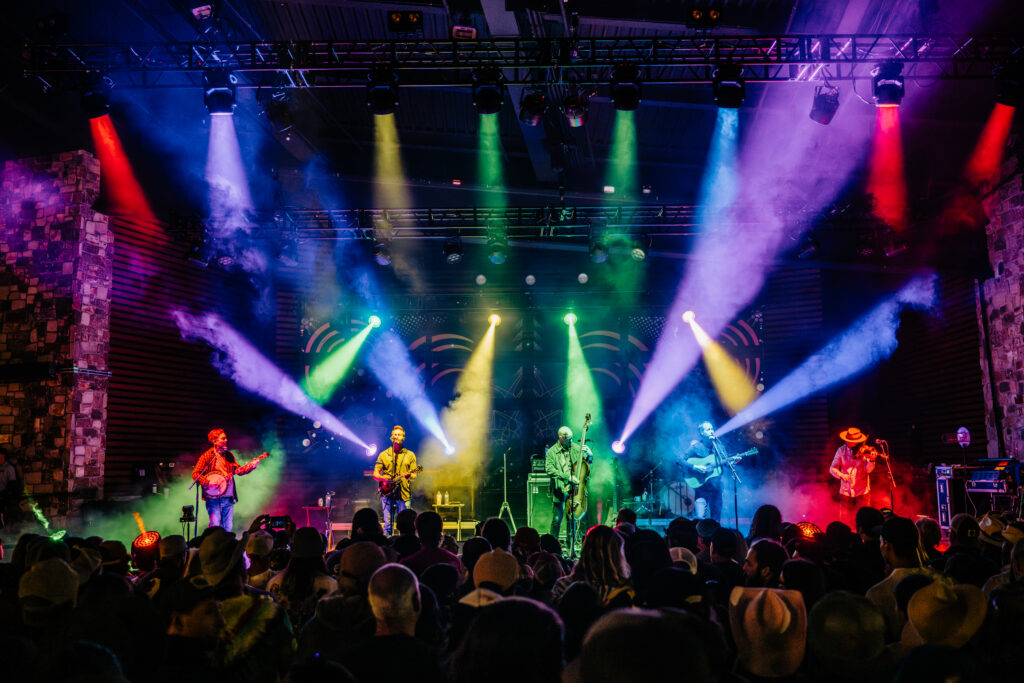
“A lot of times in the live show Ben has these series of bass walks,” says Aijala, “that are cues we are going somewhere. We have played with them enough that when he starts to do them, we all know to change. It’s hard to emulate the live feel in the studio sometimes. You don’t have the crowd to help psych yourself up or react to. It is more trying to figure out what is going to sound the coolest in that moment when you’re sitting in the chair.” From the two extended jams, the band took the one they agreed sounded the best and shortened it slightly. “We had to cut out the fat basically,” says Aijala, “but it is one take, which is cool. We made some small fixes. I definitely had some clams in there that we tried to fix. But it’s pretty much live.” Despite the initial hesitation and worry Aijala had, “Barroom Feather” captured the live, improvisational spirit Yonder is known for and that has powered the band for nearly thirty years.
Yonder Mountain String Band looms large as one of the undeniable pioneers and innovators of the modern jamgrass scene, and Good as True serves to further their legacy. By simply being themselves—an acoustic string band whose influences range all over the musical landscape—Yonder has blazed their own unique path and created a template for those who followed. The band exists at the forefront of the progressive string-band world with their aggressive, high-octane, inventive take on bluegrass and have fostered an anything goes atmosphere a generation of younger bands, not raised solely on bluegrass, look to for inspiration. Along the way, Yonder has stayed true to themselves and allowed that to guide their music. Good as True is a forward-thinking album that proves music does not have to fit neatly into a well-defined box; it can be traditional and modern, it can be acoustic and loud, it can be thoughtful and rowdy. “I like all the songs on Good as True,” says Johnston. “I think it is a really distinct-sounding record. We are the only ones who could have made it, and that will always be the highlight for me.”