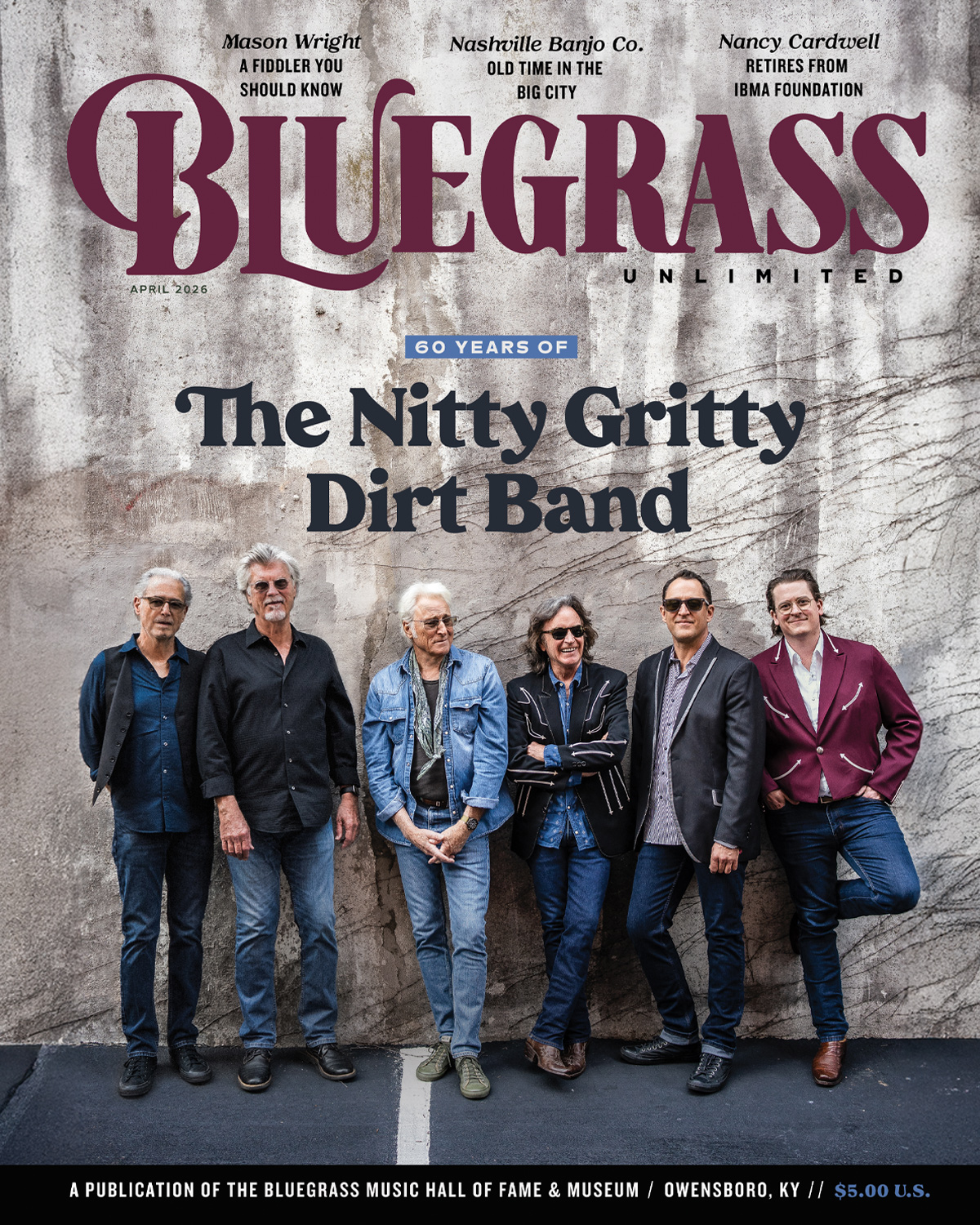
The Nitty Gritty Dirt Band
Celebrates 60 Years
As the majority of bluegrass fans know, bluegrass music—as we know it today—was born the first time that Bill Monroe walked out on the Grand Ole Opry stage with Earl Scruggs as a member of his band in December of 1945. Early in 1946, the “classic” bluegrass band—consisting of Bill Monroe, Chubby Wise, Lester Flatt, Earl Scruggs, and Cedric Rainwater (Howard Watts)—came together and “the rest is history.” Monroe’s music made a big splash in the country music world and over the past 80 years, the popularity of bluegrass, like the ripples generated from any big splash, has experienced swells of rising and falling popularity. The rising phases of bluegrass music have tended to be tied to musical or cultural events such as the popularity of bluegrass festivals, prominent recordings being released, television shows or movies that have featured bluegrass music, or the popularity of certain artists.
Many bluegrass fans’ gateway into the music came from watching television shows like The Beverley Hillbillies or The Andy Griffith Show, or movies such as Bonnie and Clyde, Deliverance or Oh, Brother, Where Art Thou. Others found out about bluegrass music by listening to popular pop or rock bands who featured bluegrass songs or instrumentation, such as The Grateful Dead, or by bands who pushed the envelope of bluegrass and appealed to more of a general audience, like Alison Krauss and Union Station or, most recently, Billy Strings. Albums by these bands were also significant in causing music fans to dive into the roots of bluegrass. In some instances, these albums were by these bands, and in some cases, such as Jerry Garcia’s involvement in the Old and In The Way project, it was a popular musician collaborating with bluegrass musicians.
One of the most significant of these collaborations occurred in August of 1971 when a group of “hippie” musicians from Southern California, calling themselves The Nitty Gritty Dirt Band, came to Nashville to record with some of the legends of country and bluegrass music. The album, which was released in November of 1972, introduced young rock and country-rock music fans to bluegrass music and inspired a surge in bluegrass music’s popularity. This year—2026—represents the 55th anniversary of that recording and the 60th anniversary of The Nitty Gritty Dirt Band.
While the Nitty Gritty Dirt Band members have changed over the years, the two members of the band who were there from day one and are still touring and recording with the band are Jeff Hanna and Jimmie Fadden. With no disrespect to any musician who has ever been a part of the band, this article will focus on Hanna and Fadden’s perspectives since we are helping the band celebrate 60 years, and they are the only two who have remained on that long ride from the start.
Also, due to the limitation of space, this article will focus on the band’s history leading up to the first Will The Circle Be Unbroken album and then make mention of the current band members. Again, no disrespect to all of the band’s achievements during the years not covered in this article. Due to the space limitations inherent in a magazine article, we had to necessarily narrow our focus.
The Early Days
The seeds of what would become The Nitty Gritty Dirt Band were planted in Long Beach, California, in the early 1960s when a young Jeff Hanna and his friend, Bruce Kunkel, began playing music together as the New Coast Two. Hanna, whose father worked as an aeronautical engineer, was born in Detroit, Michigan, in 1947. Hanna remembers that when he was young, the music that his parents listened to was by artists such as Ella Fitzgerald and Louis Armstrong. Before the family moved to Southern California, they had spent about five years in Phoenix, Arizona (starting in 1955), and then moved to Littleton, Colorado, and spent a couple of years there. By the time the Hanna Family landed in Long Beach, California, in 1962, Jeff had become interested in early rock music by bands such as Duane Eddy, Eddie Cochran, and the Everly Brothers. He had also gotten caught up in the “folk boom” of the early 1960s and was listening to Joan Baez, the Kingston Trio, the Greenbriar Boys, the New Lost City Ramblers, and others.
Hanna explained that his older brother had brought home some folk records on the Folkways and Vanguard labels. Since he enjoyed those recordings, he started to check out some of the other Folkways and Vanguard artists and discovered Mississippi John Hurt, Doc Watson, Sonny Terry and Brownie McGhee, Ramblin’ Jack Elliott, and The Jim Kweskin Jug Band. He said that his gateway to bluegrass music was found on Joan Baez, Volume 2, released in 1961, where Baez was backed up by The Greenbriar Boys on the tunes “Pal of Mine” and “Banks of the Ohio.” Hanna said, “That Joan Baez record really changed a lot for me, not only because I’m a life-long fan of hers, but because of The Greenbriar Boys. They were the first kind of bluegrass guys that I really loved, a game-changer for me.”
Around the time his family moved to California, Jeff got a “funky” Harmony Monterey model guitar and was learning how to play. He said, “During my first day in high school, I met a fellow named Bruce Kunkel, who became my best friend and is still one of my dearest friends in the world. I met him that first day, and we struck up a conversation. He said, ‘Well, do you play the guitar?’ I said, ‘A little bit.’ He said, ‘Can you play any songs?’ I said, ‘Not really.’ He showed me a G chord, an E minor, a C, and a D, and, man, it was like the clouds parted. It was such an epiphany. It was a great moment. We became pals and started a little folk group.”
Jeff and Bruce not only started playing together, but they would also hang out to play music at McCabe’s Music Store in Long Beach and on the lawn at Long Beach City College. Hanna said, “Invariably, there would be guys out there on the lawn with guitars. Some of the guys who would hang out at McCabe’s Music Store in Long Beach would wander over. The famous McCabe’s that everyone knows about was in Santa Monica [founded in 1958 by Gerald McCabe and partner Walter Camp], but there was also one in Long Beach. Our home base became McCabe’s Long Beach. They provided a really great space for us to sit around, drink their coffee, play records, pull instruments off the wall, and sit around and strum. We were deep in the whole folk music deal.” At McCabe’s, Jeff and Bruce met Jimmie Fadden and recruited him to play with them. They also met Les Thompson and Ralph Barr at McCabe’s and the five musicians began jamming together in the jug band style along with various other friends, calling themselves The Dirt Band. Jimmie Fadden explained, “At first, it was pretty much a throw-together. Under that moniker, it could embody four guys or ten guys. It was whoever wanted to join in. If you were a good picker, you were in the lineup.”
Jimmie Fadden was a Long Beach native who was first inspired to learn how to play the harmonica after hearing Bob Dylan’s music and listening to Charlie McCoy play on a Chet Atkins album. He was later exposed to people his own age playing music when he and his brother attended summer camp and met another pair of brothers who played guitar and mandolin. Fadden remembers, “I had been playing harmonica a little bit, but I didn’t take myself seriously at that point. The idea that some people my age were playing music made me the victim of a musical infection. They were playing things that were currently popular in folk music, like Bob Dylan, The Kingston Trio, or Peter, Paul, and Mary. I found it was a good fit. I liked it. We also had friends that were in a rock band that played at the dances and so forth. We went to see Dick Dale and Deltones, Ike & Tina…there was a little club we used to go to called The Airport Club in Seal Beach, and they had all kinds of stuff. It was very popular. Also, the Golden Bear had a lot of different acts there.” It was at The Golden Bear that Fadden first heard blues harmonica player Sonny Terry play live. Terry would become one of his harmonica mentors.
Fadden recalls the days at McCabe’s by saying, “Back then, they called us ‘the hangers on’ at McCabe’s. There were four or five of us, maybe more, some days. They had a nice coffee table and some chairs and some magazines like Sing Out, where we would read articles about bands like The Country Gentlemen.”
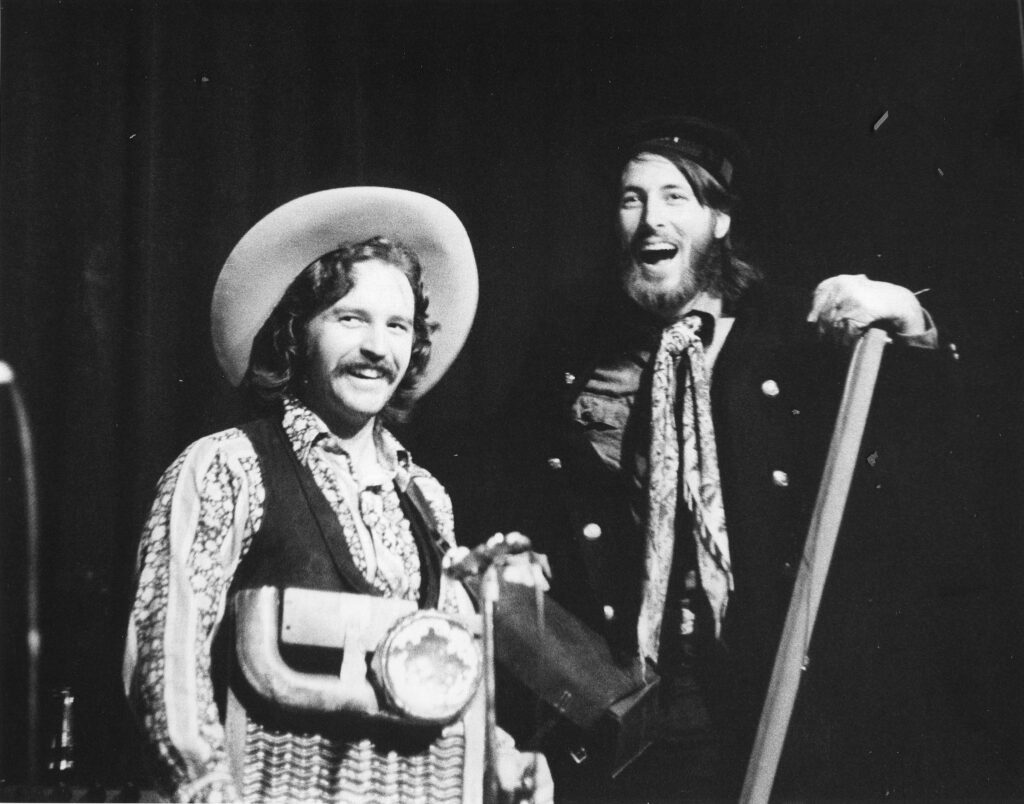
In addition to playing music at the store, the ‘hangers on’ would discuss notable players and groups and how they were affected by them. Fadden said, “Here is an example that I was thinking about the other day…On our first single record called ‘Buy For Me The Rain,’ you’ll notice the crosspicking on the mandolin. It came directly from Jim & Jesse. We were little thieves when it came to music. If we heard something we liked, we would take it and use it. We might have camouflaged it a little bit, but it is there. It was a time of discovery and a time of growth. There was a great community amongst players and a lot to be shared.” By the time Fadden started hanging out at McCabe’s with Hanna and Kunkel, he had also learned how to play the mandolin and autoharp.
Another young local musician named Jackson Browne heard the jug band perform one of their first shows. In an article printed in Bluegrass Unlimited Magazine in February of 2016, Browne states, “The Dirt Band came in, and they kind of blew everybody away. They were a jug band, but it wasn’t just jug and washboard. It wasn’t just ‘plunka plunka plunk.’ They had some really great fingerpicking and virtuoso playing. They had Jimmie Fadden, an incredible harp player, and he also played really great washtub bass. You could really make out the notes. It wasn’t just gutbucket.” After the band heard the 16-year-old Jackson Browne perform at an open mic, they asked him to join the group.
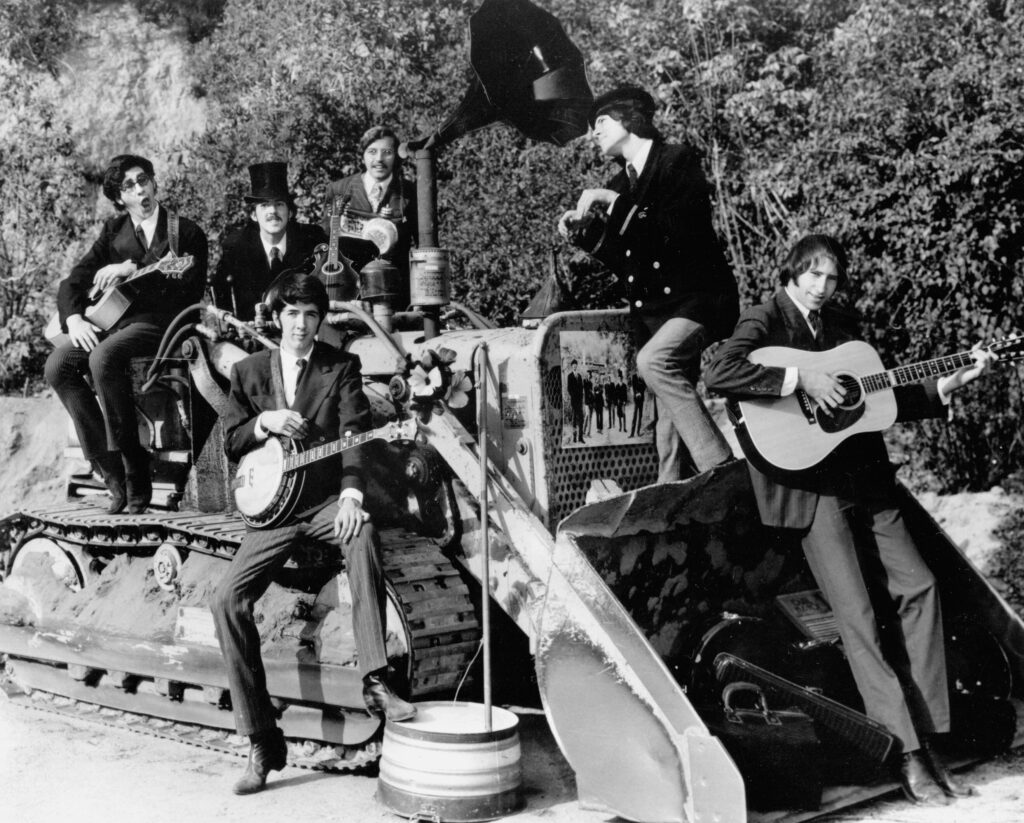
This band, by now calling themselves The Nitty Gritty Dirt Band (they had called themselves this by the time they left Jeff’s mom’s garage) and consisting of Jeff Hanna, Jimmie Fadden, Bruce Kunkel, Ralph Barr, Les Thompson, and Jackson Browne, performed their first paid show together at The Paradox Coffeehouse in Orange, California, on May 13th, 1966. They mark that date as the band’s official beginning. Soon after, the band started performing at other local venues like The Mecca and The Golden Bear. Recalling the early days, Hanna said, “When the band started, we were essentially six guitar players, but everybody played something else. In a jug band, you have to have a rhythm section, so me and Jimmie Fadden were the rhythm section. Jimmie played the washtub bass and I played the washboard and a little bit of mandolin. Sometimes Jimmie would switch to jug or harmonica. Les Thompson played guitar and mandolin.
By August of 1966, Jackson Browne had left the band to pursue his own music. It was a friendly parting, and Browne would sometimes open for the band as a solo act after he left them. When Browne left, the band then brought in John McEuen, who had been Thompson’s bandmate in a band called The Willmore City Moonshiners. Hanna said, “When Jackson left the band, Les Thompson brought up John McEuen’s name. I knew who he was because he was this hot shot musician. He was a really good guitar player, but he played the heck out of that five-string banjo. We got together and played a little bit, and we backed him up at the Topanga Canyon Banjo and Fiddle Contest, and he won! He joined us in August of 1966 and it was great. His brother Bill became our manager a little while later and got us a record deal at the end of ‘66.”
To put things in perspective, in relation to the age of the musicians in the band when they launched in 1966, Hanna had graduated from high school in 1965 and was still just 18 years old (he would turn 19 on July 11). Kunkel and Hanna were the same age. Jimmie Fadden, Jackson Browne, Ralph Barr, and Les Thompson were about a year younger than Hanna and Kunkel. Fadden and Barr had both turned 18 in March of 1966. Browne would not turn 18 until October. John McEuen was a couple of years older than the others (having been born in 1945). So, when the band started, sixty years ago, their ages ranged from 17 to 21. The band recorded their first album, self-titled, which was released in March 1967 on Liberty Records.
As mentioned above, after McEuen joined the band, his brother, William (Bill), started to manage them and convinced Liberty Records that The Dirt Band could be America’s “next big thing.” Regarding the name change from The Dirt Band to The Nitty Gritty Dirt Band, Jimmie Fadden remembered, “Jeff had a teacher at school who mentioned the phrase ‘nitty gritty’ in an attempt to get the class to understand a very rootsy and essential thing that he was explaining. ‘To understand this, you really have to get down to the nitty-gritty.’ Jeff was taken by that and came back and said, ‘Hey guys, what do you think about this?’ And it was thumbs up.”
On the first record album, The Nitty Gritty Dirt Band, the group recorded a couple of Jackson Browne songs (“Melissa” and “Holding”) and a couple of band originals (“Song to Jutta” by Bruce Kunkel and “Dismal Swamp” by John and William E. McEuen). However, the single that was released, “Buy for Me the Rain,” was a Steven Noonan and Greg Copeland song. The album was on the Billboard Pop charts for eight weeks, peaking at number 61. The single was on the charts for seven weeks and peaked at number 45. During the week that the album peaked, the number one album on the charts was More of The Monkees. The top song on the charts when their song peaked was “Happy Together” by The Turtles.
The band’s second album, Ricochet, was released in September 1967, and the third album, Rare Junk, came out in February 1968. Rare Junk included guest musicians Bernie Leadon, playing guitar on one song, and Rodney Dillard on Dobro. Both albums continued to feature a song or two penned by Jackson Browne. The Browne song on Rare Junk, “These Days,” was one that Browne would later record on his For Everyman album in 1973.
Band Changes
In 1967, after the release of the second album, Bruce Kunkel left the band and was replaced by Chris Darrow. In 1968, after the release of Rare Junk, the band then spent a few months in mid-1968 in Oregon playing musical parts in the movie Paint Your Wagon, starring Lee Marvin and Clint Eastwood. Then, at the end of 1968, the Nitty Gritty Dirt Band broke up for a short time. Hanna said, “Towards the end of the jug band era, one of the guys that we brought into the band was Chris Darrow. In the history of Southern California roots music, bluegrass, and country rock, Chris doesn’t get enough credit. He played in a band called Kaleidoscope, which was kind of a legendary World Music band with David Lindley. Chris and I started talking about what we would do if we didn’t play jug band music. We had heard The Byrds’ Sweetheart of the Rodeo album [released in 1968], and that was really eye-opening. We had also heard Music From Big Pink by The Band [released in 1968]. That was mind-blowing for us.”
“Chris and I really loved the Everly Brothers, and we sang pretty well together, and we wrote some songs together. The Dirt Band shut down for about six months, and Chris and I started another band. We had this group called The Corvettes, and our rhythm section was John Ware on drums and John London on bass. The four of us got a record deal with Dot Records, and Michael Nesmith from The Monkees was our record producer. We recorded four or five tunes for Dot and were going nowhere fast. Then we got a phone call from our old friend Linda Ronstadt, who we’d known from the jug band years. The Stone Poneys and The Dirt Band started out at about the same time and played a lot of the same rooms. She said that she needed a band because the Stone Poneys had broken up. She said ‘Would you guys be my band?’ So, we were Linda’s backup band for about six months.
“That was great training for me…being kind of an acoustic-based folk guy to playing this California country-rock. Linda was a pioneer of that. She was right there on the front lines. Singing with her was terrific, and then about six months in, in June of 1969, I ran into John McEuen at a Poco show at the Golden Bear. We hadn’t seen each other in six months, and we looked at Poco and said, ‘We could do this’…our version of it, of course. We were huge Poco fans. We were pals with Poco. I should add that we were huge fans of The Buffalo Springfield, Poco, The Flying Burrito Brothers, and The Byrds—all very influential.”
In addition to being influenced by early California country-rock bands, the members of The Nitty Gritty Dirt Band were also very aware of the Southern California bluegrass bands. Hanna said, “The Dillards played a club called The Mecca in Buena Vista, California. They had a regular gig, and they were so good and funny. Mitch Jayne was one of the best comedic storytellers I’ve ever seen. They sang great and had great material. Doug Dillard was a remarkable banjo player and among John’s first heroes on the banjo. I think he would agree with that. At the front end of his banjo playing, if there is anyone he patterned his style after, it was Doug Dillard. We all loved The Dillards. The Kentucky Colonels…being a guitar player, I was immediately drawn to Clarence’s flattop playing. The Gosden Brothers also had a thing going on that had bluegrass roots. I also saw Bill Monroe and The New Lost City Ramblers at the Ash Grove. We also saw The Stoneman’s play there, and at the Golden Bear, a lot. Even though we didn’t come from Appalachia, because Los Angeles was such a big part of the circuit, we were exposed to remarkable music as teenagers.”
After McEuen and Hanna reconnected at the Poco show, they started looking for a singing drummer. Hanna said, “We tried to figure out who from the jug band would make sense. Chris Darrow was still playing with Linda [when Hanna left The Corvettes, he was replaced by Bernie Leadon]. Ralph Barr, one of our other guitar players, was in a folk duo with his wife, Holly. They had another thing they were doing. That left me, John, Jimmie, and Les. We felt like we needed a drummer who could sing because we loved what Poco was doing with George Grantham, who was a great harmony singer, and, of course, Levon Helm. Drums and singing…wow, that is cool.
“My favorite instrument when we switched to playing country rock was the drums. I had gotten an electric guitar and started getting pretty good at it, in a rhythm approach. Jimmie Fadden had picked up lead guitar and was really good at it, and he was still playing drums. Jimmie and I were self-taught on the drums, and we wanted a guy that was a full-on rock drummer. We found Jimmy Ibbotson. He came to audition for us, and we were lucky to get him because he was getting ready to audition for Poco as a bass player because Randy Meisner had just left. But they had set their sights on Tim Schmit, and Ibby was available. We heard him play drums and we said, ‘You got the gig!’ Then he and I sat down with a couple of acoustic guitars and started singing, and it was like we were brothers from another mother. We immediately heard this blend, and we were stunned by it. We both loved the Everlys, Buddy Holly, Eddie Cochran, Chuck Berry, and that whole scene, as well as Ian and Sylvia from the folk side of things, and The Greenbriar Boys. But the Everlys were kind of our North Star. We were off and running.”
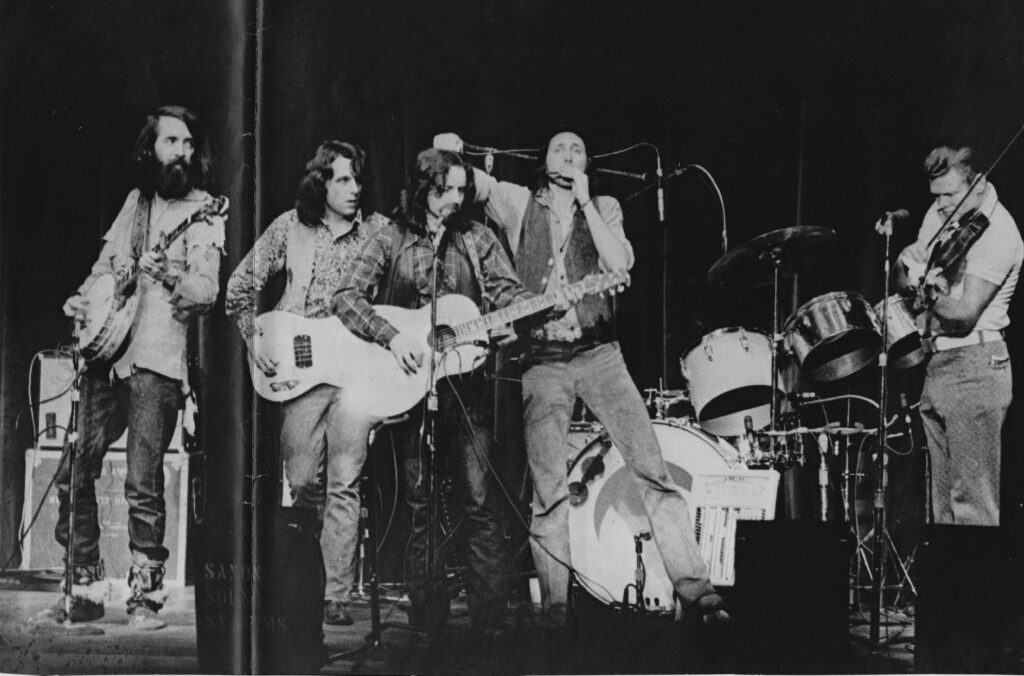
With Ibbotson on board, the band had a rock drummer, but the members still liked to switch up instruments. Hanna said, “If you had seen our show between 1970 and 1975, most likely, you would have seen three of us playing drums at different parts of the show. It seems like a gimmick if you think about it, but we all loved playing drums, and the audience enjoyed seeing the musical chairs aspect. Jimmie Fadden, Jimmy Ibbotson, and me all played drums and lead guitar at some point. John was a master of anything with strings. One minute he would be on the five-string banjo, and another he would be on mandolin or acoustic guitar, and then, eventually, he picked up the fiddle. Chris Darrow was the first fiddle player in our band, but John learned to play this Cajun song called ‘Alligator Man’ that we had worked up at the tail end of the jug band days. Chris played the heck out of that on fiddle, and John learned how to play it and got really good at it. But he was always a brilliant five-string banjo player. I’ve seen him on stages with some of the greats in bluegrass, and he was always able to hold his own. His facility was remarkable.”
Regarding having three musicians who could play drums in the band, Jimmie Fadden said, “We had a drum set at the house, and Jeff, Jimmy Ibbotson, and I all played, and we used to alternate. Sometimes Jeff would play drums, and I would play guitar. It was very much a matter of what you thought your job was on that particular song…where you thought you fit best in the arrangement. For example, sometimes Ibby would say, ‘The drums should be like this.’ Then he would play, and we would say, ‘OK, play them like that, and we will do something else.’ We would morph into a new variation of what we did or who we were.”
From Jug Band to Country Rock
In the late 1960s, some of the Southern California bands were beginning to blend rock and country music—The Byrds, Linda Ronstadt, Poco, The Flying Burrito Brothers, to name a few—but these bands were opting to use electric and pedal steel guitars instead of acoustic instruments. This is where The Nitty Gritty Dirt Band was different. They were blending genres, but kept many acoustic instruments in the mix. Hanna recalls, “Poco and the Burritos were electric and steel guitar driven. We didn’t have that. Our band had mandolin, five-string banjo, and harmonica at the forefront. Although we were never technically a bluegrass band, we sure played it and loved it and could pull out a bluegrass song in a show and play it with conviction…especially after the Circle record, where we were baptized by fire by all of those greats. We were so lucky.” Jimmie Fadden said, “We used to call what we did ‘mountain rock’ or ‘barnyard boogie.’”
Hanna continued, “The whole thing about genres…that area was very grey back then. People would jump around to different styles of music, and we loved that, and we still do. We love the idea of not being pigeon-holed. That was another great thing. Today, we see that big broad umbrella in Americana. We were always fans of bands who did a lot of stuff, like The Lovin’ Spoonful. From one song to another on one of their records, they sounded like a couple of different bands. And then The Band…their status and influence was legend. They are still, to this day, one of the greatest groups. We got to record with Levon Helm, and he was a friend of ours. How lucky were we!? That was another door that the Circle series of albums opened for us. It was always a communal thing—that is one of the things that speaks to bluegrass music in general. You go to festivals, and you see kids jamming under the tree, and everyone is welcome. I love that.”
Uncle Charlie & His Dog Teddy
The Nitty Gritty Dirt Band’s third album was recorded after the band reformed and transitioned from a jug band to being more of a country-rock group. This album, Uncle Charlie & His Dog Teddy, was released in September 1970. The album produced three singles that charted: “Mr. Bojangles” reached number 9 on the US charts, while “House at Pooh Corner” reached number 53, and “Some of Shelly’s Blues,” written by Michael Nesmith of The Monkees, reached number 64. The album also included the bluegrass numbers “Chicken Reel,” “Clinch Mountain Backstep,” “Billy in the Low Ground,” “Jesse James,” and “Randy Lynn Rag.”
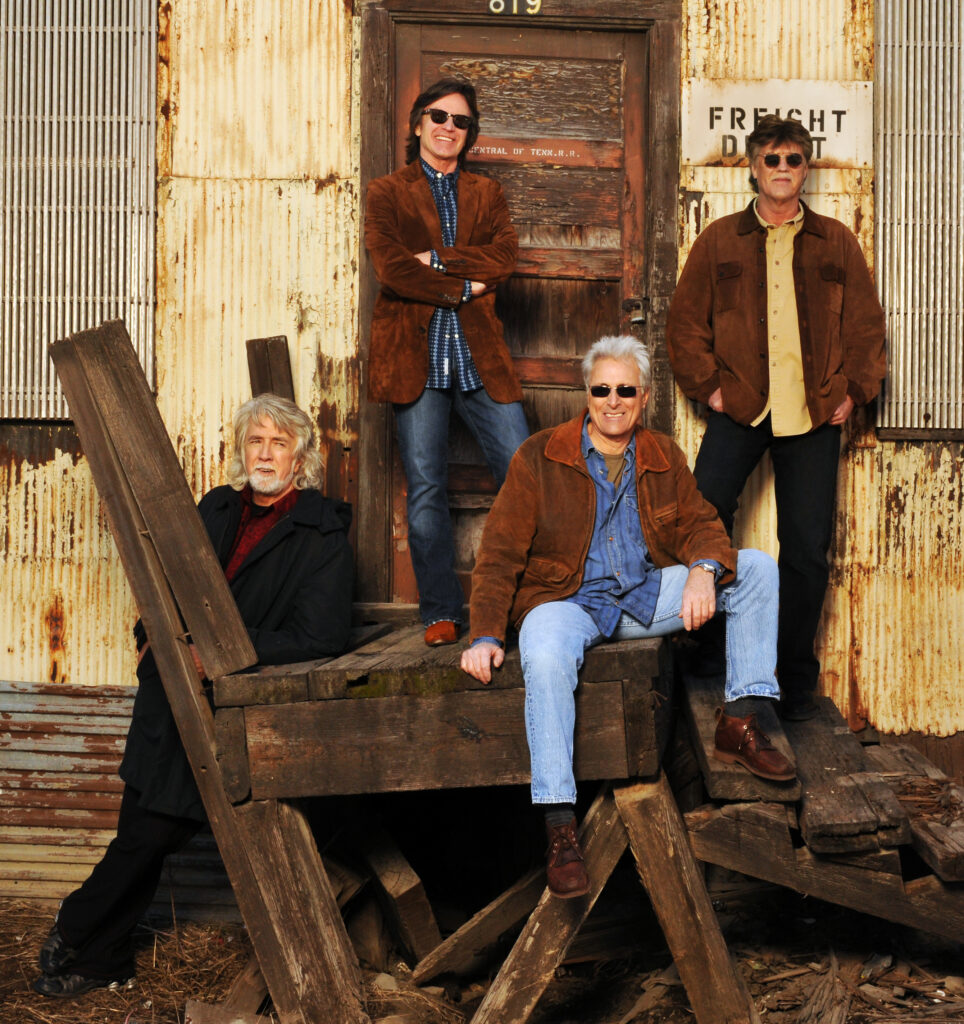
The album is listed under the genres of country, rock, folk rock, and bluegrass. But the band’s albums also included elements of blues, Cajun, old-time, jug band (skiffle), swing, and folk music. Additionally, every member of the band played multiple instruments. Jimmie Fadden said, “We had guys that played different things that were near and dear to their hearts. Sometimes there was some bluegrass to be played. There was string band music to be played, and that is where Les Thompson and John McEuen came in. We had a lot of artillery, musically speaking, or instrumentally speaking.”
With the release of Uncle Charlie & His Dog Teddy, the band was gaining traction. By the time they were ready to release their fourth album, they were signed to United Artists Records, where they would release their next seven albums, including the first Will The Circle Be Unbroken album. They were with United Artists Records from 1971 through 1980.
The Nitty Gritty Dirt Band did not fit any genre molds. When asked if the band ever got pressure from the label to focus their music, in terms of genre, Jimmie Fadden said, “There was always little comments at the studio. Our attitude was, ‘If people like the music, what are you worried about?’ Sometimes they felt like they had the right to tell us what we should be giving them or recording for them. It is a matter of selling something. They want all of the oranges where the oranges are and all of the apples where the apples go, and put the bananas way down there at the end. I don’t think we were capable of that. We just didn’t see that as being right. I don’t think that the audience sees it that way. The audience is the thumbs-up or thumbs-down quotient in your life. We just did our thing, smiled a lot, were nice, and kept moving on.”
With the popularity of the singles that were released on the Uncle Charlie & His Dog Teddy album, the band did more than capture the attention of the listening public. They captured the attention of one of bluegrass music’s legends, Earl Scruggs. In his book, The Life I’ve Picked, John McEuen relates the story of what happened at a show the band was performing in the fall of 1970 in Nashville when Earl Scruggs showed up with his family. McEuen writes, “Humble Earl made my night when I asked him his reason for coming to the show. His response was to say, ‘I wanted to meet the boy who played “Randy Lynn Rag” the way I intended it.’ (We had recorded this song of his, a hot instrumental breakdown, on the Uncle Charlie album.) Earl’s friendly boys had played that album around the house. This was huge for me. My music mentor had come to see me, and I, for once, felt like I must have accomplished something of note. Earl had also heard our songs filled with banjo, mandolin, fiddle, washboard, accordion, dobro, acoustic guitars, tight two-part harmony—and liked it! Thanks to our fans for making the record popular enough that it made it to Earl’s ears. His sons had played it for him.”
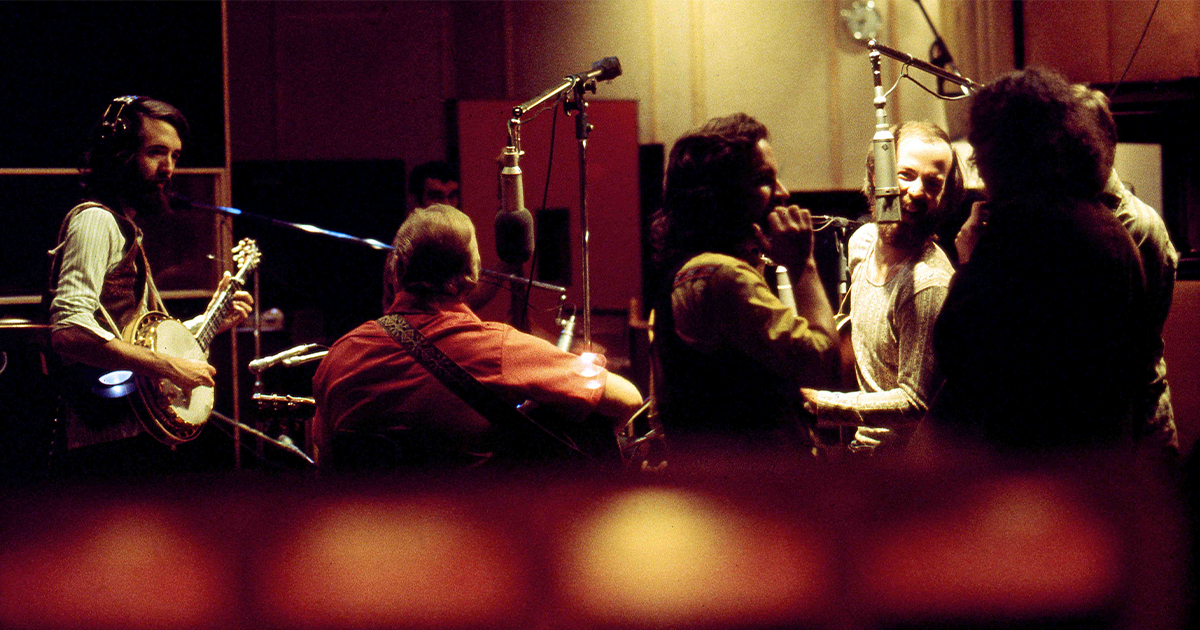
That incident—Scruggs showing up at the show to meet the band—would be the spark that led to the recording of the first Will The Circle Be Unbroken album. The complete story of how that album came to be recorded is expertly told in the book Will The Circle Be Unbroken—The Making of a Landmark Album by John McEuen, with photographs by William E. McEuen, and contributions from Nitty Gritty Band members Hanna, Fadden, Ibbotson, and Thompson. So, I will not repeat it here. [I also interviewed John McEuen regarding the book for a podcast—Bluegrass Unlimited Magazine Podcast #90, posted on July 11, 2022].
I highly recommend that a copy of this book be in the library of any serious bluegrass music fan. The recording of that three-album set, which is one of the best-selling and most influential bluegrass music recordings of all time, introduced hundreds of thousands of country, folk and rock music fans to bluegrass music. Surprisingly, Bluegrass Unlimited Magazine did not run a story about this historic event, although the magazine did run a review of the album in the April 1973 issue.
After the Circle Album
The Nitty Gritty Dirt Band went on to record many more albums over the years and continued to have periodic personnel changes. Their current discography lists 30 albums. They also recorded two GRAMMY-winning albums in the Will The Circle Be Unbroken series (Volume II in 1989 and Volume III in 2002, which also won an IBMA award). Bluegrass Unlimited ran a cover story about the recording of Volume III (November 2002), and the magazine also ran a cover story about the band’s fiftieth anniversary show at the Ryman in the February 2016 issue. Band members who performed at that show included Jackson Browne, Jimmie Fadden, Jeff Hanna, Bob Carpenter, John McEuen, and Jimmy Ibbotson. The band was joined by Jerry Douglas, Sam Bush, Alison Krauss, John Prine, Rodney Crowell, Vince Gill, Jerry Jeff Walker, and Byron House. That show was filmed for a PBS Special titled Circlin’ Back: Celebrating 50 Years. The show aired in 2016 and is available as a CD/DVD combination.
The group on the first Circle album included Jeff Hanna, Jimmie Fadden, John McEuen, Les Thompson, and Jimmy “Ibby” Ibbotson. With the exception of Hanna and Fadden, the other three musicians left the band at different times, although they sometimes would return at different points in the band’s history. The longest running member who is still with the band—besides original members Hanna and Fadden—is Bob Carpenter, who joined the band in 1979 and is still a member. A nicely presented timeline of the band’s history, regarding its members, can be found on the band’s website (https://nittygritty.com/history/).
The Nitty Gritty Dirt Band Today
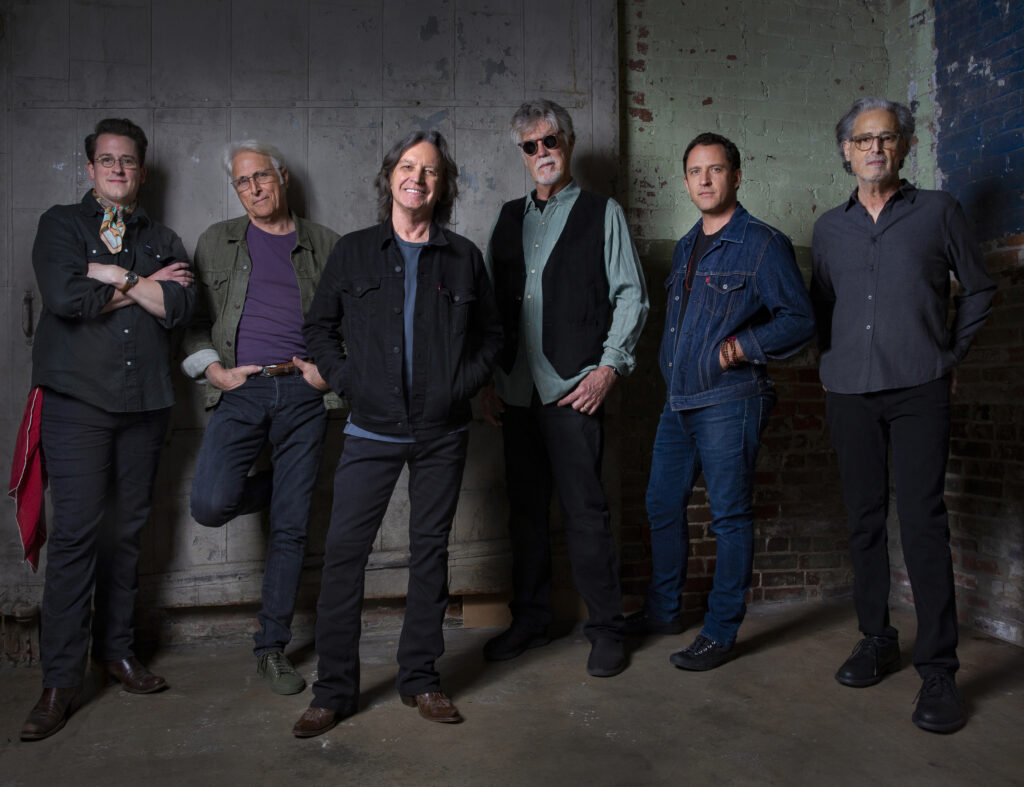
Today’s Nitty Gritty Dirt Band members include Jeff Hanna (guitar/vocals), Jimmie Fadden (drums/harmonica/vocals), Bob Carpenter (keyboards/accordion/vocals), Jaime Hanna (guitars/vocals), Ross Holmes (fiddle/mandolin/vocals), and Jim Photoglo (bass/vocals). Jaime Hanna is Jeff Hanna’s son, and Ross Holmes is a celebrated bluegrass musician who has played with Mumford & Sons, Bruce Hornsby, and Cadillac Sky.
Jaime Hanna is Jeff Hanna’s son. When asked about having his son as a band member, Jeff said, “After I moved to Nashville, Jamie and his younger brother, Christopher, would come visit and we’d hang out a lot. Then he decided he wanted to go to school at Belmont University in Nashville, and he moved in with me, which was great. When he graduated from Belmont, like most musicians, he went to work in a restaurant (laughs). In the meantime, he got really great as a guitar player. He was influenced early on by the Metal guys. That is where he went; he was not into country at all. Then I turned him on to Dwight Yoakam’s guitar player, Pete Anderson, and it was a game-changer for him. And of course, he knew our music—he could sing the catalog. He played drums in high school, and he was already a trained musician, although he wasn’t doing it professionally.
“He started dating a girl who had a sister who was married to the late Raul Malo from The Mavericks. Jaime and Raul became friends and started writing songs together. My wife and I started encouraging Jaime to sing more, because he has always been a great singer. [Since 1993, Hanna has been married to Matraca Berg, a celebrated country music singer and songwriter. She was inducted into the Nashville Songwriters Hall of Fame in 2008.] Raul took Jaime under his wing, and he ended up as a member of The Mavericks. After the Mavericks he spent some time performing in a duo with his cousin Jonathan McEuen. Then he performed with a great country singer named Gary Allan. Gary had a nice string of country hits, and Jaime ended up in his band for eleven or twelve years.
“When John McEuen left the band in 2017, we asked Jaime’s neighbor, Ross Holmes, to come out on the road with us while he was not touring with Bruce Hornsby. We convinced him to join up. Ross said, ‘What about Jaime?’ But, Jaime was very loyal to Gary Allan and that band. Jaime talked with Gary, and Gary said, ‘If you have an opportunity to go play with your dad, you should.’ Jaime came out on the weekend with us, and it really clicked. He knew all of the songs. He joined up officially in May 2018, and it has been great.”
“In terms of life-changing events for me, it has been way up there in the positive. Having both Ross and Jamie on stage with us, the energy level and the fun level went up about 300 percent when those guys joined. It was really cool, and our audiences have accepted those guys with open arms. We are having a blast, and people know it is authentic.”
Regarding the newest Nitty Gritty Dirt Band lineup, Jimmie Fadden said, “We have all pretty much defined our tasks as we see them, and they fit together rather well. It is nice to have Jaime and Ross, to have some young people. They are both great players and great singers, and they let the old dogs do the work in the back.”
In October of 2025, The Nitty Gritty Dirt Band released their newest recording, Night After Night. This album, a five-song EP, was produced by Dobro legend Jerry Douglas. Hanna said, “Jerry has been a buddy of ours for a very long time. We met him at a bluegrass festival in Wisconsin back in the seventies, and he started playing on our records back in 1984, and we are very grateful for that. He would show up on Dobro from time-to-time. When we did the second version of Will The Circle Be Unbroken, Jerry was part of our extended house band, which was Roy Huskey, Jr. on bass and Jerry on Dobro alongside Mark O’Connor on fiddle and mandolin, with the rest of the guys in the band. We have been pals ever since. I love that guy a lot. He came out on the road with us a couple of summers ago in 2024, and we started talking about doing some recording, so we did it in the winter of 2025.”
When asked about working with Douglas as a producer, Hanna said, “It was fantastic. He keeps it fun and has great musical ideas. He ended up playing on four of the five songs with us. That was great. He really knows how to play in a band. He played Dobro on a couple of songs and lap steel on a couple of others. We have such a great time with him.”
In 2026, The Nitty Gritty Dirt Band has a tour scheduled from March through June. The rumor in the music world is that after this tour, the band will end its run. Hanna clarified, “We are wrapping it up, but when I say that we are ‘wrapping it up,’ I have to say that we started this farewell tour in 2024 and when we put our first press release out we made it clear that we are not stopping as a band, but we are pulling the tour bus over to the side or the road. We have done a lot of shows year in and year out for sixty years. We need a break. We don’t have anything booked beyond June of 2026. We wanted to cross that finish line because it is our sixtieth year as a band. We intend to keep recording, and maybe we will do the odd festival or two. But right now, we are going to take an extended break and shut it down. As Jimmie Fadden said, ‘Do the math.’ Between me, Bob Carpenter, and Jimmie, our average age is 79. But Willie Nelson is 92, and Del McCoury is in his 80s, so there are plenty of inspirational examples of people who keep doing it. For a band that tours like we do, it is more complicated. We love playing, and we intend to have a great time through the first half of this year.”
Looking Back
When summing up his sixty years with The Nitty Gritty Dirt Band, Jimmie Fadden said, “When we were young and formed this band, it was a really wonderful time in our lives, and we are still here doing the same thing, basically. We found our niche, and it became our life’s groove.”
When asked to make a statement about his sixty-year-long career in music, Jeff Hanna said, “John had always said that he knew he was going to be in showbiz. Me, not so much. But I didn’t really have a plan B. In college, I thought that maybe I’d be an English teacher because I was good at that. Now I look back on my life, and I say, ‘Dude, you have been so fortunate.’ As a music fan, I’ve had a front row seat. That is pretty great.”