Notes & Queries – April 2026
April 5, 1959
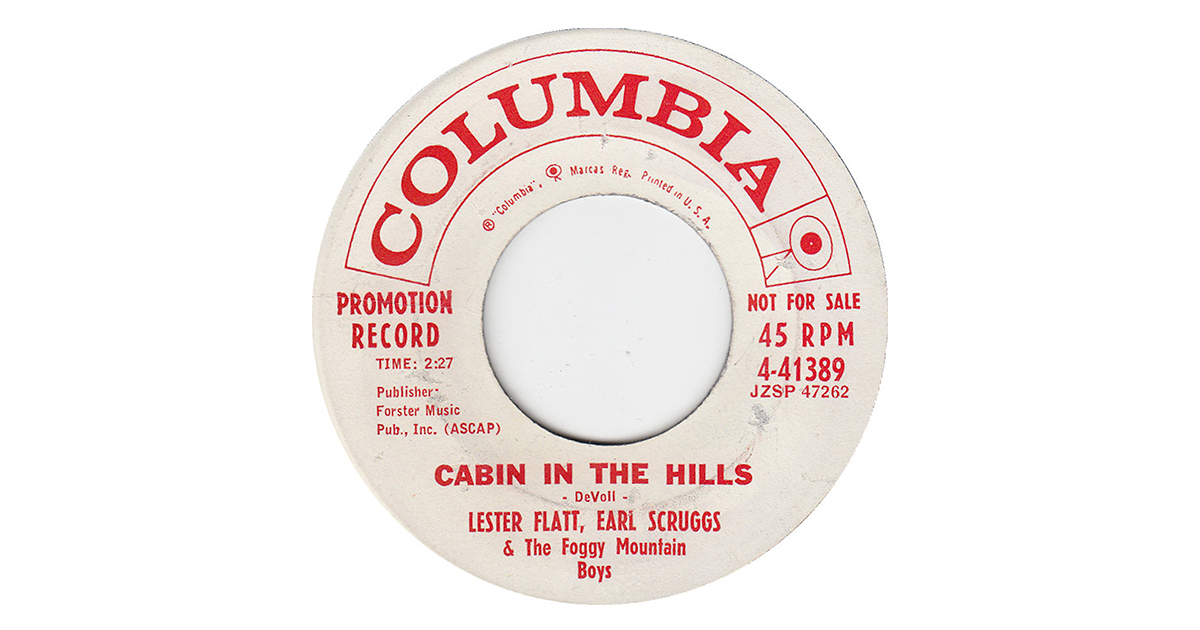
It was on this date that the duo of Lester Flatt & Earl Scruggs recorded one of the most iconic songs of their careers, “The Cabin on the Hill.” The 45-rpm single release has the distinction of being their longest-running chart success, remaining on Billboard magazine’s “Hot C & W Sides” for 30 weeks. The song entered the chart on June 8, 1959, and peaked at #9 in the October 9, 1959, issue of the magazine. Its last appearance on the chart was January 11, 1960.
The initial single release was mislabeled with two mistakes that remained in place throughout the song’s run on the charts. First was the title (noted correctly above). Unfortunately, Columbia Records pegged the title as “Cabin in the Hills” and ascribed its authorship to one Cal DeVol. Sheet music was copyrighted in 1930 for a song of this title by DeVol. But it is a completely different song from the one recorded by Flatt & Scruggs. Columbia later attributed the song to its proper author, B. L. Shook.
Songwriter Boliver Lee Shook was born on July 11, 1897, in Prentiss County, Mississippi (though his tombstone lists his birth year as 1896). What scant information that is known about Shook came from a Booneville, Mississippi, attorney by the name of Donald Franks. In Dorothy Horstman’s Sing Your Heart Out, Country Boy, Franks related that Shook’s life was marked by hardship early on. At the age of 18, in 1914, Shook suffered a life-altering accident when he was thrown from a freight train he had been riding near his home. The accident left him with a disfigured right leg and left arm. Unable to perform manual labor, Shook turned to music as a means of livelihood. He taught piano and singing and worked as a house-to-house piano tuner, a profession he continued until his death. Curiously, and somewhat contradictory, census records for 1920 and 1930 list his occupation as “farmer,” while the 1940 census listed him as a laborer.
Shook’s childhood home—a modest frame cabin perched on a hill six miles south of Booneville—overlooked a wide valley with a low range of mountains to the west. This picturesque setting became the inspiration for “The Cabin on the Hill.” The song, a reflection of his life and experiences, was published in a 1943 James D. Vaughan hymnal called Sacred Thoughts. That same year, another Vaughan hymnal called Dawning Light also made use of the song.
Several scholars have characterized Shook as a prolific songwriter. In truth, his name appears on only four published works, the most popular of which is “The Cabin on the Hill.” Others include “Shouting in the Air” (also contained in both the Sacred Thoughts and Dawning Light hymnals), “Will You Meet Me Up There” (in Dawning Light), and “I’m Going Home,” which appeared in a 1953 book called Three Hundred Country Chapel Songs and Hymns. The Johnson Mountain Boys included “Shouting in the Air” on their 1987 Rounder album Let the Whole World Talk; their inspiration was an earlier recording by the Chestnut Grove Quartet.
Among the earliest performers to make use of “The Cabin on the Hill” were Valdese, North Carolina, natives John and George Shuffler and their friends, steel guitarist Merritt “Curly” Williams and fiddler Lester Woodie. In a July 1997 Bluegrass Unlimited article by Jeff Vogelgesang, John Shuffler related that “I used to sing tenor and Curly would sing high baritone, George sang lead, and Lester a bass on our hymns. We’ve had people come through here and pick up some stuff, back in them days. For instance, ‘Cabin On The Hill’—we arranged that particular tune with a high lead; when they [Flatt and Scruggs] came through Hickory to hire [fiddler Jim] Shumate (ca. April 1948), they got that song from us and rearranged it, and it worked out well.”
Some have speculated that Flatt & Scruggs might have picked up the song when they worked at radio station WCYB in Bristol, Virginia, in 1948 and ‘49. It was during this timeframe that nearby Dickenson County, Virginia, natives, the Mullins Family, recorded the hymn for Rich-R-Tone Records. Their rendition (recently re-released in a lavishly assembled Bear Family boxed set of the complete Rich-R-Tone label recordings) featured a blend of male and female voices accompanied by guitar, with Rev. Cline Sluss of Clintwood, Virginia, providing bass vocals. This recording is believed to be the first-ever version of Shook’s song, and it introduced the heartfelt tune to a wider audience.
The most plausible account of the song’s journey to Flatt & Scruggs comes from Jim Smoak, the banjoist for Hylo Brown & the Timberliners. “That song was brought to us by [our mandolin player] Red Rector,” Smoak related recently. “Red introduced the song to us, and we started using it. We got the most mail for that than anything. Oh man! That song just brought in the letters at WSAZ-TV. We used to get sacks of mail out there. We’d leave Bluefield (West Virginia) after we did a TV show at 6 o’clock on Wednesday. We’d drive up to Huntington (West Virginia) and check in at the Fifth Avenue Hotel. And then when we’d get up Thursday morning, the first thing we’d do is go to the post office and get one or two mail sacks of mail. That was one of the most requested songs ever. We tried to get Hylo to record that song. And then Flatt & Scruggs beat him to it.”
At the time, both Flatt & Scruggs and Hylo Brown were sponsored by Martha White. Flatt & Scruggs played one circuit of television stations for a month, and Hylo Brown played another circuit of stations. The groups would swap circuits every month; Flatt & Scruggs would play Hylo’s stations, and Hylo would play Flatt & Scruggs’s stations. Smoak reasoned that when Flatt & Scruggs took over the show at WSAZ-TV, they saw the tremendous amounts of mail that came in for “The Cabin on the Hill” and got the idea to record it.
The Flatt & Scruggs recording featured a unique five-part harmony, with two parts above and two below the melody, and included contributions from notable musicians such as Curley Lambert (tenor), Paul Warren (bass), Culley Holt (on loan from the Jordanaires, bass), Jake Tullock (high baritone), and Joe Zinkan on acoustic bass. The lead vocals were handled by Lester Flatt while Earl Scruggs’ subtle guitar playing and baritone vocals added depth to the hymn-like quality of the song.
Despite the song’s success, controversy surrounded its authorship. There was the earlier-mentioned gaffe with Cal DeVol. Flatt & Scruggs printed the lyrics in song and picture books that they published in 1959 and 1960. In both instances no credit was given for it or any of the other songs in the books; this was not an uncommon practice for many groups of the era. However, a 1961 book featured copyright credits to both Flatt and Scruggs and their publisher, Peer International Corporation. Some of Shook’s family members groused at the claim of the song by Flatt & Scruggs. Even if proper credit had been given to Shook and Vaughan Music, there’s a likelihood Shook would not have benefited from this. While it is not known for sure about this specific song, it was not uncommon for gospel music publishers of the day to purchase all rights for an author’s composition for a generous one-time payment, with the composer foregoing any future royalties.
Over the years, “The Cabin on the Hill” became a beloved bluegrass and gospel classic, recorded by numerous artists. The Estil Ball Singers performed it in 1960, followed by Roy Drusky in 1962 and Skeeter Davis in 1968. The song continued to be recorded by artists such as Lester Flatt & The Nashville Grass, Bass Mountain Boys, Virginia Squires, Ralph Stanley & Raymond Fairchild, and many others, spanning decades and generations. Its hymn-like quality and rich vocal harmonies made it a staple in Southern radio stations and bluegrass performances.
Boliver Lee Shook passed away on January 4, 1964, leaving behind a legacy of music that continues to resonate with audiences. His song, “The Cabin on the Hill,” stands as a testament to his ability to transform personal hardship and the beauty of his childhood home into a timeless piece of American music. Today, the song remains a cherished part of bluegrass and gospel traditions, a reflection of Shook’s life and the enduring power of his artistry.
Over Jordan
Michael Thornton “Mike” Flynn (October 11, 1934 – January 14, 2026) enjoyed a decades-long career in broadcasting that dated back to 1959. He was best known for his syndicated radio program, The Folk Sampler. Originating from his home in Siloam Springs, Arkansas, the program sported a mix of folk and bluegrass music and was carried on upwards of 60 public radio stations. He also, for many years, served as a master of ceremonies at the Walnut Valley Festival in Winfield, Kansas.
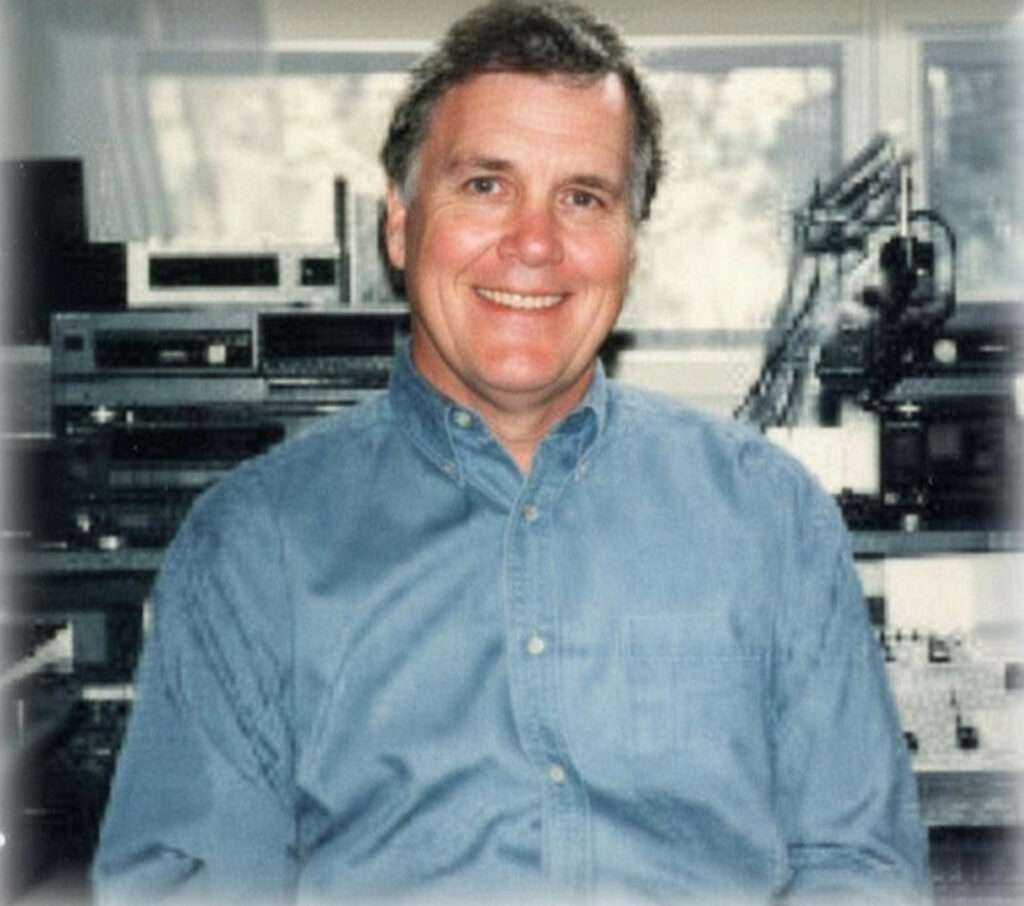
Flynn was born in Santa Fe, New Mexico, and spent most of his childhood in Kansas and Oklahoma, graduating from Rogers High School in Tulsa. Though he considered Santa Fe his spiritual home, it was in Tulsa that his journey into broadcasting began in earnest.
Flynn pursued higher education at Moody Seminary, John Brown University, and the University of Tulsa, eventually earning a Master’s degree in Communication from the University of Arkansas. Early in his career, Flynn worked as a television news anchor for KOTV-Channel 6 in Tulsa, Oklahoma. While he excelled in this role, he realized his true passion lay in the slower, more personal world of folk music and radio.
Flynn’s love for folk music was sparked in the late 1950s while working at WMBI in Chicago. His friend Dan Crary introduced him to a Flatt and Scruggs record, which opened his eyes to the beauty of bluegrass music. Flynn began exploring folk music, attending concerts by artists like Pete Seeger, the Kingston Trio, and the Weavers. Inspired by this discovery, he launched The Folk Sampler in 1959 as a 15-minute radio show in Chicago. Although the program was short-lived, it planted the seeds for what would become his lifelong passion.
In 1960, Flynn moved back to Tulsa, where he created similar folk music programs for FM stations KOGM (now KBEZ) and KRAV. During this time, he also co-owned a storefront club called the Dust Bowl, which allowed him to perform folk music and connect with other musicians. However, his career took a different turn in the mid-1960s when he became the noon anchor at KOTV. For a decade, Flynn focused on television news, temporarily setting aside his musical pursuits.
In 1975, Flynn returned to music when he and his wife, Sandy, performed on a Christmas variety show for KOTV. This led to their own half-hour program, Easy Country, which aired four times a year for three years. Despite its success, Flynn eventually left television to pursue a teaching career in broadcasting and communications at John Brown University in Siloam Springs, Arkansas. There, he helped establish KLRC radio and served as the Head of Broadcasting and Communications.
It was in Siloam Springs in 1978 that Flynn revived The Folk Sampler. The program, which featured an eclectic mix of folk, bluegrass, blues, and traditional acoustic music, quickly gained popularity. Flynn’s meticulous curation of songs, each chosen for their simplicity, warmth, and storytelling, resonated with listeners. The show’s themes, such as “folk food,” “harvest time,” and “faded glory,” added a unique personality to each episode.
By 1983, The Folk Sampler was picked up by American Public Radio and distributed nationally to 58 public radio stations across 22 states. Over time, the program expanded its reach to Canada, Portugal, and Australia, becoming a beloved fixture in the world of roots music. Flynn’s dedication to his audience was evident in the 9,000 letters he received over a two-year period, all of which he and his wife personally answered.
Flynn’s commitment to folk music extended beyond the radio. He served as a master of ceremonies at numerous bluegrass festivals, including the Walnut Valley Festival in Winfield, Kansas, and the Shady Hills Bluegrass Festival in Neosho, Missouri. He also hosted hootenannies in his home, fostering a sense of community among musicians and fans.
Throughout his career, Flynn championed the idea that bluegrass and folk music could coexist with other genres, such as Cajun and Celtic music, without losing their identity. He believed in the power of music to connect people and often shared stories of listeners who discovered a love for bluegrass through his program.
After more than four decades on the air, Flynn retired from The Folk Sampler in 2018, leaving behind a legacy of promoting American roots music and creating a space for diverse voices and sounds. His velvety voice and thoughtful curation of music made him a cherished figure in the world of radio.
Beyond his contributions to music, Flynn was deeply involved in his community. He served on the City Board of Siloam Springs for 12 years and pursued various hobbies, including photography, flying, motorcycling, and cowboy culture. He even edited and published the Quarter Horse Newsletter, reflecting his love for all things Western.
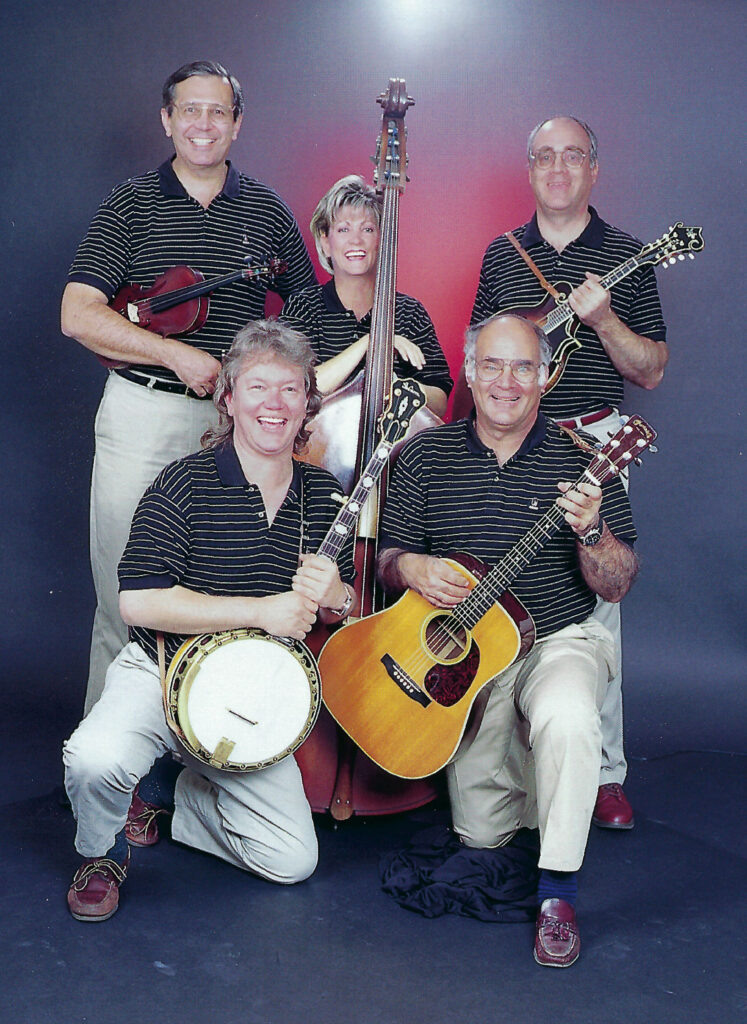
Barry William Palmer (February 2, 1960 – January 27, 2026) was a talented banjo player from Cleveland, Georgia, who had a rich and diverse musical career spanning decades. For years, he was a driving force behind the music that was presented each year at the Georgia Mountain Fair, was a frequent contestant (and winner) at various music competitions, a faithful attendee at Banjothon, and, perhaps most visibly, served as the leader of the reconstituted Bluegrass Alliance.
Barry grew up in a family steeped in music. His grandmother, who played piano and banjo, was one of his earliest influences, teaching him the basics of frailing style banjo and instilling in him a deep appreciation for music. Her banjo, an original five-string Stella, became Barry’s first instrument, and he spent countless hours playing on the front porch of a country store, entertaining passersby. His father also played the banjo, and Barry learned from local musicians who shared their knowledge, including Paul Elliott, a Cleveland, Geogia-based banjo maker and teacher who had a profound impact on Barry’s development.
At the age of 16, Barry attended the Georgia Mountain Fair, an experience that he later described as life-changing. “It set me on fire,” he said. “From then on, I knew I wanted to play country music.” The following year, 1977, Barry joined the Bluegrass Ramblers of North Georgia, a group of five musicians who played bluegrass-infused “old-time mountain music.” The Ramblers included Ed and Richard Mashburn on mandolin and bass, A.B. White on fiddle, Zip Marvey on guitar, and Barry on banjo. This marked the beginning of his professional music career.
Barry’s involvement with the Georgia Mountain Fair became a cornerstone of his life. Initially volunteering for tasks like picking up trash after events, he eventually became a key member of the Fair’s staff band. Over the years, his role expanded to include booking talent and serving as the master of ceremonies. His dedication to the Fair spanned decades, and he often credited the Fair as a pivotal part of his musical journey.
In 1982, Barry achieved a significant milestone when he won first prize in a regional segment of the 6th annual National Country Music Songwriting Contest. His winning song, “Walking Through the Shadows of My Mind,” showcased his talent as a songwriter and earned him recognition in the local press. At the time, Barry was a senior at North Georgia College and preparing to attend pharmacy school in the fall. Despite the demands of his studies, he continued to pursue his passion for music, balancing his academic responsibilities with performances.
Barry’s musical versatility also found a home in the world of theatre. In 1990, he participated in a seven-week run of The Reach of Song, a locally produced play based on the life of North Georgia poet Byron Herbert Reece. In the production, Barry played the banjo that had been gifted to him by his grandmother, further cementing the deep connection between his family’s musical legacy and his own career.
Throughout the 1990s, Barry’s skill as a banjo player earned him numerous accolades. He won the Tennessee State Championship in Athens, Alabama, and placed second in the 1994 National Banjo Championship in Winfield, Kansas. At the Tennessee Old-Time Fiddlers’ Championship in Clarksville, Tennessee, he won first place in 1993 and 1997, and placed third in 1996 and 1998. Despite his success, Barry was rarely recorded. In the 1980s, he is reported to have recorded a banjo album called Just Me . . . and Some Friends. In 1996, he contributed to Rob Mashburn’s cassette, Misty Mountain Music.
Barry’s musical journey reached a new milestone in 1998 when he became the leader of The Bluegrass Alliance, a band with a rich history in bluegrass music. Originally founded in Louisville, Kentucky, in 1968 by Lonnie Peerce, the band was known for its innovative “newgrass” style, blending traditional bluegrass with contemporary influences. After the band disbanded, for medical reasons, in 1978, Peerce entrusted Barry with its legacy, granting him the band name, master tapes, memorabilia, and equipment.
Under Barry’s leadership, The Bluegrass Alliance was reformed with a new lineup of seasoned musicians, including guitarist Johnny Martin, fiddler Chuck Nation, bassist La Rita Buchanan, and mandolin player Tom Hicks. The band performed at prestigious venues such as Bill Monroe’s Bean Blossom Festival in Indiana, Wolf Trap Farm Park in Virginia, the Georgia Mountain Fair in Hiawassee, and, reportedly, the Grand Ole Opry. They also toured internationally, captivating audiences at Japanese colleges, clubs, and festivals. The revitalized band released a CD in 2001 titled Re-Alliance, showcasing their unique blend of traditional bluegrass and contemporary styles.
Barry was beset with numerous health issues later in life. He succumbed to his ailments just days before his 66th birthday.
Stanley Benjamin “Stan” Zdonik, Jr. (June 25, 1947 – February 4, 2026) enjoyed over 50 years of immersion in the world of bluegrass music as both a fan and as a member of its professional community. He was a passionate advocate, visionary leader, and generous mentor whose influence was felt particularly in the Northeast. As a co-founder and the first president of the Boston Bluegrass Union (BBU), Stan helped to create a vibrant community for musicians and fans alike. On a national level, he was an enthusiastic member of the International Bluegrass Music Association (IBMA) and served in various capacities, including as a board member, a vice-chairperson, and a chairperson.
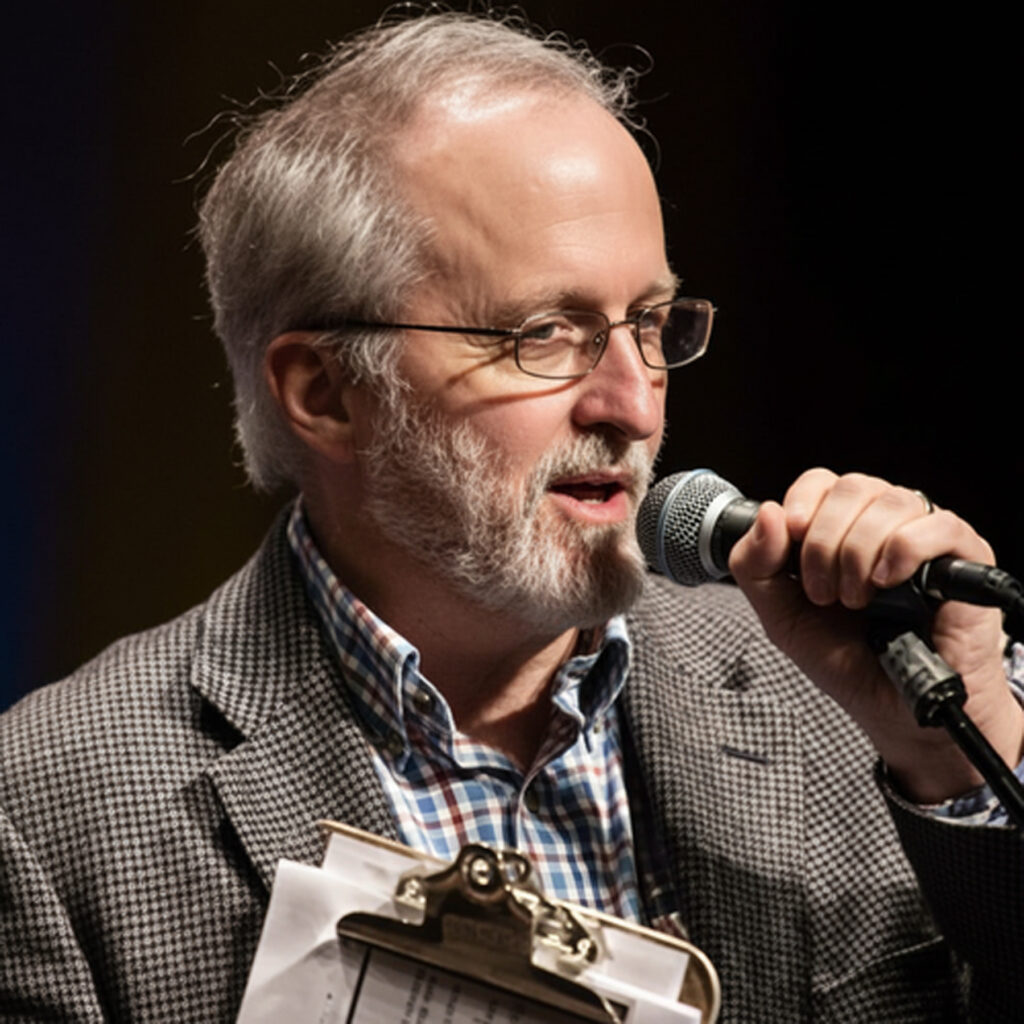
Stan’s journey into bluegrass music began in an unexpected way. A native New Englander, he first encountered the genre as an adult when he stumbled upon a group of musicians jamming in Harvard Square. That serendipitous moment sparked a lifelong passion for bluegrass, leading him to become one of its most ardent supporters in the region. Alongside a small group of like-minded enthusiasts, including Ray Magliozzi of Car Talk fame, Stan co-founded the Boston Bluegrass Union in 1976. The organization was established as an all-volunteer nonprofit with the mission of promoting and preserving bluegrass music throughout the Northeast.
The BBU’s inaugural concert season in 1976 was a landmark moment for bluegrass in New England. Under Stan’s leadership as talent scout and master of ceremonies, the Union hosted performances by legendary acts such as Joe Val and the New England Bluegrass Boys; Ted Lundy, Bob Paisley and the Southern Mountain Boys; Tasty Licks; Marie Rhines and Tony Rice; and Del McCoury and the Dixie Pals. These concerts not only showcased the best of bluegrass music but also laid the foundation for a thriving local scene that would continue to grow and evolve under Stan’s guidance.
Working through the BBU, Stan was committed to building a sustainable bluegrass community in the Northeast, one that supported both national acts and local talent. In the early years, the Union alternated between hosting national bands and Boston-based acts, providing a platform for emerging artists while also drawing in larger audiences with established names. Stan’s dedication to fairness and integrity was evident in his commitment to paying performers the agreed-upon fees, even during challenging times when attendance was low.
One of Stan’s most significant contributions to bluegrass was his role in establishing the Joe Val Bluegrass Festival. It began in 1985 as a fundraiser to help cover medical expenses for Joe Val, the beloved bluegrass musician and co-founder of the BBU, who was battling cancer. Tragically, Joe passed away shortly after the event, but the festival continued as a tribute to his legacy. Under Stan’s leadership, the festival grew into a major annual event, attracting top bluegrass acts and earning recognition as the International Bluegrass Music Association’s (IBMA) Event of the Year in 2006. The festival, now in its 40th year, remains a cornerstone of the BBU’s efforts to promote bluegrass music and educate new audiences.
Stan’s involvement in bluegrass deepened when he joined the IBMA in the late 1980s. He served on its Board of Directors, eventually becoming Vice-Chairperson (2007-2010) and Chairperson (2010-2013). During his tenure as Board Chair, Stan played a pivotal role in negotiating the relocation of the World of Bluegrass event from Nashville to Raleigh, a move that significantly expanded the event’s reach and influence.
Stan’s dedication to bluegrass was matched by his commitment to education. After earning five degrees at MIT, culminating in a PhD in Electrical Engineering and Computer Science, he joined Brown University in 1983 as a professor specializing in Database Management Systems. His colleagues admired his brilliance and his infectious enthusiasm for learning and teaching. Stan’s ability to think on his feet and his passion for brainstorming made him a beloved figure in the academic community, just as he was in the bluegrass world.
Despite the demands of his academic career, Stan remained deeply involved in the BBU. He worked tirelessly to organize concerts, recruit performers, and build relationships with national bands and industry leaders. His efforts were instrumental in establishing the BBU as a key promoter of bluegrass events in New England. Stan’s commitment to the music and the community was unwavering, even during challenging times when the organization faced financial and logistical hurdles.
Stan’s contributions to bluegrass were not limited to organizing events and promoting concerts. He was also a talented mandolinist and a member of the Mystic Valley Boys, a bluegrass band he formed with Ray Magliozzi and others during his youth in Arlington, Massachusetts. His deep understanding of the music and its traditions informed his work with the BBU and the IBMA, ensuring that bluegrass remained true to its roots while also embracing new audiences and opportunities.
Stan’s passion for bluegrass was matched by his generosity and vision. He believed in the transformative power of music and worked tirelessly to share it with others. Whether it was through organizing picking parties, teaching workshops, or hosting concerts, Stan’s goal was always to bring people together and create a sense of community. His efforts to educate and inspire new audiences were evident in the BBU’s expanded schedule of events, including Suzuki classes for children, regional band showcases, and the development of a newsletter that eventually evolved into the bi-monthly Bluegrass Breakdown.
In recognition of Stan’s incredible contributions, he was a 2021 recipient of an IBMA Distinguished Achievement award. Closer to his home, the BBU Board voted in 2026 to rename its Heritage Industry Award as the Stan Zdonik Industry Award. The honor was bestowed posthumously at this year’s Joe Val Festival (February 2026).