Paul Brewster
“One of the Best Tenor Singers in the Business”
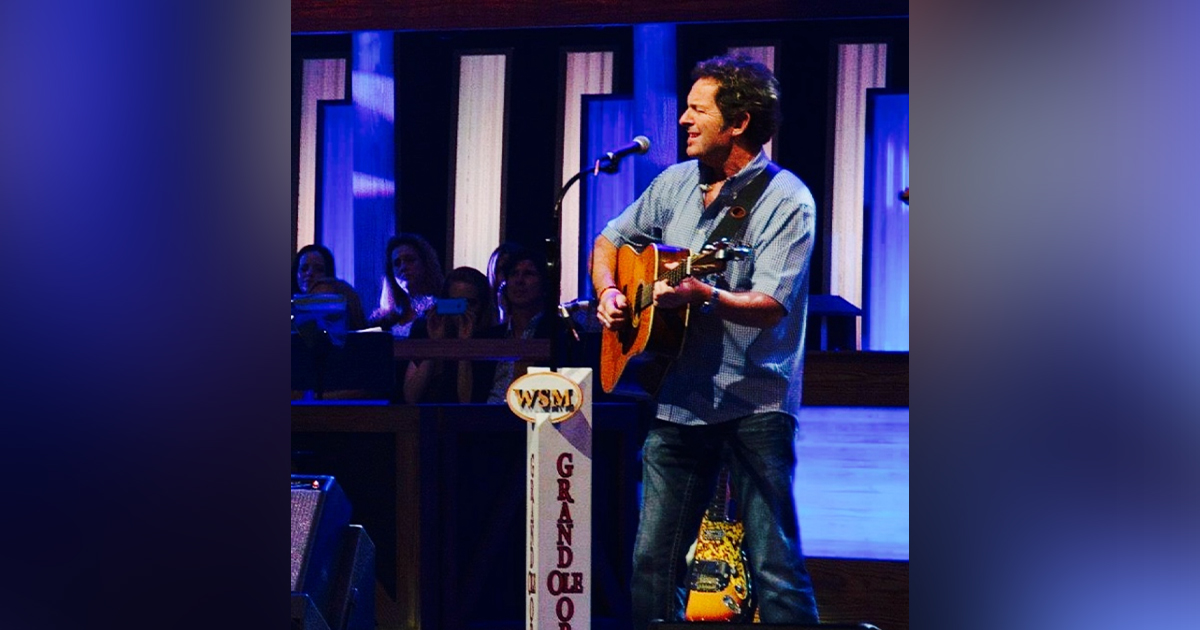
Paul Brewster grew up around music and has been a part of several influential bands in bluegrass. He was a founding member of the highly regarded band, Knoxville Grass, during the 1970s and has since become known as a unique and influential tenor singer in bluegrass music history. His voice is recognizable, impressive, and unforgettable.
At age 22, he became part of the Osborne Brothers for a decade. This was a great learning experience, deepening his appreciation for the country/bluegrass blend and teaching him to project his voice. His harmony singing complemented the brothers’ sound and ensured the legacy of “Rocky Top.”
In 1992, he performed at Dollywood with the band True Blue. Then, for 25 years, he became part of Ricky Skaggs’ Kentucky Thunder, contributing his signature harmonies to Grammy Award-winning projects. He retired from the road due to physical limitations from battling multiple sclerosis. A song writer, too, Paul has definitely made his mark in the music industry and remains active.
In an awards ceremony held on October 13, 2025, at Tennessee’s Executive Residence Conservation Hall, Governor and First Lady Lee honored Brewster and other recipients with the Tennessee Governor’s Arts Award. This award is the state’s highest honor in the arts, recognizing individuals for their sustained contributions to Tennessee’s cultural life.
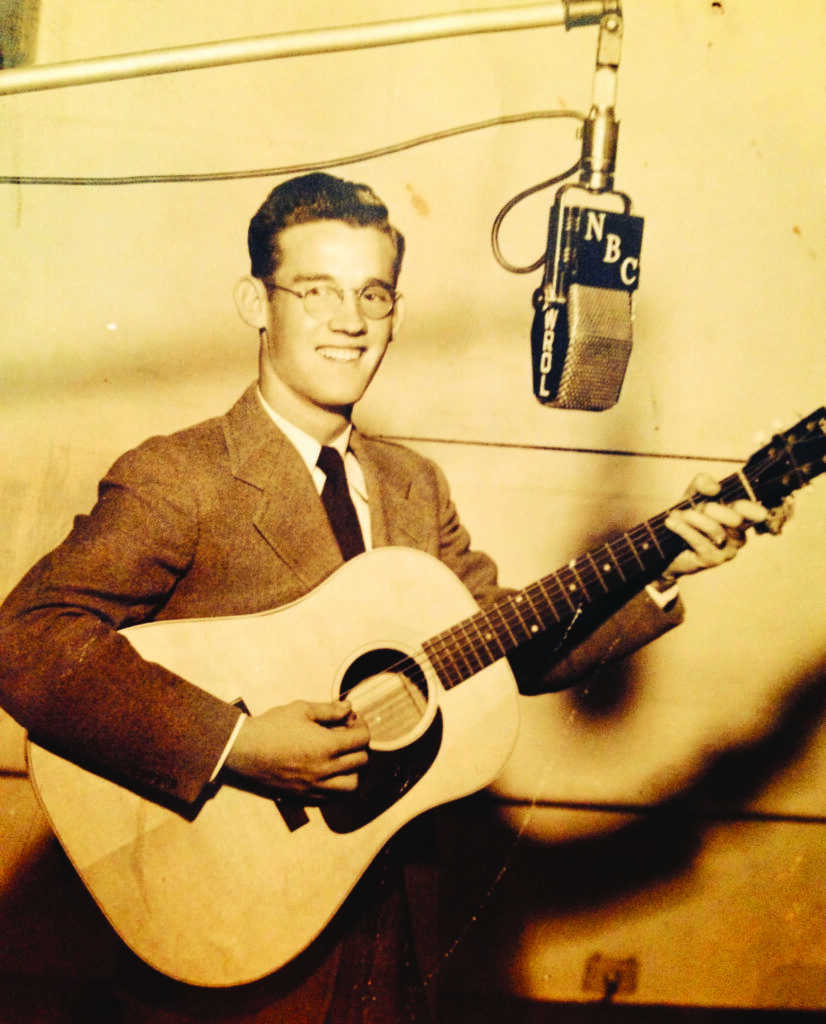
Paul came from an eastern Tennessee musical family. “My first inspiration was my dad. He played guitar and mandolin on the Cass Walker Show in Knoxville in the 60s, but he started with him when he was 13 years old. That was a long time ago. I used to go with him to the TV and radio stations. He took me to a lot of morning shows before I had to go to school. I had to beg him, but he would take me before daylight. I enjoyed it.
“Growing up, kids would ask what does your dad do? I said, ‘My dad sings.’ They would snicker. Lot of people that snickered at me in school became my friends when I started playing. I won a talent contest in school singing ‘Love Bug,’ a George Jones song, and got to ride in the Christmas parade downtown. I got to ride in the back of a car and wave. They liked what I did. Life takes its turns.
“I kind of started late. My dad had retired from the music business and went into sales. I was probably 13 or 14. I started with guitar. I was self-taught. I never went to school for music. I never looked at music as a business. I fine-tuned my talents after high school at my uncle’s store, ‘Pick ‘n’ Grin.’ This was the center of Knoxville’s bluegrass scene. I learned how to play banjo and guitar there. Guitar is my main instrument, mainly Martins. Dad and I played together in church, and sometimes a trio with my Uncle Bud.
“It took off on its own. You have to have a love of what you’re doing to want to continue on with it. I was fortunate to be in it. I love the music: bluegrass and country. Like Barbara Mandrell and George Jones said, ‘I was country before country was cool.’ That’s really the truth.”
Paul’s first band was the Dixie Rebels in 1975. Then came Knoxville Grass. Early members of that band included Jimmy Millsapps (banjo), Glenn Laney (guitar and banjo), Darryl Wolfe (mandolin), Lynn Norman (bass), and Brewster (guitar and vocals). Paul said, “I just loved to play. They wanted me to play with them full-time so I started playing bluegrass music that way. One of the first places we played was for the opening of a Burger King in Knoxville on Magnolia Avenue. We were the first group to play for Buddy’s BBQ. We played for three hours. It was very popular because it was close to the University of Tennessee campus.
“From there, I went to work with my uncle Bud Brewster’s group, the Pinnacle Boys. I played bass and a little guitar. Then (bluegrass) festivals got really big in the late 70s, and I went to work with Sonny and Bobby (Osborne) about 1979. I stayed with them about 10 years. When I told my dad, he flipped out and said, ‘Hallelujah!’ That’s a real moment in my musical time. It verified what I was doing was worthwhile.
“One of the reasons they hired me, Robby, Bobby’s boy, didn’t want to go to Germany. Sonny called me and asked, ‘didn’t I want to try out?’ I said, ‘Let me think about it…yes!’ They gave me a list of songs. I knew 95% of their material. I sat for a week and listened to Osborne Brothers’ songs. Mike Davis and I took a trip to Sonny’s house in Hendersonville. We did ‘Pathway of Teardrops’, a three-part harmony song. We got through a verse and a chorus, and Bobby got up, put his mandolin back in its case, put his hat on, walked out the door, and left. I asked Sonny, ‘Did I do something wrong?’ He said, ‘No, you’re in.’ I had to be on the bus at 12 the next night.
“That was a huge trip for me. That was my first time to be overseas. I learned a whole lot real fast. We went to Germany and Switzerland. It was a Marlboro country music show with Faron Young and others. Faron decided to come on before us and had us close it. It was a great experience for me.
“When I first started, we played all night. When you get in it professionally, everything has steps to it. You do your sound check, play your songs, put your instruments up, and then have a show right after. When you do it for a living, it becomes part of your business and part of you. It’s a job, but you need to look at it as a GREAT job, not as an ‘oh, I got to do this again’. If you ever do that, you need to get out of the business. You’ve got to enjoy what you’re doing. It’s not what it’s perceived. When you get done, you have to turn around and break down your sound system, put your instruments up, and get back on the bus, and you’ve got to drive to the next gig. Some people don’t realize what you go through, but it’s just part of the business. You just have to learn how to do those things. It’s not easy when you’ve got to play so many shows a year, but it’s your job.”
Then his life took another path. Paul remembers, “Keith (Whitley) passed in 1989. We had played a lot of festivals. I was with Bobby and Sonny, and he was with JD (Crowe). They changed bluegrass music when (Rounder) 0044 came out. I had an 8-track of it. That’s when I got introduced to the New South.
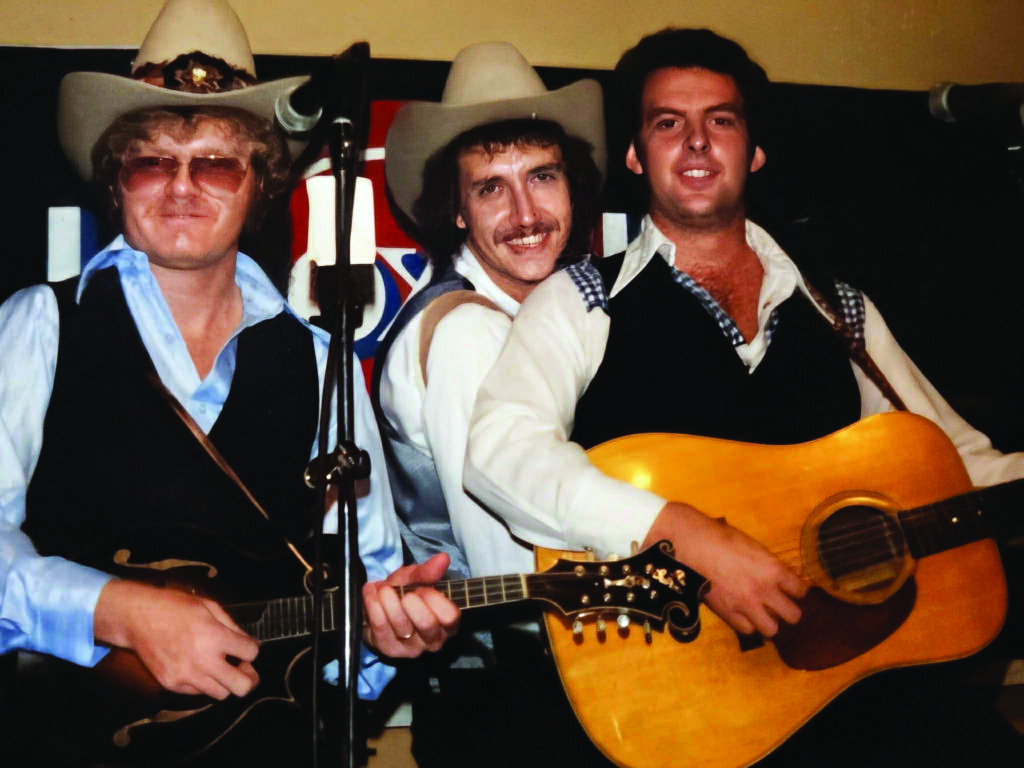
“Keith was a good friend. I got bummed out, left, and moved to Naples, Florida, with my wife and daughter, Calah. I went to work at the Imperial Golf Club, pursuing my dream of professional level golf. I was really into golf. I went to get my card to become a golf professional. That didn’t quite work out. I worked in Naples for about a year or year and a half. I never got my card, but I got close. You can learn more about a person playing 18 holes of golf with them than you can trying to talk to them. It’s a great hobby on the road. It’s better than sitting in a hotel room. You get outside, and it’s relaxing.”
Brewster returned to Knoxville. “We went back home after we had my son, Aaron. I got into selling cars with my brother. We drove to the Opry one night to see the Osborne Brothers, and David gave Ricky (Skaggs) a cassette of my singing tenor. Soon after that, Ricky called (in 1995) and invited me to join him on the road singing harmony vocals and playing rhythm guitar. I went to Nashville, and my first gig was playing with Skaggs at the Opry. Unfortunately, that was the same week of the Oklahoma City bombing.
“We were doing a show in Vancouver, British Columbia, and Steven Stegal (the American actor) was there filming a movie, and he came on stage and introduced us, then took us out to eat. You get a chance to meet movie stars and other artists. There’s some great perks in this business. I learned a lot from Ricky. He’s been in the business since he was five. I played with him until 2020. I tried to do the best show every night. I tried to give 110%. It is a constant work in progress.
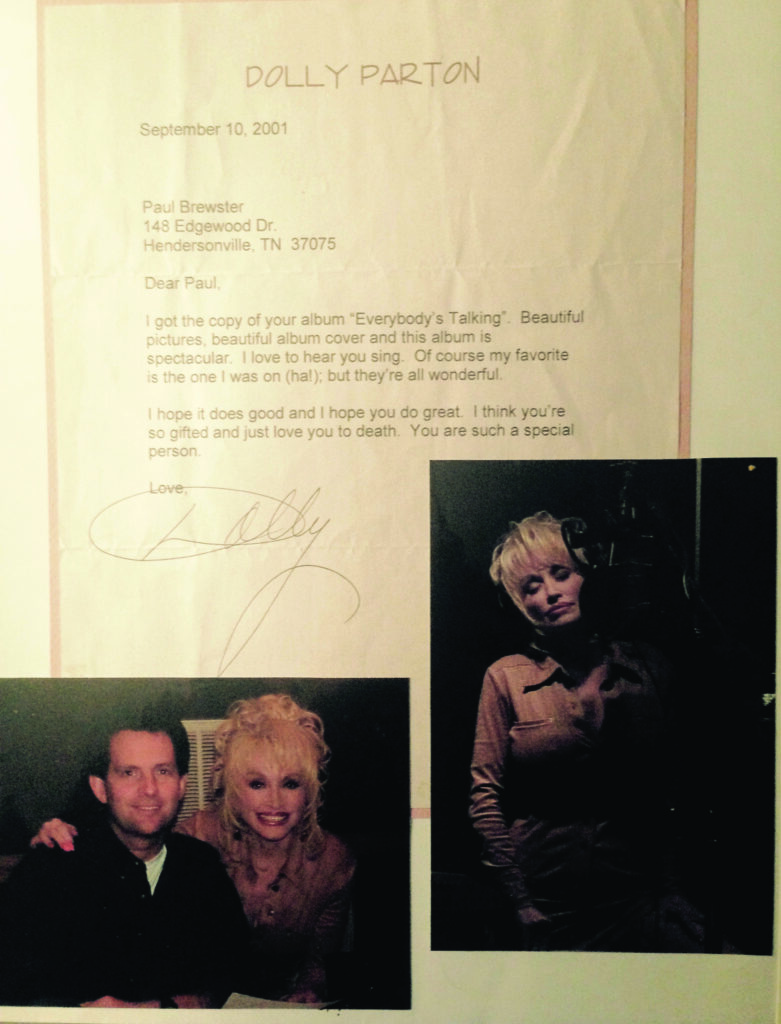
“I have always enjoyed singing harmony, even as a kid. I never sung the lead line. I have been fortunate to sing harmony with some of the best singers in the business, including Dolly Parton, Marty Raybon, Joe Diffey, and Ricky Skaggs. If I’d had an iPhone, I’d have taken 30,000 pictures. I don’t take it for granted. Merle Travis enjoyed taking pictures at the Opry. I just happened to see him in the dressing room. I had my guitar, and he said, ‘Hold on just a minute. I’m taking your picture.’ I said, ‘I need to be taking your picture.’
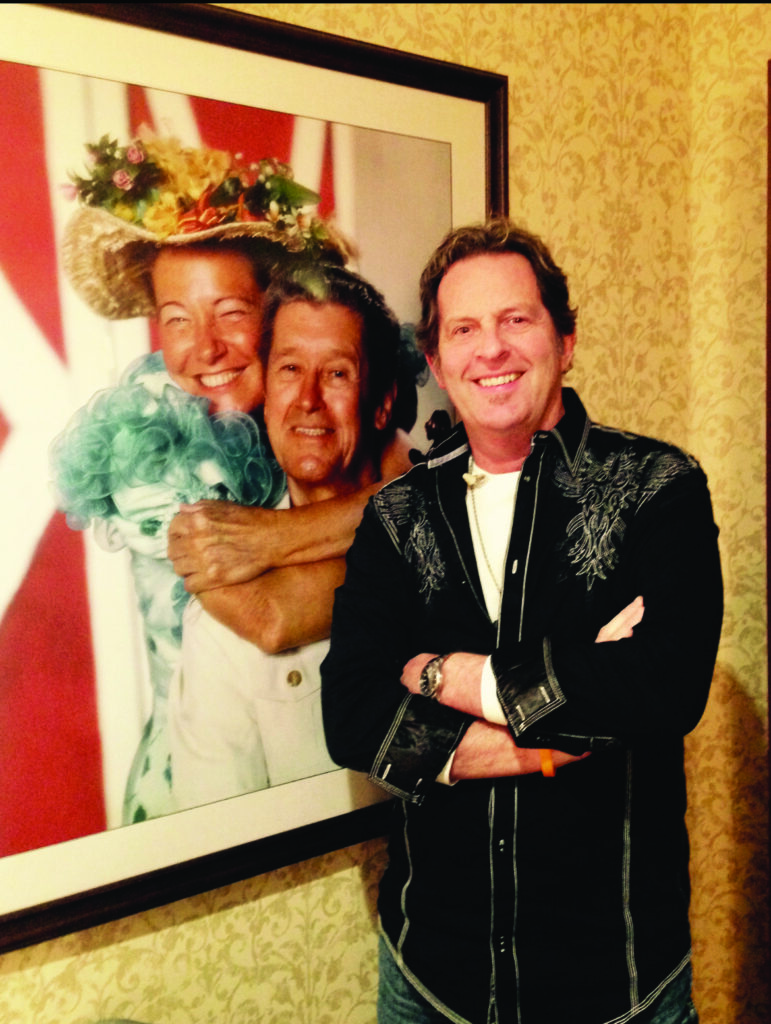
“This is my Minnie Pearl and Roy Acuff story. I’ve told it many times, but it’s worth telling. The Osborne Brothers were to play a bluegrass show near the Opry during the day, we had played the Opry the night before, and I had left a suit in the dressing room. I came back to get my suit. I couldn’t find my suit. I started looking for my suit. Minnie Pearl came up and offered to help. Roy Acuff came in and wanted to know what she was doing. She said, ‘Paul has left his suit in one of these dressing rooms. And I’m trying to help him find it.” It was just us three in the Opry House. That was it. I stood at the back of the stage and watched them going in and out of these dressing rooms looking for my suit. I thought people’s not going to believe this. That’s why we’re family down there. That’s the Grand Ole Opry.”
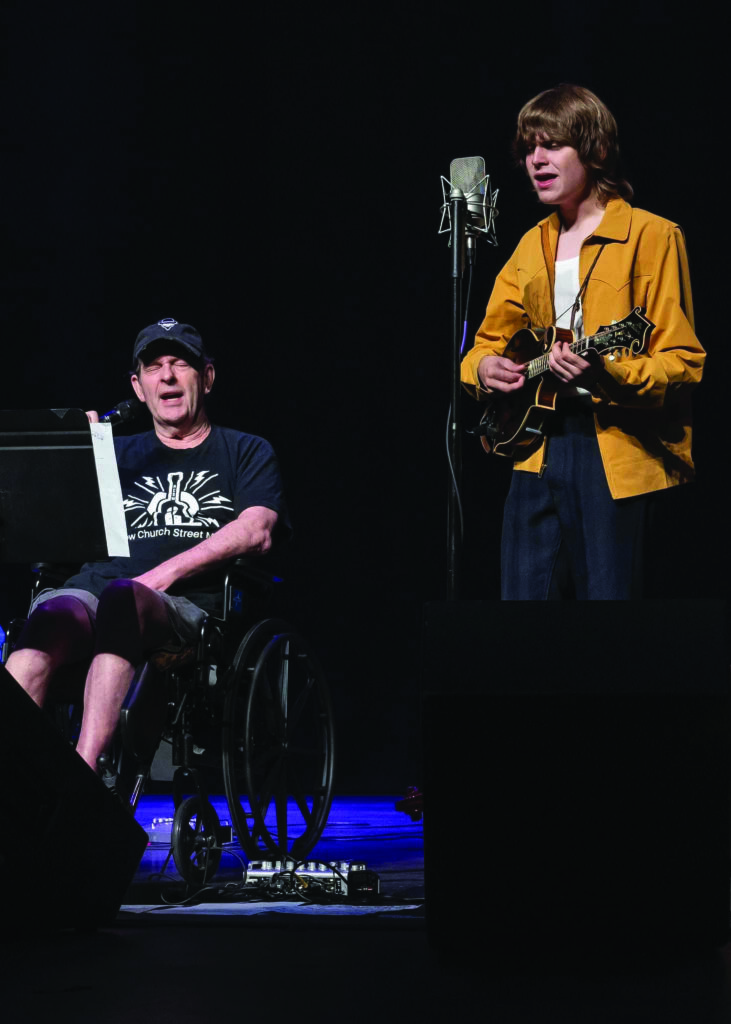
A part of Ricky Skaggs & Kentucky Thunder for two and a half decades, Paul was recognized for his accomplishments in the bluegrass industry by his former boss on May 27, 2022, at the Bijou Theatre in Knoxville, Tennessee. Skaggs invited his now-retired longtime tenor vocalist and rhythm guitarist to join him on stage for a couple of tunes. Paul had not appeared on stage since the beginning of the pandemic. After singing “Big Spike Hammer” and his classic rendering of “Kentucky Waltz”, Brewster was surprised to receive a commemorative plaque honoring his time spent with Skaggs. The inscription on the plaque reads: “You’re one of the best tenor singers in bluegrass music, a first-class musician, and a good friend. Your presence on stage and off is deeply missed.”
Ricky shared with the audience, “Paul was with me for 25 years. Some of the best records that I ever recorded, I recorded with Paul at Skaggs Family Records, all of our bluegrass stuff. We had some wonderful times; Paul always had just the clearest voice, and people loved it when he’d sing.”
In a phone interview following his special night, Brewster shared, “The appreciation presentation was a surprise. Ricky called and asked me to come down and sing a few. It was great! I had a lot of family there. It all worked out really well. I’m so thankful. It was fun and nice to see the guys again. I got to sit on the side of the stage and had my in-ears and enjoyed it very much.”
Reflecting on his career, the vocalist shared, “I’ve been all over the world…twice. We went overseas quite a lot: Germany, Switzerland, the Czech Republic, and Ireland. I’ve been to all the states, too. I would not have seen all that without music. I never thought about the travel. In the back of my mind was just to play music to wherever it led me. I had no idea it would take me so far as it did. You never really know until you get involved.”
Brewster is grateful. “I met all my music heroes: Bill Monroe, Lester Flatt & Earl Scruggs in the bluegrass. In country music, being a member of the Opry with Sonny & Bobby, I got to meet Ernest Tubb, Marty Robbins, gosh, I met them all.”
He shared a humorous encounter. “I went with my Uncle Budd to Lester Flatt’s festival in Pinnacle, North Carolina. For some reason, I ended up sitting on Lester’s bus. It was just me and him. I didn’t know what to say. I was pretty young. I said, ‘You still like what you do, Lester?’ I was stupid and didn’t know what else to ask him. He said, ‘I’m still here, ain’t I?’ I still remember that.
“I recorded with Dolly on ‘Forever Young’ with Daniel Grindstaff. He’s got a great album. It worked out really well.”
Regarding albums, Paul recorded three with the Knoxville Grass, he said, “I was on several albums with Sonny & Bobby. I don’t remember how many, probably five or six. With Ricky, we did both country and bluegrass. I was on a couple of his country albums. We basically switched over to bluegrass in 1996-97, that’s when Bluegrass Rules, our first official bluegrass album, was released.”
Brewster has played some impressive venues in his career. In addition to the Grand Ole Opry House and the Ryman, he played the Fox Theater in Atlanta, Red Rocks in Colorado, and even Carnegie Hall a couple times. “(While with the Osbornes), we played in the Tennessee Vols’ Neyland Stadium, where ‘Rocky Top’ is the theme song of the University of Tennessee. We rehearsed with their Pride of the Southland band, went out on the football field, and did “Rocky Top’ with the band. The crowd went berserk! When Sonny hit the banjo, the floor of the stadium started rocking like an earthquake! That was Bear Bryant’s last game in Knoxville, and we won that game. I’ll never forget it.
“With Ricky, we played with the Boston Pops orchestra in Massachusetts. We’ve played some pretty cool places. I got to be a BeeGee for one night. I got to sing with Bruce Hornsby and Bonnie Raitt. We did the Conan O’Brien show in New York City. I met Ozzy in the bathroom. Three weeks later, we went to LA for the Grammy Awards in the Staples. I go to the little boys’ room, but who else do I see but Ozzy Osborne. That’s my Ozzy Osborne experience.”
Paul is also a songwriter. He composed “Waiting at the Gate” with Skaggs. “I also wrote a couple of gospel songs when I was with Bobby and Sonny. Music is a great place to learn about life, especially as a songwriter. You’re aware of what’s going on around you when you’re trying to write.” When he comes to singing parts, Brewster is modest. “(I sing) whatever is needed, low tenor and lead. Tenor or high lead is my favorite.”
Brewster’s advice to up-and-coming performers: “I’m an old-school guy, concentration should be on the lyrics first, of course, and the music as well. Bluegrass singing, I feel, has sort of gotten left behind in recent years. It used to be that the voices in bluegrass were out front, and the instruments supported. Now, there are so many amazing musicians, which is a great thing, but oftentimes it seems the voices and the harmonies are secondary. When young musicians learn bluegrass in jams, they are surrounded by instruments and you can’t hardly sing if you wanted to. In a lot of bands now, musicians don’t know when to back off and let a singer step to the forefront—that used to be a fundamental part of the bluegrass band sound. I’d like to see the music turn back toward the singing, and to see young musicians get over that fear, and really sing out and not be afraid to make a mistake. That’s how I learned with the Osborne Brothers.”
As part of the Traditional Arts Apprenticeship Program, the 69-year-old began giving voice lessons to the rising young artist, Wyatt Ellis. Paul stressed, “This was during COVID. So I’ve been working with him for about five years. He’s doing really good. I’m proud of him.”
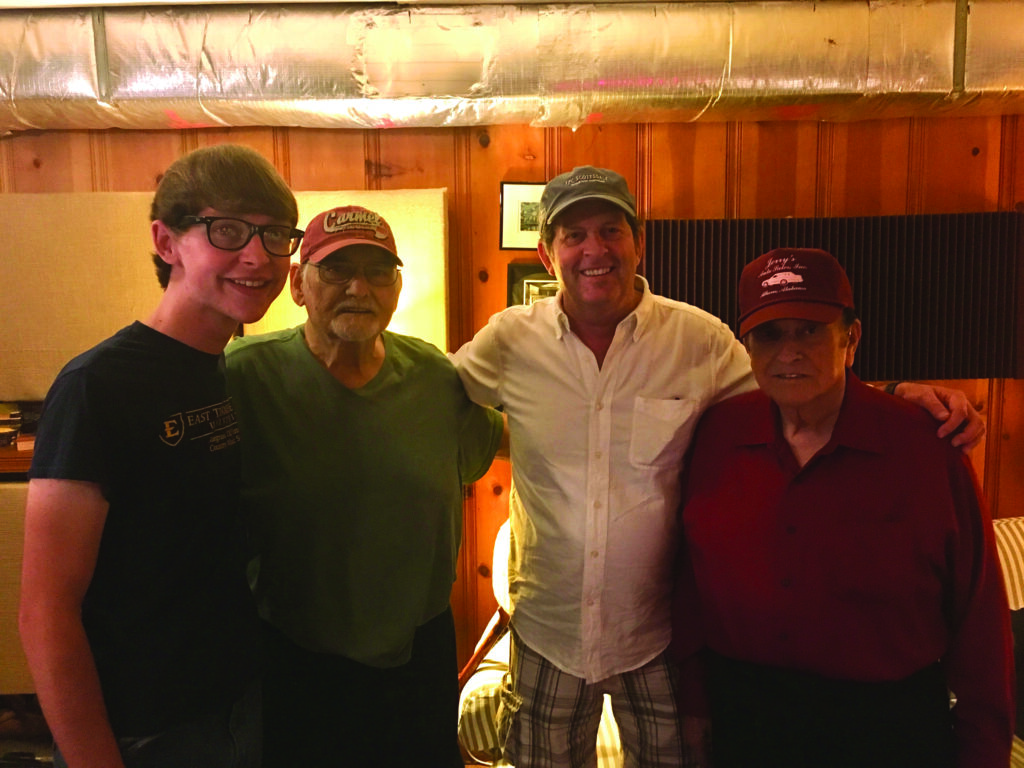
Wyatt praised his instructor. “Paul Brewster has meant a lot to me and to the music of East Tennessee. Since 2021, Paul has worked with me on singing, phrasing, and harmony parts. It’s been a priceless opportunity that I’ll carry forever. Because of who Paul is and what he’s given to so many of us, it was an honor to nominate and gather letters supporting his Tennessee Governor’s Distinguished Artist Award. I performed at the ceremony in his honor, and Paul was there. It was very special.”
Paul responded, “I am deeply honored to share that I was awarded the Distinguished Artist Award at the Governor’s Arts Awards through the Tennessee Arts Commission. What a blessing to stand among so many incredible artists and to be recognized for a lifetime of music that has meant so much to me.”
He is staying busy composing and hopes to get into the studio to record some of his works. “They’re more of the country music side.”
He admires the work of George Jones, Merle Haggard, and John Conley. “I’m a song guy. I’ve got some favorite songwriters in Nashville: Tony Lane, Shawn Camp, and Vince Gill. I just love the whole business.”
“I like to mention my faith. The Lord Jesus Christ is my main object of my life. I got saved when I was young at Morning Star Baptist Church in Maryville, (Tennessee). I got started singing in church. My pastor, Buck Ledford, was in the music business, too. He used to play guitar and sing with his wife, Elva. That’s where I got started…in church. Christ deserves all the credit. That’s my main focus.”
His advice to aspiring artists: “Get saved. Get right with the Lord. That’s the first thing. The second is to learn your craft and learn it as good as you can learn it. Don’t be scared. Do what you know how to do. Listen to people. You can learn from everybody. Start with Christ in your life and learn the other things.”
Currently, Zach Top’s song, “Sounds Like the Radio,” features Paul Brewster on background vocals. Paul’s involvement adds significant traditional country credibility to the recording. Paul Brewster is still making his mark.
“Do what you love to do and do it the best you can,” Brewster concluded.