Duffy Boyd
A Treasure of Southern West Virginia
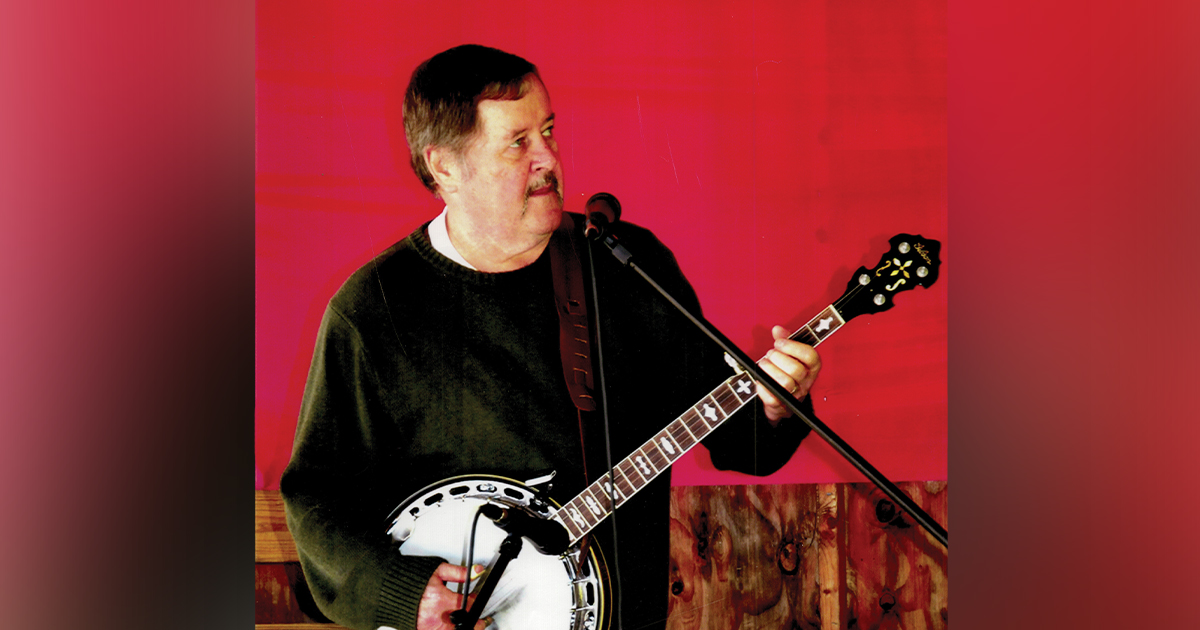
I live three doors down from Duffy, and on quiet mornings when I walk the dog past his house, I often hear him playing the sweetest banjo music. It drifts through the porch boards and out into the street, unhurried and warm, the kind of sound that makes you slow your steps without realizing it. There’s something about the timing of his rolls. They never fall into the mechanical rat-a-tat that made the banjo famous. His rolls are sweeter, rounder, each one settling neatly into the next until the whole line feels like a single piece of music. Line up a hundred banjo players, blindfold me, and I could walk straight to Duffy every time.
Duffy was born Darryl Edwrd Boyd, named after Darryl Zanuck, an early movie producer. His father dubbed him Duffy after the old radio show “Duffy’s Tavern.” His mother, however, was never fond of the name. Duffy came to the banjo late—his early twenties—but he grew up surrounded by sound. In Cannelton Hollow, in the hills of West Virginia, he roamed the woods, abused the creek, and listened to his sisters’ 50s rock and roll records playing in their bedroom. His father was a fiddler who favored waltzes, and though Duffy never learned directly from him, that smooth, singing fiddler’s tone seeped into his ear. There were Merle Travis and Chet Atkins records around too—clean, syncopated guitar work that left its mark. These were not the elements of standard bluegrass training, but they shaped what he listened for long before he ever picked up an instrument.
After he hired on at the Union Carbide plant, Duffy bought a used thirty-five-dollar banjo and began seeking out anyone who might show him something. Fayetteville, West Virginia, didn’t have many banjo pickers then, but Beckley did (about 20 miles away). It was there he found Charlie Keaton. Charlie had picked up a great deal during his Navy years, when he crossed paths with members of the Country Gentlemen and sharpened his skills. His clean timing and melodic instinct became Duffy’s first real guide. Those early influences—rock and roll rhythm, fiddle sweetness, Travis-style clarity, and Charlie’s seasoned roll—were the raw ingredients of what would become the “Duffy sound.”
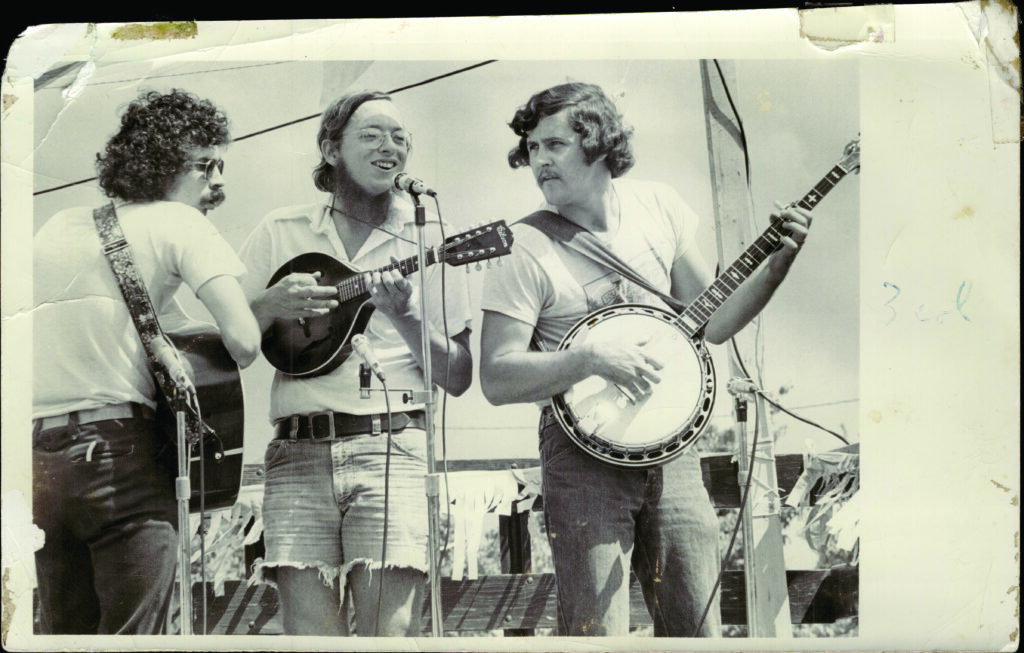
Once Duffy got a few tunes under hand, he discovered a loose circle of musicians who gathered at the roadside park just outside town. Enthusiasm there far exceeded talent, but it was a place to play, and a place to listen. Duffy quickly stood apart. He was the only banjo player who could keep up with the standards from Monroe and the Stanley Brothers, and while he always respected the tune, he added something extra—an ease, a lift, a touch of syncopation—that made people stop mid-conversation. There were no duplicators.
Within a short time, Duffy was playing far better than the rest, and soon better musicians began seeking him out. He sat in with players of every kind, absorbing ideas and stretching his sense of timing and melody. His first band included a singer-guitar player, a string bass player, and Charlie Keaton on mandolin. They practiced more than they performed, but practice never hurt anyone, and the hours together taught Duffy what ensemble playing required. For a time, they had a radio show on WJLS in Beckley—a small thing, maybe, but a steady push toward the player he was becoming.
By the time Duffy reached the Southside Junction years, his sound had begun to mature into something unmistakable. The band blended bluegrass with the rock energy sweeping through West Virginia in the 1970s, and Duffy adapted quickly. His banjo never stiffened when the group stepped outside traditional lines. Instead, he brought drive, clarity, and an instinctive feel for rhythm and harmony that let the band stretch without losing its center. Audiences responded to him. Even in louder rooms, his tone carried—clean, warm, and confident—and the other players leaned into his timing. Southside Junction gave him exactly what he needed then: steady performing, room to experiment, and the pressure of playing for crowds who expected a show. Those years sharpened his sense of dynamics and taught him how to shape a break so that it lifted the whole band. It was during that period that the full “Duffy sound” emerged—seasoned, flexible, and unmistakably his.
As the years passed, Duffy’s playing took on a deeper assurance. He never chased flash or speed for its own sake. Instead, he favored tone, touch, and timing—the things that last. His rolls flowed like a single thought, each note placed with quiet accuracy. Younger players listened closely to him, trying to understand why his banjo sounded clean without sounding polished, warm without losing drive. His influence was subtle but strong; he made others play better by example alone. In any gathering—porch, roadside park, or crowded stage—he had a way of settling the rhythm without calling attention to himself.
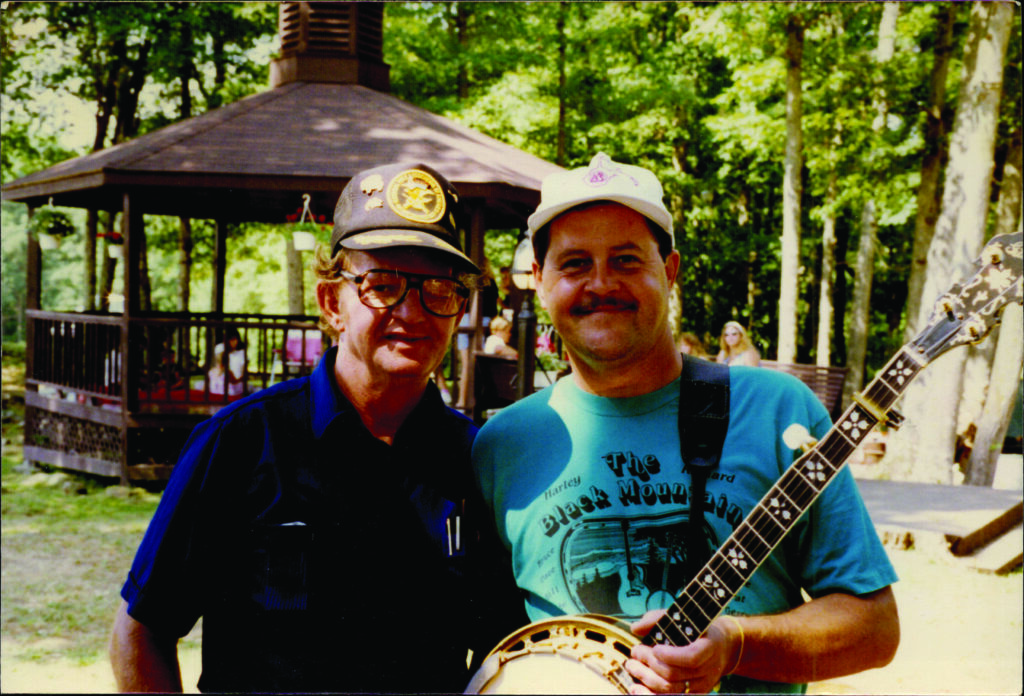
Playing lead was never as important to Duffy as playing backup. He felt his job was to make it easier for the singer or picker to give their best performance without worrying about competing with the musicians behind them. If he could free them to focus on their art, they could offer their strongest performance. His backup didn’t just support the music—it shaped the entire sound of the song. What made his backup so effective was his sound—steady, warm, and absolutely reliable. He never crowded the singer. He filled the spaces with just enough tone to hold the rhythm without drawing attention to himself. He was very successful at this, though this kind of talent almost always goes unnoticed. If his backup made a singer or player sound better, they rarely realized the support Duffy was giving them. He shaped his backup with the same timing and tone that defined his lead playing, rolling just enough to lift the song without ever drawing attention to himself.
That respect for the music extended even to the most famous banjo tune of them all. Duffy always played a mean version of “Foggy Mountain Breakdown,” blisteringly fast in his younger days. He often said it was the hardest tune he ever tried to learn, and he never believed he truly got it right. That puts him in good company—every banjo player in the world except Earl Scruggs. No one has ever played it like Earl. Duffy once had a backstage conversation with Scruggs and asked whether the famous 1949 Mercury recording was really played that fast, or if it had been sped up. Earl answered simply, “Yes, we played it that fast. And by the way, we played it in A-flat.” But what matters to Duffy is not how fast he can play it, but that it sounds right to him.
Over the years, Duffy had the rare chance to play three Gibson pre-war Granadas, but the first encounter stayed with him the longest. At a Southside Junction gig with the Osborne Brothers, he was invited to play Sonny’s Granada, an instrument as close to a banjo Stradivarius as one can find. Players often say that what makes a Stradivarius extraordinary isn’t only its tone but the way it makes playing feel effortless, as if the instrument is helping the musician find his best sound. The old Granadas have that same magic. What struck Duffy most was not the voice of the banjo but the ease—the way it allowed clean notes, precise rolls, and better timing with less struggle. He never owned one himself, but that night taught him something important: the right instrument doesn’t just sound different; it changes what a player is capable of.
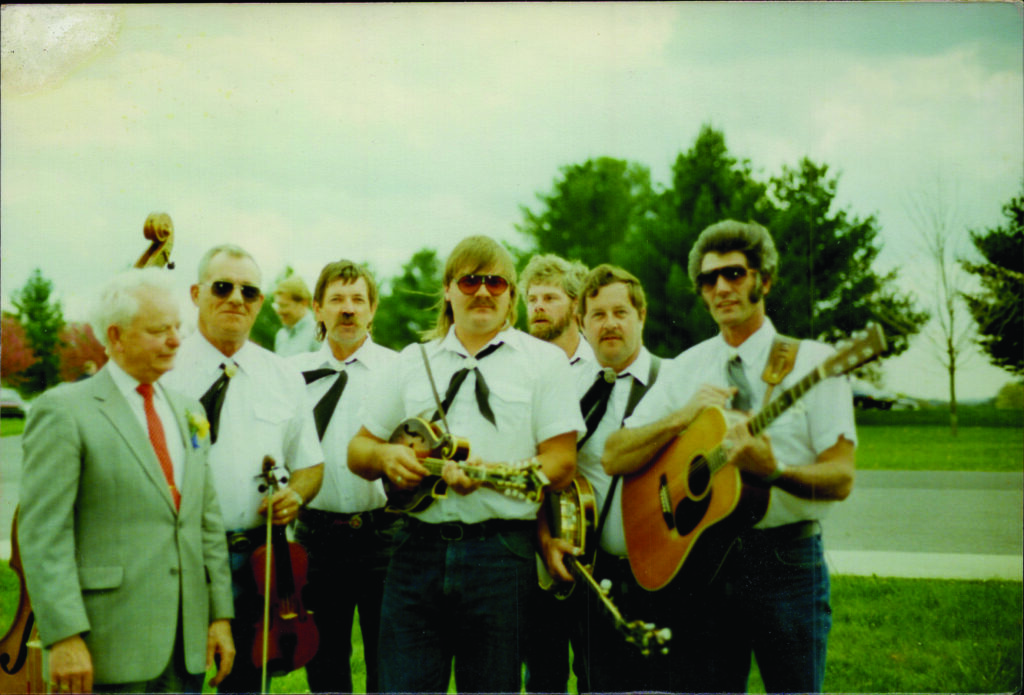
Tragedy struck in the early 1980’s. The house where Duffy and his wife Barb lived was an old farmhouse built from scrap lumber, a room at a time by a coal miner with no carpentry skills. Knob and tube wiring, six rooms heated by a single warm morning heater. Every time lightning struck, every light bulb in the house would blow. One side of the house was blackened by being struck by lightning so many times. Finally, one evening, Duffy and Barb came back to a pile of smoldering ashes where their home had been. They lost everything but the instruments they had with them.
After a month of living with Barb’s parents and walking the railroads, Barb, with a degree in computer science, got a job at a plant in rural Ohio. Duffy, who was already a collector of Indian artifacts, spent his days walking the recently plowed fields, finding artifacts. And he played the banjo, but not in a band, as there were no real players around. He continued to develop his style. His only musical visitor was Buddy Griffin, who would stop and pick as he traveled from his West Virginia home to his gigs in Columbus. Duffy was able to hone his picking skills during the four years spent in Ohio.
Eventually, they came home and settled in Greenbrier County. Duffy had a special musical relationship with Richard Hefner. Richard often sat in with whatever band Duffy was playing with, and the two of them shared an instinct that was rare. I’ve never heard a similar blend from any pair of banjo players. Their rolls locked together in a way that created an entirely different sound—syncopated, bright, and almost telepathic. They always seemed to know what the other was about to do, and none of it was rehearsed. Those tunes came straight from the soul.
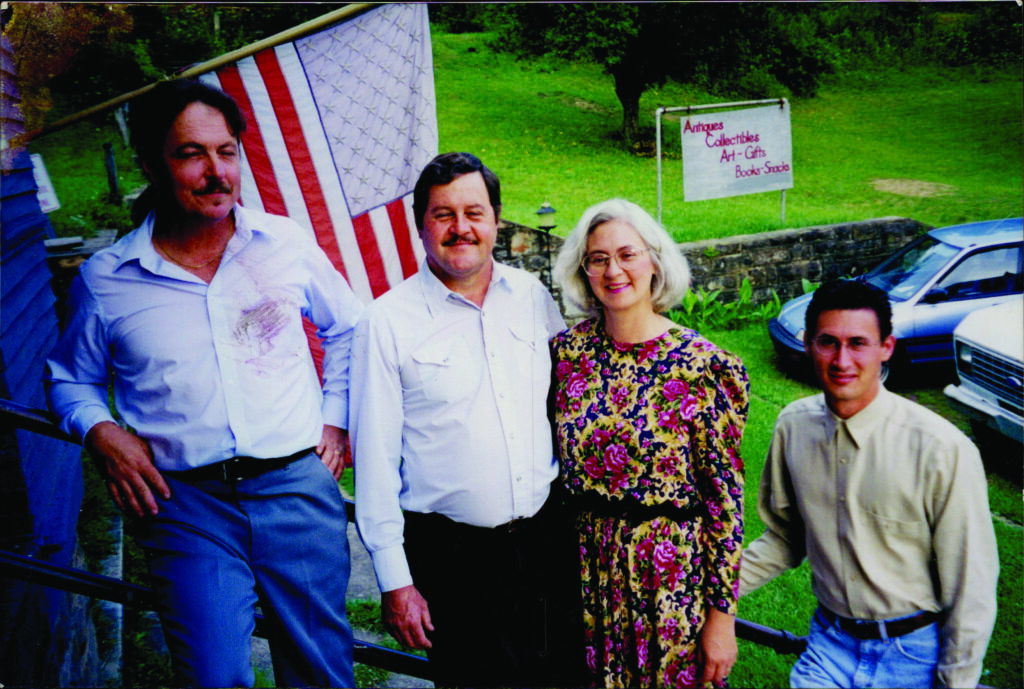
Over the years, Duffy played with several bands, but he particularly enjoyed working with Larry Lowe. With Larry fronting the group, Duffy could simply be the banjo player, and when he could just play the banjo, he shined. He never sought the spotlight, though he could sing a strong tenor and take a lead when he needed to. For Duffy, it was always about the sound of the banjo.
He says some of his best picking came when he went to Nashville to record Harley Carpenter’s album. The band practiced for seven straight days before the session and then cut the entire record in a single day. Later, he and Barbara recorded with their own group, keeping his tone and timing alive on one more project.
Eventually, Duffy grew tired of four-hour bar jobs, hauling a PA, and sometimes even having to ask for his pay. He says he’s retired now. Born in 1943, he feels satisfied with what he gave to the music, and there is no way to quantify the effect he has had on bluegrass in southern West Virginia.
He has tutored many a young wannabe, very many of whom became excellent pickers. He always had time to help a beginning player of any age master the reverse roll and was just as willing to offer advice to a fledgling band, regardless of talent. His curiosity ranges well beyond music. He is knowledgeable about Native American artifacts and an avid history buff, capable of hours-long discussions on nearly any period of U.S. or world history. Now, that same intuition and generosity are finding a new outlet as he helps raise his six-month-old grandson.
Duffy is truly a treasure of southern West Virginia. These days, when the morning is still, and the dog tugs me down the street, I still hear that same sweetness drifting from his windows—the timing steady, the tone as warm as ever. It is the sound of a life in music, not loud or flashy, but true. And even after all these years, it remains unmistakably, beautifully Duffy.