
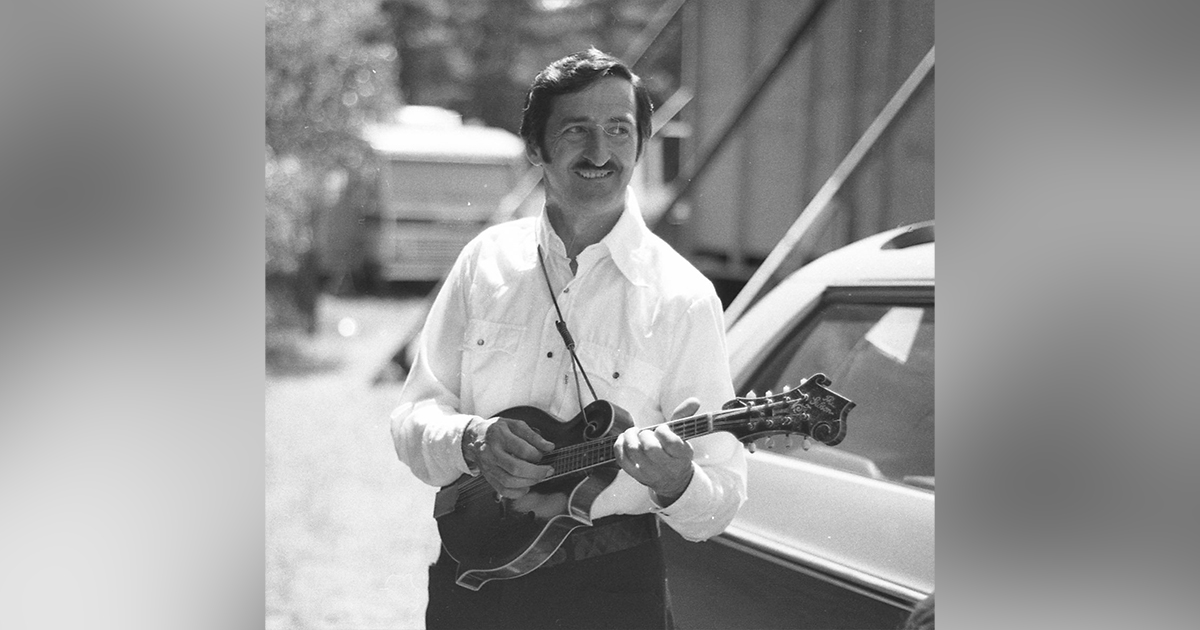
The Return of the Joe Val Bluegrass Festival
Twenty years after the Joe Val Bluegrass Festival won the award for the International Bluegrass Music Association’s (IBMA) Event of the Year in 2006, the festival is returning to the Boston area in 2026 after having been on hiatus since the COVID pandemic. This year, the Boston Bluegrass Union’s (BBU) flagship event is not only celebrating its return in 2026 (after being dark for 6 years), it is also marking the 40th anniversary of the first Joe Val memorial, the 50th anniversary of the founding of the Boston Bluegrass Union and the 100th year of Joe Val’s birth (1926-1985). So, the event in 2026, which will be held the weekend of February 12-15 at the Sheraton in Framingham, Massachusetts, will be an opportunity to mark many milestones in the history of New England bluegrass.
History
The Joe Val Bluegrass Festival grew out of two benefit events that were held for Joe Val, one in 1984 and the next in 1985. At the time, Joe Val—who was one of the most popular bluegrass acts in New England—was suffering from lymphoma. In November of 1984, the first benefit concert was organized by Len Domler and Kevin Lynch in West Hartford, Connecticut. The Johnson Mountain Boys, Del & Jerry McCoury, Bob & Danny Paisley, and Traver Hollow donated their talents to this event and played to a sold-out audience. In June of 1985, another fundraiser for Joe Val, called The Joe Val Benefit and Appreciation Day, was organized. This second benefit was a joint venture between the BBU (which formed in 1976) and the North River Bluegrass Association. The lineup at this event included Tony Rice & Jimmy Gaudreau, John Lincoln Wright, Bill Keith, Traver Hollow, and White Mountain Bluegrass. Joe’s brother, Paul Valiante, sang with Traver Hollow. Sadly, Val passed away two days after this benefit. In an article published in Bluegrass Unlimited about the Joe Val Bluegrass Festival, in the January 2008 issue, BBU President Stan Zdonik said, “You sort of wondered if he knew what was going on, and was holding on.”
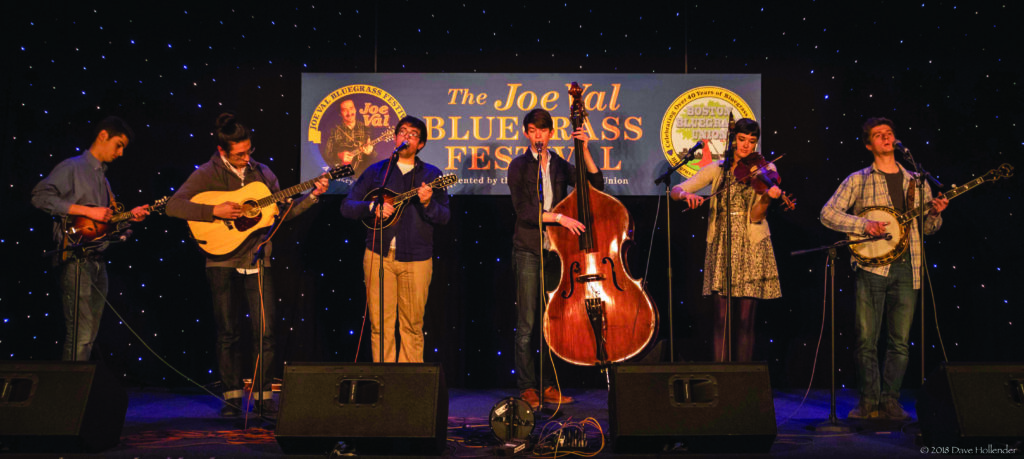
After Joe Val’s passing, the festival continued on as a one-day event, titled Joe Val Day, held every June at various locations around the Boston area over the next several years. In the mid-1990s, the event evolved into the Joe Val Bluegrass Festival, and it moved to become a winter-time indoor event in 2000. The hot weather, combined with the competition from other summer events and the success of Wintergrass—a successful winter, hotel-based festival in Bellingham, Washington—had caused the BBU to rethink their summer festival date. They decided to move the event to February and hold the festival for three days at a hotel. The change was successful, and the festival became a winter-time destination for bluegrass fans all over New England and down into New York, Pennsylvania, and up into Canada.
Joe Val and Boston Bluegrass
Joe Val was born Joseph Valiante in Everett, Massachusetts, and began listening to the music of Bill Monroe at an early age. Later, when he began to perform in public, Tex Logan started calling him Joe Val, and the name stuck. Benjamin Franklin “Tex” Logan was a Texas-born fiddler who had moved to Boston in 1946 to study electrical engineering at the Massachusetts Institute of Technology. Logan, along with West Virginians Don Stover and the Lilly Brothers (Bea and Everett), formed a band in the early 1950s called the Confederate Mountaineers and began performing daily on radio station WCOP in Boston. They also performed at a country music venue in Boston called the Hillbilly Ranch. The Hillbilly Ranch was open from 1939 to 1980, and during the 1950s, the Confederate Mountaineers were the house band. Their nightly appearances at the Hillbilly Ranch served to help popularize bluegrass in New England. In addition to the live bluegrass shows at the Hillbilly Ranch, the Hillbilly at Harvard radio show on WHRB, which started in 1957, also promoted bluegrass to local music fans.
Joe Val was influenced by the music of the Confederate Mountaineers and ended up performing with the Lilly Brothers & Don Stover during the 1960s (Tex Logan had left Boston in 1956). Val also performed with Bill Keith and Jim Rooney, as well as The Charles River Valley Boys, before forming his own group, Joe Val and The New England Bluegrass Boys in 1970. For the next 15 years, Joe Val and his band entertained New England bluegrass fans and became a bluegrass favorite. Joe Val was inducted into IBMA’s Bluegrass Music Hall of Fame in 2018.
Festival Re-Birth
In 2020, the Joe Val Bluegrass Festival occurred in February, as it had every year since 2000. However, in March of that year, the world of live music shut down due to the COVID pandemic. As a result, the 2021 event was cancelled. Since that time, the BBU has been working to bring the festival back. Although many bluegrass events started reopening during late 2021, the Joe Val Bluegrass Festival experienced difficulty finding the right venue.
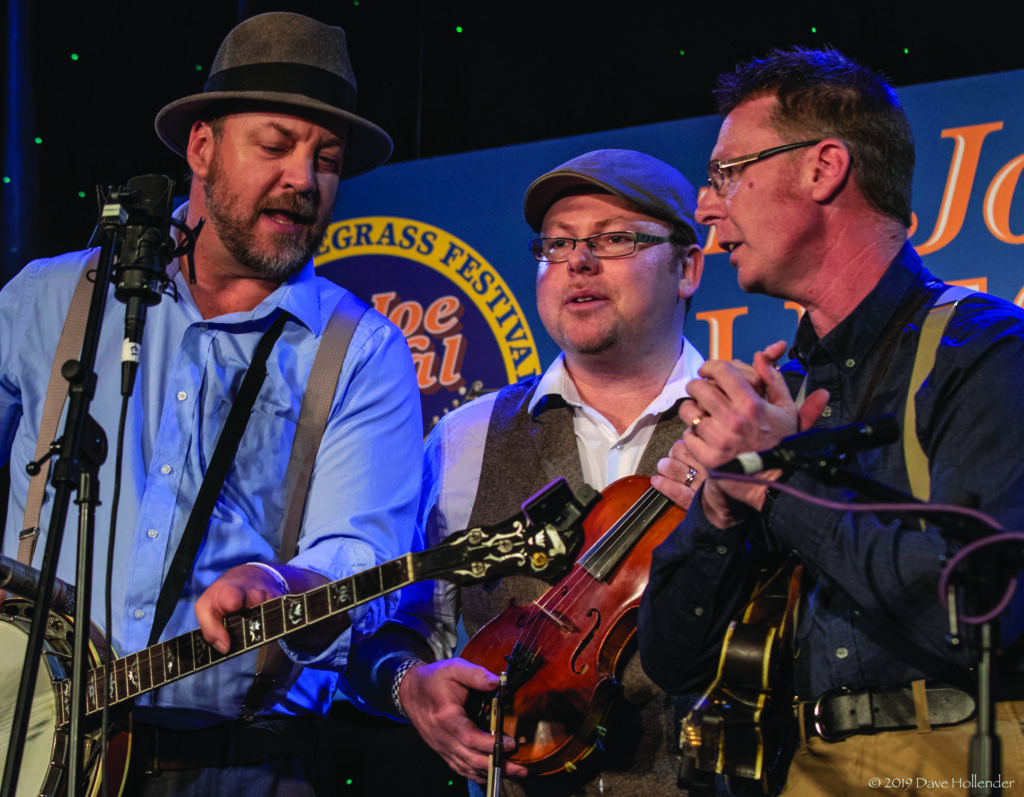
Tony Watt, who grew up in Boston and is currently an Associate Professor [teaching bluegrass] at the Berklee College of Music, has been on the board of the BBU since 2011 and has been the President of the organization since October of 2025. Watt is very excited about the upcoming 2026 event and the many milestones this event will commemorate. Although Watt is at the helm of the organization now, he credits BBU’s 50 years of success to Stan Zdonik, among many others. Zdonik was the president of the BBU for most of its history, although he has recently transitioned off of the board. In addition to Zdonik, Gerry Katz was also a great asset to the organization, starting in the late 1980s. In an article written about the BBU in Bluegrass Unlimited, Zdonik talked about a period in the history of the BBU in the late 1980s where he “couldn’t see any new energy coming in.” The article continued, “That is, until Gary Katz came on the scene in the late 1980s.” Zdonik described Katz as “a savior.” Katz brought “an injection of new enthusiasm” and experience in marketing to the BBU.
One of the features of the Joe Val Bluegrass Festival that has been suspended since 2020 are the BBU’s Heritage Awards. The BBU started giving these awards out in 2008 to those who have made substantial contributions to furthering bluegrass music in New England and beyond. No awards were given from 2021 through 2025. Typically two awards were given out each year: one to a musician or band, and another to an important person in the bluegrass industry. Beginning this year, these two honors will be renamed the Joe Val Artist Award and the Stan Zdonik Industry Award. The BBU announced, “We’re proud to say that the inaugural recipient of the Stan Zdonik Industry Award will be Stan himself.
The 2026 Joe Val Bluegrass Festival lineup is a great one. Artists and bands appearing in 2026 include: The Del McCoury Band, The Gibson
Brothers, Danny Paisley and The Southern Grass, Special Consensus, East Nash Grass, reunions of Boston-based bands The Lonely Heartstring Band, Mile Twelve, and Northern Lights, The Hazel Project with Special Guest Alice Gerrard, Ashley Lilly (granddaughter of Everett Lilly) & The Songcatchers, Rock Hearts, The Reunion Band, Joe Sings Joe, Redwood Hill, and more. Del McCoury performed his first show for the BBU during the BBU’s first season of concerts. Del and his brother, Jerry—as well as Bob and Danny Paisley—also performed at the first Joe Val benefit concert, which was held in 1984. Having Del McCoury and Danny Paisley return in 2026 makes this a full-circle event for these artists. This year’s Artist-in-Residence at the Joe Val Festival is Laura Orshaw.
The festival also includes a Kids’ Academy where kids receive two days of instruction on their instruments, plus ensemble and singing classes. The Kids’ Academy culminates in the kids performing on the main stage on Sunday. Dozens of workshops and teacher-led jam sessions are also part of the fun for festival attendees.
Profits from the festival are used to support a variety of educational programs focused on bluegrass music. In the January 2008 article about the festival, Bluegrass Unlimited reported, “The popular festival, which draws as many as 1500 people per day Thursday through Sunday, reflects the non-profit association’s year-round focus on outreach and education in the Boston area.”
The Boston Bluegrass Scene
From humble beginnings in the early 1950s, the Boston area has grown into a thriving bluegrass scene. Starting with the Confederate Mountaineers at the Hillbilly Ranch and adding the Hillbilly at Harvard radio show, there was then the folk boom of the early sixties, the start of Rounder Records in 1970, the founding of the Boston Bluegrass Union in 1976 and the rise of prominent bands and musicians—like Bill Keith, Joe Val, Jim Rooney, Peter Rowan, Tasty Licks and others. For roughly the past twenty years, the Berklee College of Music has been bringing exceptional bluegrass talent to Boston, and as a result, the bluegrass scene has continued to flourish.
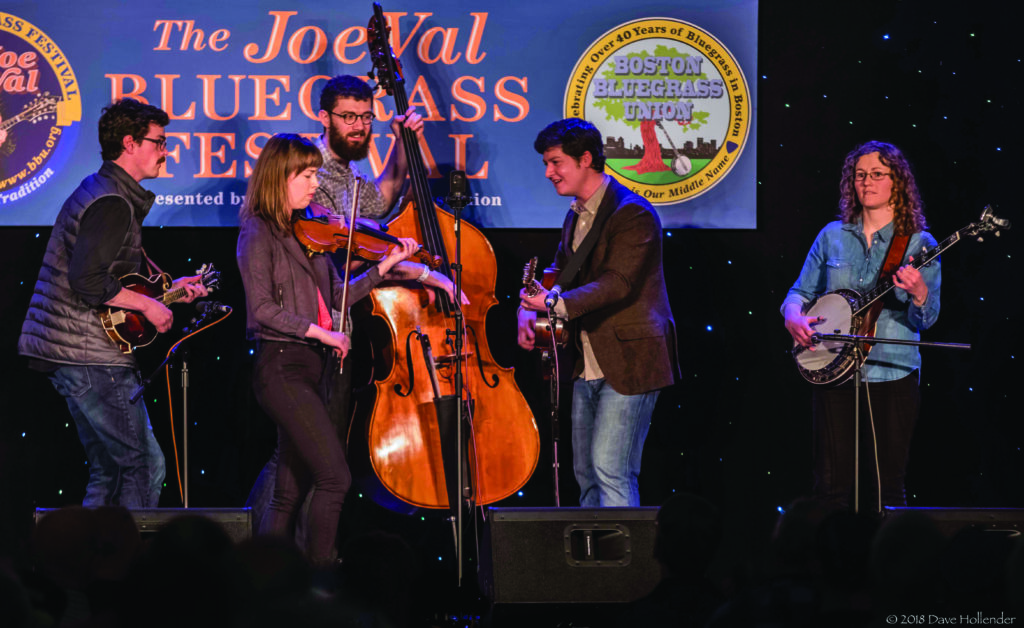
Berklee started in 1945 as a music school that focused on jazz music. In the 1980s, some students who came to study jazz also brought with them their interest in roots music—John McGann, Jeff Troxel, Pete Huttlinger, and Hiro Arita among them. In the early 1990s, that trend continued with students like David Rawlings and Gillian Welch, who met there. In the late 1990s and early 2000s, a growing tide of artists with interests in traditional music came through the college, including Andy Hall, Bryn Davies, Casey Driessen, Chris Pandolfi, Joe K. Walsh, Nicky Sanders, April Verch, Hanneke Cassel and Rushad Eggleston.
In about 2006, the college began highlighting roots music by allowing mandolin and banjo as principal instruments. Then, in 2009, they introduced the American Roots Music Program. The launch of that program coincided with a stream of ultra-talented young musicians coming to Berklee, including Molly Tuttle, Sierra Hull, Sam Grisman, Bronwyn Keith-Hynes, Courtney Hartman, Jake Jolliff, Alex Hargreaves, Billy Failing, Mike Barnett, Stash Wyslouch, and many others. In addition to their studies at Berklee, these musicians started participating in local jam sessions and forming local bands. Other musicians, like Wes Corbett and BB Bowness, started moving to Boston, not to go to college, but simply to be a part of the scene. Many of today’s top bluegrass bands include members who attended Berklee, and a good number of bands were formed in Boston because of connections that were made there.
Giving Back
Today, Tony Watt is one of the driving forces that keeps Boston bluegrass moving forward. He grew up in Boston, and his father was a part of the early bluegrass scene there. From the time he was very young, Tony was involved with BBU events, local jam sessions, and festivals. He said, “I’ve been involved since I was in diapers.” Tony’s father, Steve Watt, is a mandolin and banjo player and one of the founding members of the Boston Bluegrass Union. Tony said, “I grew up listening to my Dad play in bands. We went to a lot of concerts, jams, and festivals.”
Tony started to learn how to play the guitar at the age of nine and remembers, “My dad would take me out to jam sessions, and I had the opportunity to pick with some of the best bluegrass musicians in the Northeast. He was picking with all of these great players, and he would take me along. They were all very generous to let me sit in and jam.”- Tony is a very talented flatpicking guitar player and instructor. He has toured with Rounder recording artist Alecia Nugent, with Leigh Gibson, guitarist for The Gibson Brothers, with Jenni Lyn Gardner, original mandolinist for Della Mae, and most recently with Alan Bibey & Grasstowne. He moved away from Boston in 1994 to attend college at Georgia Tech in Atlanta. He moved back to Boston in 1999 and performed with his father’s band, True Life Bluegrass, and also performed with his own band, Southeast Expressway.
Tony said that his time in Boston between 1999 and 2002 helped him grow tremendously as a guitar player. He remembers, “It’s hard to put into words how amazingthe group of musicians was that was thereat that time, but if you looked at the stagesof MerleFest just a few years after that, you’d see themall again (in The Infamous Stringdusters,Crooked Still, The Steep Canyon Rangers,Casey Driessen and Matt Mangano, UncleEarl, etc.).
Although some of the participantscame from Berklee or the New EnglandConservatory, the center of the scene wasThe Cantab Lounge in CentralSquare in Cambridge, just a few blocks fromthe house I grew up in. For 27 years, theCantab held an open-mic bluegrass nightevery Tuesday, hosted by four-time Winfieldfingerstyle runner-up Geoff Bartley. Forme, playing the Cantab every Tuesdaynight for those years was a huge part of mydevelopment, as well as jamming regularlywith the folks mentioned above, particularlyGreg and Rushad of Crooked Still, whopushed me to play better and more tastefulthan I ever would have otherwise.” For nearly 30 years, Tony’s father, Steve Watt, has led the house band on Tuesday nights, which is a major reason the BBU has chosen him as the first recipient of the newly renamed Joe Val Artist Heritage Award.
In 2002, Tony moved to Johnson City, Tennessee, and then to Asheville, North Carolina, to work with the West Virginia-based band Meridian. Then, in 2004, he moved to Nashville to work on graduate studies in engineering at Vanderbilt. While in Nashville, he roomed with Andy Falco of the Infamous Stringdusters and Noam Pikelny of The Punch Brothers.
In 2008, Tony left Nashville and moved to Schenectady, New York, for about a year, but then moved back home to Boston in 2009 and started giving back to the Boston bluegrass community by becoming involved in BBU events and local jams. He said, “I grew up as a child of the BBU and benefited immensely from their concert series, festival, jams at the Cantab Lounge, and picking with the students at Berklee.”
After joining the BBU board in 2011, Tony is now the President of the BBU. He has also been a bluegrass professor at Berklee for the past four years and is the host of the Bluegrass Tuesdays (formerly held at The Cantab Lounge). Additionally, he also puts on JamVember, a jamming “non-festival” held at the Sheraton in Framingham, two flatpicking camps in Western Mass., and co-created a website for accurate bluegrass lyrics and chords at PickersGuide.com In 2024, Tony won IBMA’s Momentum Mentor of the Year award.
Tony is not the only one who is very excited about the BBU bringing back the Joe Val Bluegrass Festival in 2026. Boston bluegrass has missed this festival in its absence over the past six years, and all bluegrass fans are very happy to see that it is returning. Many festivals were hit hard during the COVID pandemic. It is nice to see that some of them, like the Joe Val Bluegrass Festival, are now returning.
