

Notes & Queries – January 2026
In the Mail: Bill Monroe Photo Revisited
The 1944 photo of Bill Monroe and his Blue Grass Boys, George D. Hay, and Uncle Dave Macon (as featured in the November 2025 “Notes & Queries”) elicited several responses. Eddie Page from Florida State University wrote that he had “just received my current issue of Bluegrass Unlimited and was overjoyed to see the picture of Bill Monroe and band together with Uncle Dave Macon, Dorris, and Judge Hay. I first saw the original photo on display at Bill Monroe’s Museum out on Music Valley Drive in Nashville, which I visited shortly after it opened over 40 years ago. At that time, the caption stated it was taken at Linebaugh’s Restaurant on Lower Broadway (in Nashville). Thanks so much for sharing this wonderful old photo!” Clyde Mattocks of Kinston, North Carolina, confirmed that the location for the photo was “Linebaugh’s on East Broad Street. It was open 24 hours and therefore a popular place for entertainers coming in off the road at all hours to get something to eat.”
Photographer Carl Fleischhauer chimed in that he was “probably the 500th [nope – only the third!] person to write you with the ID for Linebaugh’s, which I am 99 percent certain is the setting for the marvelous photo that Dick Spottswood sent you. Linebaugh’s was about a block from the Ryman. In 1973, I took a couple of photos that include Bill Monroe having supper at Linebaugh’s, and standing in line to pay his bill.” As an interesting aside, Carl added: “It was spotlighted in the John Hartford song, ‘Nobody Eats at Linebaugh’s Any More,’ in 1972.”
More Good ‘n Country
In the October “Notes & Queries,” I fielded a question from Billy Q. Smith concerning a mystery musician on the cover of Jimmy Martin’s 1960 Good ‘n Country album. Unfortunately, I came up empty. Doyle Lawson reached out recently to save the day. He wrote: “J.D. Crowe told me that the fellow in the photo was a friend and fan named Floyd Busby who happened to come into KWKH radio in Shreveport, Louisiana, where they were shooting photos for the Good ‘n Country LP. To balance out the photo, they decided to dress Floyd like J.D. and Paul (Williams), and the rest is history, and a bit of mystery. Here’s the backstory . . . In 1967, I was working three nights a week in Lexington, Kentucky, at Martin’s Tavern, located at 7th and Limestone streets. Down at 4th and Limestone was the Limehouse [a club] that also featured bluegrass music. One night, the Limehouse had booked Bill Monroe and J.D. and I went down to see some of his show on one of our intermissions. We walked in and J.D. looked at the band and then said, ‘I don’t believe this!’ I asked him what about, and he said, ‘The guitar player is Floyd Busby, and he couldn’t pick a lick when we were in Shreveport!’ In addition to Monroe was Byron Berline, soon to leave for the military, Lamar Grier, James Monroe, and Floyd, who played the guitar left-handed. That was the first and only time of seeing Floyd and I understand that his stay with Monroe was short. Now you know the rest of the story.” Thank you, Doyle Lawson!
Marty Godbey’s superb biography Crowe on the Banjo (which I should have checked in the first place!) added a few more details. From a quote in the book, J.D. told that “when the album was released, the Sunny Mountain Boys were at WWVA in Wheeling, West Virginia. The fourth person in the cover photograph was Floyd Busby, who was not even in the band. They just thought they needed a fourth man for the picture.”
Memories of Joe Hickerson (and More!)
Your piece on Joe Hickerson (October 2025) brought back a lot of memories. Joe was just a few years ahead of me at Oberlin College, where I enrolled in 1961. As you noted, Joe founded the Oberlin College Folk Club; he may have also started the “hootenanny” tradition at the college. At some point, I came into a large collection of reel-to-reel tapes marked “Hick and Hoot.” These were concerts featuring Joe along with other college folksingers. He was, as you mentioned, a talented and compelling singer of folk songs.
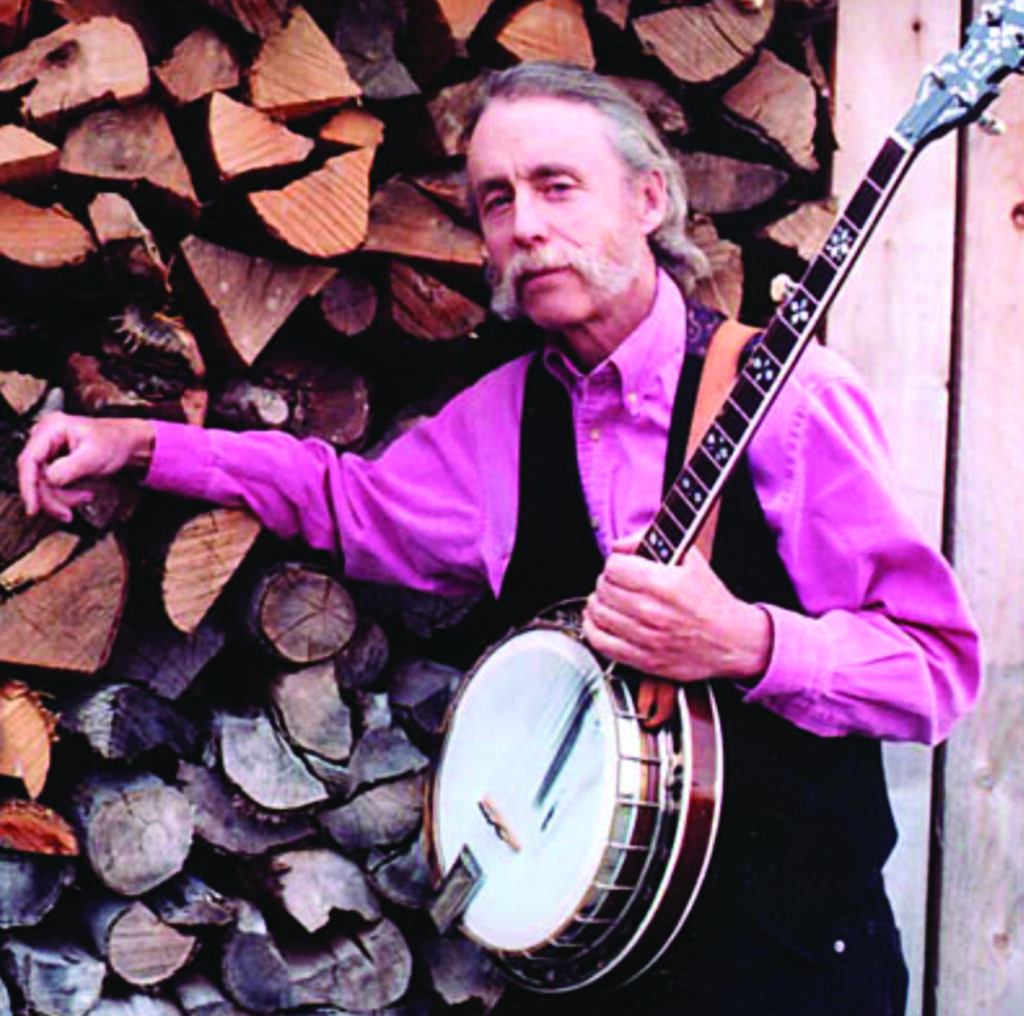
After Joe graduated, the folk club continued to have a strong presence at Oberlin. During my four years there, we presented concerts by everyone from Pete Seeger and Joan Baez to Brownie and Sonny, Reverend Gary Davis, and Sleepy John Estes, to the New Lost City Ramblers, who appeared several times. With a strong bluegrass contingent in the club, we brought in Flatt and Scruggs, Bill Monroe, and the Country Gentlemen. I have some great memories of a post-concert picking party with the Gents.
We also hosted a memorable show by The Stanley Brothers. They thought they had been booked by Antioch College in southern Ohio, where The Osborne Brothers had played the first college bluegrass concert. They showed up at Antioch only to be told that, no, this was not Oberlin, which was a couple hours to the north. Carter phoned and said they were on their way. The Plum Creek Boys held the crowd, or at least part of it, for an hour and a half ‘til the Stanleys finally arrived. Great show for the few of us who stayed around.
I’m pretty sure Neil Rosenberg founded the college bluegrass band, The Plum Creek Boys. He was a couple years ahead of me. By the time I got there Erik Jacobsen was on banjo. After graduating, “Jake” formed The Knob Lick Upper Ten Thousand with Dwayne Story (Carl’s nephew) on guitar and Pete Childs, who later accompanied Joan Baez, on Dobro. They played a very sanitized version of bluegrass aimed at the college crowd and recorded a couple of albums. Jake later produced The Lovin’ Spoonful, among others. I bought my 1928 Mastertone from Jake when he switched to a gold-plated Gibson. I inherited the banjo chair from Jake when I was a sophomore and played with the band for three years. We recorded an album, certainly one of the first by a college band, in 1965.
The article by Sandy Rothman (“Road Trip With Jerry Garcia,” October 2025) also had some Oberlin connections. Sandy mentions Mayne Smith, who I think was in The Plum Creek Boys with Neil. I never met Mayne, but his younger sister Janet was just a year ahead of me and was a wonderful folk singer with a beautiful voice. She taught Joan Baez the great song “Babe (I’m Gonna Leave You)” which Joan later recorded. Sandy also mentions Steve Gibbs, a senior when I arrived, who gave me a few banjo lessons and sold me my first real banjo, a nice Vega, to replace my pawn-shop Kay. Steve never cared to perform but was an excellent clawhammer picker.
So yeah, there was a great folk and bluegrass scene at Oberlin in those days. In fact, it must have persisted in good shape beyond my years. Rhiannon Giddens is also an Oberlin alum. – Regards, Banjo Dan Lindner.
The Lilly Brothers: West Virginia’s Musical Mountaineers
Music historian Jay Bruder reached out recently to say that he had “just purchased the attached edition of The 560 News from Beckley, West Virginia, from August 1947. It featured The Lilly Mountaineers as the cover story – mostly fluff. I didn’t realize they were on the radio at that early date. The magazine also mentioned the station had just purchased a tape recorder. Thought you would find this of interest.”
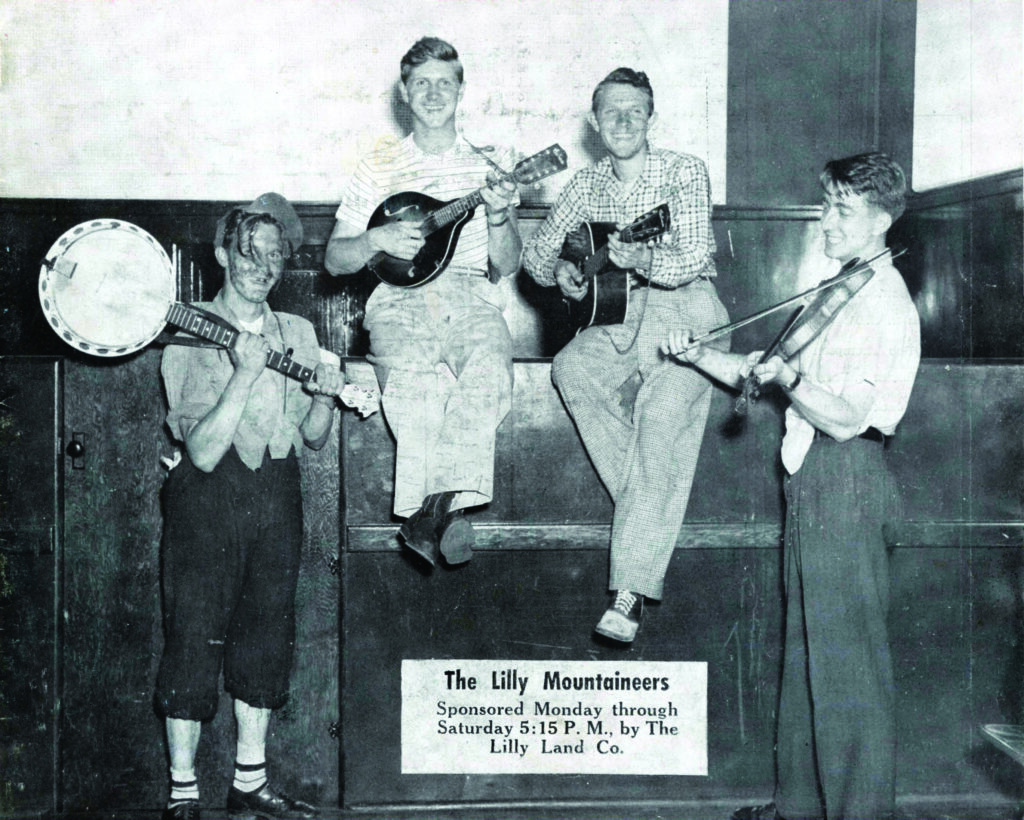
Yes, interesting, indeed! This was probably some of the first in-print publicity ever given to the group. As Jay noted, the article that accompanied their front cover photo was mostly “fluff.” However, the Lilly Brothers, Everett and Bea Lilly, were serious musicians hailing from Clear Creek, West Virginia. Known for their authentic mountain music, the duo performed in 1947, under the name “The Lilly Mountaineers” and gained popularity through their regular appearances on radio station WJLS in Beckley, West Virginia.
The magazine’s tongue-in-cheek interview with the Lilly Brothers was conducted after much persistence from the station’s Promotion Department and the intervention of Mrs. V.T. Lilly, Secretary of the Lilly Reunion Association. The interview offered a glimpse into the brothers’ personalities, their humor, and their mountain heritage.
Everett and Bea’s playful banter during the interview revealed their contrasting personalities. When asked about their origins, Everett joked, “Ma and Pa said we were born…but some people say we wuz abandoned in Clear Creek, West Virginia.” Bea quickly corrected him, stating firmly, “Just say I wuz born in Clear Creek on December 5, 1922.” The brothers’ lighthearted exchange continued as Everett claimed they sold their father’s calf to buy their first guitar, a story Bea vehemently denied. “Everett, you’re gettin’ the buggy before the horse—never happened that way at all, and you know it,” Bea argued, his frustration evident.
Despite their differences, the brothers shared a deep love for music and their Appalachian roots. Their hobbies reflected their connection to the land, with Bea enjoying hunting and fishing, while Everett preferred farming and chatting with old friends. Their humor shone through even when asked about rumors of falling out of bed. Everett quipped, “Sure it’s true. Every night before I climb up into the tree where we sleep, I shake it according to the number of houses and lots Lilly Land Company—our sponsor—has sold during the day.”
Although it wasn’t mentioned in the interview, the Lilly Brothers enjoyed a busy schedule in 1947. They played at venues across West Virginia, including Hinton, Meadow Bridge High School, and Mt. Hope Airport. Their performances were a highlight of the Lilly Family Reunion, an annual event that drew crowds of 50,000 to 70,000 attendees. On August 17, 1947, the brothers delivered a heartfelt rendition of “Mother’s Not Dead, She’s Only Sleeping” during the reunion’s Sunday morning program, broadcast live by WJLS.
Sponsored by the Lilly Land Company, the Lilly Brothers’ daily 5:15 p.m. radio show on WJLS was enjoyed by many listeners across the region.
Tall Paul Charon
An article in the October 1962 edition of the Jim & Jesse Fan Club journal labeled Paul Charon as a “bluegrass vocalist and instrumentalist.” Indeed, as a young man in his early 20s in the early 1960s, he logged time with some of the bluegrass greats such as Jim & Jesse, Bill Monroe, and Jimmy Martin. He spent three years with country singer Skeeter Davis. From 1961 until 1968, he was a fixture on the Nashville music scene . . . and then he abruptly disappeared. Just who was Paul Charon?
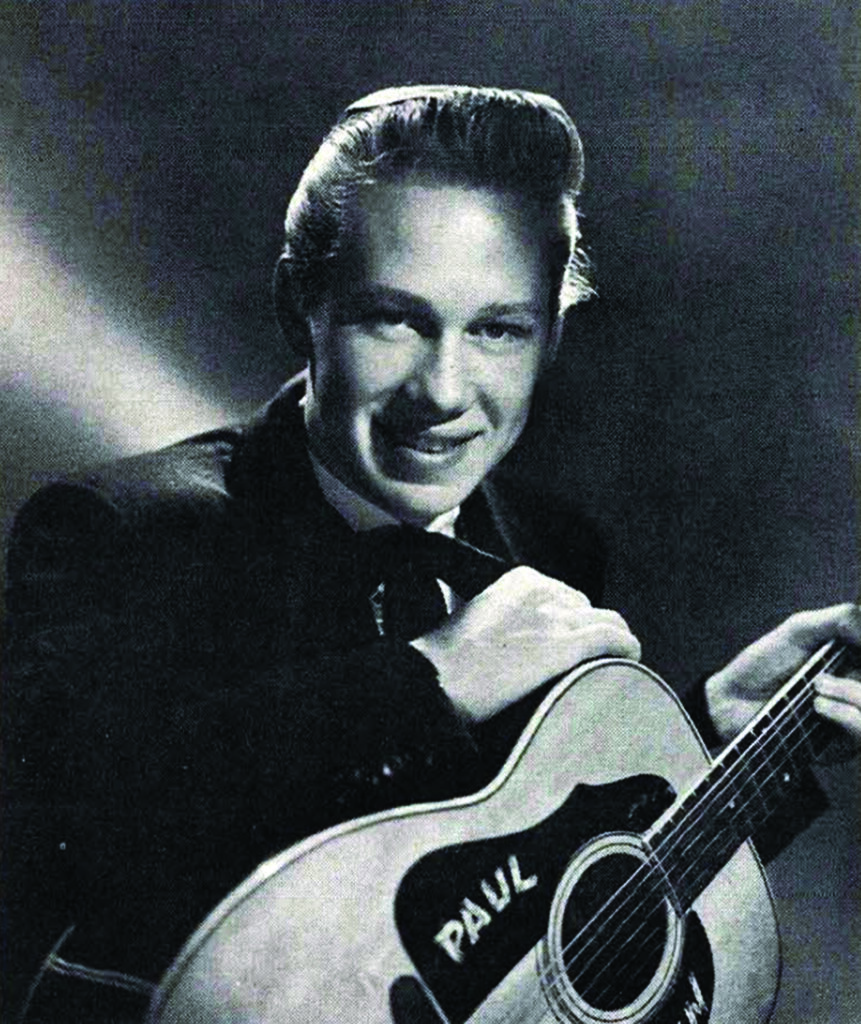
He was born Paul Douglas Clouthier, Jr. on December 27, 1942, in Phoenix, Arizona. His early years were shaped by a love for Western culture, fostered by his family’s ranch lifestyle. At the age of eight, Paul’s passion for music was ignited when he watched Marty Robbins perform live and in person at a television station in Phoenix. Robbins, a native of nearby Glendale, Arizona, would soon develop into a major country music performer, making this experience particularly impactful for the young Paul.
In 1956, Paul’s family moved to the Stage Coach Ranch near San Diego, California, where he began learning guitar from a neighboring farm boy. By 1957, at the age of 15, Paul made his first public appearance at the USO in Oceanside, California, performing with Beverly Mae Wilson and others. Over the next two years, he toured regularly across Los Angeles, San Diego, Arizona, and Mexico, establishing himself as a promising young artist in the country and western music scene.
Paul’s career gained momentum in 1960 when he graduated from high school and began working as a DJ and radio engineer for station XEGM, owned by Smokey Rogers. The well-known San Diego-based Western singer provided Paul with valuable insights into the music industry while allowing him to pursue his singing career. That same year, Charon performed with the Town Hall traveling group and became known as one of the most active young promoters of country and western music in Southern California. Early publicity, much of it written by his media-savvy mother Ruth, introduced him as Tall Paul Charon.
In 1961, Paul and his family relocated to Nashville, Tennessee, where he became a fixture at the Grand Ole Opry. He performed alongside notable artists such as Jim & Jesse. Performances at Nashville’s Centennial Park concerts and collaborations with artists like George Hamilton IV and the Glaser Brothers allowed him to showcase his talents on songs such as “If I Should Wander Back Tonight,” “Oh, Lonesome Me,” and “Prison Blues.”
In 1962, Paul joined Bill Monroe and His Blue Grass Boys as a regular member. He also contributed to the music industry through songwriting, playing various string instruments, and writing columns for country music publications, including Country Cavalcade Corral Chatter, Country and Western Spotlight, Country Music Report, and Country Music Life. His friendships with legends like Johnny Cash, Loretta Lynn, and Earl Scruggs enriched his musical journey.
Charon’s 1964 stay with Jimmy Martin was brief, perhaps lasting only a few months. His fellow Sunny Mountain Boys (and girl) included Vernon Derrick, Mike Miller, and Jean Ewing. From 1965 until 1968, he worked as a backing musician for country singer Skeeter Davis. However, after 1968, he seemingly disappeared from the Nashville music scene.
Ironically, it was only after leaving Nashville that Charon did much in the way of recording work. Among his earliest efforts was a 1972 album on the Atteiram label by Randall Collins called Stands Tall in Georgia Cotton. The early 1980s found Charon contributing to several CMH collections, including Family Gathering by Grandpa Jones and Farm & Home Hour by Grandpa Jones and Merle Travis.
By the early 1980s, Paul had relocated to Flagstaff, Arizona. It was then that he developed an interest in dog sledding, which eventually led to his relocation to Alaska.
Unfortunately, the name of Paul Charon is today but a footnote in the history of bluegrass and country music. Had he stayed with the music longer, or had the opportunity to make recordings with some of the name acts that he worked for, his legacy might be better known.
Over Jordan
Loyd Mayne Smith (March 15, 1939 – November 12, 2025) enjoyed a life-long connection to bluegrass music through his work as a musician, a scholar, and an advocate for traditional music. As a native of Boston, Massachusetts, Mayne’s early exposure to folk and country music, which came through his family, laid the foundation for his lifelong passion. His father, Henry Nash Smith, was a renowned American literary historian and folklorist, and their home was often filled with the sounds of Burl Ives, Leadbelly, Josh White, and other folk legends. This rich musical environment, combined with his father’s connections to figures like John A. Lomax and Alan Lomax, gave Mayne a unique perspective on the intersection of folklore and music.
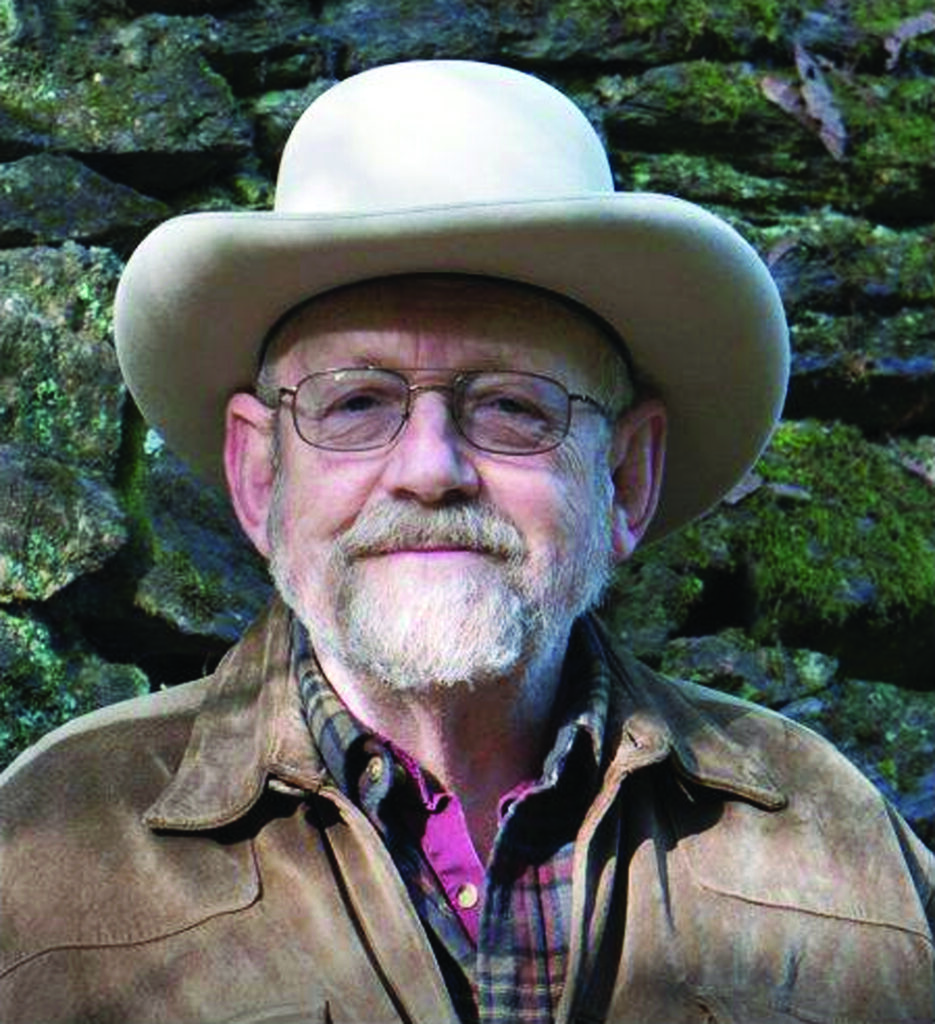
In 1953, Mayne’s family moved to Berkeley, California, when his father accepted a position as a professor of English and administrator of the Mark Twain papers at the University of California, Berkeley. It was in Berkeley that Mayne met Neil Rosenberg at Garfield Junior High School. Along with Scott Hambly and Pete Berg, they formed the Redwood Canyon Ramblers, the first bluegrass band in Northern California. The band introduced bluegrass music to the Bay Area, performing at local venues, private parties, and radio broadcasts. Their August 1960 concert at Washington Elementary School marked a turning point, showcasing bluegrass to an enthusiastic audience and solidifying their place in the region’s music history. The Ramblers were known for their authentic sound, blending folk music with contemporary bluegrass, and their performances inspired a younger generation of musicians to explore the genre.
Mayne’s journey into bluegrass deepened when he attended Oberlin College in Ohio alongside Neil Rosenberg. While at Oberlin, Mayne and Neil became immersed in the local folk music scene, joining the Lorain County String Band, a precursor to the Plum Creek Boys. During this time, Mayne began to explore bluegrass more seriously, influenced by the music of Flatt & Scruggs and the Stanley Brothers. A pivotal moment came during a visit to Antioch College in Yellow Springs, Ohio, where Mayne attended a listening session at the home of Jeremy and Alice Foster. It was there, via reel-to-reel tapes recorded in the field by folklorist Mike Seeger, that he first encountered the live sounds of the Stanley Brothers, an experience he described as life-changing. Listening to their live recordings, Mayne was captivated by the raw, unpolished sound of the music, the fluctuating balance of instruments and voices, and the seamless transitions between solos and harmonies. This profound listening session deepened his understanding of bluegrass music and its intricate interplay of instruments and voices, shaping his approach to the genre.
In 1959, Mayne decided to leave Oberlin and return to Berkeley, where he enrolled at UC Berkeley’s English literature department. That summer marked the beginning of what Mayne called “the second incarnation of the Redwood Canyon Ramblers.” The band’s performances were a mix of bluegrass standards, folk songs, and novelty tunes, reflecting their diverse musical influences. They were not afraid to embrace the commercial aspects of bluegrass, incorporating stage routines and comedy into their shows. While the New Lost City Ramblers on the East Coast focused on old-time string band music, the Redwood Canyon Ramblers sought to balance authenticity with a sense of the present day, paying homage to the performers they emulated while creating their own unique sound.
In 1962, Mayne left Berkeley to join Neil Rosenberg at Indiana University, where he pursued a master’s degree in folklore. While there, he played guitar with Neil’s group, the Pigeon Hill Boys, and performed at local country and coffeehouse gigs. Mayne’s master’s thesis, completed in 1964, was the first serious academic study of bluegrass music, and his subsequent article in the Journal of American Folklore further solidified his reputation as a scholar of the genre. However, Mayne eventually transferred to UCLA to work on a Ph.D. under D.K. Wilgus, a scholar who recognized the importance of hillbilly music as a legitimate field of study. Despite his academic success, Mayne ultimately decided to leave academia, feeling that it was too narrow for his creative needs. He chose to focus on songwriting and performing, a decision that would shape the rest of his career.
Mayne’s musical journey took him to Los Angeles, where he worked as a sound man at the Ash Grove folk club and played bluegrass with Richard Greene and David Lindley. He recorded a demo tape of original compositions with backup instrumentalists such as Ry Cooder, Clarence White, Bill Keith, and Taj Mahal. Mayne’s songwriting talent led to collaborations with artists like Linda Ronstadt, Rosalie Sorrels, and Michael Murphey, and his songs were featured on several albums.
In 1969, Mayne returned to the Bay Area after years of living in Los Angeles and traveling as a musician. He formed the country-rock group The Frontier Constabulary with Mitch Greenhill, which played both acoustic and electric music, blending traditional and contemporary styles. The association with Greenhill yielded several albums including Storm Coming and Back Where We’ve Never Been. Mayne also worked as a steel player in the commercial country and western circuit, gaining valuable experience as a traveling musician. However, he eventually decided to leave the night owl existence of a full-time musician behind, seeking a more stable home life and reliable income. He found a new sense of purpose working at Hideo Kamimoto’s guitar and violin shop in Oakland from 1977 to 1983, where he honed his skills in guitar repair and enjoyed the camaraderie of fellow musicians.
Mayne’s legacy as a musician, scholar, and advocate for traditional music was recognized in 2019 at the 44th Annual Father’s Day Bluegrass Festival. He, along with Neil Rosenberg and Scott Hambly, received special recognition from the California Bluegrass Association for their work with the Redwood Canyon Ramblers. The band was honored as the first bluegrass group in Northern California, credited with introducing and promoting the genre from 1959 to 1963 and inspiring a younger generation to carry on the tradition. This recognition was a fitting tribute to Mayne’s lifelong commitment to the music he loved.
Mayne’s contributions to bluegrass scholarship, his role in introducing the genre to Northern California, and his dedication to preserving and promoting traditional music have left a lasting impact on the bluegrass community. His work with the Redwood Canyon Ramblers, his groundbreaking academic studies, and his musical collaborations with artists like Neil Rosenberg, Scott Hambly, and Mitch Greenhill have ensured that his influence on bluegrass and American music will endure for generations to come.

Somewhat surprisingly, L. Mayne Smith played banjo on John Fahey’s 1965 album “The Transfiguration of Blind Joe Death”.