The Reno Brothers—Continuing A Musical Legacy
Reprinted from Bluegrass Unlimited Magazine
December 1990, Volume 25, Number 6
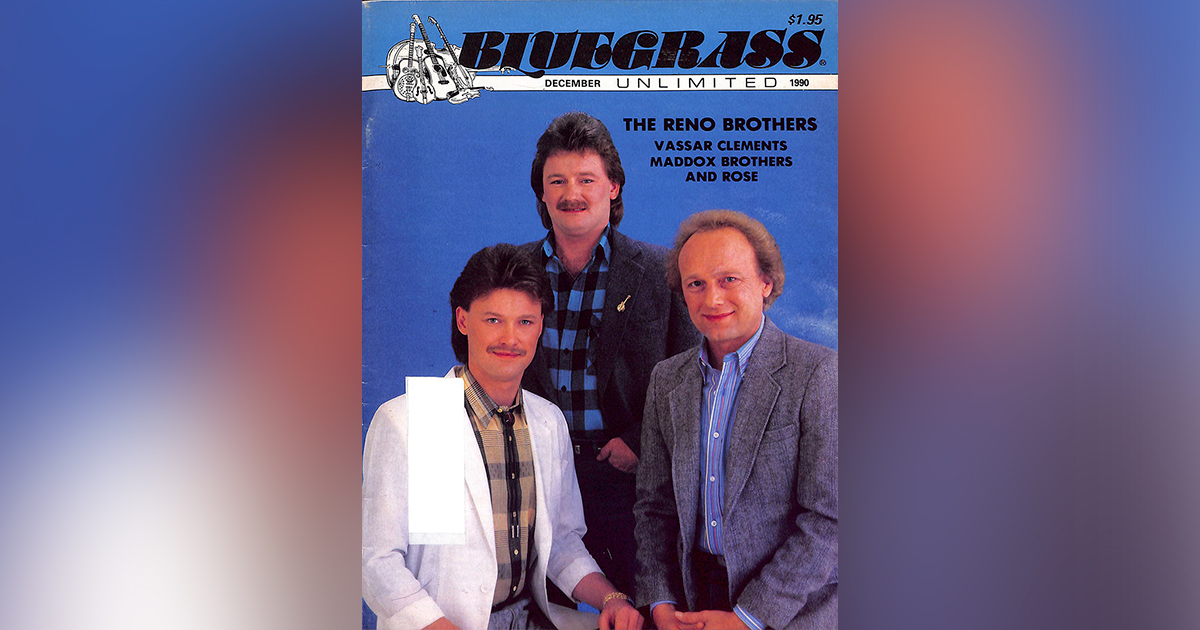
Six years after the passing of their father, the Reno Brothers continue a tradition in creating music that has been as much a part of their family as the family tree itself.
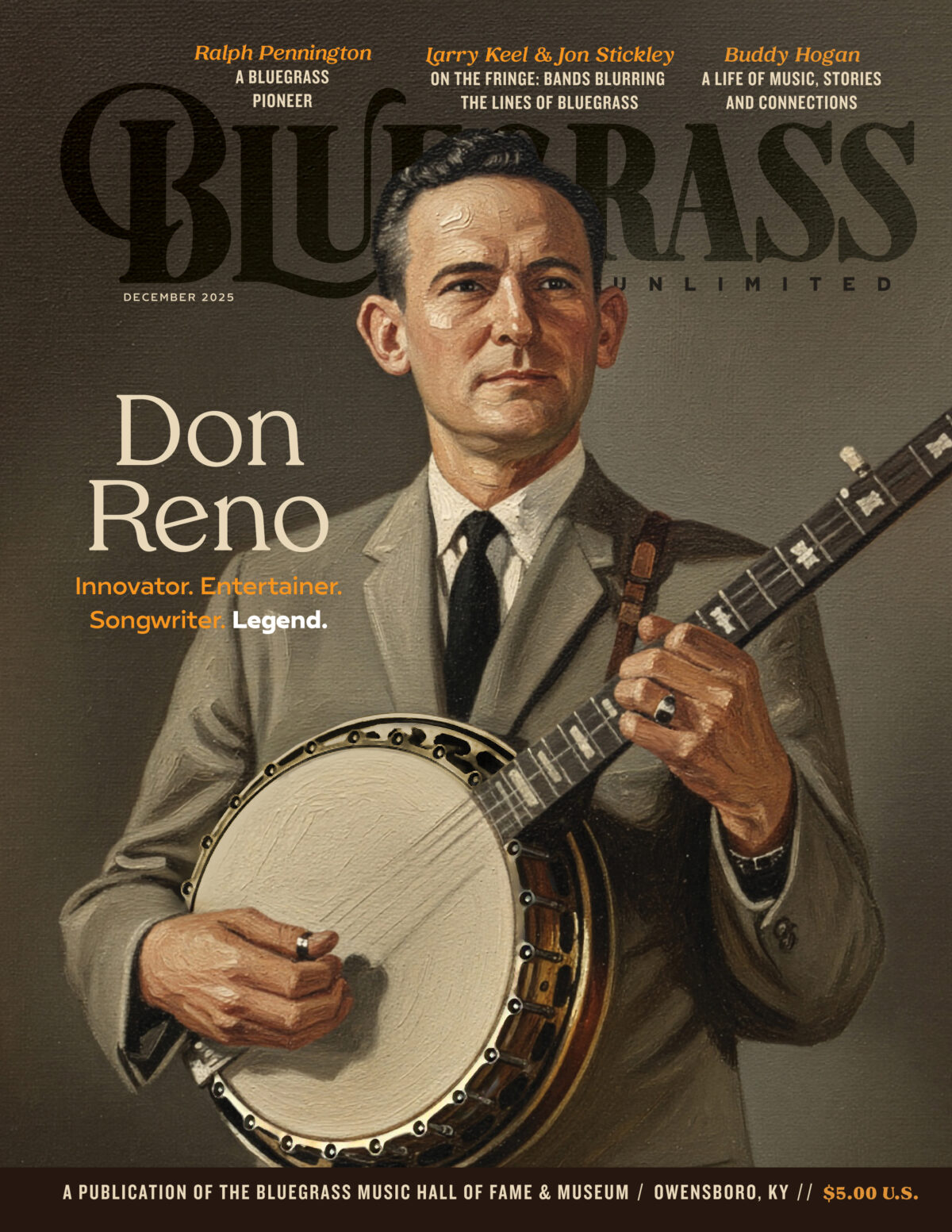
But an account of the Reno Brothers must reach back to the mid-fifties when Don Reno was working at the WRVA Old Dominion Barn Dance in Richmond, Virginia, in partnership with Red Smiley. With weekday television and radio spots and a busy personal appearance schedule, the Reno and Smiley combination was also turning out records their audience was hungry for. Little did they know that those albums would one day be collector’s items and help define what is meant by innovative musicianship.
With music buzzing around the Reno household, it’s easy to imagine why young Ronnie Reno, the oldest of Don’s three sons, was taking such an inspired interest in this music his father was so deeply involved in. At age eight he was already getting up on stage and singing some with Don and soon he was chopping rhythm on his Gibson A-4 mandolin, purchased at a Roanoke, Virginia, pawn shop for $75.
By the time Don had left Arthur Smith at Charlotte and moved to Richmond to pursue the famed Reno and Smiley combination, Ronnie was already a full-time member of the group. With the band traveling to Washington, D.C., to do regular television shows for Jimmy Dean, Ronnie was already gaining valuable experience with which he would base a career in music with his brothers some thirty years later.
The act, now billed as Don Reno, Red Smiley and the Tennessee Cut-Ups, was performing regularly in Roanoke, Virginia, on a daily television show, as well as a Saturday evening program in Harrisonburg, Virginia. With their popularity continuing to grow, the music going out over the airwaves was influencing scores of young musicians like none other had done before. Was it bluegrass? Was it country? How about folk? It was good heart-felt music for sure. Besides traditional bluegrass accompaniment, they were also using piano and electric guitar to create a broad musical interest that was fresh and exciting.
Following the departure of Red Smiley from the group due to his ailing health, Don worked in a number of locations before teaming with singer/songwriter Bill Harrell in Washington, D.C., in 1966. Ronnie was part of this group for a year, although Don and Bill remained together for nearly ten years, after which Don moved to Lynchburg, Virginia, until his death.
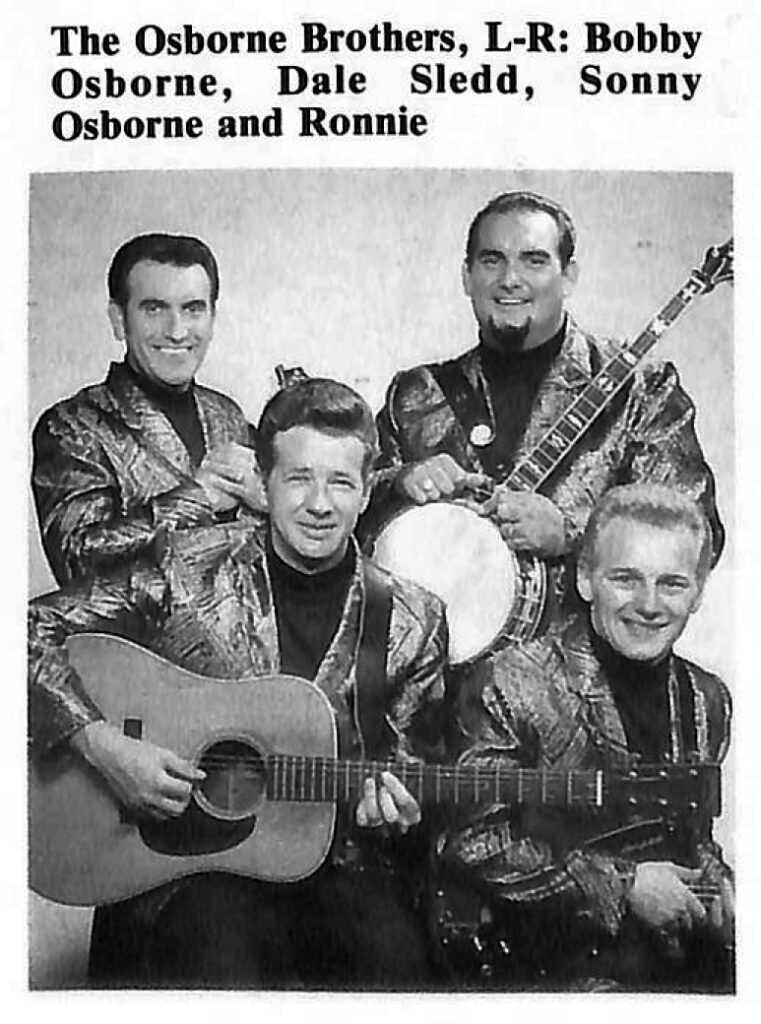
By 1970 there was no question in young Ronnie’s mind that music was what he wanted to do. With an offer to join the Osborne Brothers, Ronnie moved to Nashville and remained a part of Bob and Sonny’s group for nearly four years. First playing bass and then guitar, Ronnie was singing third part in the trio with the legendary bluegrass duo, at a time when they were doing bluegrass and, well, not-so-bluegrass tunes.

“I went with Bob and Sonny right after they had ‘Rocky Top’ and when I was with them we got vocal group of the year. We weren’t doing bluegrass then. Bob and Sonny were trying to broaden the scope of their music,” comments Ronnie at his Hendersonville, Tennessee, home. Whatever they were doing, it was getting the attention of Decca records with considerable chart success and a sound that included drums, electric bass and Ronnie playing electric guitar.
“I felt like we were breaking new ground,” comments Ronnie. Enjoying the experience of being in a group with chart records, Ronnie helped record “Muddy Bottom” and “Tennessee Hound Dog,” about ten albums in all. The Osbornes were indeed breaking new ground, however the concept of using drums and electric instruments was nothing new to Ronnie—his father was using them both on records back in the 1950s on tunes like “Home Sweet Home” and “Green Mountain Hop.”
It was about this time that eighteen-year-old Dale Reno went to a festival with his Dad and Bill Harrell and as he explains, “Lester Flatt was there and a young boy by the name of Marty Stuart was playing mandolin. He must have been about fifteen years old. When I saw how great he played for such a young guy I said man, I gotta do that myself! At that time Dad didn’t have a mandolin player, so Dad showed me the chords and about a week later I was officially offered a job with Don Reno, Bill Harrell and the Tennessee Cut-Ups … for pay!” smiles Dale.
Back in Nashville, Ronnie found himself with an offer to join the country music giant Merle Haggard. “We had been opening a lot of shows for him (with the Osbornes) and Merle and I became good friends,” explains Ronnie. “After I left Bobby and Sonny, I decided I wanted to start my own thing, but in the mean time Merle called me and wanted me to open his shows and sing harmony with him.”
An opportunity like that rarely beckons and so it was that Ronnie left bluegrass and marched into a whole new realm of the music industry for the next eight years. “I got to see another side of the industry,” states Ronnie matter-of-factly. “A very positive side to where you would show up in four on five buses and have the sound company set up your sound and playing the Houston Astrodome on a Tuesday night to some 20,000 fans.” Haggard had just recently released “Okie From Muskogee” and he was hot, to put it mildly.
“I got to see a real up-side of the industry, a market that I was unaware of,” shares Ronnie. In reference to his leaving bluegrass for the straight country market, Ronnie explains, “Any music that’s done right and done to perfection, I feel is good. I enjoy doing acoustic music and then turning around and doing a straight country song.”
Ronnie’s stay with Haggard was important to the entertainer in gaining valuable experience in what it takes to make it in the music business. The desire to have his own band finally culminated in his departure from the Haggard entourage, resulting in a four-year period when he pursued his own musical interests, playing occasional dates with his father and doing some recording.
Ronnie had gained the respect of many promoters during his tenure with Haggard and used those contacts to continue a busy personal appearance schedule as a solo act. His first single record, “The Letter,” cracked Billboard’s top forty, but his ties to his father’s music often took him back to play with the Cut-Ups, the last of which was an Alaskan tour during which they opened for Three Dog Night.
About the time Ronnie was starting his stint with the Haggard show, Don Wayne, the youngest of the Reno boys, found himself in a school play with a banjo on his lap. “When I was eleven years old, my music teacher at school asked if I could learn to play banjo for the school play,” explains Don Wayne. “The principal at school had an old banjo and he told me to take it home and learn ‘She’ll Be Coming Around The Mountain.’ ” So Don Wayne took his weak excuse for an instrument home and had his dad string it up, touch it up and show him a few things. Don Wayne’s debut under the light at the school play must have left an impression … the banjo soon became his primary interest.
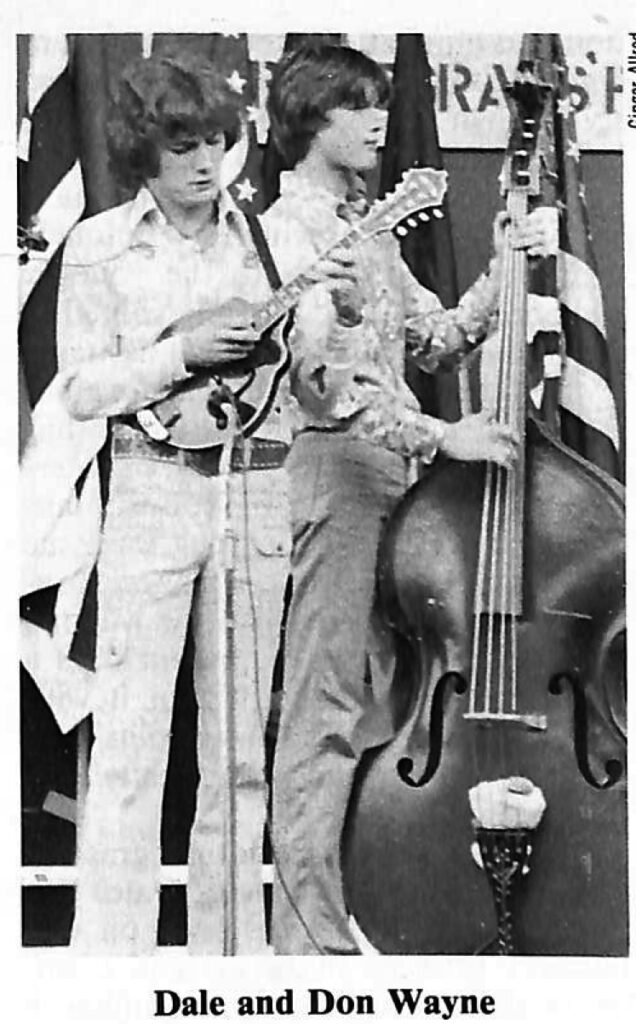
At fifteen, Don Wayne was feeling more than a little left out. “They were going out every weekend and leaving me at home!” says Don Wayne. Finally, with the departure of Ed Ferris from the group in 1979, the door was open for Don Wayne to join the Tennessee Cut-Ups, now a full-fledged family group with his two brothers and their dad.
Don Wayne played bass in the group, while Dale played mandolin and Ronnie guitar. Don Wayne was by now an accomplished banjoist in the tradition of his father’s style and the pair would often team up for a twin banjo tune on stage. “Don Wayne was playing such fine banjo,” comments Ronnie. “But he was playing upright bass in the group and his fingers would be almost bleeding and then Dad would expect him to play a banjo tune with him on stage! Then I found an electric Ampeg bass and took it on a trip. It worked out great and saved Don Wayne’s fingers too!”
In 1982 the group did an album for Reader’s Digest under the name of “The Cripple Creek Quartet.” The album, which was nominated for a Grammy Award and sold over 100,000 copies, included Bobby Thompson, Kenny Malone and the Renos.
After their father’s death in 1984, Don Wayne and Dale formed a group of their own before joining forces with Ronnie to form the Reno Brothers. “We decided we wanted to pursue our careers together one day.” Out from under the protective wings of their father, the brothers were faced with the reality of standing in the business alone. “We suddenly had to do all the booking ourselves!” says Dale. “We finally realized what a tough job it was!”
Four years have passed since the brothers decided to make it on their own. The current Reno aggregation includes Ronnie on guitar and lead vocals, Dale and Don Wayne on mandolin and banjo respectively, Pearly Curtis on Dobro and David Smith on electric bass.
With a wide variety of stylistic talent to draw from, the Reno Brothers’ show remains versatile and eclectic in every respect. Their father was a natural at musical experimentation and innovation, never hesitated to combine the elements of other musical styles when appropriate. It is from this background of musical genius that Ronnie, Dale and Don Wayne have cultivated a style which is uniquely their own. It appeals to the younger audiences while being firmly rooted in the tradition of their father’s heritage.
While the Reno Brothers are a hot attraction at bluegrass festivals, they remain in the unique position of catering to the mainstream country audience as well. In addressing the issue of playing to country audiences, Ronnie comments, “They like the way it’s presented. We actually present it as a country show and then flavor it with up-tempo banjo and mandolin and harmony singing and that really gets their attention.”
“We always include bluegrass in our country shows,” states Dale. But the Renos wish not to dwell on differences between bluegrass and country music and apparently the audience doesn’t mind. “To them, there is no difference,” comments Ronnie. Without labeling their music, the Reno’s have found wide acceptance of their music whether it be straight bluegrass or mainstream country. “We just finished a ten day tour with Mel Tillis and nobody on the tour ever called us a bluegrass band,” adds Ronnie. “To them, it’s just good music.”
When playing country venues, Dale and Don Wayne switch to electric Telecasters and Pearly Curtis plays steel. The Renos play a wide variety of music at their country shows and find it refreshing to throw their bluegrass spice to a country audience and have them go crazy for more. “I’ve sat in with a lot of country bands who totally accepted me playing banjo,” comments Don Wayne. While Don Wayne plays some banjo during their country shows, he does admit that it took some adjustment to switch to the Telecaster. “It’s different for us because we were so used to playing acoustic instruments. There’s a lot different technique. It’s a great experience to be able to work with your brothers and do both aspects of music,” adds Don Wayne.
In describing their show, the brothers are quick to credit their father’s musical legacy and influence. “We were taught by one of the finest,” proudly states Ronnie. “Dad could play country music just as well as he could bluegrass. In fact he played electric guitar on ‘Oklahoma Hills’ with Jack Guthrie when he was sixteen and he also would play with Ernest Tubb, Hank (Sugarfoot) Garland and then turned around and played banjo with Bill Monroe!”
Ronnie adds his appreciation of the acceptance they receive from fans. “It makes us feel great when a fan comes up and says, ‘We’re really glad to see you and by the way, you’re doing a great job carrying on the tradition of your father.’”
Not content to rest on their accomplishments, the Renos are eager to expand their musical tradition. They are currently working on a series of shows with Stan Hitchcock for Country Music Television (CMT) to be taped at Busch Gardens, Cypress Gardens and Sea World in Florida. The first show, which aired the end of May, featured Restless Heart, Wild Rose, Charlie Daniels and of course, Stan Hitchcock and the Renos.
The Renos also recently finished a special for CMT at Renfro Valley, Kentucky. “We are simply trying to expand to a bigger audience and grow with the rest of the music industry,” states Ronnie. “If we don’t expand, we’re just going to sit and spin our wheels. The music needs to get to the airways in order to compete with the rest of the industry. I believe show business is called show business for a reason … it should be a show, whether you’re trying to compete with Michael Jackson’s tour or whatever,” continues Ronnie.
“Bluegrass has as much drive and soul as anything,” comments Dale, “you just have to get it out to the audience.”
And getting it out to the audience seems to be the mission of the Reno Brothers. In addition to playing numerous bluegrass festivals and concerts, the Renos opened fifteen dates for Tom Wopat, as well as Vern Gosdin and the Whites last year. In the last several years they’ve opened for Randy Travis, Billy Joe Royal, Bill Anderson, Porter Wagoner, Exile and numerous others.
And so the Reno Brothers continue a family tradition that spans a half century. “We all made a personal choice to play music,” smiles Dale. Realizing the legacy behind them and the future in front of them, the brothers are steadfast in their career of music. Dale sums it up well: “We’re extremely proud of our heritage!”