Notes & Queries – September 2025
Q: I’ve been listening to recordings by Larry Sparks (Ramblin’ Guitar, Pine Tree 500) and Lee Allen (“Beer, Whiskey, and Women” and “The Old Home Place,” Jalyn 45-356), all of which feature the mandolin work of David Cox. Did he appear on any other recordings? What can you tell me about his life in music? Thanks.
– Jerry Steinberg, Salem, Virginia
A: George David Cox (February 15, 1940 – October 2, 2002), who went by David and sometimes by Dave, was a talented mandolin player who logged time with a number of bluegrass bands in the 1960s and ‘70s. A native of Campton, Wolfe County, Kentucky, Cox spent his early years on his family’s farm, where he earned a nickel a week for doing chores. On weekly trips to town, he used his nickel to listen to a song by Bill Monroe on a jukebox; “Blue Moon of Kentucky” and “Rose of Old Kentucky” were among his favorites. Closer to home, his mother played guitar and sang songs of the Carter Family.
David’s earliest notable involvement in bluegrass music was with The Valley Ramblers in the late 1960s. This group included Don Warmouth (guitar), Noah Crase (banjo), Bobby Gilbert (bass), and Cox on mandolin. Their album Pickin’ And Singin’ Solid Bluegrass (Jalyn JLP-125) is considered a definitive hard-core traditional bluegrass record. Cox’s mandolin work was an integral part of the band’s sound, contributing to the album’s timeless appeal.
In November 1969, Cox joined Larry Sparks’ newly formed band, the Lonesome Ramblers. Alongside Sparks, his sister Bernice Neely (rhythm guitar), Joe Isaacs (banjo), and Lloyd Hensley (bass), Cox played mandolin and helped shape the band’s distinctive Stanley Brothers-inspired sound. He contributed to Sparks’ debut album, Ramblin’ Guitar (April 1970), where his mandolin work added depth to both instrumental and vocal tracks.
In the early 1970s, Cox became a key member of Jim McCall, Vernon McIntyre & The Appalachian Grass, performing regularly at venues like King’s Row in Cincinnati, Ohio, and Aunt Maudie’s Country Garden. His mandolin playing was praised for its support and color, complementing the band’s traditional bluegrass style. He also appeared on their Vetco Records (3015) album released in March 1974. Fellow bandmate Katie Laur remembered Cox as “outrageously funny.” Typical of his antics was the time he went cruising down Interstate I-75 searching for mufflers; he cleaned them up and sold them as refurbished auto parts! Another time, a band trip to New York City left a less-than-favorable impression on the young picker. “I didn’t care for it a bit . . . You know what? Ever’ one of them people knowed we was from out of town.”
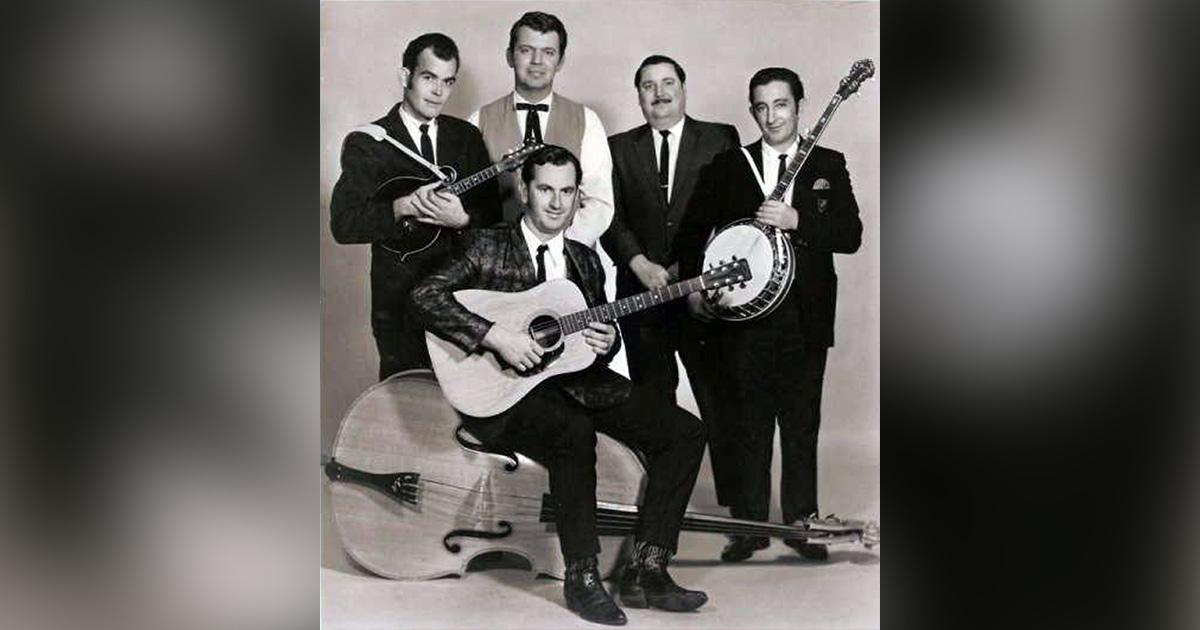
Cox’s career included collaborations with other notable bluegrass groups and artists, such as Lee Allen’s Dew Mountain Boys. Members of that group, in addition to David on mandolin, included Lee Allen, guitar; Harold Staggs, fiddle; Lloyd Hensley, banjo; and Jack Lynch, bass.
In addition to his band work, Cox’s personality and storytelling abilities made him a memorable figure in the bluegrass community. Known for his down-home tales from Wolfe County, Kentucky, he was described as resembling an Ivy League law student but possessing a unique charm and wit.
After having logged a decade as an active bluegrass performer (mid-1960s to mid-1970s), David Cox dropped out of sight. He died in musical obscurity in 2002 at the age of 62. His contributions to recordings by the Valley Ramblers, Larry Sparks, and Appalachian Grass provide insightful glimpses of an unsung bluegrass trouper.
Q: I’ve seen the name Wilbur Jones in the composer credits of several older bluegrass and country songs. Who was he?
– John Storer, Inverness, California
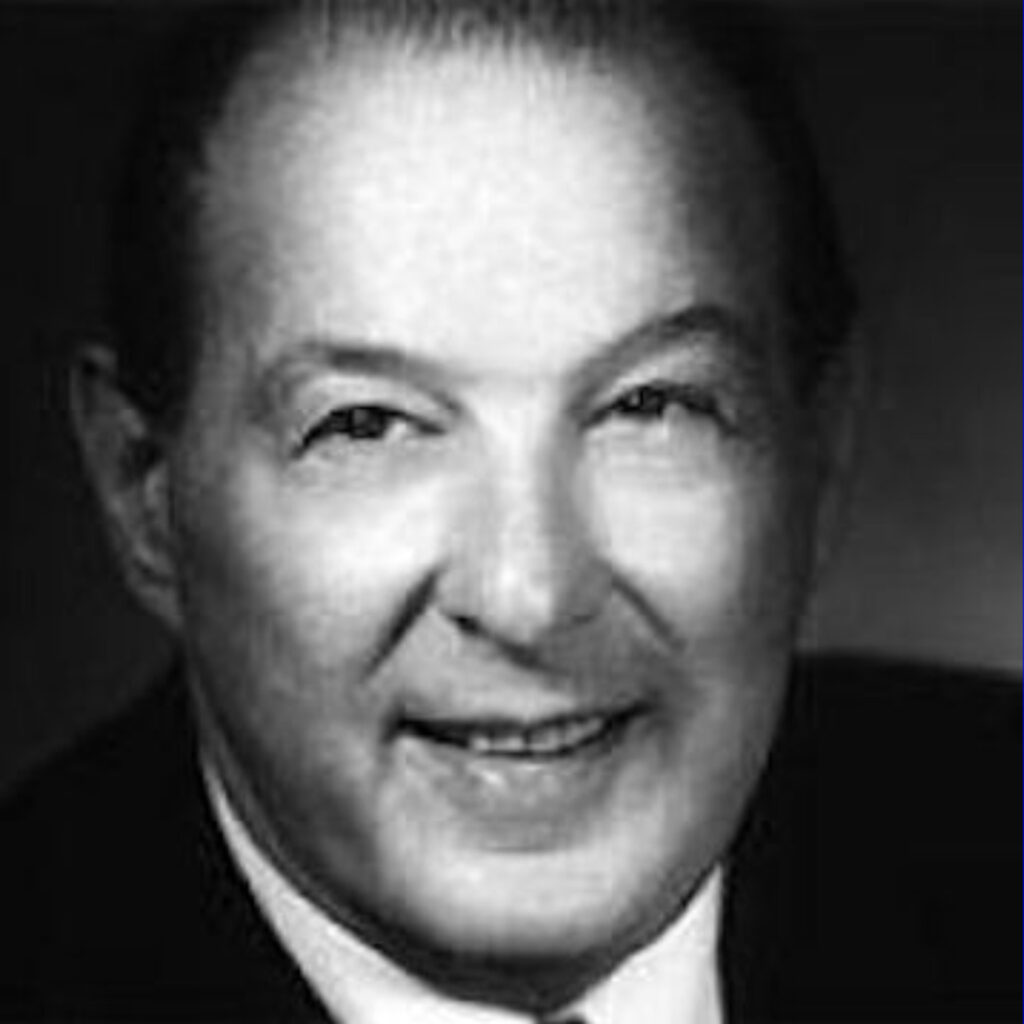
A: In the book The Music of Bill Monroe, Charles Wolfe and Neil Rosenberg asserted that Wilbur Jones was “a pseudonym Monroe used for traditional or public-domain songs.” This is partly true. It was a pseudonym, but not for Monroe. It was for Monroe’s producer at Decca Records, Paul Cohen. The copyright for “White House Blues,” which Monroe recorded on January 7, 1954, lists the claimant as “Paul Cohen a.k.a. Wilbur Jones.” The name appeared on two more of Monroe’s songs that he recorded for Decca: “Put My Little Shoes Away” (arranged and adapted by Wilbur Jones) and “He Will Set Your Fields on Fire” (Wilber Jones).
What adds credibility to Cohen being the fictitious Wilbur Jones is the fact that from 1953 until 1957, the name of Wilbur Jones appeared in the composer credits of at least two dozen country releases, all of which were on the Decca label. Among the first (recorded February 15, 1953) was a peppy instrumental fox trot by Grady Martin and the Slew Foot Five called “Bandera (The Texas Polka).” “You’re Not Easy to Forget” was an early hit for Kitty Wells; it appeared in a Billboard chart of Most Played C & W Records for 1954. Later recordings of the song by groups such as Al Jones, Frank Necessary & the Spruce Mountain Boys, and J. D. Crowe and the Kentucky Mountain Boys turned it into a bluegrass favorite. In 1954, Jim Eanes straddled the fence between being a bluegrass balladeer and a country crooner. On a March 1954 session for Decca, Eanes shared composer credits with Wilbur Jones on two selections: “There’s No Place Like Home” and “Possum Hollow.” The pseudonym appeared on songs by other Decca artists, including Jimmie Davis, Spade Cooley, Wilf Carter, Jimmie Skinner, Tex Williams, and even a 9-year-old Brenda Lee (“I’m Gonna Lasso Santa Claus”).
Q: I know you are a huge bluegrass history buff, and was wondering if you had any old pictures of Hylo Brown? Stage pics or just random casual ones.
– Mike Daniels, via e-mail.
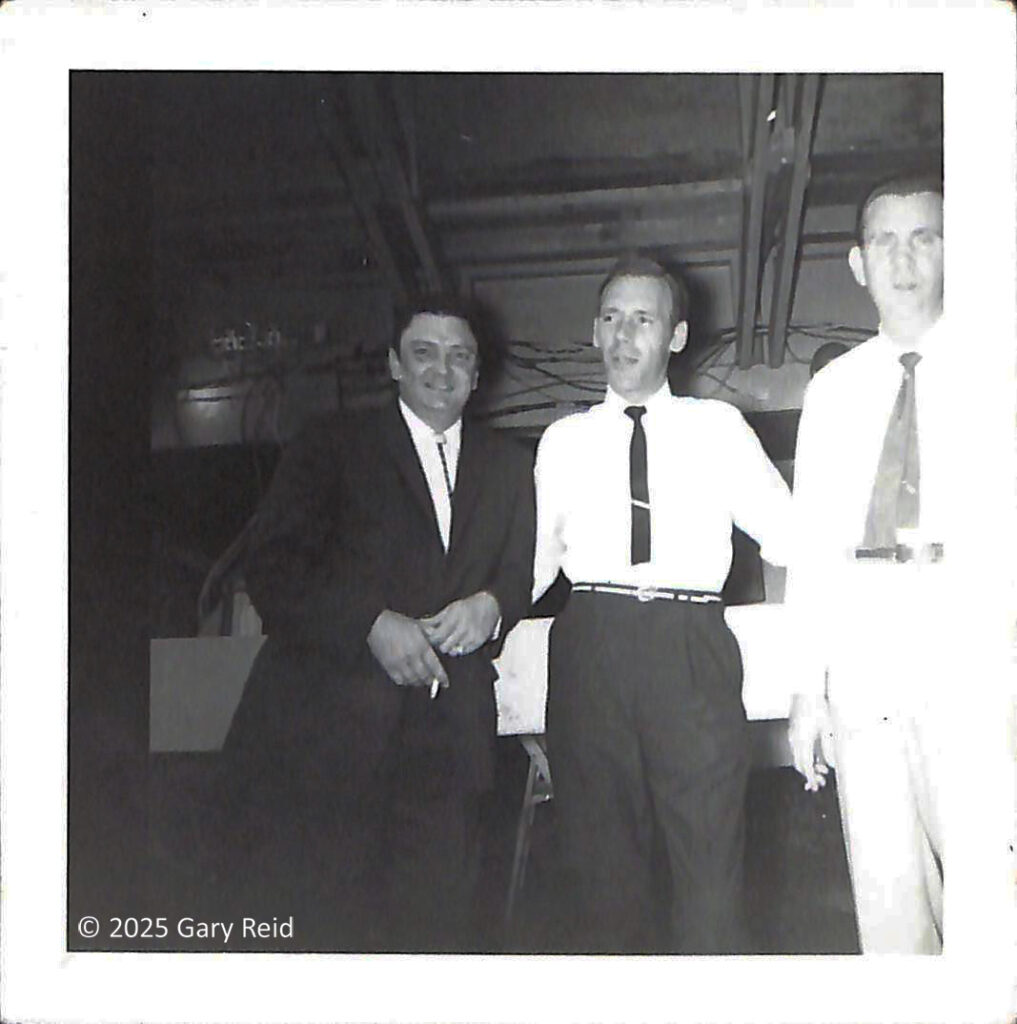
A: I haven’t seen that many unique photos of Hylo Brown floating around. Mostly, there are a half dozen or so publicity photos that are the first to turn up. However, there is an off-stage gem that was taken on July 12, 1959, at the Newport Folk Festival. It also features Carter Stanley and fiddler Tater Tate.
Hylo and his band, the Timberliners (Tater Tate, fiddle; Jim Smoak, banjo; and Jimmy Fox, bass), were booked on the festival to back Earl Scruggs. For whatever reason, Scruggs’s longtime partner Lester Flatt was not invited to the event.
Concerning this specific event, Hylo and the Timberliners took advantage of their trip north to book a few shows in the area. One was in Taunton, Massachusetts, and another was in Groton, Connecticut. The July 14, 1959, edition of the Groton News reported that “approximately 350 attended the Hylo Brown jamboree and block dance sponsored by the Groton Ambulance Association, last night at Highway Motors on Rt. 95. A group of entertainers presented an hour-long show preceding the dance. Cousin Johnny Small of WNLC in New London promoted and handled the show.”
Although not featured in this particular photo, Jim Smoak has vivid memories of the event. He recalled that the group traveled in his 1953 Pontiac, “a big, full-sized car.” Once in the area, Smoak used this to pick up Earl Scruggs from a nearby airport and drive him to his hotel. Smoak recalled that Scruggs “brought an extra Gibson banjo with him to sell if anybody wanted to buy one. I don’t know whether he sold it or not, but I remember carrying it around for him in my car.”
The decision for Smoak to chauffeur Scruggs was an easy one. He was the one with a car, and he “knew Earl Scruggs before. He gave me the job with Hylo Brown when I got out of the service. I first met Earl when I was 17 in Augusta, Georgia, at a show with Snuffy Jenkins. Then, later on, when I moved to Knoxville and started playing on the radio, Earl lived there too. We kind of reacquainted ourselves, but we didn’t do anything together—he was just there, and I was there.”
Having Scruggs on banjo for the show knocked Smoak out of his usual position in the band. “At Newport, I didn’t play anything. I sang in the quartets and trios, but I didn’t even choke chords (on the banjo) in the background. I just stood around for the vocal numbers because I knew the vocal parts. It felt different because when you’ve got a banjo on stage, you’re kind of hiding behind it, you know? But now, I was out in the open—nowhere to hide.”
The Timberliners and Scruggs were slated for two performances at Newport on Sunday, July 12, 1959. An afternoon show that got underway at 2:30 was closed out by the group, and they were slated to be the next to the last act on the evening program. The Kingston Trio, clearly the most popular act on the bill, was to close the festival. The Newport Daily News reported the next day that “in an unhappy lapse of programming, the trio was put on ahead of banjoist Earl Scruggs, instead of being allowed to close the bill. After a good deal of unrest, a compromise with the crowd was arranged; Scruggs, a great banjo virtuoso in his own right, followed the trio, but the three youth then came back one more for a final set that ended at 1:15 a.m. today.”
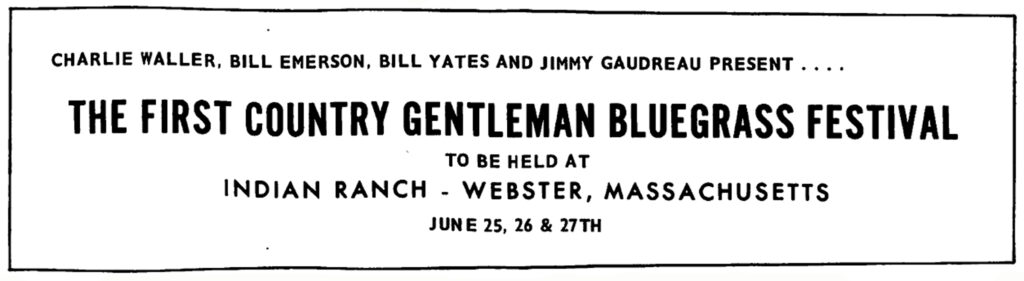
Q:I recently saw a program on the Country Gentlemen Fanpage on Facebook. It’s for the 1st Annual Country Gentlemen Bluegrass Festival at Indian Ranch in Webster, Massachusetts, on June 25-27, 1971. Can you tell us more about this festival and its history? Also, I’m curious about two of the performers on the bill: Smokey Green and Randy Hawkins and the Bluegrass Travelers. What do you know about them?
-Joe Ross, Roseburg, Oregon.
A: The Country Gentlemen Bluegrass Festival was launched in 1971 at a venue called Indian Ranch in Webster, Massachusetts. It ran there for two years, after which it was moved to Stepping Stone Riding Stables in Escoheag, Rhode Island, for one more year.
Indian Ranch has an interesting history that predates the Country Gentlemen festival by some 25 years. It first opened in 1946 and was the brainchild of its owner, Ernest Wallis. It was situated on the banks of Webster Lake, which was known in earlier times by its Native American name, Lake Chargoggagoggmanchauggagoggchaubunagungamaugg. It has the distinction of being the longest-named lake in the United States. Wallis was reported to have Native American ancestry. To aid in booking talent for the park, Wallis hired George Mahoney; he was one-half of the New England-based George & Dixie country music duo. A mix of vaudeville acts and hillbilly music filled the bill. One short-lived experiment was the late-evening showing of recent film releases.
In 1955, Wallis sold the park to Israel “Izzy” Sadowski, a jeweler who operated a shop in Webster. His son, Jake, ran the Indian Ranch for many years and utilized the services of a booking agent by the name of Abe Ford to secure talent for the park.
Enter The Country Gentlemen Festival
By 1971, bluegrass festivals were popping up in increasing numbers, and the Country Gentlemen decided to throw their collective hats in the ring. Advertising for the event listed the organizers as Charlie Waller, Bill Emerson, Bill Yates, and Jimmy Gaudreau.
The inaugural festival featured an impressive lineup, including the Osborne Brothers, Ralph Stanley & Clinch Mountain Boys, Jimmy Martin & Sunny Mountain Boys, Mac Wiseman, Carl Story & Rambling Mountaineers, Melvin & Ray (The Goins Brothers), Randy Hawkins & The Bluegrass Travelers, and Don Reno & Red Smiley & The Tennessee Cut-Ups with Bill Harrell. Amateur bands were also invited to perform on Friday evening, adding a community-driven element to the event.
The 1972 festival continued at Indian Ranch with another stellar lineup, including Ralph Stanley, J.D. Crowe, and the Newgrass Revival. The setting at Indian Ranch, with its natural amphitheater and lakeside views, added to the magic of the event, making it a memorable experience for all who attended.
By 1973, the festival moved to Rhode Island, where it expanded to accommodate larger crowds and featured acts like the Lilly Brothers with Don Stover, Frank Wakefield, Joe Val, and Del McCoury.
Smokey Greene and Randy Hawkins
Concerning the other two artists that were asked about, Walter George “Smokey” Greene (March 10, 1930 – October 19, 2023) was a mainstay in bluegrass and traditional country music in New York, Vermont, and surrounding regions; he was profiled in the December 2024 “Notes & Queries.”
Randy Hawkins, born Irving J. Richard on March 14, 1930, in Harrisville, Rhode Island, was a pioneering figure in the New England bluegrass and country music scene. Over the years, he performed in several bands and was one of the first disc jockeys in the northeast to play bluegrass music on the radio. He adopted the stage name of Hawkins in part because of his admiration for country music singer Hawkshaw Hawkins.
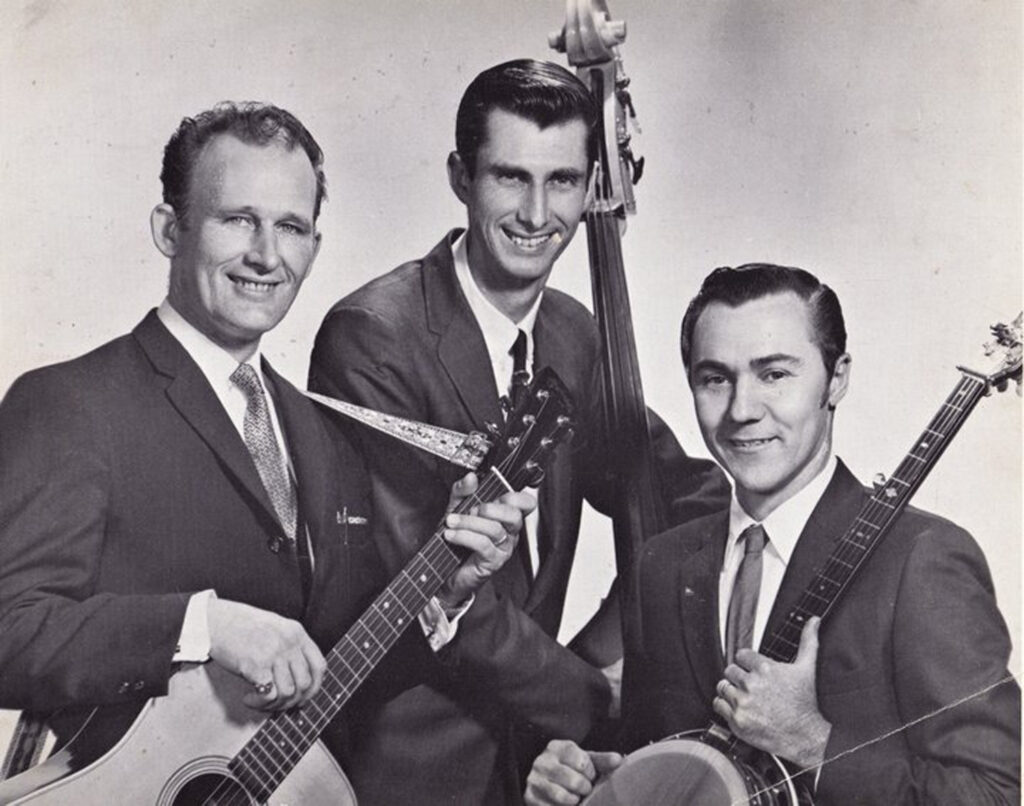
Hawkins discovered his love for music early in life, learning to play rhythm guitar and immersing himself in the sounds of country and bluegrass. By the late 1950s, he had formed his first country music group, the Silver City Wranglers, and began performing across New England. A short time later, Hawkins met Fred Pike, a talented guitarist and banjo player from Connecticut. Their shared love for country music led to the formation of the Country Nighthawks, a band that featured traditional country music of the day.
Randy Hawkins – Fred Pike & The Bluegrass Nighthawks
In 1959, Hawkins and Pike expanded their musical horizons by recruiting Bob French, a banjo player, to join their band. They renamed the group the Bluegrass Nighthawks and began performing at clubs, festivals, and radio shows. Their sound, characterized by tight harmonies and energetic instrumentals, quickly gained popularity. Hawkins served as the lead singer and rhythm guitarist, while Pike and French provided instrumental depth.
The Bluegrass Nighthawks recorded several songs during this period, including the notable single “Dream, Dream, Dream,” co-written by Hawkins and Fred Pike. The flip side of the 45-rpm disc featured “Pike’s Tune,” an instrumental written by Pike. Released on Boney Records, the single showcased the band’s early Osborne Brothers/Country Gentlemen-inspired sound.
Randy Hawkins – Radio Career and DJ Work
Hawkins was not only a performer but also a trailblazer in bluegrass broadcasting. He became the first bluegrass DJ in Rhode Island, spinning records and promoting the genre to a growing audience. He worked at several radio stations, including WBZY in Torrington, Connecticut, and WKFD in North Kingstown, Rhode Island. His shows often featured bluegrass and country music, and he was known for his efforts to secure more records from major labels to keep the genre alive on the airwaves. Hawkins’ radio career spanned most of the 1960s, during which he became a key figure in the New England bluegrass community.
Randy Hawkins & The Bluegrass Travelers and Later Years
In the late 1960s, Hawkins formed the Bluegrass Travelers, a band that at times included Bill Hall on banjo, Carl Rebello on fiddle, and J.R. Smith on bass. The group performed regularly at venues like Ray’s Place in Central Falls, Rhode Island, and became a staple of the local bluegrass scene. Hawkins continued to lead the band until the late 1970s, when he began to scale back his musical activities. He participated in festivals, benefit concerts, and special events, including the first Country Gentlemen Festival in Webster. He also served as an MC for various shows, showcasing his deep knowledge of the genre and his ability to engage audiences.
Hawkins lived in Oneco, Connecticut, for the last 30 years of his life, where he built a house on land he acquired from the Pike family. He worked as a truck driver for Honey Transport Co. of Plymouth, Florida, before retiring in January 1990 due to ill health. Randy Hawkins passed away on February 16, 1991, at the age of 60, after battling cancer. He was remembered as a talented musician, a dedicated DJ, and a beloved member of the bluegrass community.
Over Jordan
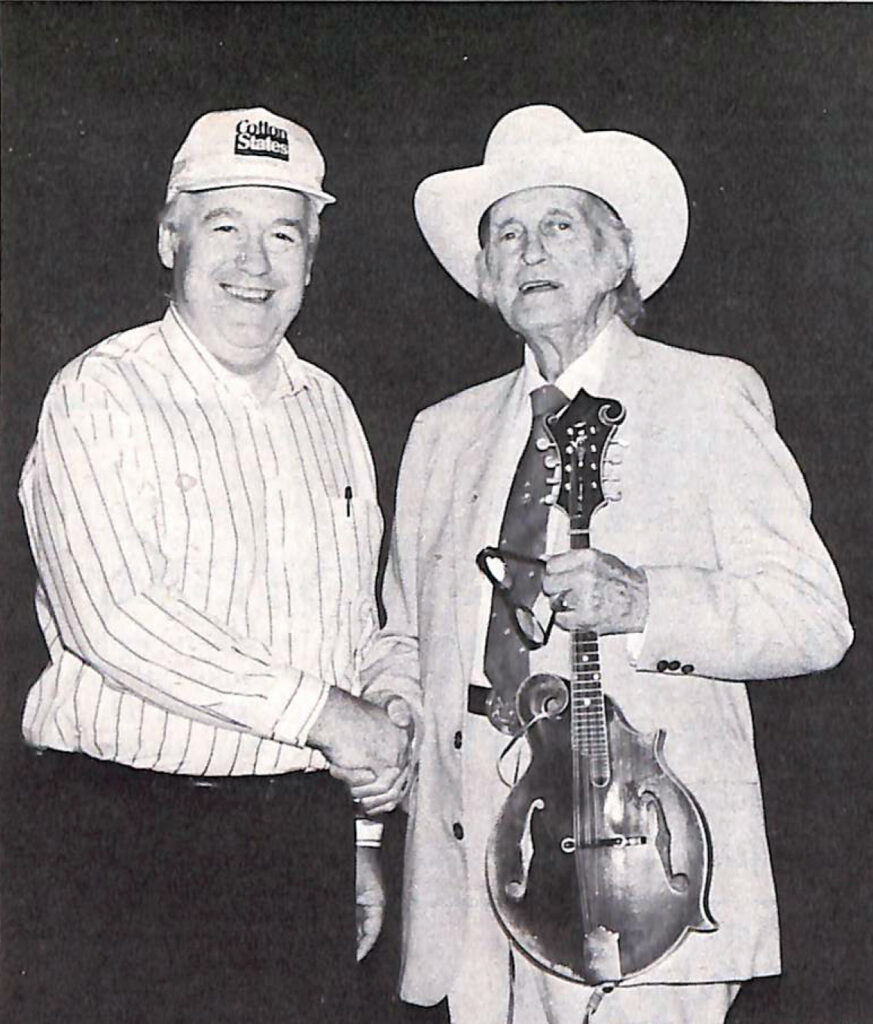
Norman Millard Adams (October 27, 1934 – July 15, 2025) was a legendary bluegrass music promoter. Born in the foothills of the Blue Ridge Mountains, Adams developed an early love for bluegrass music, inspired by listening to the Grand Ole Opry on a neighbor’s battery-operated radio. His passion for music and people shaped his remarkable career, spanning over 45 years in bluegrass promotion and 40 years as a successful insurance agent. Adams began his journey in bluegrass in the early 1970s, co-founding a festival in Dahlonega, Georgia. Despite a challenging start with a rain-soaked debut, his determination and the support of bluegrass legend Bill Monroe helped him persevere. Monroe’s belief in Adams, demonstrated through frequently discounted performance fees, laid the foundation for Adams’ rise as one of the most respected promoters in the industry. Over the years, Adams hosted festivals across multiple states, from campgrounds to cruise ships, providing a platform for countless artists to gain recognition. Known for his meticulous attention to detail and unwavering commitment to quality, Adams ensured his festivals were family-friendly and professionally managed. His genuine love for people and music earned him accolades, including an IBMA Distinguished Achievement Award. His festivals drew thousands of fans annually and preserved the spirit of bluegrass music. Beyond music, Adams was a pillar of his community, serving on the board of the Lumpkin County Bank and as a deacon at Mt. Olive Baptist Church. His dedication to personal service and old-fashioned values defined both his insurance and music careers. Norman Adams’ passion, integrity, and love for people and bluegrass will long be remembered.