
Think What You’ve Done
Why Carter Stanley Ranks as the No. 1 Bluegrass Songwriter
Carter Stanley’s song “The Memory of Your Smile,” came on strong as Tracy Nelson picked songs for an upcoming 1972 album. Blues-rock singer Nelson grew so committed to the bluegrass number that she brought in banjo king Earl Scruggs and A-level fiddler Vassar Clements for her hard-hitting recording of the Stanley Brothers cut with her band Mother Earth. “I’ve always loved ‘The Memory Of Your Smile,’” Nelson said not long ago. “I recorded it with Mother Earth and performed it once with Ralph [Stanley] on a tribute set, at a downtown Nashville event.”
Of course, Nelson is far from alone among singers, famous or otherwise, who have chosen to sing and record songs from Carter Stanley’s pen. Ricky Skaggs, Emmylou Harris, Billy Strings, Bob Dylan, Gillian Welch, Don Rigsby, Vince Gill, and countless others have drawn on his work. These artists’ choices range from the heartache of “Could You Love Me One More Time” to the devotion of “White Dove” and the fast-sad bounce of “How Mountain Girls Can Love.”
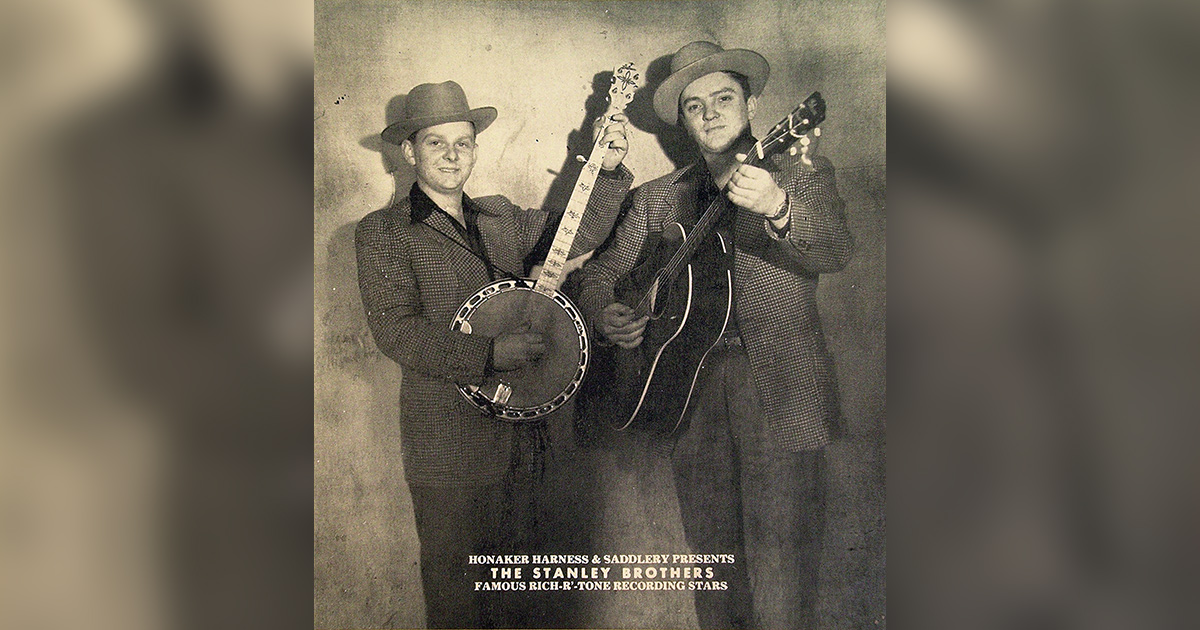
As the 100th anniversary of Carter Stanley’s birth approaches on August 27, 2025, it seems a good occasion for looking at his singular songwriting skills. A dedicated tunesmith starting in 1945, Carter sensed from the heart how to put together a memorable song with foundational music and lyrics, to create songs that fit perfectly into the still-developing style called bluegrass.
I’d even put Carter at the very top of the songwriters who came out of the classic era of bluegrass, but I’ll return to that idea later.
A Crowd of Witnesses
Carter Stanley’s fans have included singers that might not have been easy to predict, pop-rocker Elvis Costello for one, and a West Coast honky-tonker for another. “I’ll tell you who was a really, really big Stanley Brothers fan, was Buck Owens,” Skaggs told me. “I got to be with him three or four times,” he said. “And he loved the Stanley Brothers. He loved Carter’s writing, he loved Carter’s lead singing, and he just loved the sound of the harmonies and all.”
Some of the material here reflects research for my music-centered biography of the Stanley Brothers, in editing stages at the Country Music Foundation as I write. Other sections are newly reported. “A lot of the lyrics that Carter Stanley dealt with really emphasize that side of human nature — ‘The Fields Have Turned Brown’ and “White Dove’ and all of those,” Bill Malone, one of the deans of country-music journalism, said during an interview for the book. “I just think he’s very underrated as a songwriter.”
Carter, on guitar, and younger brother Ralph came up in sparsely populated Dickenson County in Southwestern Virginia, far from country music’s early music capitols in Atlanta, Nashville, and Chicago. But they kept their ears wide open and found inspiration in archaic singing from the fundamentalist Baptist churches the family attended. They learned old-time ballads passed down by their father, Fitzhugh Lee Stanley, neighbors, and others. And there was the African-rooted banjo style Ralph learned from Lucy Smith Stanley, their mother.
From the growing radio and records industries, they absorbed powerful old-time sounds from records by Grayson & Whitter and Mainer’s Mountaineers, as well as from radio broadcasts that featured Roy Acuff and other stars of the Grand Ole Opry. A rich mixture indeed, but their sound really came together when the brothers dove into the brand new music played by Bill Monroe and Flatt & Scruggs, just as they created the style that would come to be called bluegrass.
How Songs Drove the Brothers’ Career
The Stanley Brothers’ place among the most influential founders of bluegrass was assured by Carter’s songs, along with some by Ralph, and material such as “I’m a Man of Constant Sorrow” that they adapted or arranged. Of course, lots else was going on in addition to songwriting, learning new songs, and arranging some old ones. Carter had married Mary Kiser in 1943 and the first of their five children was born in 1948. Ralph took the first of his three wives in 1950.
With families to support and a band to pay, the brothers worked constantly to improve their music. The Stanley Brothers’ skills and songs meant the act could draw a crowd of fans, become radio regulars, and win the record deal they hoped would be central to their career. “The main thing in music is to be original and different, and to be yourself,” Ralph wrote in Man of Constant Sorrow, the autobiography he wrote with Eddie Dean. “You need to be original to get anywhere, and you need to do your own material if you’re going to make your way.”
The Stanley Brothers took off on local station WCYB in late 1946, and by the next year were recording for Johnson City’s Rich-R-Tone Records. Realizing that the act needed original songs to move up the country music ladder, Carter prepared two of his own for their first Rich-R-Tone sessions, “Mother No Longer Awaits Me at Home” and “The Girl Behind the Bar.” The latter song was Carter’s rewrite of “Little Glass of Wine.” But “Mother No Longer Awaits Me at Home” gave their regional fans, and eventually the world at large, a first taste of several hallmarks that made Carter a songwriter to watch. She told them of how she was longing to see me / How lonely her home since I went away, Carter’s lyric goes in part.
Still in his early 20s, the budding writer filled “Mother No Longer” with elements that would recur in many of his songs, including “White Dove” and “Memories of Mother.” It’s all there: a glowing moon, the old mountain home, the son’s troubled absence, his desire to repent, and the mother’s heavenly home after disappointed years.
Lucy Smith Stanley would outlive Carter by seven years. But as a young man, he seemed already captured by images of a mother dying before her rambling son. This early song hasn’t seen as many covers as a number of his other tunes, but it did show up on the notable 1971 Stanley Brothers tribute album released by future country stars Ricky Skaggs and Keith Whitley.
Another Rich-R-Tone recording, “Let Me Be Your Friend,” found Carter spinning what became another frequent theme of his writing, that of a rejected lover who still wants to keep in touch. Though I know that you don’t love me/Won’t you let me be your friend? Carter sang in the uptempo lovelorn song.
At the risk of skipping over major items, like a single man at a crafts fair, let’s keep following Carter’s increasingly accomplished work as a songwriter.
Big Publisher, Bigger Songs
When Carter and Ralph joined Columbia Records in 1948, they also signed with the Peer-Southern publishing empire. Officially brought into the fold by company exec Bob Gilmore, they were working with the firm run by Ralph S. Peer, a central figure of the years when country music in effect left the farm and grew a major commercial crop in radio and records.
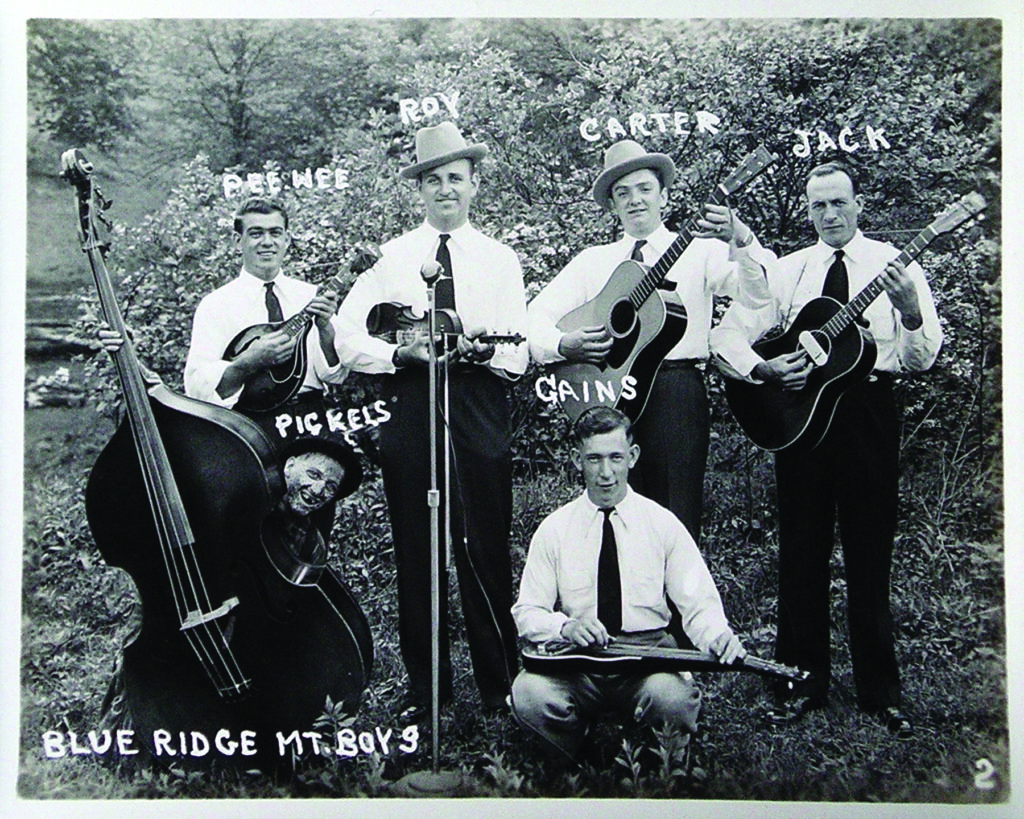
Peer Music published one of the songs most associated with the Stanley Brothers, “I’m a Man of Constant Sorrow,” under Carter’s name. (It would become an overwhelming hit after its appearance on the hit 2000 movie O Brother Where Art Thou?) In fact, the song’s title and central notion had been around in recorded form since pioneering old-time musician Em’ry Arthur recorded it in 1928. Before that, it appeared in a rendition by fiddler Dick Burnett, and even earlier in songs and hymns dating back to the 19th century. In adapting it, Carter was just following the less strict copyright practices of the day.
During the Peer affiliation, Carter produced several original songs that also became bluegrass standards. They included “The Fields Have Turned Brown,” a poignant number that falls in the same general category as “Mother No Long Awaits Me at Home.”
“The Fields Have Turned Brown” would appear on record as performed by a host of bluegrass acts, including a 1961 release by the Country Gentlemen. Surprisingly at least in retrospect, this was one of the first of countless eventual covers of the Stanley Brothers’ compositions. Also from this period came “The White Dove,” one of Carter’s greatest songs, in an arrangement that highlighted a high-baritone harmony sound that put two vocal parts above the lead. One of American music’s top songwriters, Bob Dylan, frequently covered this somewhat mysterious tune, one of numerous Stanley Brothers numbers he recorded and/or performed live.
In a 1997 session in Nashville, Dylan dueted with Ralph Stanley for a cut of Carter’s heartrending “Lonesome River,” another Columbia Records track by the brothers. In just one more of the Columbia songs, Carter showed his versatility by producing the fast-sad romp “Hey, Hey, Hey.” The future bluegrass staple had a title said to have resulted from his running out of words.
A New Company, Strong New Music
Despite all the great music, original or not, that the Stanley Brothers recorded for Columbia, they lost their deal and signed in 1953 with Mercury Records, a relative newcomer to the label wars. Some folks, Ralph included, have found their recordings for Mercury to be among the best from the brothers’ 20-year joint professional career.
Carter in his mid-to late-20s may have been choosing some of the same words as rival country songwriters, but he put them together more effectively. Like one of his songwriting heroes, Hank Williams, Carter used straightforward music and lyrical fodder but transformed it into a style that made him stand out amid a growing list of bluegrass songwriters. Tragically, Carter Stanley also shared with Williams a devastating addiction to alcohol. Their habits would lead to death for both men.
In the 1950s, Carter was still years away from having his work earn him money and fame. In fact, that kind of recognition mostly came after his death in 1966. However, he was consistently writing songs still heard as among the best ever created in the style. Again, at the risk of skipping over some great music, allow me to mention “Could You Love Me One More Time,” a song recorded in 1954. This number displays the compelling vocal range often heard in Carter’s work. The melody in the key of D climbs to an F#, or the second fret of a guitar’s E-string, near the top of Carter’s range, with Ralph hitting an A note above that. “I love ‘Could You Love Me One More Time?’; there’s nothing like Carter’s soulful lead on that song,” the songwriter Alice Gerrard told me when I was asking people for their favorite Stanley Brothers songs.
A quarter-century after the Stanley Brothers release of the song, Ricky Skaggs and Emmylou Harris took it a half-step higher for a 1979 version on his solo album debut. Like other of Carter’s compositions, “Could You Love Me One More Time” keeps coming around, with alt-country man Sturgill Simpson selling the song to fans on YouTube with a soulful acoustic version.
One more favorite from the Mercury period, the majestic gospel tune “Harbor of Love,” received an intricate vocal arrangement at its first recording, in 1954. None other than Bill Monroe recorded it in 1991 for his last studio album, Crying Holy Unto the Lord, with Ralph singing lead. And Billy Strings hit it at a 2024 concert at Music City’s Bridgestone arena for a crowd Billboard estimated at an astonishing 18,500 people. Fast-rambling songs such as “Nobody’s Love Like Mine” also kept coming, in this case for a song that also became a staple of Ralph’s long career leading the Clinch Mountain Boys he had founded with Carter.
Unlike many contemporary country songwriters, Carter didn’t do a great deal of collaborating, but he and Monroe came up with a good one, called “Who Will Call You Sweetheart,” during the months in 1951 when Monroe hired Carter to sing lead in the Blue Grass Boys.
When recording for Mercury, the songs Carter and Ralph wrote were published by Acuff-Rose, the company set up in 1942 by Opry star Roy Acuff and songwriter-publisher Fred Rose. Despite the high quality and eventual success of Carter’s songs during the association with Acuff-Rose, the publisher either didn’t try or at least didn’t succeed then, in placing his songs with other artists.
In addition to those already mentioned, country and bluegrass singers who would later record the Acuff-Rose material in later years have included Sierra Ferrell, Hazel Dickens and Alice Gerrard, Dwight Yoakam, Ry Cooder, John Conlee, Dan Fogelberg, Hot Rize, Red Allen, Larry Sparks, Mark O’Connor, Alan Munde, and Patty Loveless.
Another Label Switch, and a New Town
The Stanley Brothers again found themselves looking for a new label when they failed to cut hits for Mercury. Keep in mind that it was only in the later 1950s that they and other peer acts were referred to as bluegrass. That meant they had to compete for sales and airplay with straight-country acts such as George Jones, Ray Price, Webb Pierce, Kitty Wells, Ernest Tubb, and Hank Snow.
In 1958, the Stanley Brothers had a brief affiliation with the Mercury-tied label Starday and began a long association with Cincinnati-based King Records. In the same period, Carter, Ralph, and the band left behind what they regarded as a played-out Virginia home base to take up residence in Live Oak, Florida, for the remainder of their career as a duo.
For Carter, it seemed, songwriting remained as much a part of life as it was a professional necessity. King Records label head Syd Nathan aggressively pushed the Stanley Brothers to make the charts. Carter’s ongoing flood of songs, many with a strong influence of the popular honky-tonk sound, could have resulted from Nathan’s ambitions. More likely, the output arose from Carter’s drive to write songs that were both commercial and highly creative.
Meanwhile, let’s return for a minute to “The Memory of Your Smile,” recorded by the Stanley Brothers and released on King on September 30, according to Gary Reid’s comprehensive discography The Music of the Stanley Brothers.
To Tracy Nelson, who can belt or croon, Carter’s song simply called out to be sung. “I loved the melody,” she told me. “I thought, it could be kind of a shouter.” A fan of hard-living songs by the likes of Jones, Carter gave a night-life setting to “Memory of Your Smile”: Walking from one bar to another / Don’t know where I’m going or where I’ve been. The number would become the title song of a 1981 album by Ralph and appear as a cut by Mike Seeger with Maria Muldaur, by Bill Grant and Delia Bell, and by West Coast banjo man Craig Smith.
“Think What You’ve Done,” a 1961 Stanleys release on King, earned praise from D.C.-area picker and writer Ira Gitlin. “A masterpiece of despair and resignation — especially when done slower, as Hot Rize used to do it,” Gitlin wrote. Faced with the end of an affair, Carter offers one of his undying portraits of his native ground: I’ll go back to old Virginia / Where the mountains meet the sky.
It’s also worth remembering that Stanley Brothers recordings never hit the country-music charts, with one exception. That was the combined picking-comedy number “How Far to Little Rock,” which made it to No. 17 on Billboard. That means that the trade paper never listed any of the numerous songs by Carter that later became hits and/or cuts by other artists. In the case of the magnetic “Think What You’ve Done,” the song with only 66 distinct words drew covers by pop-folk star Dan Fogelberg, and by bluegrass stars Ricky Skaggs, IIIrd Tyme Out, Special Consensus, Larry Sparks, and Chatham County Line.
Other ageless King favorites written by Carter include “I’ll Take the Blame” and “How Mountain Girls Can Love.” The country music world’s failure to latch on to Carter’s skill as a writer seems particularly glaring considering “I’ll Just Go Away,” perhaps better known as “I just think I’ll go away,” its tagline.
In an oversight that’s hard to understand, the Stanleys’ 1961 recording of the wonderfully plainspoken “I’ll Just Go Away” went unreleased until 1969, years after Carter’s death. That’s according to Reid’s discography. The song became a favorite as sung by Keith Whitley with Ralph Stanley and the Clinch Mountain Boys, in a hit video by future four-time Grammy winner Sierra Ferrell, and in live performances by acoustic stars Watchhouse, previously Mandolin Orange.
As fans know, times grew tough for the Stanley Brothers by the mid-1960s. Their contemporaries Lester Flatt and Earl Scruggs had chart hits, worked as big draws on the college circuit, made millions of impressions with a theme song and appearances on “The Beverly Hillbillies,” and would soon enjoy a major hit when Earl’s “Foggy Mountain Breakdown” was scored as central to the counterculture-meets-Hollywood film “Bonnie & Clyde.”
Their mentor Bill Monroe also found a home on the folkie/campus scene as the Father of Bluegrass. Peers such as Jim & Jesse and the Osborne Brothers recorded for a major label and became Grand Ole Opry members.
During these years, the Stanley Brothers lost their King deal, issued records on a raft of small labels, and played such gigs as “matinees” entertaining elementary school students in rural Kentucky. They had their high moments, such as appearances with major country stars and gigs at the Newport Folk Festival and other folk-minded events. These included a 1966 tour of Europe called the American Folk and Country Music Festival.
No matter the hard times and endless low-level tours, Carter never gave up on writing songs with moving melodies and lyrics that might entertain or terrify within the same few lines. At least two examples came in the last years of his life. One of these songs, “Sharecropper’s Son,” was Carter’s slice-of-life portrayal of a poor family as they struggle to survive while farming on shares. The Stanleys debuted it in a January 1965 folk festival performance at the University of Chicago, according to an account by Gary Reid.
On a tape of the show, Carter says “Sharecropper’s Son” would soon appear on a record. That prediction failed to come true during his lifetime.
Carter came up with the apparent final song of his career, “It’s a Wonderful World Outside,” during the March 1966 tour of Northern Europe, Ralph wrote in Man of Constant Sorrow. Credited to both brothers, “Wonderful World” unfolds like a mysterious black-and-white movie, with the first-person narrator singing about spending life in prison for murdering a man who made love to his wife. Ralph would later record separate duets of the song with Larry Sparks and George Jones, those masters of hillbilly film noir.
King of Them All
As mentioned, I’d place Carter Stanley, 1925-1966, as the best of the songwriters who created bluegrass music. He has serious competition, certainly, from Bill Monroe, Lester Flatt, Earl Scruggs, Jimmy Martin, and a few others from the early days. All I’m saying is this: Carter Stanley came along at the very beginnings of bluegrass, a younger man than Monroe, Flatt, or Scruggs, but knocked out a long list of great songs that mesh entirely with what we now call bluegrass. Carter had the melodies, the hooks, and the concise and compelling lyrics that led to many songs that became hits after he was enshrined in his grave on Smith Ridge.
Carter Glen Stanley enjoyed no radio hits in his day, but it turns out that he’d written stacks of them. Regard for him remains strong as bluegrass continues to grow and thrive on the soul, authenticity, and deep feeling best summed up by Carter’s enduring compositions.
Thomas Goldsmith is a writer and musician who lives in Tennessee and North Carolina. His writing about bluegrass has appeared for more than 40 years in magazines and newspaper stories, as well as in The Bluegrass Reader and Earl Scruggs and Foggy Mountain Breakdown: The Making of an American Classic, both from the University of Illinois Press. Readers can expect in 2026 his music-based biography of the Stanley Brothers. He can be reached at [email protected].