Notes & Queries – May 2025
Q – I am a big fan of Ernie Thacker and know that he was in Ralph Stanley’s band from 1988-1994. I am trying to find all the albums that feature him singing lead with Ralph Stanley & the Clinch Mountain Boys. Do you happen to know the titles of the albums that Ernie was on besides Saturday Night/Sunday Morning? Thanks! Jessie Gray, Elma, Washington.
A – The late Ernest Charles “Ernie” Thacker (June 14, 1971 – April 10, 2018) enjoyed a robust career in bluegrass that was all too brief. He first gained recognition as a mandolin player when, at age 16, he joined Ralph Stanley & the Clinch Mountain Boys. After several years, he assumed the role of rhythm guitarist and lead singer. His style was straightforward and sincere, often compared to his musical hero, former Clinch Mountain Boy Keith Whitley. Thacker’s tenure as lead singer lasted from 1990 until 1994, during which time he appeared on a number of recordings with Stanley. But, as Ivor Trueman of the clinchmountainecho.com website noted, they were “either (a) all Gospel or (b) dominated by guest vocalists.” Consequently, there are very few recordings of Ernie playing straight-ahead bluegrass with Stanley. In 1994, he struck out on his own and eked out a solo career until 2006 when he was sidelined by an automobile accident that left him confined to a wheelchair. While Ernie’s time with Stanley might be viewed as the crème de la crème of his career, it’s worth noting that his authentic, emotion-laden vocals graced a number of other recordings, quite a few of which had a Stanley connection. Unfortunately, most of these recordings are currently unavailable.
1988 * C-3090 * Bill Wicker & Ralph Stanley * It’s Never Too Late (cassette only) * Ohioan Bill Wicker hired Ralph Stanley and company (which included Ernie) to appear on his self-released recording. Ernie played mandolin only and did not sing.
1989 * CCCD-0110 * Ralph Stanley * Like Father, Like Son (CD & cassette) * Ralph Stanley introduced the talents of his son Ralph Stanley II in a project that featured guitarist Sammy Adkins on lead vocals; Ernie played mandolin only.
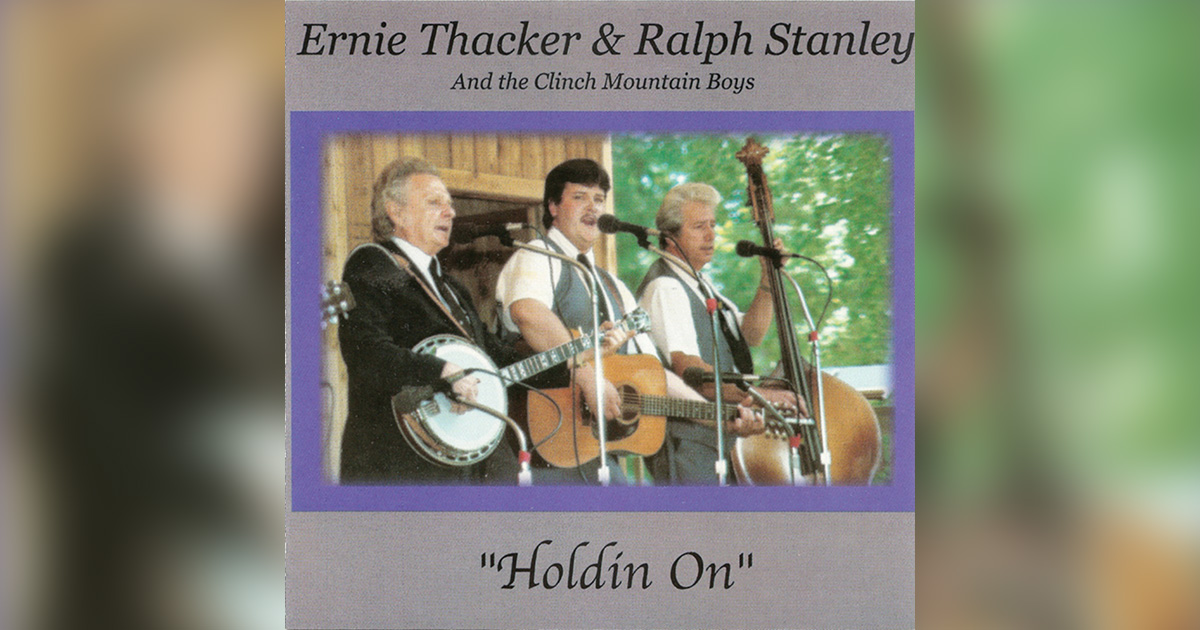
1990 * RTS-1525 * Ernie Thacker & Ralph Stanley * Holdin’ On * (cassette only, later released as a CD on the Crosscut label, CR-1121) * Just as Bill Wicker had done, Ernie hired Ralph Stanley and company to appear on a project that was issued under both of their names. This is probably the best example of Stanley and Thacker singing together on a straight-ahead bluegrass recording.
1990 * REB-1687 * Ralph Stanley * Pray for the Boys * (CD and cassette) This was recorded as a gospel tribute to the servicemen participating in the short-lived Desert Storm operation; Ernie played guitar and sang lead.
1992 * REB-1707 * Ralph Stanley * Almost Home * (CD and cassette) A thematic release centered on Stanley’s use of a cappella singing; Stanley handled all of the vocal leads while Ernie sang baritone.
1992 * FRC-638 * Ralph Stanley & the Clinch Mountain Boys * Back to the Cross * (CD and cassette) * Gospel collection that features Ernie on guitar and lead vocals.
1992 * FRC-9001 * Ralph Stanley & the Clinch Mountain Boys * Saturday Night / Sunday Morning * 2-CD set that features many guest artists. Ernie performs as a lead singer on only one song, “Mountain Folks.”
1992 * LTD-162 * Junior Blankenship & Ernie Thacker * Old Virginia * (cassette only) * A duet project that features Ernie with his Clinch Mountain Boys bandmate Junior Blankenship.
1993 * FRC-639 * Ralph Stanley & the Clinch Mountain Boys * Christmas Time With . . . (CD and cassette) This was the last recording to feature Ernie as a member of Stanley’s band; he sang lead and played guitar and mandolin.
1994 * API-1730 * Junior Blankenship & Ernie Thacker * Tears of Gold * (CD and cassette) * After leaving the Clinch Mountain Boys, Ernie and Junior embarked on a short-lived partnership that produced two releases, Tears of Gold and Tennessee Blues.
1995 * CCCD-0136 * Junior Blankenship & Ernie Thacker * Tennessee Blues * (CD and cassette) 1997 * DS-CD-1001 * Various Artists * The Stanley Tradition – Tribute to a Bluegrass Legacy * (CD and cassette) * In the late 1990s, the Doobie Shea label produced two albums that featured a variety of Stanley-style singers paying tribute to the Stanley Brothers/Ralph Stanley. Ernie sang one song, “Sharecropper’s Son.”
1998 * DS-CD-3001 * Various Artists * Songs About Our Savior, The Stanley Gospel Tradition * (CD and cassette) * As above, a multi-artist tribute. Here, Ernie sang two songs: “Traveling the Highway Home” and “I Am Weary, Let Me Rest.”
The early and middle 2000s found Ernie fronting his own band, Route 23. He subsequently recorded three band and/or solo projects, the last of which was completed after his near-fatal auto accident.
2001 * CR-1117 * Ernie Thacker & Route 23 * Backbone Job * (CD and cassette)
2003 * DS-CD-2004 * Ernie Thacker * The Chill of Lonesome * (CD and cassette)
2009 * PRC 1167 * Ernie Thacker * The Hangman * (CD and cassette) 2005 * OBR-20051 * America’s Bluegrass Band (featuring Melvin Goins, Don Rigsby, and Ernie Thacker) * America’s Favorite Hymns * * (CD and cassette) * One of Ernie’s final recorded projects was a disc that paired him bluegrass legend Melvin Goins and Kentucky powerhouse Don Rigsby.
Q – Do you know by any chance what guitars George Shuffler owned? Lawson B. Bowick, via email.
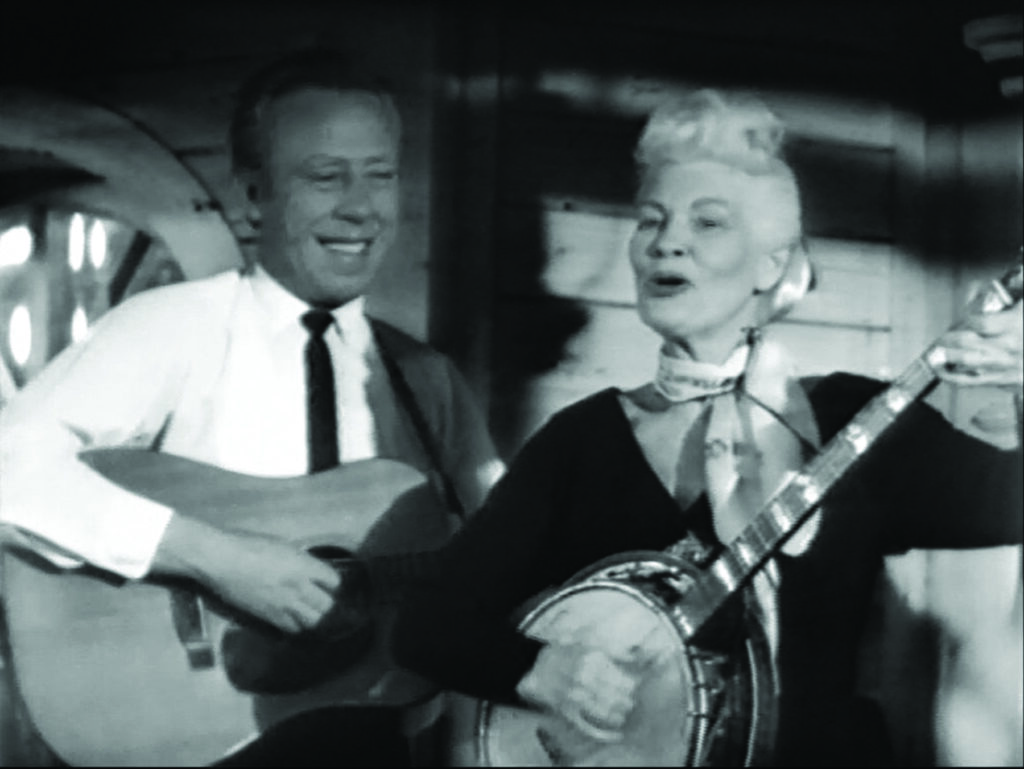
A – For part of the answer, I reached out to Ron Shuffler, George’s younger brother. He told me that “through the 1950s and early ‘60s George played a J-45 Gibson on stage and on recordings with Carter and Ralph Stanley.” In 1997, current Bluegrass Unlimited editor Dan Miller queried Shuffler about the guitar. He replied, “Yeah, it was an old J-45. I bought it for $70 without a case. Buster Mathis ran a little jewelry store there in Longview, this side of Hickory, and he had access to Gibson instruments. He had ordered it for this boy that went into the service and never picked it up. I found out about it and went down there and he said, ‘Just give me my money back. I ordered it for him and now he is gone and I don’t want it here gathering dust, so you can have it for the money.’ I had just turned seventeen and my daddy took me down there. I rode home with it between my knees afraid I would get it scuffed up. I still have that guitar.”
Ron Shuffler continued, “Then around 1964 he bought a used D-18 Martin that was made around 1955. You will see it on the Rainbow Quest television show [that was hosted by Pete Seeger and which featured the Stanley Brothers and George Shuffler as guests] and the video from Germany [clips of which – “How Mountain Girls Can Love” and “Rank Stranger” – can be seen on YouTube]. There are also pictures of George holding and playing a Southern Jumbo Gibson at the Newport Folk Festival in 1964
Shuffler later acquired a 1980 Martin D-45. Again, speaking to Dan Miller, George said “it is getting well seasoned. It’s getting to where it will jar your belly when you play on those low strings. There are people who have offered to buy it, but I think I’ll keep it.”
In the late 1990s/early 2000s, George was fortunate to have two separate lines of limited-edition guitars built and sold in his honor. One was a Saga Musical Instruments Blueridge model, with the model number BR-4060. Advertising for the instrument noted that it “has all the power and full-bodied tone that any artist could desire, and a special feature on the rosewood peghead is a stylized flatpick inlay of ivoroid, tortoise and pearl, along with George’s signature in gold script. We believe that all George’s many fans—as well as guitarists of all types—will thrill to the sound and style of the George Shuffler Signature Blueridge Guitar!” The other was a limited edition (only 25 were made) by Huss & Dalton. It was listed as a TD-R Signature Model and “was made with the best highly figured Honduran Rosewood back and sides, AAA Grade Sitka spruce top, Ebony fingerboard and bridge and bone saddle and nut. It has the bling of a D42 only with the added feature of a flower pot on the headstock.”
As an aside, George was the recipient of a Carter Stanley guitar replica that was made by Saga. For whatever reason (I never did know why for sure), George returned his guitar to the factory and received a replacement. Several years later, I sent my own Carter Stanley Blueridge guitar to the factory for some minor repair work. A short time later, I received an email from Saga staffer Tom Molyneaux that “we received your guitar today, and the shipping company completely destroyed it.” He said it looked like a pile of toothpicks! Fortunately, the shipment was insured. Unfortunately, by this time, the Carter Stanley model had been discontinued. Saga Musical Instruments owner Richard Keldsen stepped in to offer me the guitar that George had returned to the company. It had been sitting in Richard’s office for quite some time. So, by means of a freak shipping mishap, I wound up with a guitar that was once owned by George Shuffler. I had hopes at one time that owning a guitar that once belonged to George would improve my playing. Still waiting . . .
Over Jordan
Herbert L. “Herb” Hooven (May 29, 1931 – February 22, 2024) was a talented multi-instrumentalist who brought bluegrass and traditional country music to the New England area in the 1950s and ‘60s. He was born and raised in West Jefferson, North Carolina, where his father instilled in him a love of music. Hooven began playing music around age ten and started out with the guitar before switching to mandolin. At age 16, Hooven was making music with his father in public settings such as at churches, at revivals, and at community events.
Hooven’s first professional work occurred at age nineteen when he journeyed to Bristol, Virginia, to play banjo for Roy Sykes over radio station WCYB. Like many musicians of his day, he plied his trade with a number of different bands throughout the southeastern United States. First was a 1951 stint with Mac Wiseman on KWKH/Louisiana Hayride in Shreveport. At year’s end, he was in Wheeling, West Virginia, working with Toby Stroud on WWVA/Jamboree. Also in the band were Don Reno and Red Smiley. An advertisement for a personal appearance on February 20, 1952, listed the group’s personnel as consisting of Toby Stroud, Ralph Mayo, Merle Wesley, Chicken the Hot Rod (Don Reno), Chief Red Hawk (Red Smiley), and Herb Hooven.
The Korean War brought about a temporary pause in Hooven’s musical career. An oddity that occurred during this period was the airing in the States of his pre-recorded appearance on the Ted Mack Show while he was out of the country on military duty.
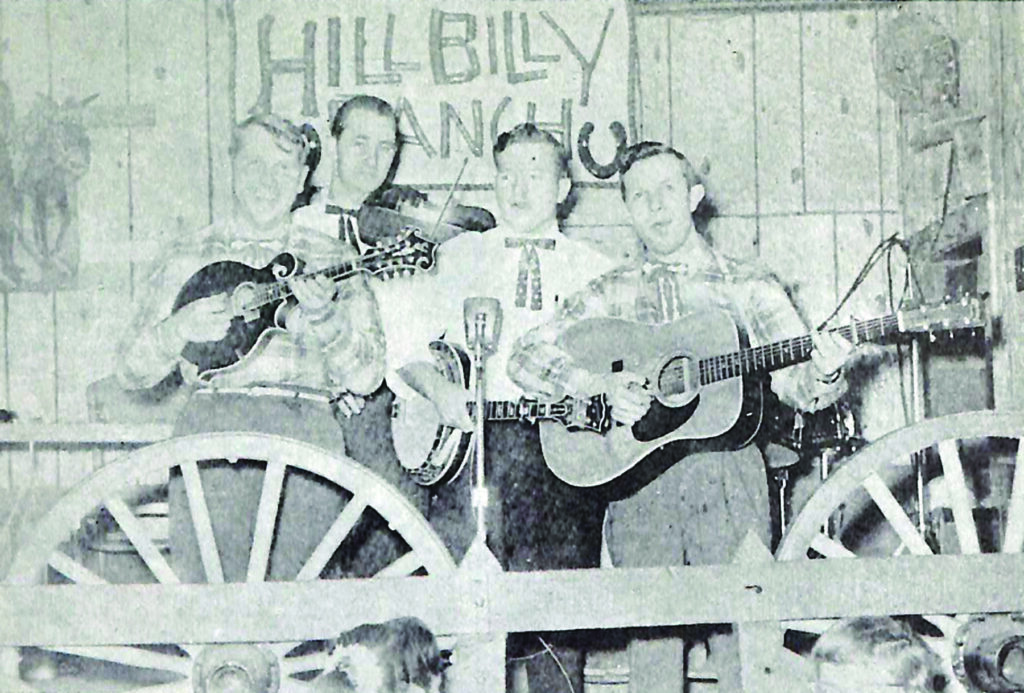
Once back in the States, Hooven found work once again with Toby Stroud who, by this time, had relocated to Boston. He had a steady gig there working at the Hillbilly Ranch night spot; Hooven played both fiddle and banjo. His banjo of choice was a Gibson Mastertone.
For most of the next two decades, Hooven had an on-again/off-again relationship with the Lilly Brothers and banjoist Don Stover. He made a number of recordings with the duo, starting with a batch of 11 songs and tunes that were made in 1956 and ‘57 for the Maine-based Event label. Only two singles were issued right away: “Tragic Romance”/“Are You Tired of Me My Darling” (Event 4261) and “John Henry”/“Bring Back My Blue-Eyed Boy to Me” (Event 4272). The rest lay dormant until they appeared on an early 1970s album on the County label. County Records owner Dave Freeman cited these recordings as “some of the very finest ever cut in Bluegrass, both for the music and the overall quality of the recording.” Most of 1960 found Hooven in Wheeling once again, working this time with Jimmy Martin. The group journeyed to Nashville in August to record eight songs for the Decca label. The songs were later issued on various albums and singles. Songs recorded included “Old-Fashioned Christmas,” “Hi-De-Diddle,” “Undo What’s Been Done,” “Don’t Cry to Me,” “My Walking Shoes,” “Hold to God’s Unchanging Hand,” “Deep River,” and “What Was I Supposed to Do.”
Recording activities continued for Hooven in November 1960. It was then he was hired to play on an album by guitarist Jim Rooney and banjoist Bill Keith; it was released as Fire on the Mountain and also included guitarist/vocalist Herb Applin, fiddler Herb Hooven, and mandolin player Joe Val. The album was recorded “live” in one afternoon and highlighted some of the first recorded use of Keith’s new melodic style of banjo playing. Hooven resumed his work with the Lilly Brothers starting in late 1960 or early 1961. One of the group’s best albums was recorded then: Folk Songs From The Southern Mountains (Folkways FA 2433). Two additional albums followed a short time later: Bluegrass Breakdown (Prestige 14010) and Country Songs (Prestige 14035). In the latter part of the 1960s, mandolin player Joe Val and guitarist Herb Applin formed a new group that became known as Joe Val and the New England Bluegrass Boys; Hooven was in on the ground floor. Curiously, he missed the group’s debut recording, One Morning in May, but he was on hand for the group’s second release, the self-titled Joe Val and the New England Bluegrass Boys (Rounder 0025).
Throughout the 1970s, Hooven continued to perform and record with various artists. In 1970, he played fiddle on two tracks for the Pike Family’s To Warm and Comfort You album for Rebel Records. Sporadic performances with Don Stover and the Lilly Brothers took place at select festivals and schools.
Hooven juggled work as an auto mechanic for General Motors with his love for music. His lifetime dedication to music earned him induction into the Massachusetts Country Music Hall of Fame.
Ernest Claude “Ernie” Sykes, Jr.
(November 13, 1960 – March 5, 2025) was a native of Central Suffolk County, Long Island, New York, who was known as a master bass player and singer. Throughout his bluegrass journey, he performed in a number of top groups including the Bluegrass Cardinals, Livewire, the Reno Brothers, Jimmy Martin, Bill Monroe, and the Tennessee Mafia Jug Band.
Sykes came by his love of music naturally. His father, a West Virginia native, noted that “my father [Ernie’s grandfather] played guitar and my mother played piano and we all sang.” Ernie started playing semi-professionally in the mid-1970s when he joined his father, Ernie Sykes Sr., in forming The Sykes Boys, a bluegrass band that quickly gained recognition in the Central Suffolk County area. Ernie played bass, while his father handled the guitar.
In early to mid-1978, Sykes joined the Bluegrass Cardinals, where he played bass and sang tenor. His talent was showcased on the group’s 1979 album Cardinal Soul. He also contributed to the band’s gospel album Sunday Morning Singing and a live double album set called Live & On Stage.
By mid-1980, Sykes returned to The Sykes Boys and took part in the making of the group’s debut album, Dixie Bound. During this period, the band performed periodically with banjo legend Don Stover. One notable performance was at a January 1983 benefit for bluegrass disc jockey/columnist Kathy Kaplan, where Sykes shared the stage with Del McCoury, Josh Graves on Dobro, Don Stover on banjo, and Ronnie McCoury on mandolin. Their set was hailed as a crowd-pleaser!
By 1986, Sykes was married to Karen Spence, a veteran of the Spence Kids and Grass Reflection bands. The couple collaborated on an album for the Webco label titled Sleeping in the Summertime; it contained several songs that Sykes assisted in writing.
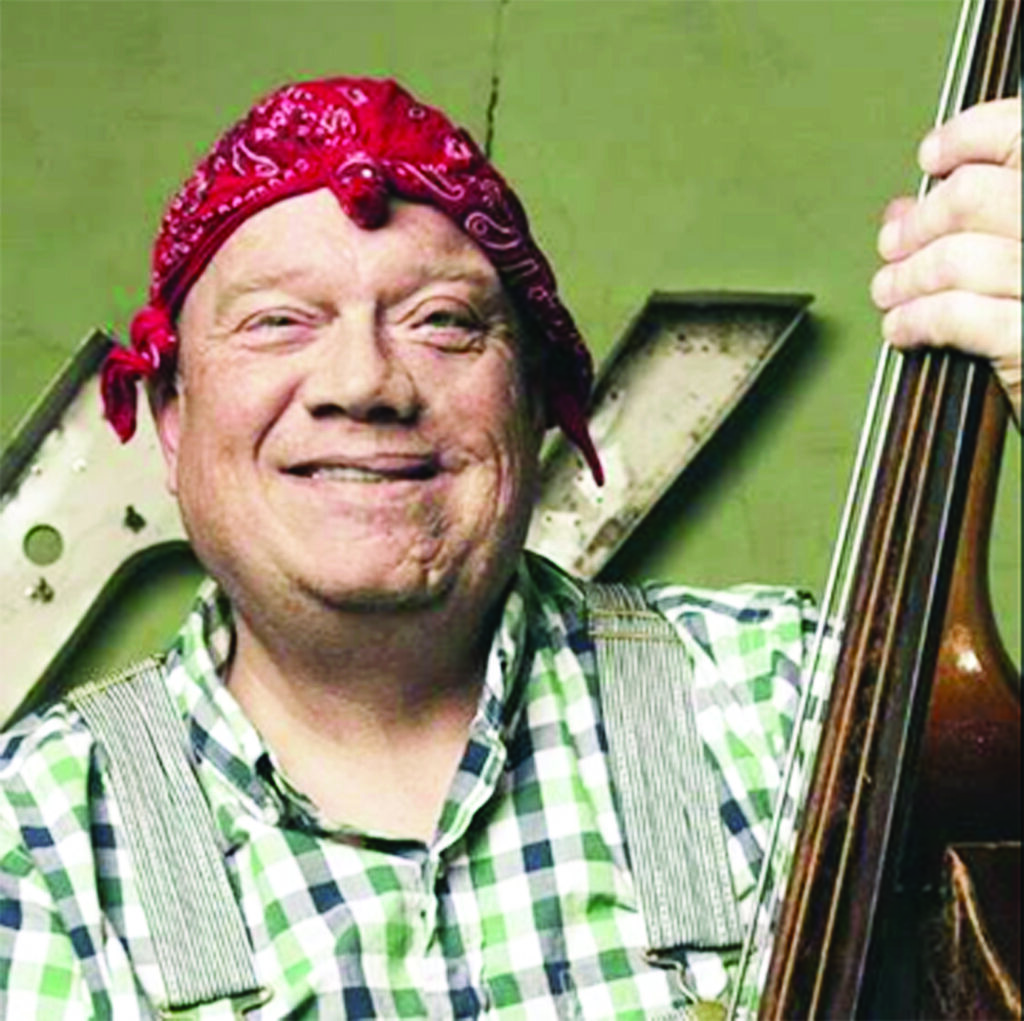
The late 1980s saw Sykes rotating through several bands. In 1987, he played with a Baltimore band called Southland, featuring Kenny and Warren Blair, and Kevin Church. Later that year, he joined The Bluegrass Unit with Jimmy Gaudreau, Wyatt Rice, Kevin Church, and Warren Blair. The group enjoyed a successful European tour shortly after forming. In 1989, Sykes formed Livewire with Scott Vestal on banjo, Robert Hale on guitar, and Wayne Benson on mandolin. He appeared on the group’s debut release Wired, where he added adventurous electric bass lines incorporating octaves and syncopated patterns.
By 1992, Sykes joined the Reno Brothers and contributed to their Webco album Kentucky Gold, anchoring the proceedings with his firm bass. In the fall of 1993, The Eddie Adcock Band welcomed Robert Hale on mandolin and Ernie Sykes on bass. Sykes appeared on The Eddie Adcock Band’s second album, Talk To Your Heart, released on CMH Records in 1994.
In 1995, Sykes became the last musician ever hired by bluegrass patriarch Bill Monroe to be a Blue Grass Boy. He appeared on Monroe’s last performance on the Grand Ole Opry on March 15, 1996. Of his time with Monroe, Sykes was quoted as saying, “Bill is easier to work with now than ever before. The years have mellowed him. Those who know him have noticed that.” After Monroe’s passing in September 1996, Sykes participated in a Blue Grass Boys reunion concert on May 24, 1997. In 1998, Sykes appeared on Sharon Cort’s album Highway to Here and participated in a European tour. In 1999, he appeared on the Grammy-winning (Best Country Collaboration With Vocals) song “Same Old Train” by Clint Black. During the late 1990s, Sykes played with country singer Mandy Barnett and worked occasional dates with Jimmy Martin.
In 2012, Sykes released a solo album titled Brand New World. In 2015, he received the IBMA award (Collaborative Recording of the Year) for “Southern Flavor” with Becky Buller, Peter Rowan, Michael Feagan, Buddy Spicher, Roland White, and Blake Williams. In 2014, Sykes appeared on The Tennessee Mafia Jug Band’s album Lester’s Loafin Lounge. He was active as a member of the Tennessee Mafia Jug Band from 2013 to 2023.
Despite suffering a stroke in 2018, Sykes recovered and continued playing. Over the years, he appeared as a guest on various albums, including James King’s It’s a Cold, Cold World (1989), Larry Perkins & Friends’ A Touch of the Past (1993), Butch Baldassari’s A Day In The Country (1994), Buddy Merriam and Back Roads’ Mystery Train (1995), Leon Morris’ The Country Sounds Of Leon Morris (1996), Clyde Mattocks’ Hugging the Ground (1999), and on two by Francine Michaels: Keeper of the Door and Time Can Mend (2000).
In addition to his work as a musician, Sykes had at least five songs to his credit as a writer or co-writer: “Heart of a Fool,” “I’m Sorry for the Heartaches,” “I Want to Go Back Home Again,” “Like I Used to Do,” and “Love That Went Away.”