The Brevard Music Camps
Béla Fleck, Casey Driessen and Bryan Sutton Lead Their Own Music Camps in the Western North Carolina Mountains
The mountain town of Brevard, North Carolina, is located less than a half hour’s drive from Asheville, and while the latter city still provides the bigger music scene known worldwide, Brevard is rising as well. Some of the reasons for that are simple and are commonly played out around the globe.
When towns and cities with rising music and arts scenes appear on the map and then draw folks in, in some cases, the newcomers wanting to live in a cool city inadvertently drive up the cost of real estate while doing so, which in turn prices out the musicians and artists that make the place interesting to begin with. Nashville, Brooklyn and New Orleans are perfect examples of this phenomenon.
Asheville is another area where the above has happened, which has sent folks moving to smaller nearby towns. What is special about Brevard, other than its vicinity to Asheville, is it is found in Transylvania County, which is known for its 1,000-plus waterfalls and beautiful mountains. It is also a part of the greater Western North Carolina region that still produces a ton of homegrown musicians while attracting artists from elsewhere.
One award-winning musician who is a native of the Brevard area is Woody Platt, who everyone in the bluegrass community will know as a former member of the Steep Canyon Rangers. A few years ago, Platt decided to leave the group to concentrate on spending time with his family and to pursue other ventures besides music. While he still performs with his wife Shannon Whitworth and recently put out his first solo album called Far Away With You, a wonderful new collection that features guests like Jerry Douglas, Sam Bush, Jason Carter, Bryan Sutton, Del McCoury, Rob McCoury, Buddy Melton, Barry Bales, Darrel Scott and others; Platt has other projects on his plate.
Platt and his business partner John Felty have produced the Mountain Song Festival for a long time under their company name of Mountain Song Productions. In recent years, however, they have expanded to produce Béla Fleck’s Blue Ridge Banjo Camp, Bryan Sutton’s Blue Ridge Guitar Camp, and Casey Friessen’s Blue Ridge Fiddle Camp, with all of them taking place at the Brevard Music Center. At each camp, the week ends with a wonderful concert open to the public that involves performances by the expert instructors as well as the students.
This year, Bryan Sutton’s Blue Ridge Guitar Camp is scheduled for May 28 to June 1, and the guest instructors will include Jake Workman, Tim Stafford, Julian Lage, Stash Wyslouch, and Avril Smith.
Sutton grew up in next door Haywood County, North Carolina, born into an extended family of musicians that played Appalachian roots music. While he was lucky to be raised in such a musical environment, being taught how to play multiple instruments by his kin and local teachers, the question arises; would he have found music had he been born into a family that did not play any instruments?
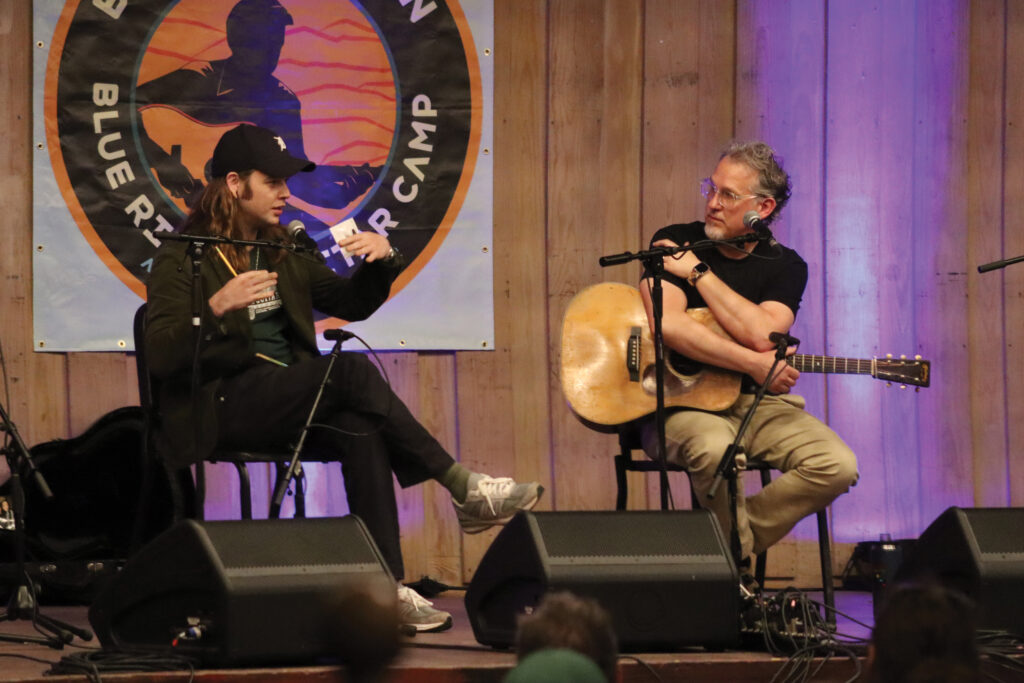
“It is hard for me to answer that question as that family environment is all I’ve ever known,” said Sutton. “I would have to imagine a completely alternate existence to answer that. I probably would have been a teacher, as both of my parents are teachers, and I would have fallen into a career along those lines. I’ve always been interested in psychology and how the brain works, so I could have been a therapist or a psychologist, maybe. If you remove my family and the Asheville area from my life story, I probably would not have found music, as far as playing it goes. But, if one does grow up around Asheville, it is hard to be in that area and not be drawn into something musical. So, even if I had grown up in a non-musical family, I believe I would have been intrigued by music just from living in that region.”
As for his Guitar Camp, Sutton’s main goal as an instructor is to “examine the music that we play and the tradition of improvising, and finding yourself in the music. He said, “If we were teaching people how to make tacos, well, there are a million ways in which you can make a taco. Similarly, there are a lot of different ways to play ‘Black Mountain Rag’ or “Whiskey Before Breakfast’ or ‘Soldier’s Joy’ or other tunes like that. So, some of the conversations that we want to have with our students is about how the improvisation found in the bluegrass music is similar to what is found in jazz music. But, we also focus on the fact that improvisation in bluegrass is done on acoustic instruments, especially on the guitar. The goal is to balance the work that you have to do when learning the songs, and then melding that with the sounds that you are physically capable of playing on your instrument. Playing the guitar is a physical activity, a motor skill, and you should try to understand the tension in your body and how that affects the sound of your playing.”
All of those issues are problems that Sutton had to deal with in his early years of being a professional musician. “Those were all big parts of my learning process as well, as in how to manage myself in the interest of trying to create and maintain the sound that I wanted to produce,” said Sutton. “Part of learning those lessons came when I played with Ricky Skaggs when I was 20 years old. I was playing hard and playing fast and causing injuries to my wrists and I was dealing with some pain. I was trying to play through tension, and it wasn’t working. So, I had to learn how to do it. It is about management and understanding what is going too far for each person, as far as how they play their instrument. You see so many people in the world of bluegrass that are fighting their own tension and they may be using techniques that cause them to work inefficiently, especially on the guitar. So, it is fun to help people get out of those negative habits.”
John Hartford once famously said to Rodney Dillard, ‘Limitations create styles.’ But, that only happens when a musician realizes what their own limitations are, while simultaneously getting better and better on their instrument. “There were people that I grew up around that encouraged me as a kid to ‘find your own voice,’” said Sutton. “There were older folks that I grew up around who gave me the advice of, ‘It is important for you to sound like you.’ Figuring that out is one of the mystical parts of this musical journey, and I’m still doing it. I’m still peeling back layers of who I am and still evolving as a musician and figuring out what my goals are as an artist. Our goal at our camp is to get people started on that journey, which is never going to stop. That is why I tell them that I am still on that same path all of these years later and I still think about those same things in my own way. So, it is about learning how to be curious and learning to care about your craft. The camp is about playing the guitar and about jamming to a certain extent, but ultimately it is really about learning.”
Sutton knows that they are not going to change anybody’s guitar playing drastically during one week’s time. The goal, however, is to improve their playing while setting them up to be able to create an improved learning process and take it with them when they leave Brevard. “With our students, it is like a race car coming in for a pitstop, where you change the tires or adjust some tolerances in the engine so that you can secure a better rest of the race,” said Sutton. “So, we have conversations on how to play and practice more effectively. We also have friends of mine that come in that are a neurologist and a psychologist that talk about the aspects of better learning and dealing with the experience of jamming or performing while being nervous and trying to get through fears and anxiety and performance pressures. We cover all of that, as our camp is not just about, ‘Here’s another cool lick that we’re going to teach you.’ We get into the nitty gritty of being vulnerable and challenging our students to so something that is new to them, and to try and do something hard that they may have never done before.”
Béla Fleck’s Blue Ridge Banjo Camp will take place on August 12 – 17 in 2025 and will feature instructors such as Tony Trischka, Kristin Scott Benson, Adam Larrabee, Greg Liszt and Mark Schatz. “I taught a bunch early on in my career, but when I got super busy in the late 80’s, I decided to take a break,” said Fleck. “I needed all my time to concentrate on being the player and artist I wanted to be. That lasted until 5 years ago when I was gifted with the opportunity to teach in what seemed like a bigger way. There didn’t seem to be a place where this modern banjo language was being taught, and I was feeling that I should be contributing energy to the banjo community and putting my teaching in balance with my performing and composing.”
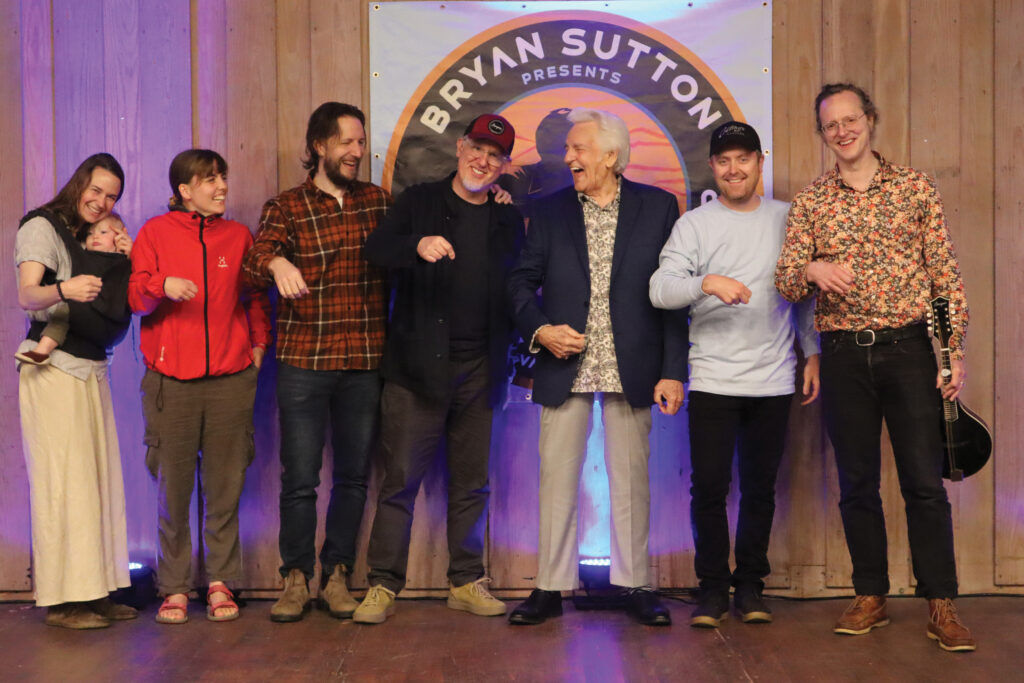
While Fleck had ideas of starting his own instructional event at various times, when Platt and Felty dropped the idea into his lap, with a venue open and ready to host the event, Fleck jumped on it. “I had been thinking of starting a camp, but I don’t know that I would have actually done it,” said Fleck. “Woody showed up one day and just put the idea to me. He had the infrastructure, the place, everything, right in own his backyard in Brevard, and with a special family connection to the music center as well. He felt that for traditional music camps to work in this Brevard Music Center venue, he had to recruit the right leader, and luckily for me, he thought I could be that person. Imagine someone getting in touch and asking you to do something you’d love to do, but they would handle all the parts that you didn’t want to deal with. I won the lottery.”
Like Sutton above, Fleck still has the curiosity and the drive to get better as an artist, and he wants to pass on that passion to others. “I love the whole experience of playing the banjo, from learning things I don’t know, to playing things that I am in total command of,” said Fleck. “You have to love all those aspects to get good at something. You have to be willing to sound bad to sound good, and in fact, it’s a part of the road to sounding good. So, what I bring to my camp may be a knowledge of how to learn, because I am certainly a perpetual student. And, I enjoy people and connecting with them and sharing information. It’s a little like being a parent, in that you have to take a leadership role, whether you like to do that or not, although I also feel like teaching is always a collaboration. It’s a thrill, and very different from the narcissistic pleasures of being an artist, where the applause is for you. In this case, there is no applause, but it’s still a profound pleasure.”
Fleck started his camp in 2018, so he has become a part of the Brevard and Western North Carolina music scene. Just like everyone who is even loosely associated with the region, the stories and footage and the reality of the disaster caused by Hurricane Helene in September of 2024 has weighed heavily on his mind. “It’s devastating, and of course, we first thought about our dear friends who live in the area,” said Fleck. “Fortunately, they all were OK, but so many folks were not. Abby (Fleck’s wife and fellow musician Abigail Washburn) and I had the privilege of performing a free show in Swannanoa for the folks who live there, and we got to experience a small amount of the devastation. Folks seemed incredibly strong and resilient, but what a hard hit! And now, we’re all focusing on the next climate related disaster in Los Angeles. The world needs us to prioritize climate. It’s never been more critical and we can only hope it’s not too late.”
After moving to Spain to become a university-level teacher for many years, Casey Driessen brought his family back to the U.S. to live once again. To be close to his wife Molly’s family in Western North Carolina, they chose to move to Asheville. Now, he has become the third leader of his own instructional gathering in Brevard.
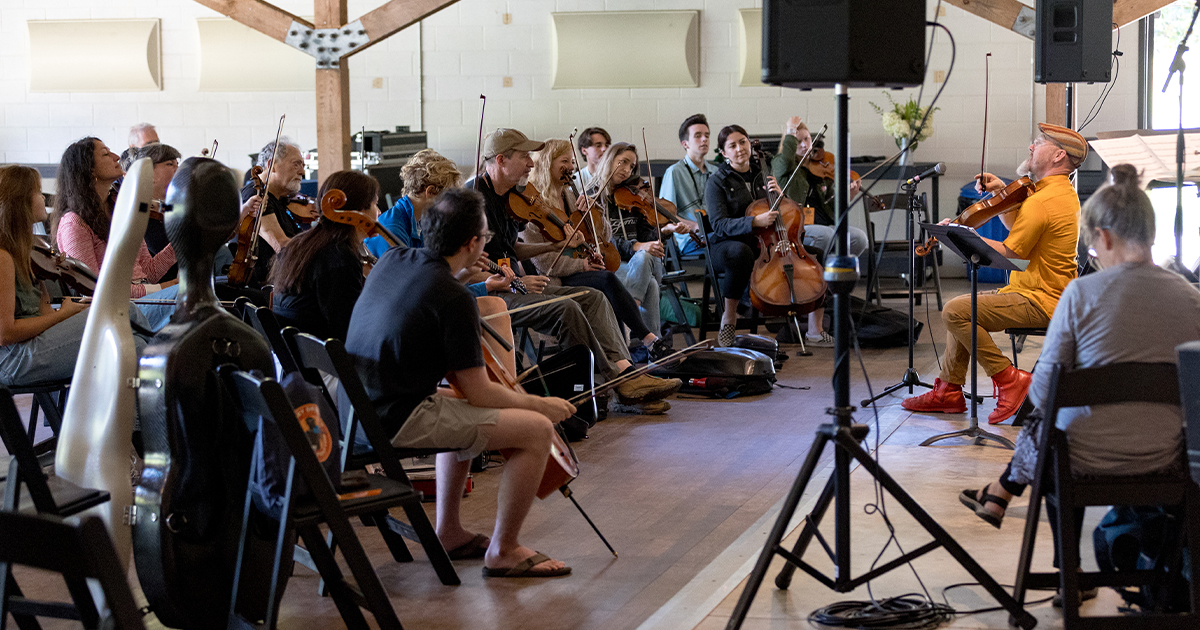
Casey Driessen’s Blue Ridge Fiddle Camp will happen on August 21 – 24, and will feature a more diverse approach and focus. For instance, the instructor team will feature Casey on the 5-string fiddle, Darol Anger teaching the 5-string fiddle as well, Kishi Bashi hosting classes on the 5-string violin, Jenny Scheinman on the regular violin, Jamey Hadad teaching percussion and all things rhythm, Megan McCormick on the guitar, and Zachary Brown hosting classes on the cello and bass.
“Another important aspect about our camp that makes our experience unique is our focus on technology,” said Driessen. “Integrating technology with tradition is not only a reality for contemporary string players, but it can be a great creative tool for new sounds and textures. For some, leaping into the world of tech can seem daunting. To this end, we’ve created a tech lab at the camp with pedal boards for sonic exploration and a recording lab similar to a home recording studio setup for those interested in getting under a microphone and capturing their ideas, or perhaps, even leading a special camp collaboration. Many of our great sponsors will be loaning us pedalboards and other audio equipment so that we can bring these labs to life. Electric violinist Matt Bell will monitor the lab and will be helping students explore the possibilities.”
Driessen has lined up other special guests for the gathering as well. “In this same vein, we also have violin luthier Jennifer Halenar and bow maker Tyler Andal coming to Brevard with their mobile workshops,” said Driessen. “As a result, they will be actively practicing their craft and giving students a glimpse into these important arts. The Violin Shop from Nashville will also set up with bows and fiddles galore for our students to try and they will be available to answer any questions about the maintenance and setup of your instrument.”
To put it simply, this is your chance to bring your roots music, or whatever music you want to pursue, into the quickly-changing world of modern technology. Number one, you want to sound good onstage, and Number 2, more and more artists are recording their works at home or in a nearby home studio set up with the latest gear.
“We are not just a bluegrass fiddle camp,” said Driessen. “We showcase different styles of music during the week. That is one aspect of the camp that I am excited about, as in we want to help people to be exposed to different types and styles of music so that they can take a little bit of this and a little it of that and bring those influences into their own music and develop their own voice.”
The greatest reward from hosting a camp like this is to help the students get to that next level, or at least to plant that seed of discovery inside of them. “When a student has an ‘aha!’ moment and they learn something important about playing their instrument; that feels great,” said Driessen. “It makes me even more excited about teaching and the learning process as a whole. I think that I do a better job as a teacher when I am excited about the things that I am teaching. And, when the light bulb goes off with a student, it is fantastic. But, sometimes you give somebody a lesson and you know that practice is going to be required for them to get to that ‘aha!’ moment, and you hope it happens. In other words, they may understand what you are saying, but they may not see the results of my teaching immediately. But hopefully, they will follow up on everything and it will happen. These things usually don’t happen overnight. When you are a student, the process can sometimes feel slow when you are in the middle of it, so you have to give yourself a little slack. Then, if you have some patience and you believe that the work you are doing with your instrument will pay off, then eventually the improvement will show itself.”
After living in Asheville for a while and getting to know Woody Platt, and ultimately after watching how Sutton and Fleck ran their respective camps; Driessen gathered his thoughts together and made a bold move. “I had been thinking about having a camp of my own for a long time,” said Driessen. “And, I have been teaching at other people’s camps since about the year 2000 or so, and I attended camps as a student when I was younger. So, while experiencing all of that, it is natural to have thoughts like, ‘If I had a camp, I would do this, and I would do that.’ So, after I came back to Asheville in 2020, and after the covid pandemic eased up, Béla asked me to be his camp’s fiddle player. That meant I played with the faculty at the week-ending concert, I played with the students in jam sessions, and I would appear in classes if somebody wanted to do some fiddle and banjo work. As a result of that, Woody and I eventually got to know each other.”
Driessen also took part in Sutton’s camp, and soon that inner voice in his heart and head just kept rising up. “I got to witness the scene in person as far as how the Brevard Music Center hosted the camps, and I wondered if this could be a possibility for me at some point,” said Driessen. “Not only did I work with both camps, I started playing on Woody’s recordings and we have done some gigs together as well, including with Steve Martin and Martin Short during their shows when the Steep Canyon Rangers couldn’t make it. So, at one point, I approached them and asked if they would be interested in adding a fiddle part to their music camp lineup. I had some ideas scratched out to show them, and then Woody and John presented those ideas to the folks at the Brevard Music Center, and they said yes.”
Now, with last year’s inaugural Blue Ridge Fiddle Camp under his belt, and having worked since then to make the next one even better, Driessen feels good about the future.
One aspect of music camp life that never gets old for him is the end of the week experience. That is when the faculty and student concert happens, and everyone is sharing the camaraderie and friendship that grew as the week progressed. “As for the feeling at the end of the week at a camp, only campers know what that feels like, because it is hard to describe,” said Driessen. “It is almost like the end of an amazing festival. But, there is something really interesting and unique about music camps because everybody is there with a similar purpose. You might have a friend there with you, but for the most part, you are there by yourself and you’re really putting yourself out there. You are meeting new folks from all around the world and you already have similar interests with them when it comes to your instrument, and everybody is enthusiastic and supportive. It is a very powerful experience and it has a real emotional component to it, because you took a chance, you are challenging yourself and making mistakes, and you did it to learn. It is a powerful thing to experience that kind of community and that kind of support.”
For more information and to apply, please go to www.blueridgebanjocamp.com, www.blueridgeguitarcamp.com and www.blueridgefiddlecamp.com.