Notes & Queries – September 2024
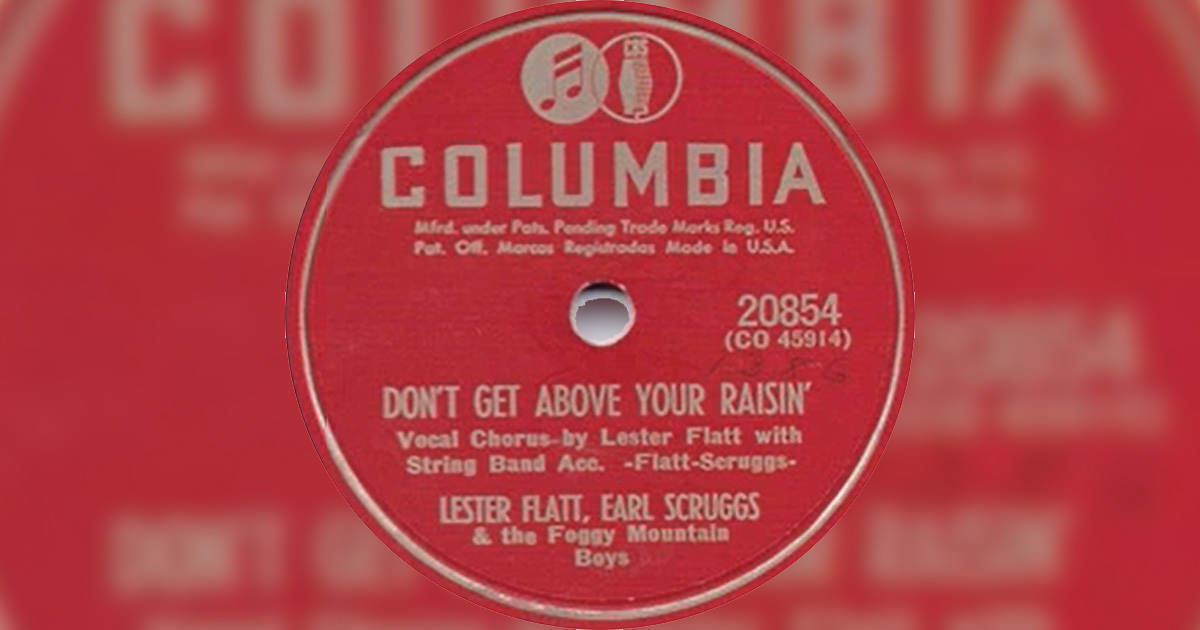
Q: I have been a subscriber to Bluegrass Unlimited for around 45 years or more; this is the first time I have been in touch. I have a question. The Columbia recording by Flatt & Scruggs “Don’t Get Above Your Raisin’” has Chubby Wise listed as the fiddle player. It sounds more like Benny Martin to me. They were both two of the best, but the hot licks sound more like Benny to me. I have been a fan and had the fortune to see Benny with Lester & Earl back in the 1950s. This was just before Benny left to join Johnny & Jack and Kitty Wells, and Paul Warren came to Lester & Earl. I thought it was money, but there could have been more than that. I started in radio (WOND News Talk Atlantic City, New Jersey) while playing in a bluegrass band while in High School in Downingtown, Pennsylvania, in the early 1950s. Don Williams, via email.
A: Thank you for your note concerning the Flatt & Scruggs recording of “Don’t Get Above Your Raisin’.” The first Flatt & Scruggs discography was assembled by former Bluegrass Unlimited editor Pete Kuykendall and was published in a 1960 edition of Disc Collector magazine (issue #14). In the article/discography, Pete listed Chubby Wise as the fiddler on “Don’t Get Above Your Raisin’” (and on five other titles: “Jimmie Brown the Newsboy,” “Somehow Tonight,” “I’m Working on a Road,” “He Took Your Place,” and “I’ve Lost You”). It’s not stated in the article, but the listing of personnel was obtained by Pete from interviews with Lester Flatt and/or Earl Scruggs. This information has been reprinted several times in various places, including the 1991 Bear Family Records 4-CD set of Mercury and Columbia recordings by Flatt & Scruggs. Neil Rosenberg prepared the notes for the Bear Family release, and he, too, cited Chubby Wise as the fiddler.
Backing up this information is an article on Chubby Wise from a February 1977 article in Bluegrass Unlimited. The piece was compiled by Ivan Tribe from an interview that he did with Chubby. One paragraph from the article reads as follows: “Leaving Bill Monroe for the last time early in 1950, Chubby moved to Detroit and played briefly with the York Brothers. He then spent a brief spell with Lester Flatt and Earl Scruggs, then based at WVLK in Versailles, Kentucky, and at Lexington’s Kentucky Barn Dance. Although Chubby’s tenure with the Foggy Mountain Boys lasted only a few months, he did participate in one Columbia session with them, recording six tunes with them including ‘Jimmy Brown, the Newsboy’ and the classic duet of ‘I’ve Lost You’ by Lester and Everett Lilly.” Taking all of this information together, it seems pretty conclusive that Chubby Wise was the fiddler on “Don’t Get Above Your Raisin’.”
Over Jordan
Henry Herbert “Herb” Applin (April 10,1938 – June 29, 2024) was a fixture of the New England bluegrass music scene for more than 60 years. The most well-documented phase of his musical career was a pair of early 1970s albums he recorded as a member of Joe Val’s New England Bluegrass Boys. But he built an impressive resume that included extensive work both before and after.
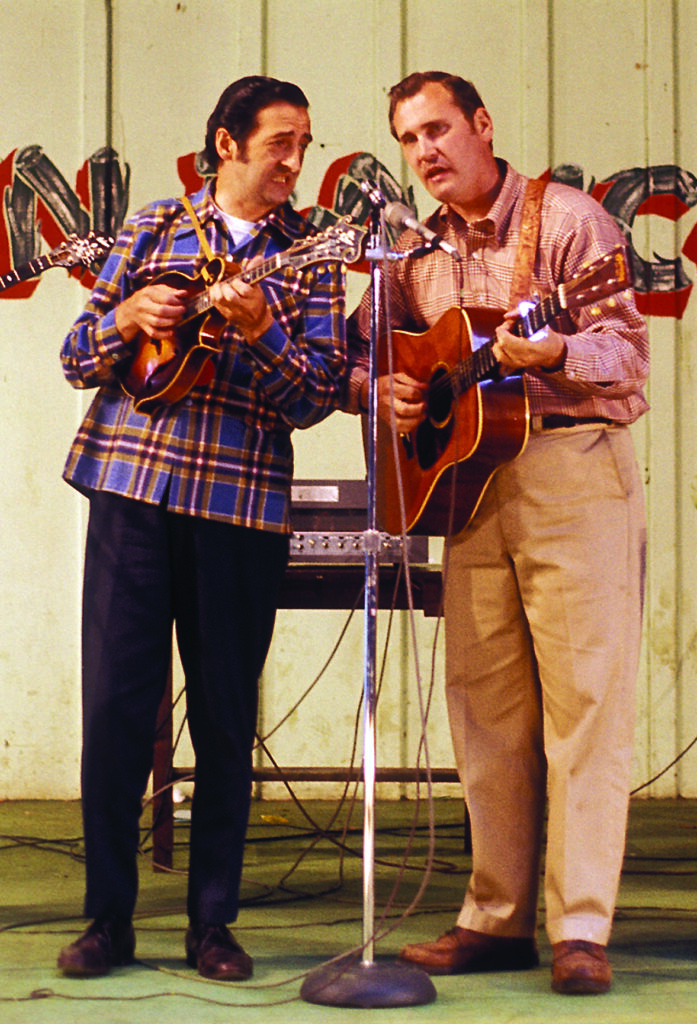
Applin was born in Boston, Massachusetts, in 1938 and, through the magic of radio, discovered rural country music at an early age. The most influential radio outlet was station WCOP which featured a live jamboree program called the Hayloft Hoedown. One of the early acts on the program was the Lilly Brothers and Don Stover.
Applin’s early interests in playing music centered on the drums, the violin, and his school’s band. But it wasn’t long until he applied his classical training to the fiddle, mandolin, and guitar.
Around 1958, Applin ran across the Lilly Brothers at a bar in Boston. Filling in on banjo for vacationing Don Stover was Joe Val. The two quickly realized a shared love of classic duets by the likes of the Louvin Brothers, Johnnie & Jack, the Monroe Brothers, and the Blue Sky Boys. Although Applin and Val were not performing together in a group, they often got together to sing. Unlike many of the classic duets, where one person always sang lead and another always sang harmony, Applin and Val often switched parts to arrive at mixes that best suited each of the various songs that they sang.
After graduating from the University of Maine with an A. B. degree and doing graduate work at the Bentley College of Accounting and Finance, Applin secured a day job with the Itek Corporation of Lexington, Massachusetts. He continued to keep a hand in music by playing with Val and also sitting in with the Lilly Brothers at Boston’s Hillbilly Ranch.
The duo of Jim Rooney and Bill Keith invited Applin and Val to join their group, Keith & Rooney, in the early 1960s. The new recruits appeared on the 1962 Prestige album called Livin’ on the Mountain and even contributed several duets.
By the late 1960s, Applin and Val had formed a group called the Old Time Bluegrass Singers. When the group went to record its first album, for newly formed Rounder Records, its name was changed to Joe Val & the New England Bluegrass Boys. The band’s debut release, One Morning in May (Rounder 0003) is regarded as a bluegrass classic. Applin stayed in the band for the release of its second album, the self-titled Joe Val & the New England Bluegrass Boys (Rounder 0025, 1975).
After departing the New England Bluegrass Boys, Applin played for several years with Don Stover. By the end of the 1970s, Applin assembled his own group, the Berkshire Mountain Boys. With that band, he played a number of festivals and engagements throughout the northeast for many years. At times, the group included luminaries such as Bea Lilly, Dave Dillon, and historian/picker Dick Bowden. Applin filled in, and occasionally recorded with, Allan “Mac” McHale as part of the Old Time Radio Gang. He also performed on Don Stover’s last recorded project, My Blue Ridge Memories. Applin’s later interests also included instrument construction.
Randall Benny Collins (May 24, 1940 – June 27, 2024) was a North Georgia fiddler who attained a degree of renown for his work with several bluegrass groups, including his partnership with Curtis Blackwell, with whom he co-led the Dixie Bluegrass Boys, and with the popular Pinnacle Boys. He also promoted concerts and festivals in and around his home in Blairsville, Georgia.
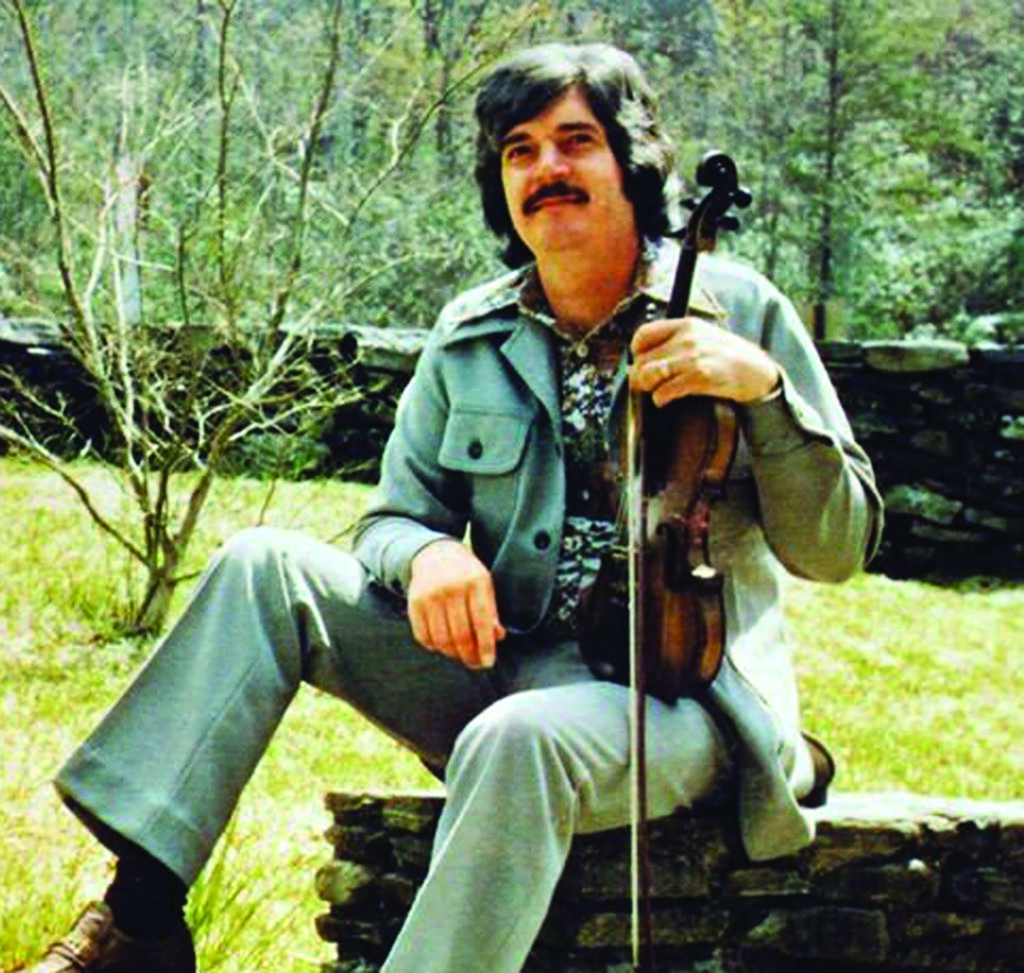
Fiddling was a Collins family tradition. Randall was taught to play the fiddle at age 12 by his father. He told the Atlanta Constitution in 1982 that “it was part of the responsibility of becoming a man in the Collins family.” He traced his family’s proficiency on the instrument to his great-great-grandfather, a North Carolinian who settled in Blairsville in the 1800s. Other influences included Georgia fiddlers Lowe Stokes and Clayton McMichen, and most notably Tommy Magness.
Among Collins’s early work was a mid-1960s stint with the husband/wife group known as Bill and Wilma Millsaps. A journey to Cincinnati found him in a year-long tenure with the duo of Earl Taylor and Jim McCall. Among his first recorded work was a pair of 45 rpm singles on the Rally label. Billed as Randall Collins and the Carolina Buddies, reviewer George B. McCeney wrote in a 1968 edition of Bluegrass Unlimited that “These four sides represent only too well what is often referred to as ‘drive’.”
The Carolina Buddies proved to be a short-lived group and in 1968 Collins joined Curtis Blackwell and the Dixie Bluegrass Boys. It was only a short time later that Collins became a co-leader of the group.
In notes to the band’s debut album on the County label, Fred Bartenstein wrote that the Dixie Blue Grass Boys were “one band unafraid to hold onto the best of a tradition while exploring within it; unafraid to get into a tune and ‘play the fire out of it’.” Speaking specifically about Collins’s own work, Bartenstein praised his “imaginative use of double-stops and a biting attack, his fiddle weaves in and out of vocal lines, coming strongly up front for the solos but never dropping back far enough to be missed.”
Collins & Blackwell and their Dixie Bluegrass Boys quickly became favorites on the emerging bluegrass festival scene. They hit all the early hotspots including Bill Monroe’s Bean Blossom Festival, Carlton Haney’s festivals in Berryville, Virginia; and Camp Springs, North Carolina; and, closer to home, Lavonia, Georgia.
Collins released his first solo album in 1972. The disc appeared on Georgia’s Atteiram label and was titled Stands Tall in Ga. Cotton. Adding to his luster as a songwriter, seven of the ten tracks on the album were written by him. Lending musical support were two bluegrass heavy hitters: banjoist Vic Jordan and fiddler Buddy Spicher.
In the latter part of 1972, Collins joined Jim & Jesse’s Virginia Boys. But, by May 1973, he was leading his own band called Dixie Grass. The following month, he was part of the roll call of fiddlers that appeared on Bill Monroe’s Bean Blossom 2- LP set. Somewhere in the mix, he was also a member of James Monroe’s Midnight Ramblers.
In the summer of 1974, Collins appeared on two albums on the Atteiram label. The first was Carl Story’s Light at The River and Other Bluegrass Favorites. The other was the debut release by the Pinnacle Boys, a new group that included guitarist/singer Bud Brewster, banjo picker Larry Mathis, and several others. Collins liked the sound of the group so much that he decided to become a regular member. The group featured smooth harmonies that were reminiscent of the Louvin Brothers and smart twin fiddle work by Collins and Jerry Moore. The band went on to record several well-received albums for Rounder and CMH.
In 1975, Collins staged a fiddle contest in Blairsville. The affair became an annual tradition and over time morphed into a bluegrass festival.
Throughout the 1980s, Collins worked in several groups including the North Georgia-based band The Hoyles and the Boys From Indiana. The 1990s were witness to a reunion of Collins with former partner Curtis Blackwell; the duo appeared at numerous festivals throughout the southeast. Collins also performed on a limited basis with the Pinnacle Boys. It was also reported, in 1995, that Collins owned a tourist attraction in Blairsville. He maintained an active interest in fiddling well into the early 2000s.
David L. “Uncle Dave” Dougherty (February 25, 1951 – November 2, 2020) was a Georgia native who logged time with several bluegrass bands – most notably James Monroe & the Midnight Ramblers and the Stoneman Family – in the early and middle 1970s.
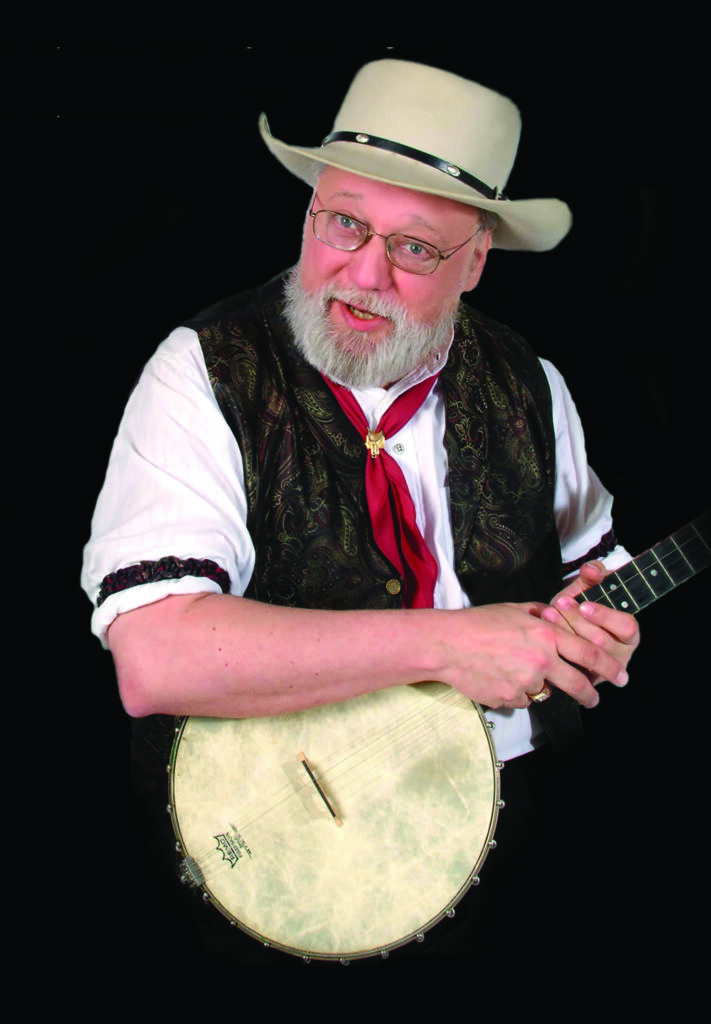
Dougherty started out playing the guitar at age 5. At age 12, his grandmother taught him to play old-time clawhammer style banjo. He later learned how to play 3-finger style, which is what he played with James Monroe and the Stoneman Family.
As a member of Monroe’s Midnight Ramblers, Dougherty participated in the Bluegrass Express Tours that were initially sponsored by Martha White. An item in an early 1970s “General Store” column explained that “the Bluegrass Express is not a band but a package tour featuring Bill Monroe, Lester Flatt, Jim and Jesse and James Monroe. The idea was to create a bluegrass package similar to the country shows which have done so well over the years. The idea was implemented last year and was successful enough to be repeated again this winter.” Despite the tour’s lofty goals, it only played to a handful of cities. March of 1972 found Dougherty playing on the tour in Hattiesburg, Mississippi; Birmingham, Alabama; and Pensacola, Florida.
Although Dougherty did not record with James Monroe, he did appear on a 1972 album by one of Monroe’s sidemen, Vernon Derrick. On May 24, 1972, Dougherty assembled in Nashville with fiddler Vernon Derrick, guitarist James Monroe, mandolin player Buck White, and bass player Cheryl White to record an album called Grass Country. Producer Paul Gerry wrote in the album’s liner notes that Dougherty “plays fine banjo.”
By year’s end, Dougherty signed on to play with the Stoneman Family. His stay with them lasted from September 1972 until October 1976. Despite his longevity with the family band, he appeared on only two albums: a CMH release called Cuttin’ the Grass and an independent disc called Country Hospitality. He played banjo on both albums.
The notes to a DVD that Dougherty issued some years later described that Dave “began his study of old-time music while living in Nashville and playing with The Stonemans. He would spend hours on end learning the old tunes from Patsy Stoneman.” The notes continued that the Stoneman’s allowed Dougherty “to shine. He had his own part of the show where he would put on his trademark hat, sit in a chair and play the old time tunes that Pop Stoneman made famous.”
Following his work with the Stonemans, Dougherty enjoyed life as a computer programmer for Shell Oil. He made music as time and circumstances permitted. By the early 2000s, he billed himself as Uncle Dave Dougherty. In this capacity, he was a co-founder and member of a new group called the Trough Sloppers. In 2001, the group released its debut CD, High on the Hog. He also produced a musical theatre production DVD called Uncle Dave Dougherty’s Radio Show Hour.
Although Dougherty passed away in 2020, we were only recently made aware of his passing by former bandmate Beverly Hale.
Lambert Schomaker (November 13, 1947 – May 29, 2024) was a pillar under the Dutch bluegrass and old-time music scene. Many musicians and fans of acoustic country music and bluegrass in the Northern part of the Netherlands were saddened by the message that Lambert Schomaker had passed away. A number of bands from the USA who toured in these parts have had very good experiences with Lambert in the thirty plus years he was actively promoting and organizing concerts and festivals.
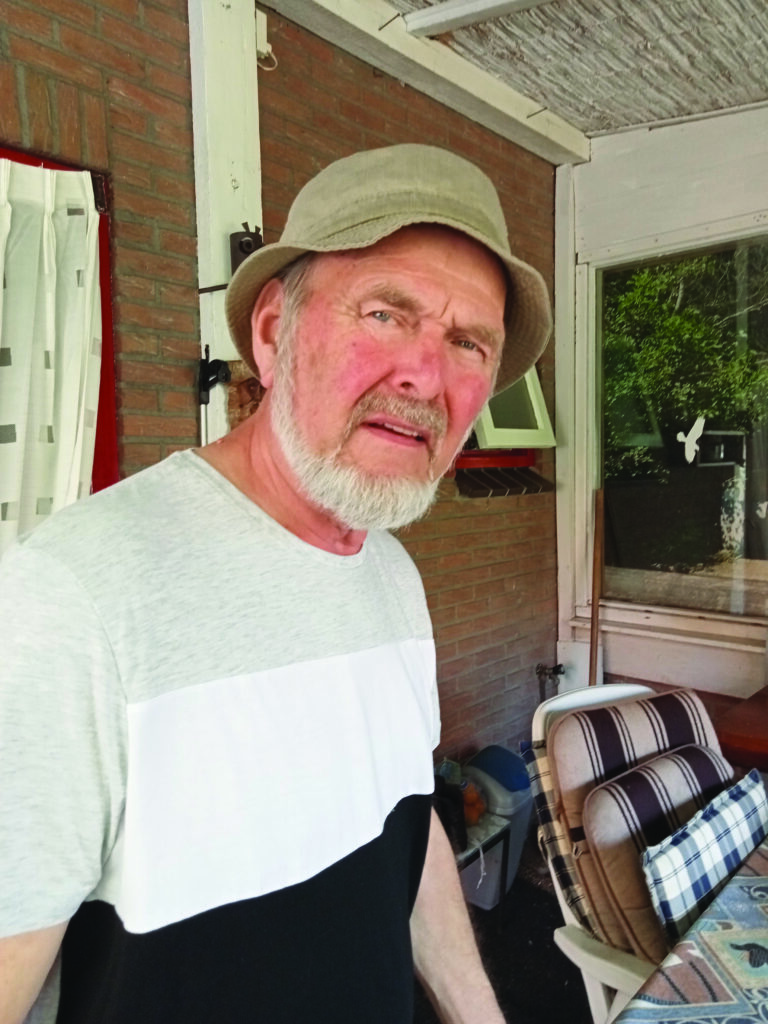
If Lambert developed an interest, he wanted to do something about it! When he discovered country music and bluegrass in the late 1980s, he started concerts and festivals on a small scale, first in Valthermond, his hometown, under the flag of Colonial Country Club, and then later in Ter Apel. Probably the best-known of these events was at Poolshoogte in the Staatsbossen (states forests) in Odoorn, under the name Boet’n Deure.
For 15 years he organized summer concerts and a festival in the woods, all on a voluntary basis, till in 2014 he decided to step down. Since then, he organized house concerts at his own place, until in 2017 when his health forced him to quit. During the Boet’n Deure years, most of the time musicians from across the ocean stayed at their house in Valthermond, where they were welcomed with generous hospitality by Lambert and his wife Annie.
Lambert’s funeral took place on June 4th and was concluded with a bluegrass jam session, in the woods at Poolshoogte.
In addition to his love of music, Lambert had an interest in local history. He wrote three books about it, and his dozens of interviews with old citizens of Valthermond and vicinity saved a lot of information about the old days in the poor peat-colonies where Lambert was born in a large family in 1947.
(Written by Silvia Fledderus, Lambert Schomaker’s daughter; submitted by Rienk Janssen.
Clifford “Cliff” Waldron (April 4, 1941 – July 1, 2024) was a significant fixture on the bluegrass music scene of the late 1960s through the middle 1970s. He later enjoyed a career revival in the late 1990s and early 2000s. He made his mark as a bridge between traditional and progressive camps at a time when the boundaries of the music were being redefined.
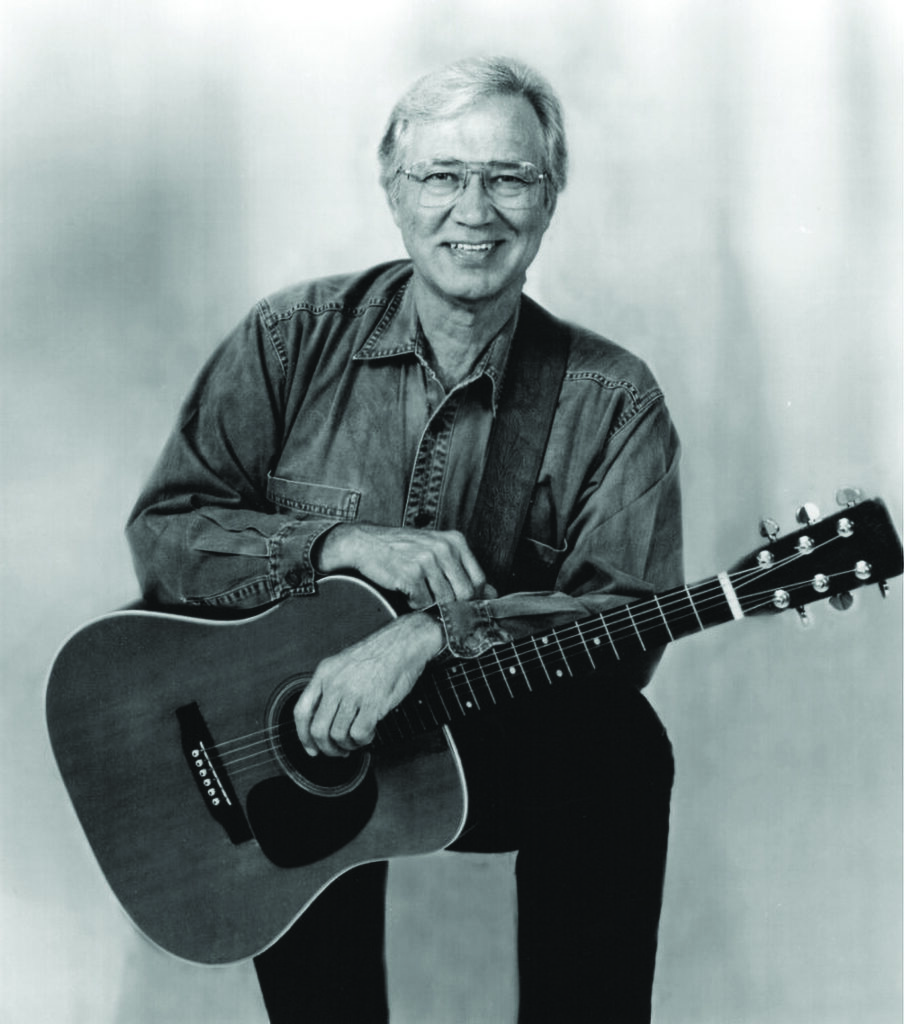
Waldron was a native of Jolo, a tiny community in the southern-most portions of West Virginia. He grew up on the sounds of radio station WCYB’s legendary Farm & Fun Time program. He started out by playing mandolin around age 12. His first job as a musician was with the Southern Ramblers, a group that performed over radio station WNRG in Grundy, Virginia.
Waldron relocated to the Washington, DC area in the early 1960s. He balanced work as a barber with performing with the Northern Virginia-based Page Valley Boys. His biggest break came in 1967 when he teamed up with banjoist Bill Emerson. Their group was billed as Emerson & Waldron and the Lee Highway Boys. They recorded three albums for Rebel which featured bluegrass arrangements of popular songs such as “Proud Mary,” “If I Were a Carpenter,” “Lodi,” and “Early Morning Rain.” They were the first bluegrass band to record “Fox on the Run,” which was later a big song for the Country Gentlemen.
When Emerson left to join the Country Gentlemen in 1970, Waldron played briefly with the Shenandoah Cut-Ups before reorganizing as a solo bandleader. His new group, the New Shades of Grass, included stalwarts like fiddler Bill Poffinberger and bass player Ed Ferris as well as up-and-coming names like Mike and Dave Auldridge and Ben Eldridge.
Over a five-year period, Waldron recorded seven albums for Rebel. Like his earlier releases with Emerson, he drew material from a wide variety of sources. A number of fans were enamored with his tip of the hat to traditional bluegrass, Bluegrass Time. Reviewer Dick Spottswood hailed it as a “tribute to Waldron and friends that they pull it off without a hitch and make it as much their own as the music they are better known for.”
The middle 1970s brought big changes for Waldron, both personally and professionally. Although he was one of the top draws on the growing festival circuit, playing music did not provide the financial security he wanted for his family. Consequently, he left the field of full-time performing and accepted a position with the National Park Service. The same timeframe witnessed Waldron’s acceptance of Christ in his life. Even though he was no longer touring, two additional gospel albums soon followed on Rebel.
After 20 years with the Park Service and several health scares (which included a kidney transplant), Waldron reorganized his New Shades of Grass and performed on a somewhat limited, as-much-as-he-wanted-to-play, basis. The late 1990s and early 2000s found Waldron recording several new projects for Rebel, as well as a duet project with Paul Williams. Reinforcing the significance of his earlier work, Rebel released two “best of” compilations, one featuring Emerson & Waldron and the other featuring Waldron’s early New Shades of Grass.