Austin Scelzo
One of Bluegrass’s New Generation
Written by Dale and Darcy Cahill
It is difficult to write about Austin Scelzo without listing the many ways he has contributed to the bluegrass community. He plays the fiddle and sings for bands On The Trail and the Rock Hearts. He teaches on his own bluegrass, country and roots online school, at Ashokan music camps, kids’ academies and he hosts Wernick Method group jam classes. He launched the Connecticut Bluegrass Association web site in 2021 and was most recently chosen as the recipient of the 2023 Connecticut Art Hero award. The list goes on. This article will take you back to a young Austin, a distracted middle school student whose first violin teacher told his parents that they were wasting their money trying to get him interested in the instrument. Boy was that teacher wrong!
Despite that discouraging advice, Austin was introduced to other instruments, learned to read music, and solidified his commitment to playing the violin in the middle school orchestra.
During his freshman year in high school Austin attended his first fiddle camp and heard Grant Flick play in a jam. Scelzo says that he was astounded. “There were about 15 musicians playing music I had never heard before. No one had a music stand in front of them and they were all playing by ear!” He also took lessons from Mark O’Connor at that camp and for the first time heard about a bluegrass organization called the International Bluegrass Music Association.
Playing music by ear was an eye opener for him as his orchestra playing only involved sheet music and strict roles for each instrument. Hearing Grant Flick instinctively and creatively play his fiddle stood in sharp contrast to classical music’s highly-structured culture. He was thrilled at hearing naturally talented musicians who could play beautiful music by ear. “They were the cool guys and it seemed to me that they had been sprinkled with some kind of magic dust that gave them the power to play that way.”
At this point, Austin started attending music camps and attended every fiddle class he could find, sometimes four a day with different musicians and different instructors. His frustration at not knowing how to play by ear propelled him to learn this new language and he methodically began to teach himself how to develop these new and exciting skills.
In high school, he met David Giardina, his school band teacher who enthusiastically supported him. He recognized Austin’s passion for music and over the next three years began to encourage him enough that Austin thought that he might like being a high school music teacher himself. Once Giardina got wind of that, he immersed Austin in a full range of music and instruments. Giardina’s theory was that if Austin wanted to be a good high school music teacher someday, he needed be able to sing harmony and play as many instruments as possible.
Over the next four years, Giardina and his choir/orchestra teacher, Paige Sperry, had him play in almost every possible musical configuration, including jazz band, orchestra, chorus, string quartet, pep band, marching band and in the pit for the school musical “Lil’ Abner.” Giardina also had Austin play a wide variety of instruments: trumpet, trombone, French horn and many others. Paige Sperry encouraged Austin to join an acapella group and the chamber singers in addition to singing in the chorus.
One day, while still in his early teens, Giardina handed the mellophone to Austin and told him that he needed him to play it in the marching band the following week. Austin had no idea even what mellophone looked like. When his mother picked him up that afternoon after school, Austin climbed into the car with the mellophone. She asked him what it was. His response was, “I don’t know.” That weekend he played the mellophone in the marching band and more importantly played it well.
Although Austin enjoyed all the instruments Giardina recommended, playing them in the orchestra and band did not allow him to be a creative musician. In order achieve that, he started writing and playing music in a small acoustic singer-songwriter band. The band included four of his good friends and among them they played three guitars and an electric violin. He recalls, “We wrote songs together and we all learned to love playing in a band together.”
By the time Austin graduated from high school, he still wanted to become a music teacher and ended up attending Western Connecticut State University for a B.S. in music education with a concentration in classical violin performance.
Not surprisingly, during college Austin took every opportunity to develop his skills as a musician. He sang in an all-male acapella group where he thrilled at the experience of melding perfect harmonies. He also joined a jazz improv group with whom he played his violin.
In college Austin broke out of the strict rules of high school music instruction and explored the limitless possibilities of his voice and his fiddle. He learned music theory, ear training and sight singing. This experience was particularly useful later when teaching music himself. It required singing notes without instrumental assistance which helped him to develop pitch and the ability to really hear notes. When Austin applied what he learned from sight singing to his violin he became better at listening to a tune, learning the exact notes and their connection to one another. Although he still didn’t feel any magical musical dust sprinkling down upon him, he was well on his way to being the proficient musician he is today.
Every summer during his college years, Austin attended musical camps, his most formative being Ashokan Music Camp where he met Jay Ungar and other musicians whose creativity and kindness cemented his desire to devote his life to teaching music.
After college, he applied for jobs as a music teacher and ended up as a middle school strings teacher in Darien, Connecticut. One of the first things he noticed was that the Darien music program taught none of the essential skills that he learned at the summer camps, and because of that, his students were trapped in the same rigid world of music that frustrated him so much as a student. While Austin did teach the essential traditional middle school music curriculum, he infused his curriculum with improvisation and listening skills.
Ever aware that the traditional approach to orchestra often leaves students out, he rewrote sixty to eighty percent of scores to include all his musicians, giving them an equal opportunity to develop their musicianship and hopefully begin to enjoy playing their instruments. To that end, Austin also transcribed songs like Count Basie’s “Fly Me to the Moon,” and other popular tunes, so kids could expand their ideas of what is possible.
During those four years of teaching in Darien, Austin could feel the pull of bluegrass music and the cultural pull of the bluegrass community. And then COVID arrived, giving him lots of time to think about his musical future. During those introspective days, he met Christian Howes at the Creative Strings Workshop and he began to develop a plan that could possibly free him from his day job.
Like Austin, Howes taught weekly lessons and shared Austin’s desire to teach students, in Howes’s words, “to increase their musicianship.” When Austin shared his musical goals with Howes, they started a musical and business collaboration. Howes explained to Austin his business strategies and basically how to earn money doing what they love.
Howes encouraged Austin to think bigger. His first recommendation was to build an online profile so people could see what he was doing. Next, he told Austin to offer free lessons on YouTube. At that point, Howes had about 30,000 YouTube subscribers and Austin had 400. After Howes offered one of Austin’s lessons entitled “Play Country Bluegrass Fiddle” on his YouTube channel, Austin’s subscribers increased from 400 to a couple thousand.
Not long after launching himself and his teaching methods online, Austin attended a Peter Wernick jam camp. After one of the sessions, Austin approached Wernick and told him about his desire to be able to support himself through both his teaching and his own musical performance career. They also discussed Austin’s style and philosophy about teaching music. Peter could see a kindred spirit in Austin and assured Austin that he could indeed make a life for himself in bluegrass.
Wernick says, “Between his teaching attitude, his teaching experience, his bluegrass enthusiasm and talent, his young age (mid-20s), overall energy and friendly personality… I knew he’d have a great future teaching the Wernick Method. And he did exactly that, jumping right in to teaching classes and getting the best types of feedback in student surveys.” Wernick and Austin began to talk once a week to discuss future projects and began planning an educational project together. Today, Austin runs Wernick Method weekend jam camps and helps Wernick conduct a weeklong camp in the Adirondacks.
Wernick is happy to have someone who shares his musical and educational vision. Wernick sums it up by saying, “Austin is breaking new ground in all the New England states, getting more and more students, and amazingly has had time to be in two excellent bands and start and coordinate the Connecticut Bluegrass Association! He even attends various other camps, not focused on bluegrass, just to learn. We could use another 20 of him in bluegrass.”
When Austin finally looked to Wernick for advice about leaving his job as a middle school music teacher, a job that he liked and offered financial stability, Peter did not hesitate to say, “Do it!” Austin took his advice and even given the uncertainties of living the life of a musician, he has not regretted it.
So, we now return to the accolades Austin received along his journey. Fellow teacher and musician Jacob Jolliff describes Austin as, “An inspiring player who has a generous spirit for teaching. He is very grounded in bluegrass idiom and has an organized way of conveying the important principles of the style in his pedagogy.” Austin also has a huge fan base in Connecticut where he built the Connecticut Bluegrass Association six years ago. The CBTA helps to connect the state’s different bluegrass clubs and creates a strong community for sharing information about all the state has to offer bluegrass players of all ages and abilities.
In 2023 IBMA had also taken note of Austin. He was nominated for “Momentum Mentor of the Year” and was accepted into the “Leadership Bluegrass” program. Closer to home, the Connecticut State Government named Austin Connecticut Arts Hero for the profound impact he has made in Connecticut, for and through the arts.
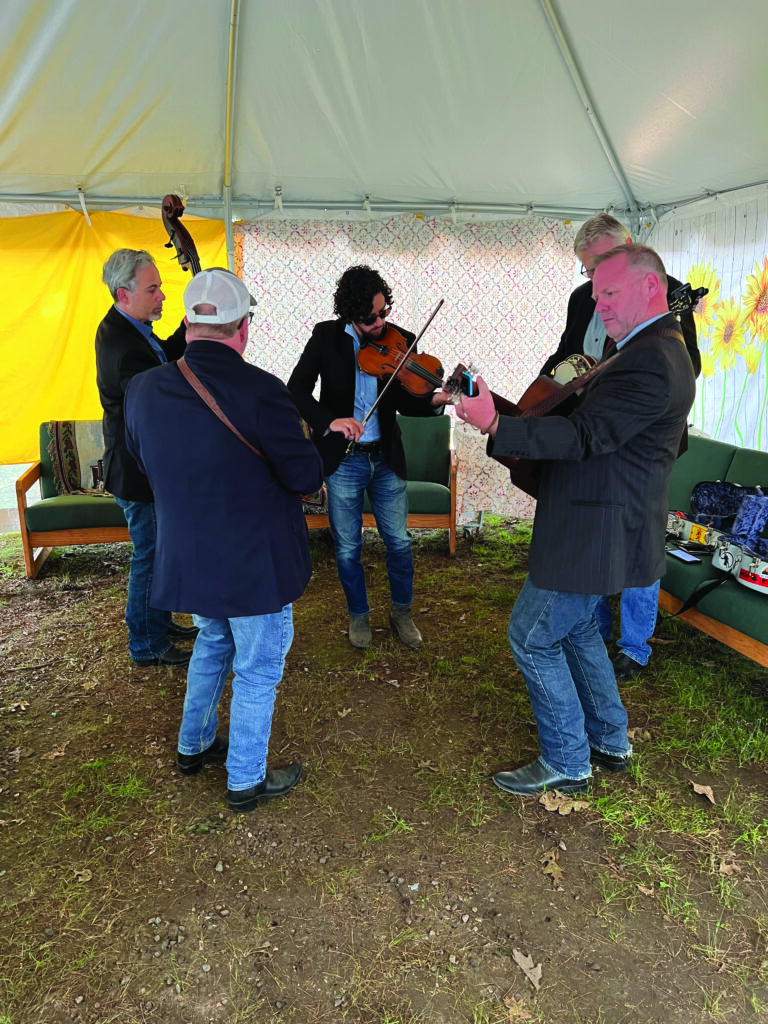
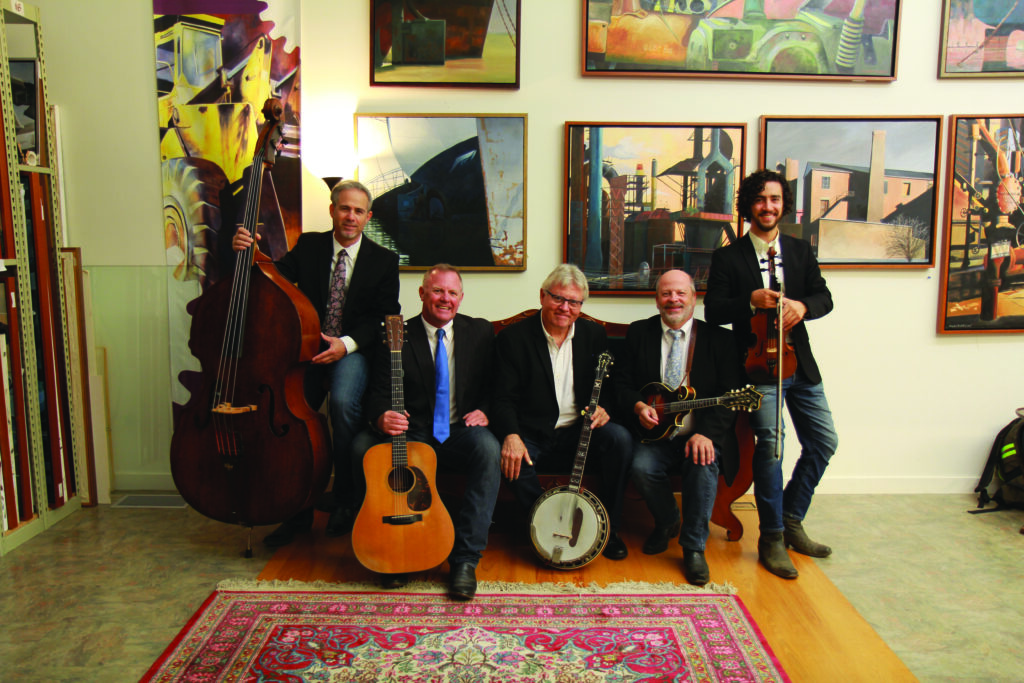
So, what is next? He will continue to compose original tunes and play fiddle and sing with On The Trail and the Rock Hearts, who appreciate all that he brings to the band. Alex MacLeod, guitarist and vocalist for the Rock Hearts says, “Austin brings several assets to the band—his knowledge of social media, computer tech savvy, which exponentially increases our collective computer tech IQ.” MacLeod also sees in Austin the qualities Wernick appreciates so much, MacLeod says, “His level of creativity, musicianship, and music knowledge is unparalleled. He is an accomplished multi-instrumentalist and vocalist with an unquenchable thirst to learn and expand his musical horizons—not only for him, but to enhance the musical journeys of others around him.”
In addition to touring with both bands, Austin will expand his Bluegrass in the Schools program, teach at camps, festivals, workshops and in the schools. He will also continue to compose music. Check out his latest original, “Second Fiddle Blues,” released as a single in October, 2023. He is also looking for a social media assistant who will free him up so he can meet all of his musical commitments. At the end of the day, Austin wants to follow in both Wernick’s and Unger’s footsteps, building and nurturing a love of music in his students and contributing to our vibrant bluegrass culture.