I’ll Take Love
Louisa Branscomb and Dale Ann Bradley
A song can create an out-of-body experience, not only for listeners upon hearing it but also for songwriters as they write. This according to renowned songwriter, psychologist, and performing artist Louisa Branscomb, PhD, who had such an experience while strolling the hills of her famous (and now former) Woodsong Farm. “It’s the oddest thing. I was walking along, when I began to feel this experience that wasn’t me yet felt like something I knew,” said Branscomb, winner of the 2017 IBMA Distinguished Achievement Award and the writer of “Steel Rails” (a game changer for Alison Krauss and bluegrass music) and “Dear Sister” (cowritten with Claire Lynch). “I’ve long since learned as a songwriter not to question the creative process, just to let it flow.”
Branscomb’s openness to that moment resulted in “I’ll Take Love,” a song that continues to touch lives and hearts with its universal message of love and connection. Cowritten with Dale Ann Bradley around 2009, it stayed in the top 10 for many months on the Roots Music Report, Folk Alliance Folk Radio, and the Bluegrass Unlimited National Bluegrass Survey, peaking at #1 on all three charts. It was nominated for IBMA Song of the Year (2012) and won second place in the prestigious Chris Austin Songwriting Contest (Spiritual Category, 2021).
“I’ll Take Love” is far from a typical ballad form yet clearly shares the moving story of a man who feels his life coming to an end. As he grapples with that, he finds his way to a celebration of the best of life.
During that transcendent moment atop a Woodsong hill, Branscomb felt like someone else who might have lived there. “I’m feeling like an older gentleman,” she recalled of her experience. “He’s standing there, seeing his farm stretch out on one side and the sunset on the other. He’s living, farming, wanting to do more work, but he feels strongly that his days are numbered. And then he is sitting by the wood stove (in his farmhouse), a single light hanging down, his faithful coon dog at his feet.”
As the song’s main character struggles with how to talk to his wife about his coming death, he commemorates cherished friends (Friends and loved ones I hold dear / I know I will leave these blessings here) and pays tribute to what his wife and farm have meant to him before leaving words to comfort her (And as for you, you are my first love and my last / So don’t cry for me / When you see the evening sun we watched together).
“It isn’t just his love for her that is making up his feelings. It’s his love for the farm, life, his friends. For me, it captured part of my own truth … I didn’t come from farming, but I have all my life felt like I belonged in farming. The journey of the song is the soul’s search for resolution, completion and acceptance – even of death. It took me to a new level of working towards that in my own life.”
Songwriting with a Soul Sister
Having most of the lyrics, Branscomb felt it was right to finish “I’ll Take Love” with Bradley, her talented friend of many years who likes to call her “the songwriter’s songwriter” and “the best friend a train ever had” for her many train-themed songs.
Branscomb said of Bradley, “Dale Ann is a master at lifting a song to what it can be.”
Living up to expectations, Bradley chose to take the song from a minor in the verses to a major in the chorus. The movement perfectly fits the lyrical content and was, as Branscomb put it, “the dose of magic” the song needed: “When she did that, I said, ‘Really? Nobody’s going to play that in bluegrass,’ but she said, ‘Oh, no, it’s good! It’s good!’”
According to Branscomb, songs have a destiny, and as the writer you had better stay out of the way. “Our goal was to make room for the message of the song – the firefly in the bottle, if you will,” said Branscomb of the cowriting process with Bradley. “It’s a delicate art, finding the inspiration without killing it. It needed, musically and lyrically, the unexpected.”
Bending the Rules of Writing
Looking closely into the structure of “I’ll Take Love,” we find more intentional irregularities used by these writers to move the song forward. For instance, there is intentional space in the song for listeners to process its meaning.
Branscomb described as an example the line leading into the second verse, This sweet life, “There’s a beat of silence after each of the first two words and three beats after life. Normally you would never sing a word like this and leave it hanging. But here, it says the singer is hanging … life is hanging … and the listener gets the feel of being suspended, too. The comfort of a string of words is taken away.”
Another intentional pause comes in the chorus, where the last word, love, commands two full measures, setting the point of the song “out there on the 4 chord to fend for itself.”
Branscomb explained the peculiarity of that strategy, “You almost always end a chorus and hook on the tonic/main chord to give a feeling of landing, or completion. But here again, landing on the 4 gives the feeling of suspension … and that’s the point, isn’t it? From his (the farmer’s) lifelong love to the harvest, life is incomplete, yet he can grasp acceptance and triumph and understanding in the chorus … he loses it on the verses with grieving these things he loves, then finds it again. The song ends with his sense of peace and joy that as he rises what he will be, or take, is love, and that is also what he will leave behind.
“It doesn’t always work to break the rules and challenge the listener, but with this song, we knew we needed to take the risk to invite listeners out of their comfort zone.”
Icing on the Cake – A Magical Recording
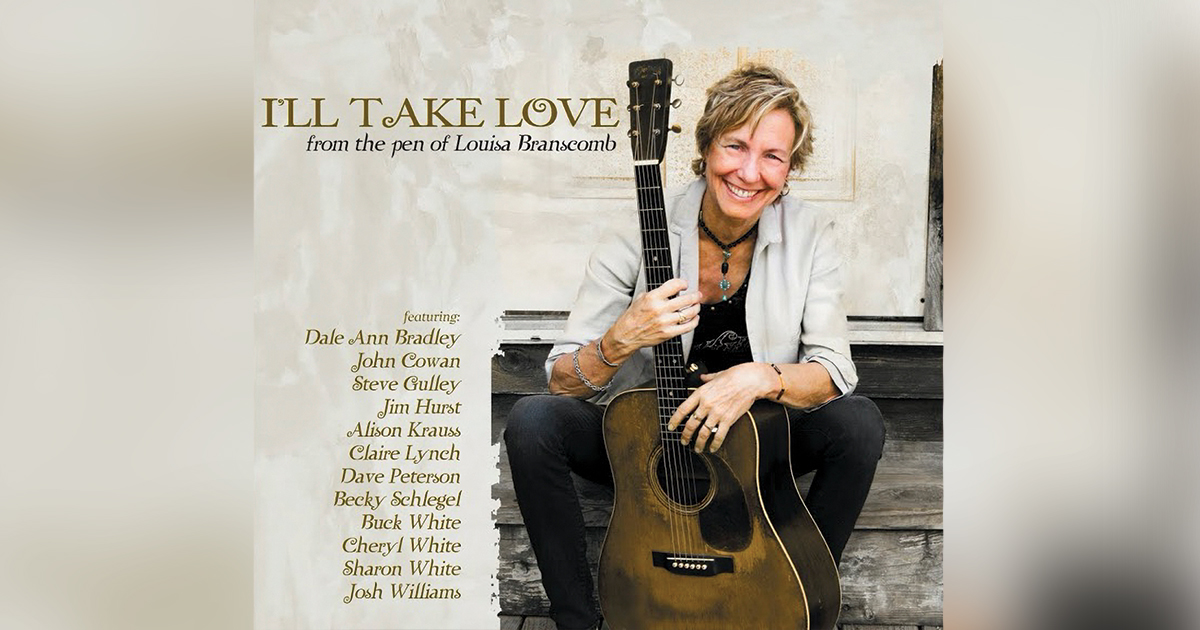
Even in the recording of the song, which was co-produced by Missy Raines and the title track to Branscomb’s 2011 album for Compass Records, deliberate anomalies help convey the deep message of the song. Listen, for instance, to the haunting fiddle run by Stuart Duncan that captures well the change of feeling between the minor in the verse and the major in the chorus. Branscomb recalled, “He nailed it. It’s my favorite moment on the track.”
Other such nuggets include Alison Brown’s banjo playing and the singing of that hard-working 4 chord in the chorus. “Rather than typical rolls on the verses, Alison plays unusual fills and leaves empty spaces. This helps create the mystery,” explained Branscomb. Of the singing, she added, “I met Alison Krauss in the studio when she graciously came to sing the tenor. She asked me if I wanted her to sing lu-u-ve, or a continuous loooove or a couple of other options. I broke up laughing and said, ‘Surely Alison Krauss isn’t asking me how to sing.’ She was howling, too. She decided to blend with Dale Ann, who had glided over six notes on the word love. It was a magical combination, with Steve Gulley on baritone.”
A Special Song Keeps on Giving
As a great song will do, “I’ll Take Love” continues to reward Branscomb and Bradley and touch listeners around the world. “My songs make me a better person if I write them right,” said Branscomb. “How extraordinary is it that we get to write songs that then help us understand life?
“I know I was channeling something important about the life spirit in all of us and the sacredness of that. It certainly didn’t come from me, and I know that is true because easily 20+ times in the last ten years, people have told me that’s the song they’d like to have playing in their last hours and several have done that. I don’t think there’s a greater honor than having a song that is meaningful to someone.”
Bradley added, “May folks keep finding this song and picturing this awesome love.”
Louisa Branscomb is a Grammy-winning songwriter. She had a song on Alison Krauss’s first Grammy-winning album and on John Denver’s last Grammy-winning album. Her catalog is immense and includes 325 songs recorded by artists that include Bradley, Krauss, Lynch, Denver and so many others. The winner of two Song of the Year Awards (IBMA, “Dear Sister,” and SPBGMA, “Steel Rails”), she has mentored songwriters of all ages through her annual songwriting and artist retreats. Hosted for more than 30 years at her Georgia Woodsong Farm, Branscomb’s retreats continue and are now hosted at Lyric Mountain, her current home in North Carolina. Learn more about Louisa’s music and her retreats at louisabranscomb.com.
Dale Ann Bradley is a bandleader, songwriter and internationally recognized bluegrass artist with multiple Grammy nominations and repeat wins for Female Vocalist from the IBMA. Learn more at daleannbradley.com.