
Notes & Queries – November 2023
Q: I’ve heard it said that the 1959 Folkways album Mountain Music Bluegrass Style was the first bluegrass album ever recorded. I guess that means a set of songs and tunes recorded specifically to be released in album format. Does that sound right to you? I recall purchasing albums by the Stanley Brothers, Bill Monroe, Flatt &Scruggs, the Osborne Brothers, etc. right around that time, but maybe they were collections of singles put together in album format.
That was the easy question. Here’s the challenge. On Mountain Music Bluegrass Style there’s a cut of “New River Train” credited to Chubby Anthony and Mike Seeger. This is unlike any other bluegrass number I’ve ever heard. There’s a banjo, presumably played by Seeger (who is credited with banjo on Bob Baker’s cuts and a duet with Bob Yellin), which does only backup work. ALL the solos are rendered on what I believe is a guitar capoed high (8th fret) and played with finger picks in a way that surely must be based on Scruggs-style banjo picking. The tune is decidedly up-tempo, and each break is different. And they are great! I’m a banjo picker myself so I’m pretty sure I know what’s going on here. I’ve put on the picks and had a go at playing the guitar this way. It can be done, and yields a very unique sound. But it sure don’t come easy. Is that really Chubby Anthony, the fiddler, doing that amazing guitar work? – Dan Linder, via email.
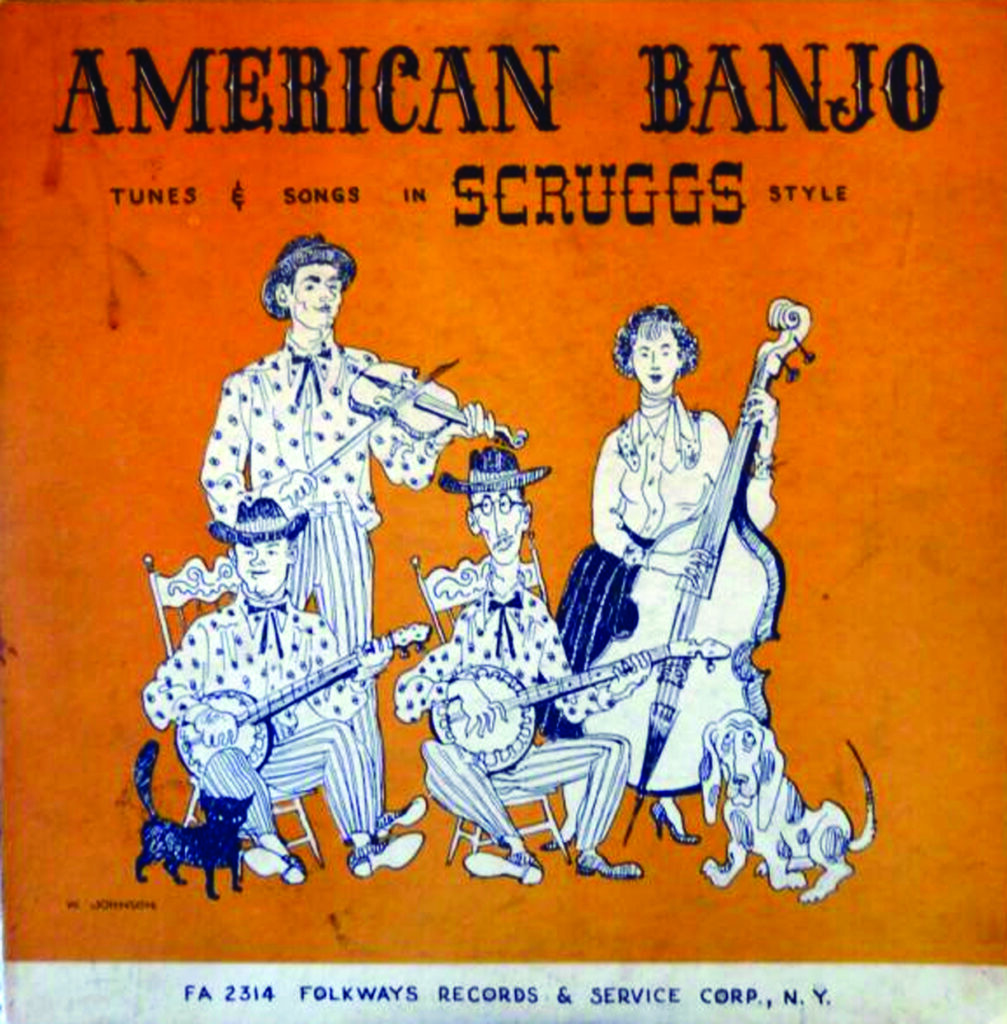
A: You were close, concerning the first bluegrass long play album. It was a 1957 Folkways release that was produced by Mike Seeger called American Banjo, Tunes & Songs in Scruggs Style (Folkways FA 2314). Albums by the other artists you mentioned started appearing on the market in 1958.
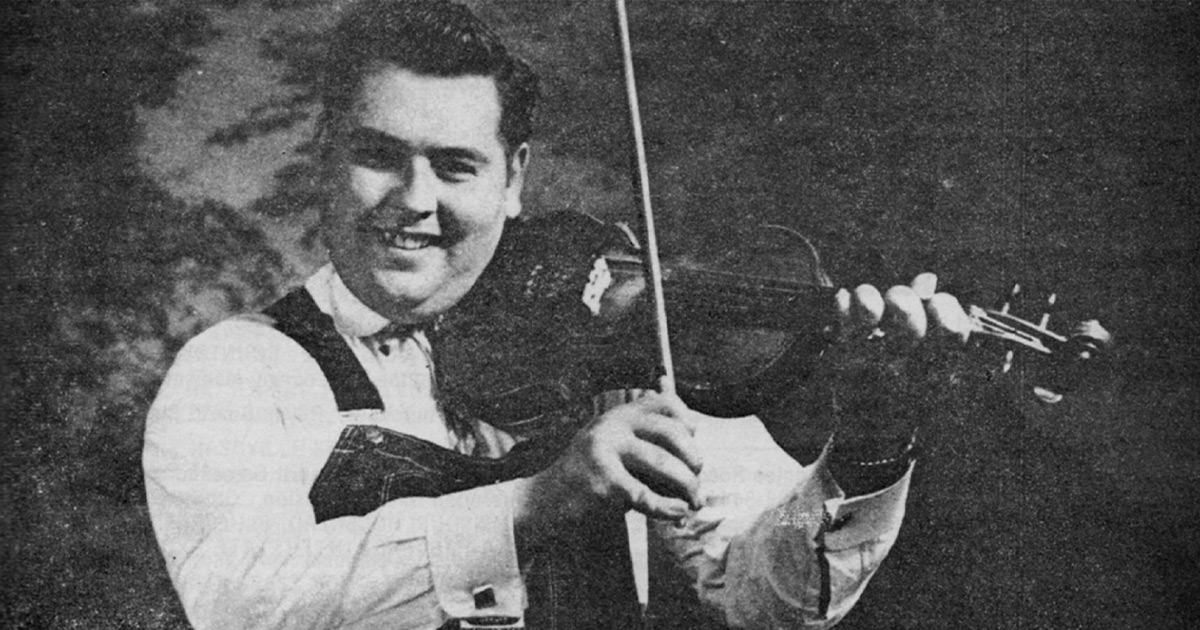
As to the second part of your question, the album Mountain Music Bluegrass Style was reissued on compact disc in 1991 with expanded notes by Mike Seeger. Chubby Anthony contributed two songs to the album, both of which are discussed by Seeger in his mini-bio: “Don ‘Chubby’ Anthony, fiddle and baritone voice. Spoken introduction for ‘Cricket 0n the Hearth.’ Lead vocal and 5-string guitar on ‘New River Train.’ Born 1935, Lincolnton, North Carolina. Started playing guitar at age seven, mandolin at nine. Began learning fiddle with help of his father, also a fiddler, about 1947. Came from large family and started work as sweeper in cotton mill. First played professionally with the Stanley Brothers in 1953 and has been recording and appearing on shows with them most of the time since. Is now playing T.V. and show dates with them in North Florida. Chubby’s fiddle playing is obviously strong, intense and creative. On ‘New River Train’ he modified a full-size Gibson guitar by putting a set of banjo strings on it, tuning it approximately F#DGBD and playing it three-finger banjo picking style. I believe it’s capoed up one or two frets.”
Q: Just curious if you could shed any light on the accompaniment of the recording of “Dear Mother” by the “Canadian Playboy” Jack Kingston? The Kentucky Colonels got my attention because of the White Brothers fame but I’m not sure if this is the same group. I tried some research but was having no luck with my curiosity. Were the Main Streeters from Canada also? – CC Smith, Virginia Beach, Virginia
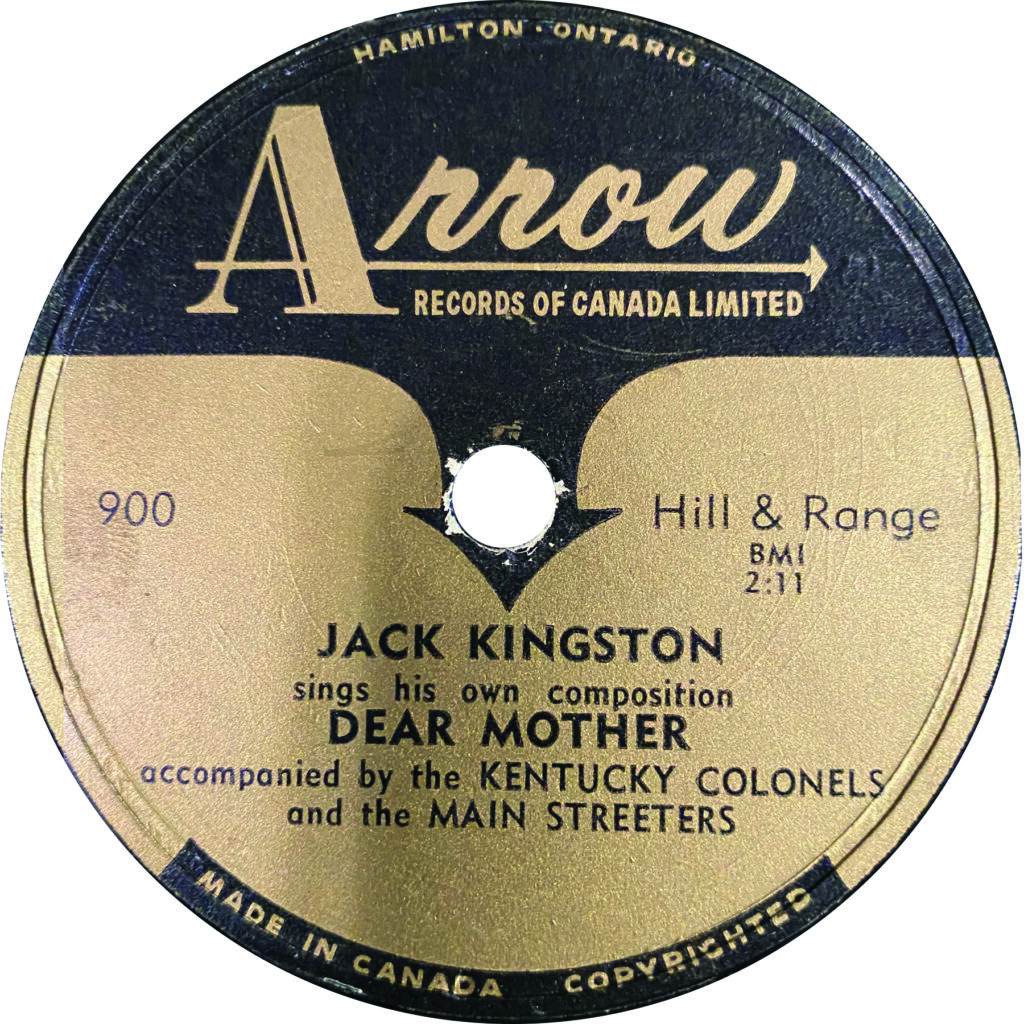
A: Not sure that I can tell you who the members of the Kentucky Colonels are on this record, but I can tell you who they are not: Clarence and Roland White and company. The recording by Jack Kingston was released on May 1, 1953. Throughout the 1950s and into the early 1960s, Clarence and Roland White, Billy Ray Latham, LeRoy “Mack” McNees, and Eric White and/or Roger Bush were known as The Country Boys. It wasn’t until 1962 that they changed their name to the Kentucky Colonels. At the time of this disc’s release, Jack Kingston was a headliner on the Main Street Jamboree, which was affiliated with radio CHML in Hamilton, Ontario, Canada. The April 25, 1953, edition of Cash Box magazine told that this was the debut release for the recently launched Arrow label. Additionally, “Jack is backed on both sides by the same performers that appear with him on CHML’s ‘Jack Kingston Show’; the Kentucky Colonels and the Main Streeters.” Unfortunately, none of the band members from either group were identified by name in the Cash Box blurb.
Q: I remember seeing the Stoneman Family several times in the late 1960s. Most of the band consisted of family members, with the except of dobro picker Jerry Monday. I haven’t heard of him years. What ever happened to him? JH, via email.
A: Jarold Victor “Jerry” Monday (born June 13, 1945) is an Iowa native who was proficient on a number of instruments including piano, guitar, Dobro, guitar, mandolin, drums, and banjo. His musical journey began shortly after graduating high school in Aurora, Colorado. It was then he teamed up with the duo of Gary and Onnie Barr to form a bluegrass trio. With them, he arrived in Nashville (circa 1965, age 20) in hopes of finding work in the field of country music.
Some of Monday’s early work in Nashville included playing bass with Jimmy Martin and dobro with Mac Wiseman. One highlight was playing dobro behind Johnny Cash on the Opry. But it was his work with the Stoneman Family that he is most well-known. He landed in the group as a substitute for Van Stoneman, who was recovering from an accident.
Over a two-year period, starting in January 1966, Monday appeared on three Stoneman albums that were issued on the MGM label (Stoneman’s Country, All in the Family, and The Great Stonemans), performed with the group on their syndicated television program, appeared in three films (The Road to Nashville, Hell on Wheels, and Dear Dead Delilah), and enjoyed performances in high-profile venues as the Hollywood Palace and the Grand Ole Opry, and appearances on nationwide television programs such as The Tonight Show and the Kraft Music Hall. He even became part of the Stoneman Family, literally, with his October 1966 marriage to Barbara Stoneman (daughter of Eddie Stoneman). His first stint with the Stonemans came to an end around the end of 1967.
In addition to performing, Monday also stayed busy as a songwriter. He had thirty-one songs that were published and listed with BMI. His “Colorado Bound” appeared on the 1967 Stoneman’s Country album. A number of Monday’s songs were co-written with country singer Merv Shiner. Their “We Had All the Good Things Going,” as recorded by Jan Howard, peaked at #20 on the country charts in 1969.
Monday returned to the Stoneman Family at the end of 1970, as a replacement for banjoist Roni Stoneman, who was out on maternity leave. One of the highlights of this go-around was a four-week engagement in Las Vegas. He remained with the group until the end of 1971.
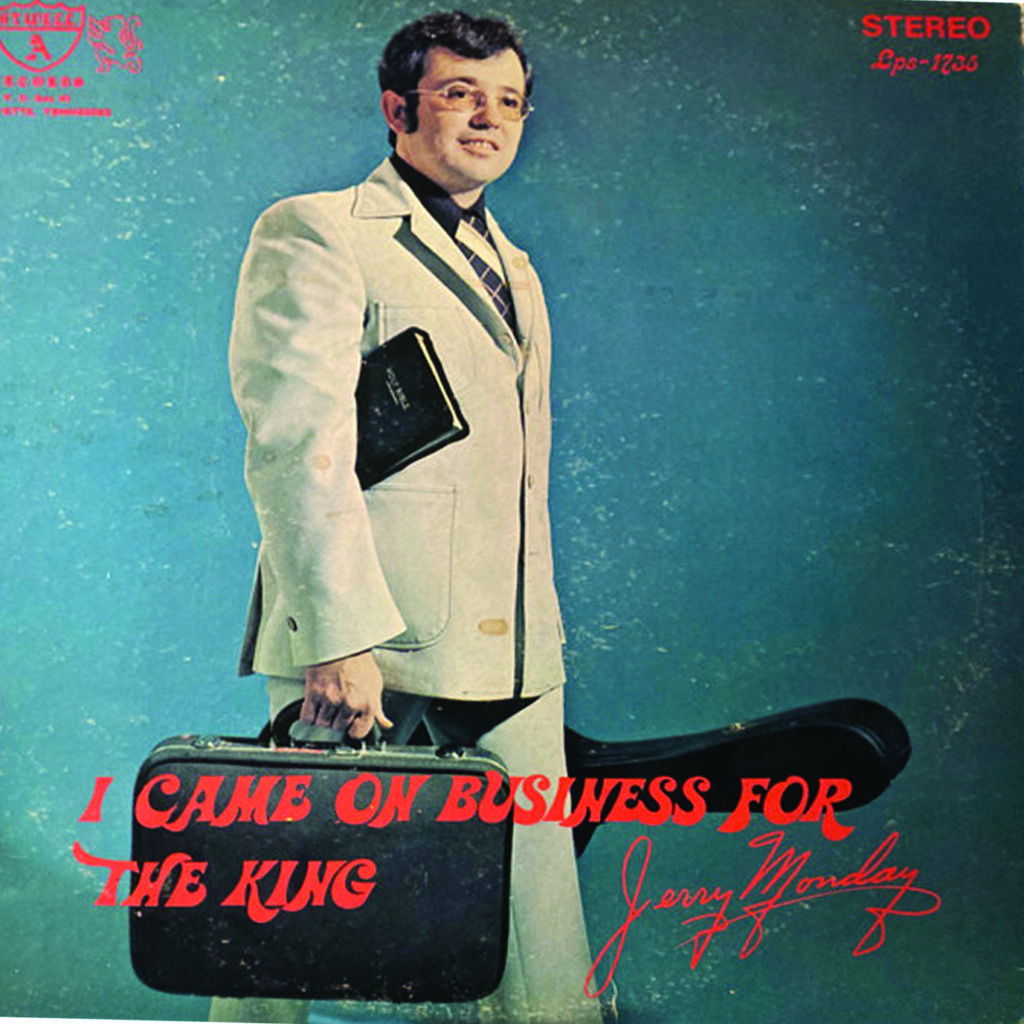
Monday remained busy throughout the early and middle 1970s. In 1972, he released a single on the Crestland label. It was produced by his brother, Vance, and contained his own rendering of the Jan Howard hit “We Had All the Good Things Going” plus “I Want No Part of Your Love.” In March 1974, Billboard reported that “Jerry Monday is a very busy fellow. He’s recording, writing songs, has a newspaper column, and is working as an agent for Beaverwood Talent Agency.” Later in the year, he logged performances at the Hall of Fame Inn on Nashville’s Music Row. At the start of 1975, he turned a four-week stay in Bessemer, Alabama, into a nine-week run and left town with a key to the city, which was presented by the mayor. That same year found him releasing a solo gospel album called I Came on Business For the King. Released on the Atwell label of Lafayette, Tennessee, the ten-song disc contained one of Monday’s compositions, “Use Me.”
Monday’s last known involvements with bluegrass took place in the middle 1980s. It was then that he hosted a Saturday morning bluegrass program on WLAF in LaFollette, Tennessee.
Monday went through several changes in the early and middle 1970s. His marriage to Barbara Stoneman was short-lived. By the mid-1970s, he married again, to Betty Hodges Huddleston. The couple recently celebrated an anniversary on September 1. Jerry writes that “things really turned around April 5, 1970, when I got saved at Bellmont Heights Baptist Church in Nashville. God called me to preach in September of 1976. My wife, Betty, and myself were in full-time evangelism for the past 46 years. We have been in the prison ministry most of that time. I play piano and we both sing. I sure miss the bluegrass but have no one to work with in Gospel music. We had an accident in November of 2019 which took us off the road permanently. Guess it was time for retirement! We still sing at our local church (Grace Baptist in Alpine, Tennessee) and do a few revivals locally. I have a Gospel broadcast on Facebook daily at 7 AM CDT under JerryBetty Monday.”
More on Country Pardners
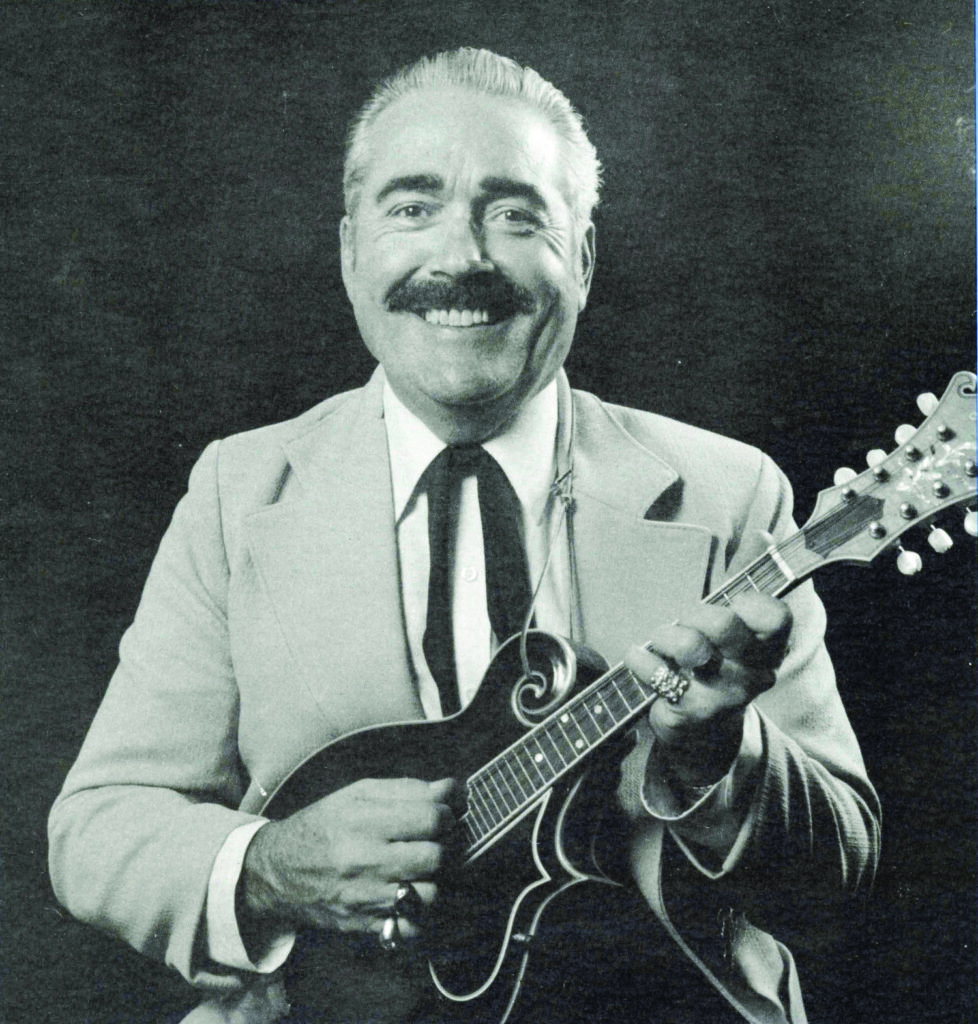
That was a great in-depth article on the short-lived Country Pardners. However, it should have been mentioned that Bill Price from Monroe, North Carolina (died 2000, age 66) and Carlos Brock from Hyden, KY (died 2016, age 82) were former Blue Grass Boys in the mid-‘50s before joining together in the Country Pardners. Both played the guitar for Monroe and sang lead. Bill Price moved back to the Monroe area of North Carolina and continued to promote, record and perform Bluegrass music. Carlos moved to Florida and would continue performing with his family band. I was blessed to be in Bill’s band in the ‘90s. He would book his band as Bill Price & The Country Pardners. Bill told me it was Elvis and rock and roll that killed his first band that was on the way to success. Bill always credited Bill Monroe as his greatest influence and was always fond of Jimmy Martin. “Pretty Polly” and “Maple on the Hill” continued to be his most requested songs. Bill and Carlos would do reunions with Monroe when they got close together.
I also want to point out that on page 17 of the Osborne article by Bill Conger, there is a typo that says “Rocky Top” was released on Christmas day of 1968. It was recorded at Bradley’s Barn around 3 PM on November 16, 1967, and was released on December 25, 1967. For me and other bluegrass musicians it was an instant hit that got lots of AM/FM radio play from the many bluegrass/country stations in the late ‘60s. By April 12, 1968 half of the 100 Bluegrass bands competing at the Union Grove Fiddler’s Convention in North Carolina were playing their version of it in the parking lot. – Tom Isenhour, Salisbury, North Carolina.
Jesse McReynolds Correction
Thanks for the detailed remembrance of Jesse McReynolds in the latest issue of Bluegrass Unlimited. However, I did notice one error on page 11. You listed a number of radio stations where Jim & Jesse worked. KFBI was here in Wichita, Kansas, not in Cedar Rapids, Iowa. For most of the year 1950, Jim and Jesse were the leaders of the KFBI Ranch Boys.
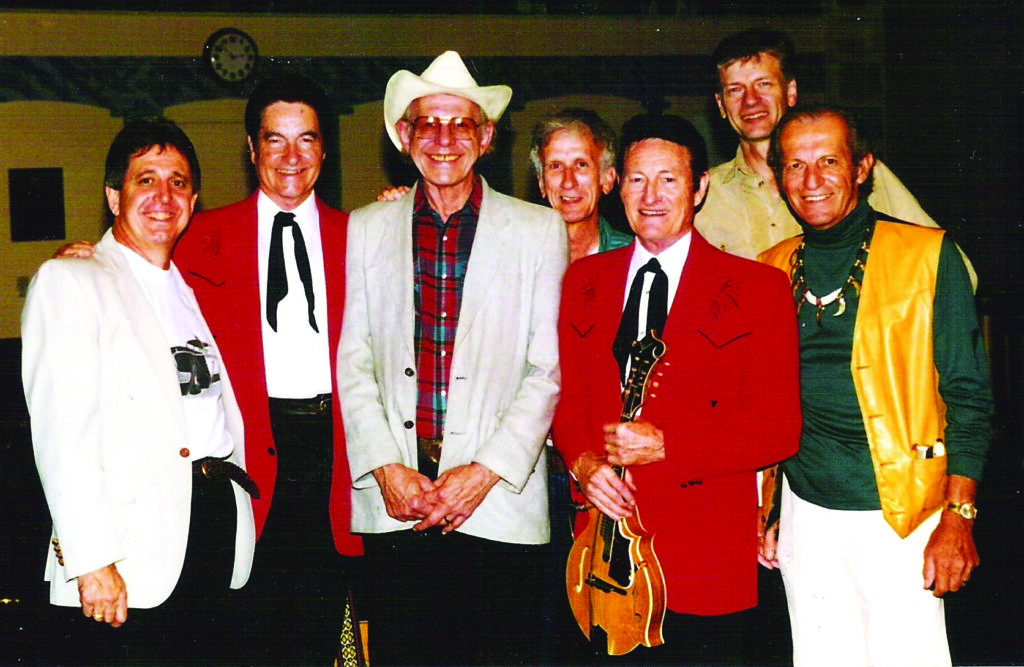
Both Jim and Jesse talked with me numerous times about their time at KFBI. They told me that they did mostly western music, like the Sons of the Pioneers. Their favorite group was Foy Willing & the Riders of the Purple Sage. Over the years they maintained a bit of connection with Wichita. They told me that they purchased their western stage clothing from Shepler’s in Wichita, which was known as the World’s Largest Western Store.
I interviewed both of the McReynolds brothers over the years. The story of their time at KFBI in Wichita is included in both of my books, Goat Glands to Ranch Hands: The KFDI Story and Honky-Tonkers & Western Swingers: Stories of Country Music in Wichita, Kansas.
Orin Friesen, Bluegrass from the Rocking Banjo Ranch — Celebrating 50 years; KFDI — Wichita, Kansas & Truckers Radio USA.
Over Jordan
Donald Ray “Don” Mulkey (July 7, 1930 – August 19, 2023) was a Northern Virginia-based bass player who was most active in the 1950s, ‘60s, and ‘70s and is best-known for his long tenure with the husband/wife duo of Benny and Vallie Cain.
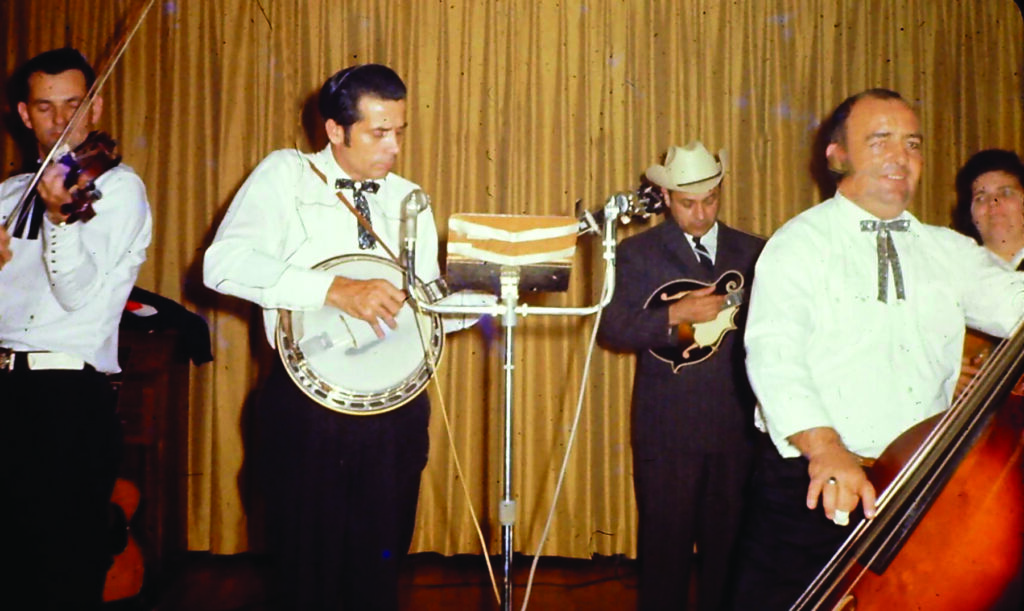
Mulkey was born and resided for most of his life in Arlington, Virginia. After graduating from Washington and Lee High School, he joined the Navy. It was in the mid-1950s that Don became a fixture of the Washington, DC area bluegrass scene. He began working with Benny and Vallie around 1956 and stayed with them for most of the next twenty years. Other early band members included banjoist (and future Bluegrass Unlimited co-founder) Pete Kuykendall (who went by Pete Roberts in those days) and fiddler Jimmy Delozier. Mulkey remembered one early engagement that also included up-and-coming country singer Patsy Cline. At the time, the Cains were much better known and garnered a greater share of applause. Mulkey’s approach to bass playing has been described as energetic. He was also known for his use of a capo on a bass and was, perhaps, the only person to ever do so. His work can be heard to good advantage on recordings that he made with Benny and Vallie. These include a 1962 single for Rebel Records (Rebel F 237) that featured “New River Train” and “Ragtime Annie.” In 1963, shortly after the single’s release, the Cains, with Don on bass, took top honors at the National Championship Country Music Festival that was held at Lake Whippoorwill in Warrenton, Virginia.
Other examples of Mulkey’s bass work can be found on a pair of 1974 album releases: More of Benny and Vallie Cain and a self-titled Rounder album by banjoist Johnnie Whisnant; he also worked extensively with the Cains. The Cains’ album featured Don’s vocal showpiece, “Won’t You Ride in My Little Red Wagon.”
Mulkey left the Cains in the middle 1970s and by 1978 was working with rockabilly performer Billy Hancock. Don was Hancock’s first bass player and appeared on four songs that were released as singles on the Ripsaw label: “Rootie Tootie,” “Do It If You Wanna,” “I Can’t Be Satisfied,” and “You Pass Me By.”
Little else is known of Mulkey’s career after his stint with Billy Hancock. He enjoyed a long professional career with the Virginia State Highway Department. He relocated to Portland, Oregon, in 2021 where he passed away at age 93.
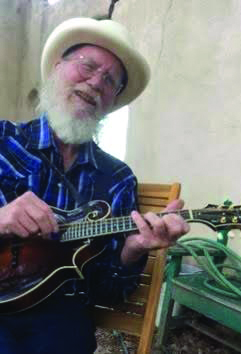
Claude Stephenson (September 26, 1952 – August 30, 2023, contributed by Don Cooke) The bluegrass and musical community in New Mexico lost a shining light with the passing of Claude Stephenson on August 30th 2023. Claude grew up in a musical family. His grandparents played barn dances around northern Pennsylvania and his great uncle, Bill Boyd, was a famous cowboy singer. Claude learned to play on his grandpa’s guitar at an early age. As a teenager, he played drums with a soul band in Philly, which likely laid the foundation for his powerful rhythm chop as a bluegrass mandolinist. He moved to New Mexico in the late 60s, first to Alamogordo and then to Albuquerque. He began his bluegrass career with the Big River Boys playing mandolin and singing tenor. Subsequently, he fronted his own band for years, The Sons of Rodan, as they played clubs in Albuquerque and Santa Fe. He joined with singer/songwriter Elliott Rogers and banjo maestro Wayne Shrubsall in the Elliott’s Ramblers band in the late 80s to the 90s playing mandolin. Claude was equally at home in other genres, such as Celtic, swing, and old-time music.
In 1991 he was hired by the State of New Mexico as the official State Folklorist, a position he held until 2014. He believed that you didn’t learn about cultural traditions by sitting behind a desk in Santa Fe, so he travelled widely around the state attending Matachines dances, cowboy gatherings, Native American ceremonies, and, of course, bluegrass festivals. He received a PhD with distinction in American Studies at UNM in 2001, concentrating on the music of the Matachines of Hispanic heritage in northern NM. He played violin with a Bernalillo Matachines band, and continued playing in numerous bluegrass bands on mandolin, guitar, and fiddle. He was also actively involved in the Albuquerque NPR station, KUNM, where he hosted live music events featuring local artists. He was a long-term producer of the KUNM show Folk Routes. Claude was also instrumental (pun intended) in establishing the Santa Fe Bluegrass and Old-Time music festival now known as the Santa Fe Tradfest. In fact, he was at the most recent one just a week before his passing.
Claude and his wife of 45 years, Zoe Economou, hosted an annual bluegrass and old-time jam session at their home in Albuquerque’s South Valley. This was a must do event for local musicians. He mentored many young musicians in his later years and developed a healthy community of acoustic players in New Mexico and beyond.He will be missed.
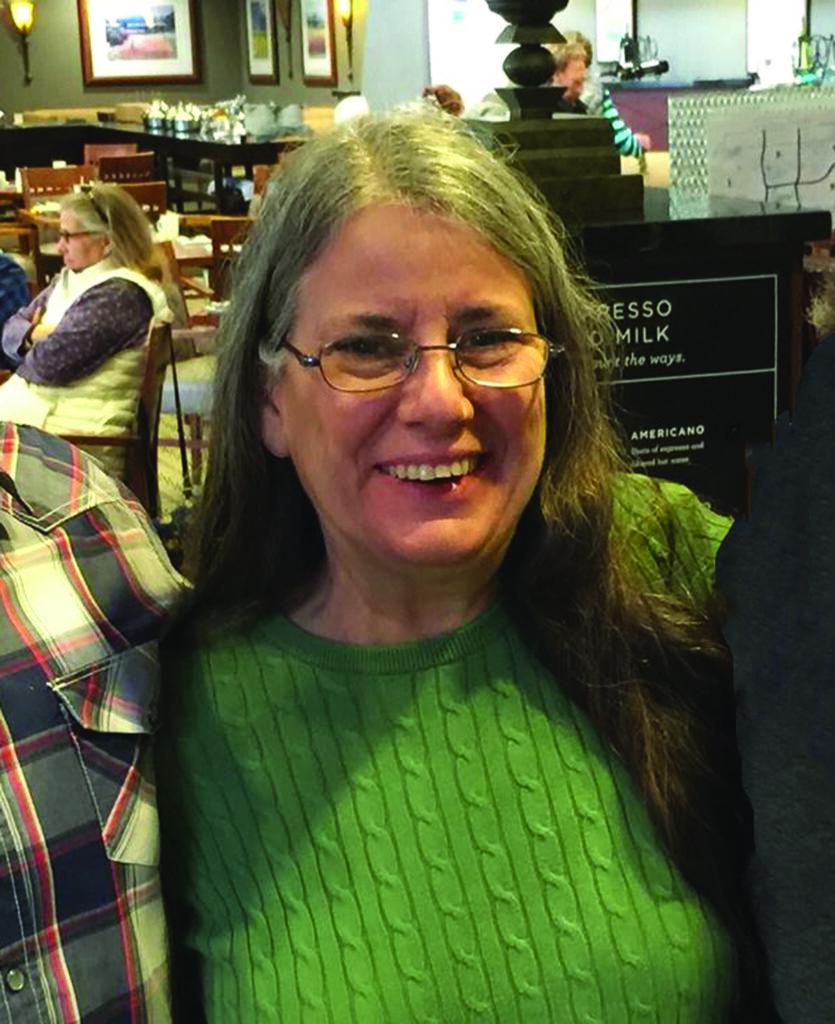
Dana Helen Speth Thorin (September 3, 1952 – September 3, 2023, contributed by John Delgatto – founder and former owner, Sierra Records) I met Dana Thorin in 1970. We were at a gathering of members of the San Gabriel Valley Bluegrass Association (SGVBA) for Doc & Merle Watson and fiddler Leslie Keith. Dana was part of an enthusiastic group of Bluegrass fans who actively supported any and all Bluegrass related events in the Southern California area. At that time, I was the Editor of the SGVBA’s publication, The Bluegrass Express, as well as hosting the first bluegrass radio show west of the Mississippi. I would often see Dana and her friends at the various Bluegrass events and festivals. We became good friends during those years, seeing each other at those events. At the same time I was starting my record label, Sierra Records, Dana started her own old timey/bluegrass publication Fiddle & Bow.
When Sierra Records was reorganized in 1992, I turned to Dana to assist with my new efforts! She became the revitalized label’s Managing and Sales Director. Dana and I attended, and had an exhibit booth, at the IBMA Trade Show in Owensboro, Kentucky, in 1994, 1995, and 1996.
Dana’s warm and inviting personality garnered her many friends in the music business. After we downsized the label in the late 1990s, Dana started her own music instrument accessory company, Music Caravan. It gave her the opportunity to attend many music conventions, festivals, and shows, right up to the last months of her valiant battle with cancer.
We stayed in touch over the past two decades. Now when I hear the sound of Bluegrass music, I will always think of Dana!