
Your 2023 IBMA Hall of Fame Inductees
Wilma Lee Cooper, Sam Bush and David Grisman
Interviews with Todd Phillips, Zeb Snyder and Old Newspaper Clippings Bring Their Stories to Life
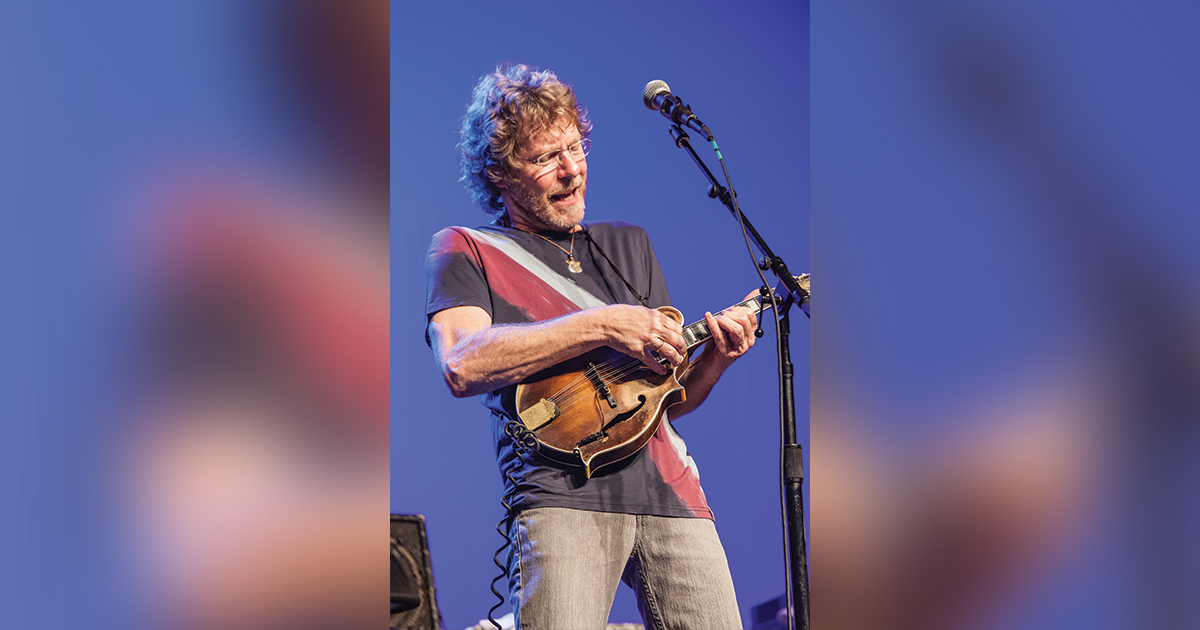
Sam Bush
Just a couple of years ago, in 2020, Sam Bush was first inducted into the IBMA Hall of Fame as a member of the New Grass Revival. On September 28, Bush will take the stage again in Raleigh for a second induction, only this time he will get his own plaque on the wall of Bluegrass Hall of Fame and Museum in Owensboro, Kentucky—and rightly so.
It is not unusual for artists to get inducted into a hall of fame twice. Usually, a musician is inducted for a legendary band that they played with early on, and then again for a solo career that stood on its own. In the Rock and Roll Hall of Fame alone, over 25 artists have been inducted twice, including musicians such as David Grohl for Nirvana and the Foo Fighters, Stevie Nicks for Fleetwood Mac and her solo career, Jimmy Page for The Yardbirds and Led Zeppelin, Curtis Mayfield for The Impressions and his solo career, and more. Eric Clapton has even been inducted three times for The Yardbirds, Cream and his solo work.
Once Sam Bush left the New Grass Revival, and after a memorable stint with one of Emmylou Harris’ most famous bands, he began to record his own solo albums from Glamour & Grits to Howlin’ At The Moon, King Of My World, Laps In Seven, Circles Around Me, Storyman, to his recent project Radio John, a tribute to the late John Hartford.
Along with his solo albums, what has been fun to watch, track and listen to over the years has been Bush’s appearance on many other recordings, instantly catching one’s attention when his name appears in the liner notes. Bush has recorded with everyone from Doc Watson and Peter Rowan to Dolly Parton, J.D. Crowe, Joshua Bell and more.
When it comes to Béla Fleck’s legendary “Whitewater” cut; yes, Sam Bush was on it. When it comes to albums like Jerry Douglas’ landmark Lookout For Hope album, Tony Rice’s legendary Manzanita album, John Hartford’s Nobody Knows What You Do recording and the super group Strength In Numbers’ album Telluride Sessions; you will hear the musicianship of Sam Bush.
Bush is not only a member of the IBMA Hall of Fame, he is also in the Kentucky Music Hall of Fame and was designated the “King Of Newgrass” by his native Bluegrass State, he was given the Lifetime Achievement for Instrumentalist Award by the Americana Music Association, he has won over 10 IBMA Awards including four “Mandolin Player of the Year” honors, and he has also won three Grammy Awards.
For true bluegrass fans however, Bush will also be known for countless legendary live jams happening on countless stages over the years. When he would join the late and great Tony Rice in a jam with Jerry Douglas, Mark Schatz, Béla Fleck and others, it was automatic magic and immediately thought of as exciting and special. Bush was long ago given the name the
King Of Telluride because he has appeared at virtually every Telluride Festival. He has also been at nearly every MerleFest festival as well, which harkens back to all of those years when a festival goer could sit and watch Bush play music with the late Doc Watson multiple times a day.
It is hard enough to pin down a full and complete Sam Bush discography because of the many recordings that he has appeared on. But, even more elusive would be an attempt to list all of the live, onstage jams that he has participated in, including memorable sessions with many great musicians that are no longer with us.
Just as important, Bush has been a prominent influence on countless younger musicians over the years and continues to be so, even now. One example is 28-year old guitar phenom Zeb Snyder. Known as one of the best guitarists in the bluegrass world, Snyder currently plays the six-string for the Appalachian Road Show. That band, at press time, is a first-time nominee for the 2023 IBMA “Entertainer of the Year” award.
“Sam Bush is one of my top five influences of all-time,” said Snyder. “He is my favorite mandolin player, and he is also one of my favorite fiddlers. On top of that, while Sam hasn’t played much guitar, what guitar he has played has been perfect. If you listen to ‘The Ballad of Spider John’ off of his Glamour & Grits album, it has textbook rhythm guitar playing on it. I have loved every project that Sam ever did, from New Grass Revival to the Sam Bush Band to Strength In Numbers to Bela Fleck’s Drive album to everything else he has been a part of through the years.”
Bush is also known for his precise and incredibly accurate mandolin chop, which is known as one of the most precise human time pieces to ever appear in the roots music world. “I also love Sam’s sense of rhythm,” said Snyder. “His chop and his groove and his sense of drive is something that I try to emulate, no matter what instrument I am playing. The progressive side of Sam’s playing is important to me as well. I started to discover extended jam-type of music because of people like him, and that has been really important to me. The Allman Brothers Band, for example, is my favorite rock band of all time, and I really might not have ever thought of looking into them if I hadn’t listened to Sam do his extended jams first, as that was my first exposure to it. So, every aspect of Sam Bush’s career is like my favorite thing ever to explore. I’m his biggest fan.”
Wilma Lee Cooper
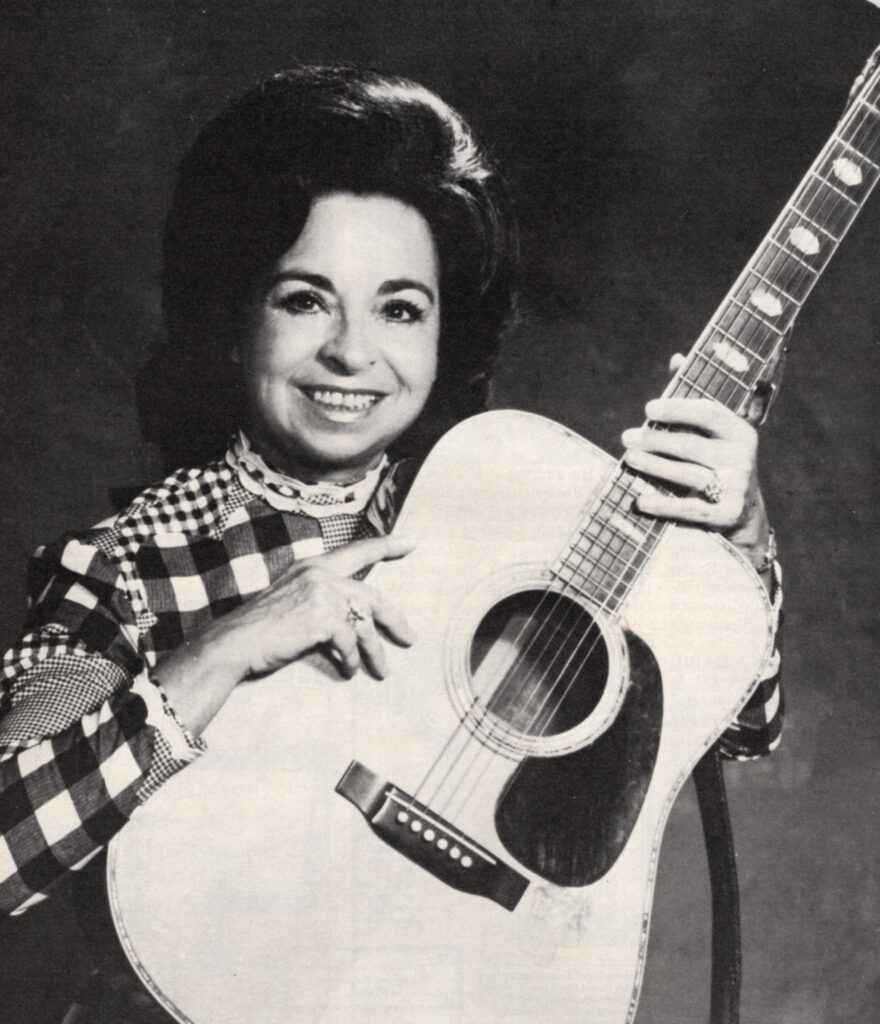
Wilma Lee Cooper will also be inducted into the IBMA Hall of Fame, with her plaque soon being added to the walls of the impressive and sprawling Bluegrass Hall of Fame and Museum in Owensboro, Kentucky.
Cooper’s career is a perfect example of music done the West Virginia way, as in the combination of old-time fiddle music and bluegrass and old school country music, all mixed together. In many parts of the country, old-time and bluegrass music stay separate from one another and try not to clash. Yet in places like West Virginia and Western North Carolina, musicians for years have combined the two with nary a fist fight as a result.
Cooper grew up Valley Head, West Virginia, which is located in Randolph County on Rt 219 in-between Elkins and Marlinton. She started out as a singer in her family’s band The Leary Family Singers. A hired hand of that group was fiddler Stoney Cooper, whom Wilma Lee would go on to marry.
Now known as Wilma Lee and Stoney Cooper, the pair concentrated on making country music and had regular, and famous, long-running gigs at the Wheeling Jamboree in West Virginia and on the Grand Ole Opry. They also recorded many hit records over the years. As a result, Wilma Lee and Stoney Cooper became members of the Grand Ole Opry in 1957 and they were inducted into the West Virginia Music Hall of Fame in 2008.
Despite the duo being categorized as a country act, Wilma Lee always made sure that her love of mountain music was in the mix. She could play the banjo and was also a lover of the sound of the resonator guitar. Stoney Cooper passed away in 1977. A few years earlier, the Smithsonian Institution’s Folkways entity touted Wilma Lee as the “First Lady of Bluegrass” in 1974.
It was during her solo career, from 1977 until she stopped singing in 2001, when Cooper was truly appreciated as a bluegrass artist. All of a sudden, after her husband’s death, she was one of the few women band leaders in the bluegrass world who was fronting a group with no relatives in it. When one looks deeper into her life story, however, it becomes clear that she was probably the driving force during the vast majority of her music career.
When Cooper stepped up as a band leader, in many ways she handled things just like her male band leader counterparts would do. One example of this comes from Tim Graves, the nephew of the late and great IBMA Hall of Famer Uncle Josh Grave and resonator guitarist of The Farm Hands.
Early in his career, at the suggestion of his Uncle Josh, Graves was hired by Cooper to play the resonator guitar in her band. But, at first, the gig did not go well, and Graves found himself on the verge of being fired by the great Wilma Lee Cooper.
“The very first time I played with Wilma Lee, I was covering her all up with my Dobro,” said Graves. “We came off stage and we got back to the dressing room and she grabbed me and pointed her finger at me and said, ‘We don’t play like that.’ I said, ‘Ma’am, how do you want me to play?’ She said, ‘If I don’t sing it, you don’t play it.’ I said, ‘So, you want the melody only?’ She said, ‘Yes, and whenever I’m singing, you do not play over top of me.’ So, it was that strict. After about six months, she was about to fire me. I was just about to lose my job and Uncle Josh called me and said, ‘Get over here, kid, I got to talk to you.’
“I went over to his house and he said, ‘You’re getting ready to get fired. You’re not doing the job. You have to learn her stuff and learn when to play and what to play,’” continues Graves. “He said it that quick. He said, ‘You have two weeks before she is going to fire you.’ She had told Josh that, but had yet to tell me that. So, I sat down at his house and I listened to her records on a Wednesday night and then I went back in on a Friday night and played. Wilma Lee said, ‘Well, I can see that somebody has been rehearsing.’ I said, ‘Yes, ma’am, and you will never have any problem with me not knowing your music or knowing when to play.’ And, I never heard another word from her for the next 12 years.”
That was the same way that the First Generation of bluegrass band leaders would handle things on occasion. Ralph Stanley II once told me that he thought of quitting his famous father’s band at one point while they were touring in California. His Dad, Ralph Stanley, simply told him to finish the tour they were on at the time and decide then. Ralph II decided to stick with music and just kept on playing as if the conversation never happened. He never told his Dad that he was staying with the band, and his Ralph Sr. never brought the subject up again. It was settled.
For more insight on Wilma Lee Cooper, she discussed her role as band leader in a couple of interviews with newspapers in the late 1970s that happened soon after the death of her husband Stoney Cooper. In an article in The Roanoke Times published in February of 1978, less than a year after Stoney’s death, Cooper talks about her new life as a widowed performer now on her own.
As the article begins, journalist Jack Hurst states, “Mountain music matriarch Wilma Lee Cooper has made more than just minimal changes in her Clinch Mountain Clan since the death last year of husband Stoney. A 23-year-old bass player is the lone holdover. She has rebuilt the group with three young college graduates as fiddler, Dobro guitarist and banjo player.”
In the interview, Cooper says she is happy to bring in “young people with younger ideas.”
In an interview that Cooper did with The Tennessean newspaper in 1979, journalist Laura Eipper points out that after Stoney’s death, Cooper was dealing with a huge medical bill due to her husband’s hospitalization for heart trouble and emphysema. Still, Cooper took care of business and moved forward with a new chapter of her life.
“The hardest part for me was coming home to an empty house after I lost Stoney,” said Cooper, in the article. “We had been working constantly together, working and at home, and we had complete companionship. It was a shock, after all of those years together, to suddenly find myself alone when I lost Stoney in 1977. That is why I went so much harder into music. I kept busy, and that kept my mind off the other. Music has been a big help in the past couple of years.”
Later in the interview, however, Cooper gives us insight into her change in musical direction at that time. “I don’t know why, but I don’t do a lot of the songs that Stoney and I did,” said Cooper. “It may be some subconscious thing with me, but I don’t. I got a fresh, new outlook from my boys (in her band), and I think that has been good for me.”
David Grisman
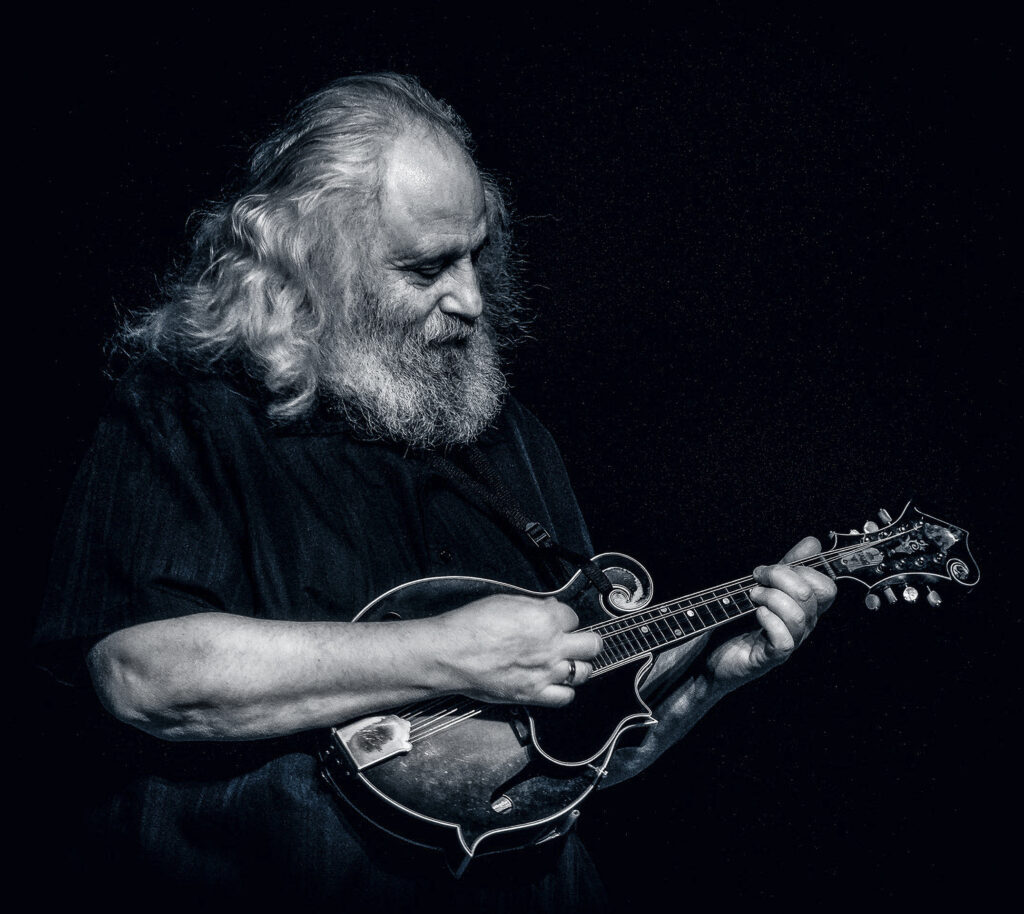
David Grisman should probably get into the IBMA Hall of Fame just for what he had accomplished by 1974. Born in 1945, Grisman grew up in New Jersey and learned how to play the mandolin in the style of Bill Monroe and soon brought his talents to the burgeoning folk music scene of the early 1960s. After moving to California, Grisman found himself in the band Muleskinner, which also featured Peter Rowan, Clarence White, Bill Keith and Richard Greene.
By 1973, Grisman was in the influential group Old and In The Way, which featured the aforementioned Rowan along with John Kahn, Vassar Clements and Grateful Dead guitarist Jerry Garcia. With Garcia’s name on the bill, the self-titled Old and In The Way live album, recorded in 1973 and released in 1975, became one of the most influential albums in the history of bluegrass. Along with the landmark 1972 Will The Circle Be Unbroken album by the Nitty Gritty Dirt Band, John Hartford’s Aereo-Plain album, and the Rounder 0044 recording by J.D. Crow and the New South, that Old and In The Way recording helped to turn on a new generation to American roots music.
After the early 1970s, Grisman took bluegrass instrumentation and style and combined that with jazz and progressive acoustic music sensibilities, producing a run of albums that would be called “Dawg Music.” Officially known as the David Grisman Quintet, the band featured incredible musicians such as Tony Rice, Darol Anger, Mike Marshall, Mark O’Connor, Rob Wasserman and more.
Another member of the David Grisman Quintet during those heady days was the acclaimed bassist Todd Phillips, who currently plays for the Appalachian Road Show.
In an interview for Bluegrass Unlimited, Phillips remembers those days of musical exploration with the genius that is David Grisman. “I’ve known David for about 50 years now,” said Phillips. “He was my college education. I was 22 years old and lucky enough to meet him back when I was playing bluegrass music in pizza parlors in California. I took a mandolin class from him. It was a group seminar-type of class. We met and started talking at the end of one of the classes one day and I ended up going to his house to hang out. After that, he cancelled the class and sort of kidnapped me, or I kidnapped him (laughing), and we hit it off. I had been playing the bass since I was 11 years old, yet at first, David didn’t know that I played the upright bass. I got really interested in the mandolin because I wanted to learn about the other side of the beat. It was an interesting side road for me, and I ended up playing second mandolin in his band for over two years.”
Even though Phillips was fairly new to the mandolin, Grisman viewed him as a “clean slate” at the time that he could teach his music to, and have it sound his way. “I was really open to the original music that David was doing,” said Phillips. “At the time, I remember thinking, ‘I want to go across the country and meet mandolin players like Jesse McReynolds and Sam Bush. I’ll just go east and then south and see where these people live.’ But, after I met David, all I had to do was hang out in his living room and everybody filtered through there. John Hartford, Jerry Garcia and Taj Mahal came by, and J.D. Crowe stopped in while on his way to Japan with the New South in 1975. That visit was what possibly got Tony Rice bitten by the West Coast bug again, as it was only a few months later that he loaded up a U-Haul and moved to California.”
As Grisman’s career continued, he would play on many important albums along the way. He played on many of Tony Rice’s early solo albums, including the landmark recording Manzanita. He can also be found on albums made by Béla Fleck, Peter Rowan, James Taylor, Tony Trischka, Bill Keith, Alison Brown, Red Allen, Mike Seeger, Doc Watson, Jethro Burns, Hazel Dickens, Alice Garrard, Jason Carter, Jim Lauderdale, Emmylou Harris, Dolly Parton, Linda Ronstadt, Sam Bush, Del McCoury, Tommy Emmanuel, Don Stover, Mike Auldridge, and many more.
“No matter how many years have gone by, David’s interest and curiosity about music has never gotten weaker, going back all of the way to the day I met him,” said Phillips. “He is the most enthusiastic and full-of-life musician that I’ve ever met. When I talk to him on the phone even now, it feels like it did 48 years ago. No matter what other kinds of music he has played over the years, he has always had a love for bluegrass. That primary foundation of bluegrass was a part of everything that he did, including the rhythmic drive of the music, the interaction of the instruments, and how the pieces of the band have to fit together. All of that is the beauty of bluegrass music, as in all of those gears meshing together to create one sound. David’s awareness of that has never gone away.”