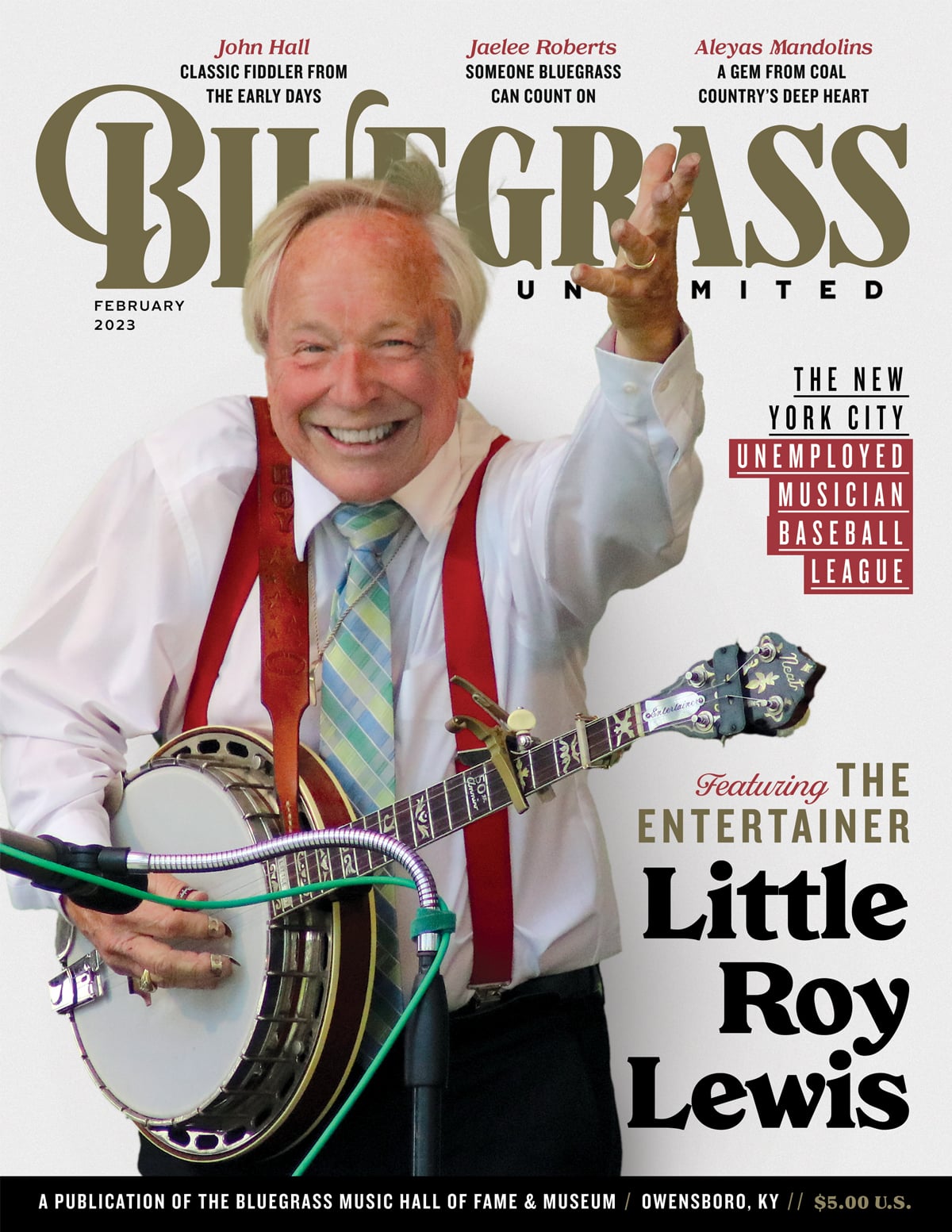
Little Roy Lewis
The Entertainer
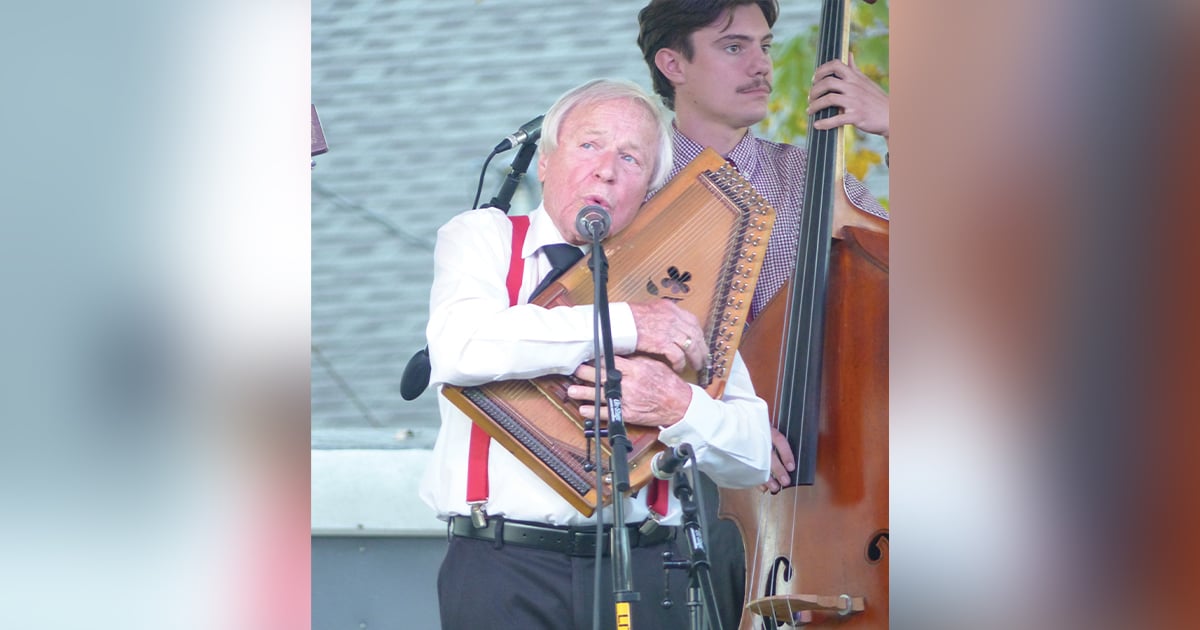
Photo by Gary Hatley
Legendary performer, Ronnie Reno, readily agreed, “Little Roy Lewis is probably the best entertainer in bluegrass and gospel music. You never know what he’s going to do, but you know it will be wild and entertaining. He knows how to get your attention and brings out the funny side of your talent.”
Born February 24, 1942, Roy McArthur “Little Roy” Lewis is the youngest of seven children of the late Roy (Pop) and Pauline (Mom) Lewis of Lincolnton, Georgia. He has been playing music since he was six years old. His musical family (that included at times, his dad, two brothers, three sisters, and two nephews) performed a weekly television show on WJBF-TV in Augusta, Georgia from 1954-1992. Beginning with Starday Records, the “The First Family of Bluegrass Gospel” recorded nearly 60 albums on multiple labels. The Lewis Family was inducted into the Bluegrass Music Hall of Fame in 2006 and retired in 2009. Little Roy and his family has also been inducted into the Georgia Music Hall of Fame, SPGBMA Hall of Greats, and Little Roy, his father and sister, Polly are members of the Southern Gospel Music Hall of Fame.
Though his siblings left the music business, Little Roy has continued to perform. Little Roy joined forces with Lizzy Long, a talented singer and multi-instrumentalist from his hometown, and formed the Little Roy and Lizzy Show. That collaboration continues today with more than ten albums recorded over the past fifteen years.
The late Sonny Osborne once shared, “Little Roy’s banjo style is the most unique. What he hears and plays is very different, in that it fits the Lewis Family’s choice of songs and style of vocals. Little Roy has a very fast right hand. He just simply plays their songs. Wherever he is and who he’s with, that crowd of people is getting entertained.”
Little Roy’s first influences were Flatt & Scruggs and Hank Williams, then Don Reno and Red Smiley. “In 1949, Mama and Daddy bought us tickets to see Bill Monroe in Washington, Georgia. That old building is still standing. I really went to see Lester and Earl and Bill Monroe. When I got there, I was shocked! Flatt & Scruggs had just left and Bill had a new banjo picker, Don Reno. He had a ’49 Ford convertible and Bill had a Chrysler limousine. They had Chubby Wise, Mac Wiseman, and Bessie Lee Mauldin. So that’s the first bluegrass band I ever saw!
“In 1951, Dad bought us tickets again. I was so anxious to see Don Reno again, but the banjo picker that night was Rudy Lyle. Then Arthur Smith hired Don Reno as a member of his band, the Cracker Jacks (to perform on his Charlotte TV show). Red Smiley would be there sometimes. When Red Smiley wasn’t there to sing, it was Tommy Faile. This was 1952 and we had just got our first television. It was more like snow. It would fade in and fade out, but I could still hear Arthur Smith play that four-string banjo. Then Don Reno would come in there all tuned up. I thought all that pearl (on his banjo) was tin foil. I’d get my old cheap banjo and put tin foil on my frets because I wanted to look like Don Reno.
“In 1954, Wallace went to Augusta to Snyder’s Music and came back with a new Mastertone. When he pulled it out of the case, I said, ‘I don’t want it, it don’t look like Don Reno’s.’ So Wallace took it back. Snyder told Wallace that they don’t make that anymore. Everything was bowtie then, so I kept that banjo and still have it.”
His brother assisted Little Roy in mastering the instrument. “Wallace couldn’t play banjo, but he could show me the chords. Then I started playing guitar when I was about eleven. I played bass fiddle on the first Lewis Family recording in 1953 because I didn’t like the way that Pop and Polly played. On those 78 records, I’m playing bass fiddle standing in a chair.
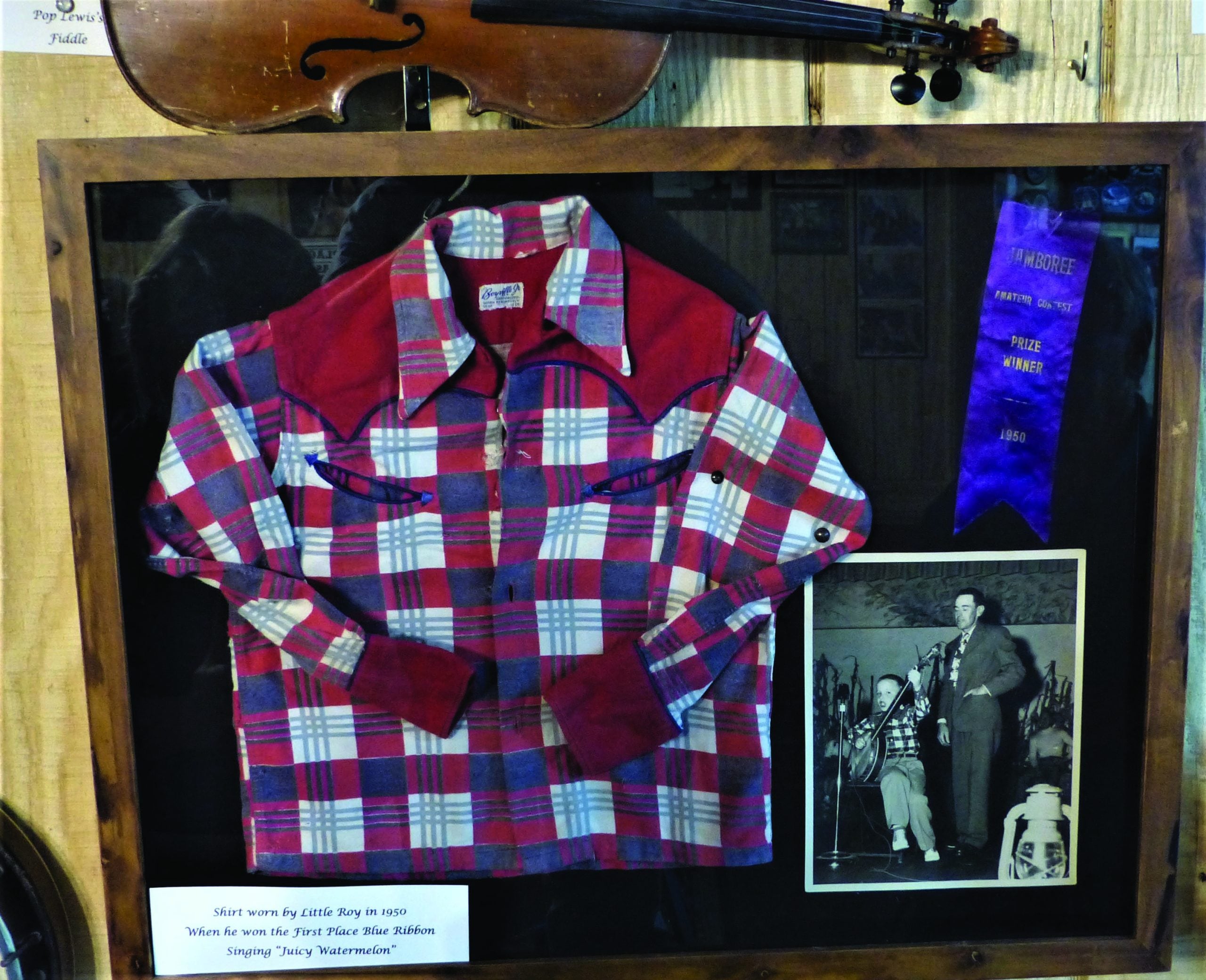
“I was eight at a local jamboree when I won my first award and earned my first money.” A picture of that little boy hangs in Little Roy’s collection. “Pop is standing with me because I was bashful and wouldn’t go onstage without him beside me. The song that I sang was called ‘Juicy Watermelon.’”
Soon after winning his first award, Little Roy started performing with his male siblings as the Lewis Brothers. “It was just local. We played for square dancing and Daddy would bring me in a separate car. I couldn’t stay long because I was little. In 1950, I played the banjo, (and his brothers) Talmage played the fiddle, Wallace played the guitar, and Esley played the bass.”
Little Roy’s oldest brother, Esley, had picked banjo until he went in service. “When he got out of the army, I was playing banjo better than he was. So he gave me the RB-100 and he started playing the bass fiddle.
“The reason the Lewis Family was gospel was because a man came by in a ’46 Ford. He sold Woodmen of the World Insurance and he wanted us to sing. Mama said, ‘If you sing for them, you gonna sing some gospel songs. That’s kind of a religious thing.’ That’s when we put together our first gospel show. Our first Lewis Family picture was made in 1953.
“Channel 6, WJBF in Augusta, went on the air on Thanksgiving Day of ’53. Mr. Gordon McGee, the County Agent, had a show, the Farm and Home Hour. He told Daddy, ‘I want y’all to sing for us.’ We sang for him. The reason I knew it was 1953 because Wallace had a ‘53 Buick. I always date things with cars.
“John Radick came out to the car and said, ‘Y’all need a television program.’ So by the end of 1953, we landed a show on that television station. It ran 38 years without ever being taken off the air. We did the live program until video tape came in in 1961. The Lewis Family used to not go any further than Birmingham, Alabama, because we had to get back to do the live program. Then we started taping our programs. The man that owned Channel 6 had about 15 or 18 stations all over the United States.”
The Lewis Family’s programs began airing on his stations around the country. Little Roy noted. “That’s when we really got to going! We could go to other states. We wouldn’t have to record (the TV shows), but once a month. That lasted 38 years. We were really there 50 years, but we were just doing specials like Christmas and Easter. We were going so much that we just didn’t have time to do it anymore.”
As they began to travel, Little Roy recalled the Lewis Family started their journey by traveling in two old Cadillacs. “We went to a funeral home and got a ‘54 Cadillac. It’d hold eight people and we’d tie the bass fiddle on top and load that thing down. Talmage had to put 6-ply truck tires on it to haul us around.”
The musical family finally graduated to a bus for their travels. “At the end of ‘59, we went to Miami and got our first bus. In 1962, we got a better bus. In 1966, we bought our first new one. Then in 1972, we bought another new one and again in 1982. We were getting ready to buy another one when Conway Twitty died and we got his bus. All but the first of these buses had over a million miles on them.”
Little Roy prides himself on his unique sound. He credits an old friend for pushing him to be unique. “Jimmy Davis, the governor of Louisiana who wrote ‘You are My Sunshine’ and ‘Nobody’s Darling, But Mine,’ was our friend. In 1954, he said you got a good thing going, but you don’t need to sound like everybody else. He said you need your own sound.”
A long time bachelor, Little Roy was 44 years old when he married his wife, Bonnie, on June 17, 1986. “Bonnie saw me on television (in Louisiana) and her family started coming to see us. I had other girlfriends, but she was always one of my best friends.”
Bonnie has a daughter, Kristen, and two grandsons, from a previous marriage. Little Roy and Bonnie became foster parents to Lizzy Long during her last two years of high school. “I used to play music with Lizzy’s granddad at square dances.”
He was invited to play with her family on Thanksgiving Day. “Lizzy was playing fiddle and (her twin sister) Rebekah was playing guitar. Well, Rebekah would put the guitar down and go out and play. Lizzy just sat right there and never moved. That night, both of them followed me to the car. Lizzy asked me, ‘How do you play the banjo?’ They had a banjo in the attic and I got it out. I showed her an alternating thumb roll.”
The next morning Lizzy called. She had already mastered the roll so Little Roy fashioned her some finger picks for her small fingers. Then Little Roy started helping her on the banjo. “For Christmas, I gave her a Murphy Henry VCR tape. I told her, ‘I’ll help you all I can, but watch everything she does.’ Two weeks later, she had all five songs down.”
Little Roy helped her with the fiddle, too. She had tape marking the positions on the fingerboard. “I told her let’s take off all that silly tape, you ain’t watching it anyhow. I started showing her how to play. I can’t play fiddle, but I could show her with my mouth (the sounds she should make). She would mock me with her fiddle.
“When she was in high school, I started taking her on the Lewis Family bus and letting her come out and fiddle (on our shows) and she’d get standing ovations. As our foster child, we helped her and the government did, too. They had a contest at the Fox Theater in Atlanta. I told her how you’re going to win that money. I said you come out, don’t say nothing, and just play the fire out of that fiddle…and she won it!
“Churches around here wanted to help her. So we’d play and they’d pass the hat. So all the while the Lewis Family was playing, I’d still play with Lizzy at churches. In Summersville, West Virginia, Buddy Griffin, who played fiddle with Jim and Jesse, was a professor of Glenville State University. They gave her a presidential scholarship so Lizzy could go to college.” It was a full scholarship.
“She was so good. They started a bluegrass program,” Little Roy proudly declared. “I would go up there and play rhythm with her.” Following college graduation, Lizzy moved to Nashville.
“Mac Wiseman and Buddy Spicher helped her. Mac would show her how to sing and Buddy would show her how to play fiddle. When I wasn’t playing with the Lewis Family, I’d go everywhere with Lizzy. We’d drive cars.”
Lizzy Long is forever grateful for their relationship. “Lil Pap is one of the most underrated pickers I have ever seen. Sure, his family was recognized, but as an individual…he just runs circles around everyone. He eats and breathes entertainment. I’m blessed to have been brought up by such an individual. It can’t help but rub off on ya!”
Once the Lewis Family retired, Little Roy continued to perform, joining forces with Lizzy. “I believe there’s only four or five states I’ve never played, including Hawaii. I ain’t going to fly!” the banjo master proclaimed.
He has played some impressive venues such as the Lincoln Center in New York City, the Smithsonian in Washington, DC, and the Grand Ole Opry in Nashville. “I am a lifetime member of IBMA, the Georgia Music Hall of Fame, and the Gospel Music Hall of Fame. I got the SPBGMA Entertainer of the Year 27 times. Awards are fine, but that ain’t what makes me do what I do. I am the same person without that award as I am with that award.”
Little Roy is also known for his practical jokes and antics. “I did a lot of crazy stuff with Randall Hilton, Sonny Osborne, and Jim & Jesse. The Lewis Family had our own shows. We’d go out and play Thursday night through Sunday afternoons. We’d be here and we’d be there.”
Then they started playing bluegrass festivals. “After his first festival in 1970, Bill Grant called Mama about the Lewis Family playing Salt Creek Park in Hugo, Oklahoma. He asked if we could do two 45-minute sets. Mom said, ‘they can do four or five hours if you want them to.’ He said, ‘Really!’ We played his festival in 1971. When we got there, we had our records racks, our tent. We had learned it from the gospel groups. We had everything it took. We couldn’t believe the record sales!”
The professional touring group’s product sales often exceeded what they earned performing. Little Roy smiled as he reflected on his family’s impact on the bluegrass music industry. “The bluegrass bands had been selling off their windshields and the hoods of their cars. The next year we went back and all the groups had records racks. They got it from watching us. We were so popular out there, they’d do a police escort into the festival.
“We got to Greenwood, MS, one night and a great big man said, ‘I’m going to be your emcee tonight.’ It was Johnny Russell (composer of ‘Act Naturally’). He said, ‘Y’all know how to do it. I wonder if y’all could stay over and do my television program tomorrow?’ So we were on his program on that local station.
“In Philadelphia, Mississippi, this little boy aggravated us to death. He’d be there early to see the bus roll in. Then he’d take my guitars and banjos and ask me what kind of strings I used. That little boy was Marty Stuart.”
Stuart shared, “Little Roy is one of my original friends and all-time heroes. He is a fireball of a human being who really represents everything that was beautiful and wonderful about the old south that the two of us grew up in. I think he is the most gifted and authentic musician that I have ever known. He is so much more than a bluegrass banjo player. He’s a great southern blues guitarist. He’s a visionary, a producer, a harmony singer, a road warrior, a comedian, a gospel music giant, and the world’s greatest bus driver. I would classify Little Roy as a ‘busologist’!
“The Lewis Family was the first concert that I ever saw in my hometown by a national touring act. They played the courthouse in Philadelphia, Mississippi. My mom took my sister, Jennifer, and me to see them. I was 8 or 9 years old and had barely started playing. By the time Little Roy finished ‘Honey in the Rock’, I was a lifetime customer. The Lewis Family has been part of life since that night. Little Roy is one of my dearest friends and a treasure.”
Little Roy confessed. “Two people in the (music) business that have never changed are Marty Stuart and Duane Allen (Oak Ridge Boys).”
Allen had nothing, but praise for the entertainer. “I have known Little Roy and the Lewis Family probably as long as I have known anyone in the music business. He is one of my best friends. I love him like a brother.
“We started (our quartet) as the Georgia Clodhoppers and have a lot of the same history. I knew Little Roy’s father, brothers, and sisters. When the Oak Ridge Boys wanted to cross over into country, I got three letters from folks congratulating us. That’s all we got. One of those three was from Little Roy. I was blown away. We’ve been friends through thick and thin.
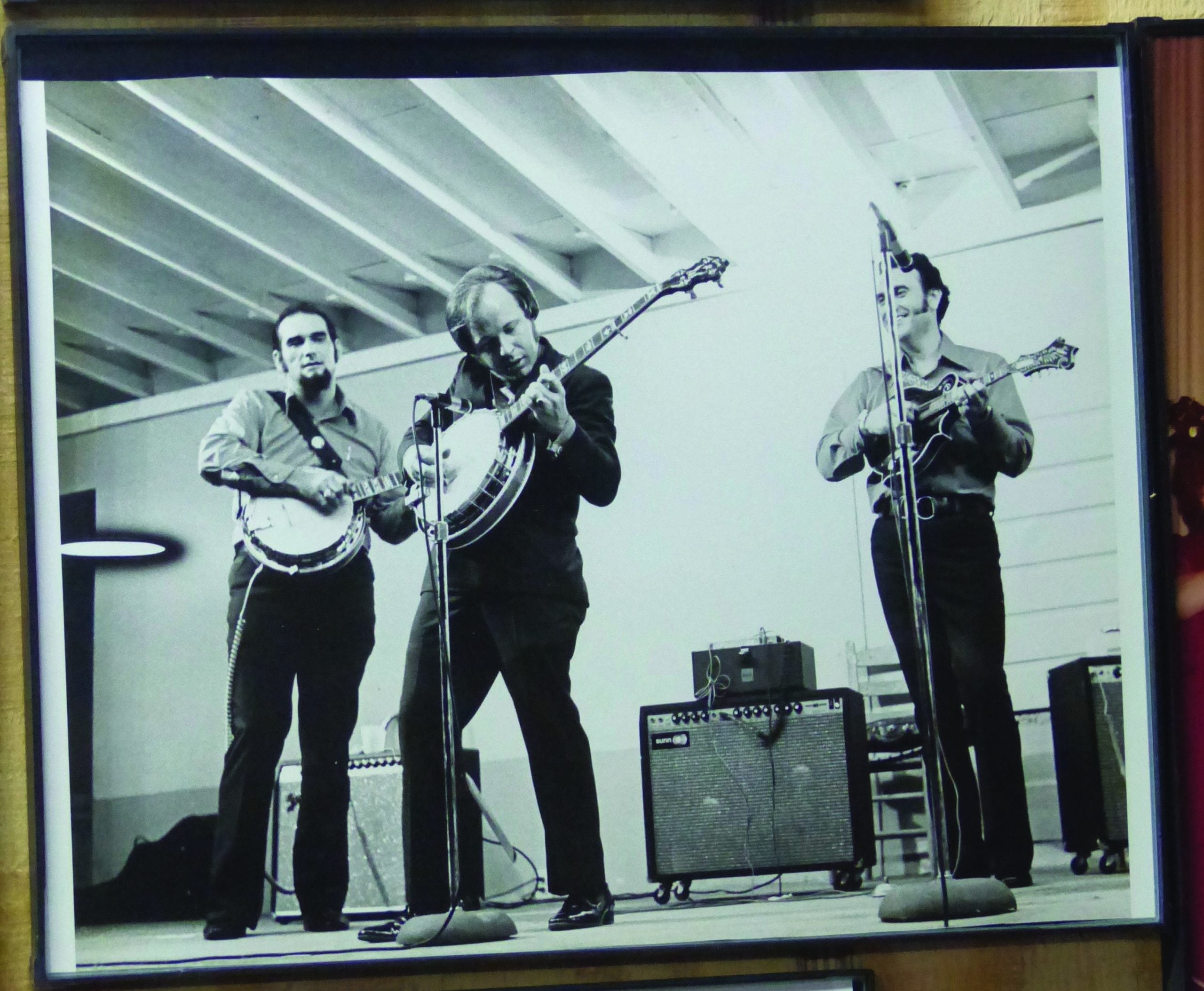
“Little Roy is the greatest banjo player and stage personality I have ever seen on stage. Young performers could learn a lot from watching Little Roy. He commands the audience and takes them on a trip. He’ll turn himself wrongside out and do anything to make folks happy. He is the ultimate entertainer and showman. I believe that still today.”
At 80, Little Roy’s memory remains sharp, remembering dates and details. “Hank Williams died the first day of ’53. Mama and Daddy had us tickets to see Lester & Earl, the Carter Family, and a local fella at the Bell Auditorium. Hank had died and we had cried all week. That was part of my life. That weekend, I sat on the second row, Earl came out, and that was the first time I’d ever laid eyes on him.
“In 1956, Flatt & Scruggs played Tignal, Georgia, twelve miles from here (Lincolnton). That’s where Lance LeRoy was from. He told us, ‘You’re more popular than they are around here in this area.’ That was the first time that I really got to talk to Earl and Lester. In 1962, I went to Nashville and I went to Earl’s house. When they came out with the Scruggs’ Ruben capos, I got to be friends with Louise and Earl. I’d order them capos. I think they were $2.75 and I’d sell them for $5. I guess I ordered more than anybody. I’d give anything if I’d kept that last letter Louise wrote me.”
Lizzy relocated to Nashville and Little Roy helped her forge a friendship with the Scruggs. “I called Louise one Sunday morning and said, ‘What are you going to be doing in six hours and twenty-five minutes from now? I’m coming to Nashville and I’m going to see you in six hours and twenty-five minutes.’ There weren’t cell phones so I stopped at a phone booth in Murfreesboro. I said tell me how to get to this new house of yours. I got to pick up Lizzy. She asked, ‘Who is Lizzy?’ I said you’ll find out when I get there. They struck it off. Louise didn’t know how to use the computer and Lizzy helped her.”
A lifelong friendship ensued. “One day Lizzy called me and said, ‘Guess what I’m doing, Pap? I’m sitting right here with Louise and Earl.’ I said, ‘Well, you little s—t!’ Louise got on the phone and wanted to know why I called her that. I said because she’s right where I always wanted to be.”
The entertainer reflected on his long running practical jokes with the late Sonny Osborne. “It all started in Berryville, Virginia. The Osborne Brothers were on the stage. I bet there were 4,000 people there. I walked out on stage eating a banana. Sonny grabbed it out of my hand and threw it on the wall. People thought it was the funniest thing. Then everywhere we went, folks wanted to know what I was going to do with Sonny. It just got bigger and bigger. I saved it all for the Osborne Brothers. I didn’t do it with anybody else. I started doing all that crazy stuff and it went on for years and years. Then I started some stuff with Jim and Jesse. We pulled some good ones, too.
“It made us a lot of money. They had a festival in Duncan, Oklahoma. The Hickman Family owned the park. It was the Hickman Family, us, and the Osborne Brothers. That was the whole bluegrass festival. We were there two days. We were all that was there for 2,000 people.
“I never knew what I was going to do. I got hurt a lot of times, but I never let anybody know. At Double R Ranch in Ohio, I walked up on stage with a brand new black suit on. Sonny put me in the trash can. When I got out, I had mustard and ketchup all over me.
“One time at Myrtle Beach, I played Superman. They had a rope hanging and got a Superman outfit. I started out higher than I thought I was. I come out swinging and I couldn’t stop. I had my banjo with me, holding on to that rope.”
Some of Little Roy’s on-stage pranks resulted in painful outcomes. “I’ve done so many crazy things. I liked to have gotten hurt bad in Florida. I rode a bicycle off the stage and dropped about five feet. Evil Knievel had just jumped the Grand Canyon and I thought I could do it on a bicycle. Can’t do it on a bicycle, you ain’t got enough speed!”
Doyle Lawson recalled a humorous incident from an encounter with the jokester during his time with the Country Gentlemen. “Little Roy was always looking for a chance to entertain and came onstage during one of our shows, doing anything he could think of to be disruptive. Bill Yates grabbed his bass cover and he and I stuffed Roy into it. Roy quickly said, ‘zip it up and drag me off stage,’ which we proceeded to do. We went back and finished our show, not realizing that he couldn’t unzip the bass cover. We learned later that it took some time for him to get free.”
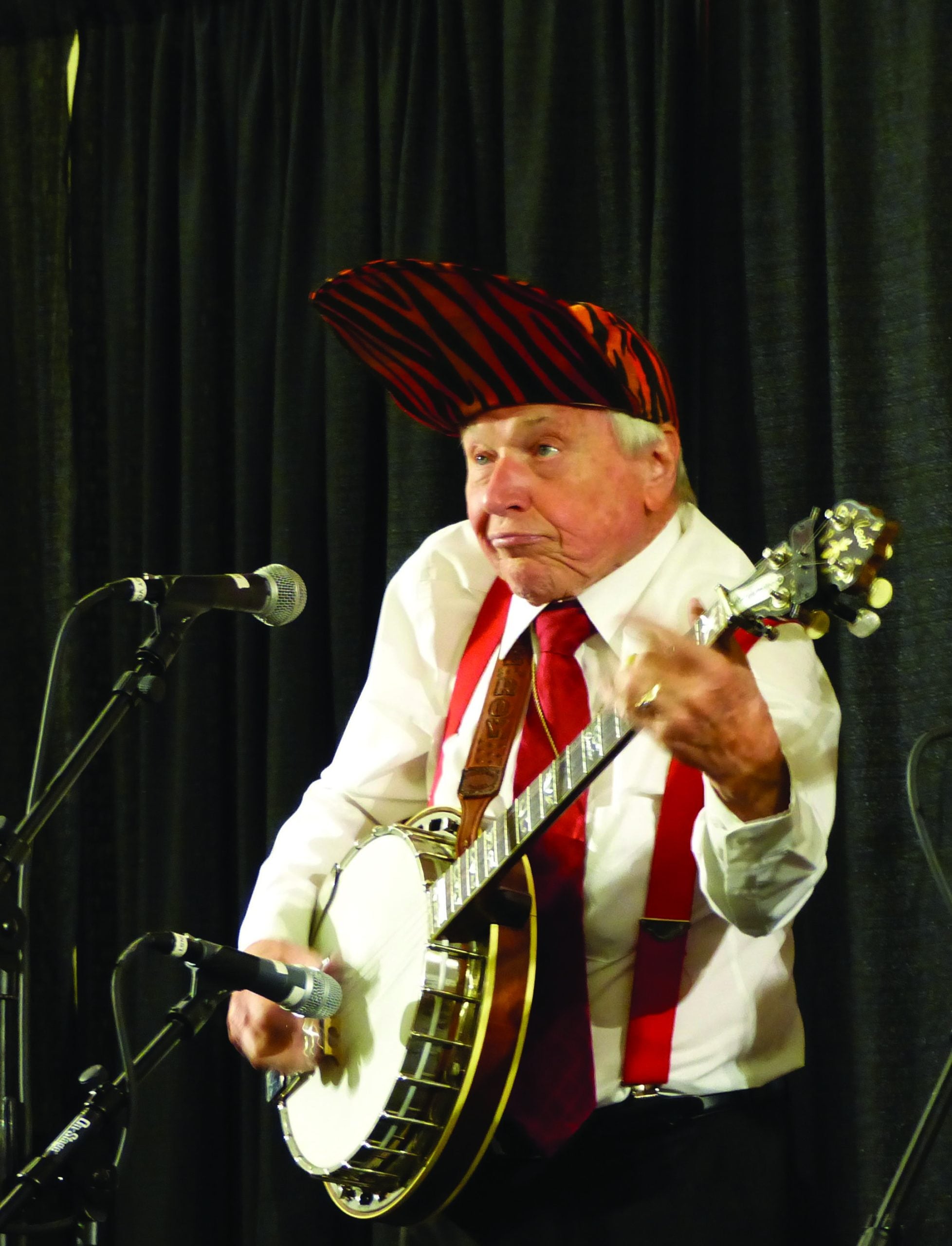
Little Roy also uses zany props such as buck teeth and crazy hats as part of his comedy. He said, “I added the teeth in about 1975.”
And he’s still pulling zany antics. During an Appalachian Road Show performance last year, Little Roy joined the guys on stage, crawled between Barry Abernathy’s legs, and laid on the floor stilling picking his banjo. Following his lead, Abernathy and Jim VanCleve also laid down and played their instruments.
Abernathy relayed. “It’s always such a great honor, and definitely humbles me when Little Roy comes on stage and plays a tune with me. He is a banjo hero of mine and I consider him a great friend. Oh, and did I mention, he is hands down (in my opinion) the greatest entertainer our industry has ever seen!! Always ready to give freely of himself and his knowledge to others, and he definitely came to please the crowd!!! As Barney Fife would have said, ‘He’s a NUT!’”
Roy said, “The biggest crowd I ever sung to was 40,000 on the Oklahoma/Arkansas line. Tazewell, Virginia was one of the biggest, too. We had to follow Conway Twitty. We sang there with Jerry Lee (Lewis).
“I still drive. I’ve always drove the bus since I was 18. I remember going on the road before it was interstate. No telling how many millions of miles I’ve driven and I still enjoy driving.”
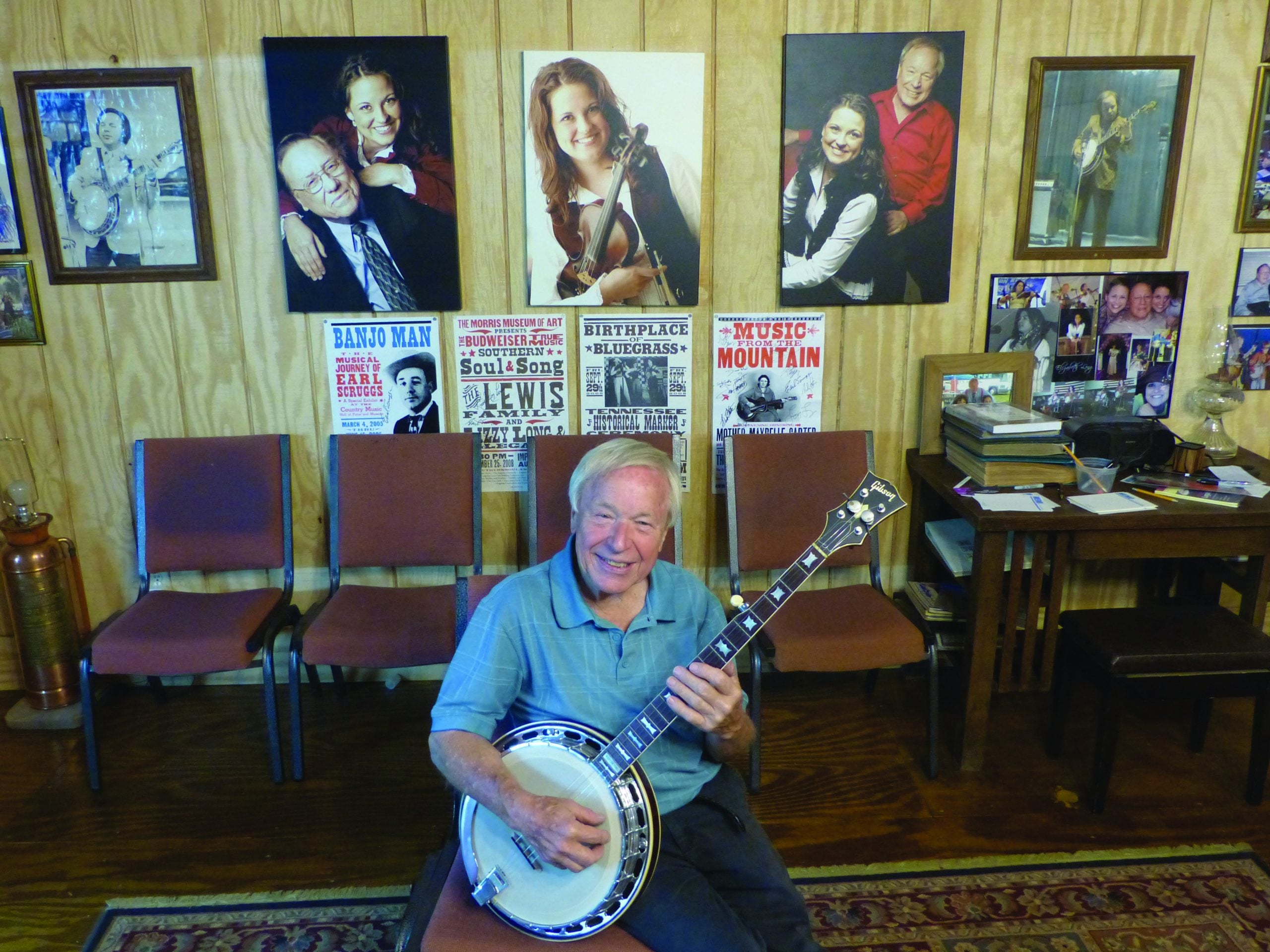
Little Roy has kept a collection of memorabilia from birth to present times. “It’s not a museum,” he declared. “It’s Little Roy’s stuff.” He has an entire building devoted to precious items from his past. His 80-year collection includes his first Bible with the Georgia native’s birthdate and weight (6 lbs, 14 oz) inscribed inside, wooden alphabet blocks he played with as a child, autographed photographs of many of the greats in music, and Lewis Family paraphernalia. The walls are lined with framed photos. He has a tie pin that President Ronald Reagan gave Pop Lewis. A framed proclamation presented to Little Roy and signed by the then governor of Georgia for his 60 years in the music industry. Little Roy even has the key to the city of Lincolnton that was presented to him in his hometown.
His treasures include a bowtie worn by Earl Scruggs on the Beverly Hillbillies television show that Earl himself gave to Little Roy. He has a handwritten note from John Hartford with the lyrics to an original song, “Sweet Dixie Home.” “Hope you like it. Call me,” is included at the bottom of the page. He also has a framed sketch Hartford did for Little Roy.
Little Roy, his legacy, and his “stuff” make him a true entertainer in the music industry and he keeps going and going and going!