Picker’s Paradise Celebrates
A Half Century of Great Music
For fifty iterations since 1972, the legendary Walnut Valley Festival in Winfield, Kansas, has crowned national and international champions in instruments as diverse as hammered dulcimer and fingerstyle guitar, banjo and autoharp, and of course the event’s crown jewel, the National Flatpicking Guitar Championships.
But the real champion is the festival itself, known simply as ‘Winfield,’ for surviving every manner of flood, thunderstorm, heat wave, and killing frosts, not to mention the pandemic’s human and economic challenges. Something about Winfield gets in people’s blood. The unsurpassed campground picking sessions, where musicians from Europe and Asia travel thousands of miles to participate. The legendary stage shows from New Grass Revival, Hot Rize, The David Grisman Quintet, Norman Blake, Dan Crary and Doc Watson on stage together, and doing a workshop later. The Dixie Chicks played their first major gig here, opening for NGR. Molly Tuttle and Billy Strings headlined the 2018 edition, with Bela Fleck’s My Bluegrass Heart headlining the 2022 edition.
Its contests have helped launch the careers of some of the biggest names in bluegrass. Notable contest winners include Kyle Tuttle, Lynn Morris, Andy Leftwich, Randy Howard, Alison Krauss, Jacob Joliff, Matt Flinner, Chris Thile, and Mark O’Connor who swept through the guitar and fiddle contests as a teenager like a southbound train. And it’s true that in the strictest sense, Winfield has never been a bluegrass festival. It’s always welcomed Irish and folk musicians like John McCutcheon and Tommy Emmanuel.
“It’s a balancing act,” says Walnut Valley Festival executive director Bart Redford. “I was putting barrels by the front gate, and someone leaving said, ‘Hey, I hope you bring more bluegrass in next year.’ Anyone particular, I asked, and he replied ‘Sierra Hull.’” When Redford politely mentioned she’d been on stage with Bela Fleck Saturday night, he replied, “She was here?” So it seems a little hard to please everyone.
For a deep-dive into the festival’s fascinating history, read Seth Bates’ new history book, Winfield’s Walnut Valley Festival. Here, Bluegrass Unlimited tells the Winfield tale through the eyes of five people ranging from an elder statesman who helped launch the festival’s fame, the heir of the founder who has taken executive control over the family-owned event, and a bluegrass superstar’s first exposure to the intoxicating aura of the Walnut Valley Festival.
Rhonda Vincent
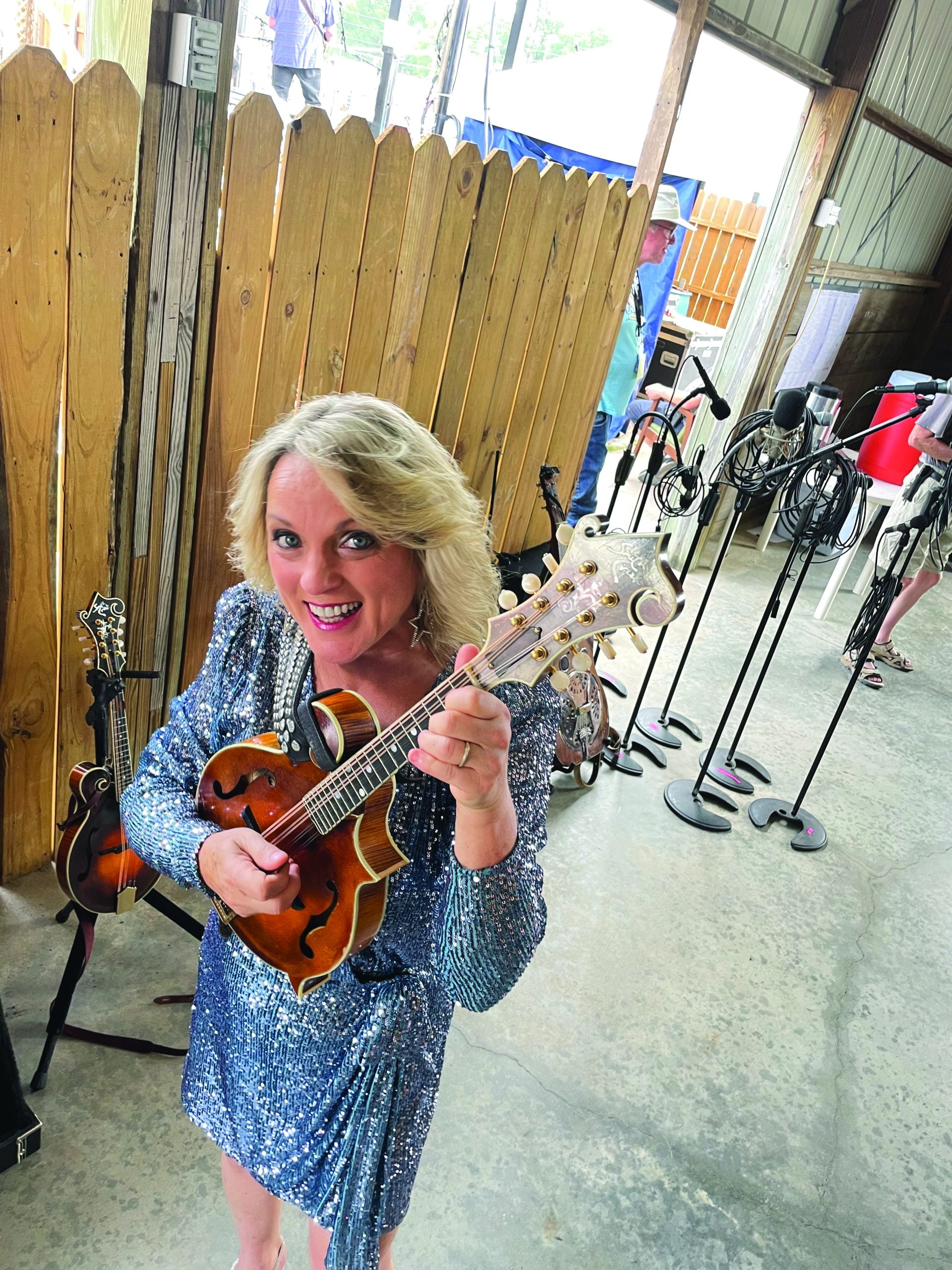
For Winfield first-timer Rhonda Vincent, the festival gave her an immediate sense of belonging; of being, not quite home, but someplace cool and comfortable.
“I love it. I love the food, and I’ve had great fun and fellowship with everybody,” the legendary bluegrass entertainer enthused. “I woke up this morning—and it’s weird that we’re in the same place two days in a row—and I looked out and saw a man in a red fuzzy robe walking through there and I said, ‘You know what, you can wear anything here.’ So I walked out in my jammies and walked over to a friend’s house for breakfast with them in my jammies, and I loved that! Its fun, it’s very authentic and natural. I ran into the best sweet corn I’ve ever had, I bought a quilt, and just seeing so many friends. So I’m having a blast.”
Ask Vincent, who was very familiar with Kansas bluegrass through multiple shows in the Sunflower State as a member of the Sally Mountain Show, about the Walnut Valley Festival’s appeal and she says it goes way, way back.
“I’ve heard of it my entire life. I got to be near here in the Sally Mountain Show, which always played Paola, Kansas, and we played the Colby, Kansas bluegrass festival, and we’ve played for the Kansas Bluegrass Association. But somehow Winfield has always evaded us until now. But now we’re here, and I’m loving it, and they can just put me down for every year from now on as far as I’m concerned.”
Beppe Gambetta
Beppe Gambetta, the charming Italian flatpicker and entertainer from the beautiful port of Genoa, loved Winfield from afar. So much so that he used to enter the flatpicking contest by international mail just to ensure that in the improbable case that he could actually raise the funds to travel to Dorothy’s distant, dusty Kansas, he could compete in the fabled National Flatpicking Guitar Championships.
“I have an incredible, beautiful letter. In the beginning, the ‘80s, before I came to the United States, I was entering the (flatpicking) contest because it is a closed (limited) number. And they told me you should enter if you hope to go. So I was sending I think a twenty dollar bill and trying to make enough money (to come over). But in the ‘80s, the money to travel to the United States by airplane and participate, it was enormous. And so I was entering just to be sure, and the two times that I did it (competed), Bob Redford wrote me a letter, wishing that I would be among the winners,” Gambetta reveals with affection.
Beppe loves flatpicking so much he named his son Clarence. The Italian pilgrim arrived in Winfield speaking halting English, eager to join his American flatpicking heroes like Dan Crary and Doc Watson, and to explore the fabled all-night flatpicking jams. He did all that and so much more, leaving the contest scene and walking onto one of the grandest stages in all of bluegrass.
“I never made the (guitar contest) cut, because after Dan Crary introduced me as a performer, I couldn’t enter the contest after that. And I started to be a judge, so,” he explains.
Once established as a performer through his immediate bond with Crary, Gambetta became a festival favorite instantly. Beppe was one of the first international artists booked at the festival and his charming accent, polished Old World manners and politeness, and superb musicianship helped open the festival’s eyes to musicians from non-traditional countries. He took American folk and bluegrass songs and reimagined them through his European perspective, reinterpreted Italian folk songs for American ears, and the crowds loved him for it. He earned even more love and admiration with his frequent participation in campground jams at Winfield venues like Stage 6 and his performances on the intimate Stage 5 with Stephen Bennett. He tells a favorite tale from those heady days. “Oh, there are so many, but maybe one story in the early years. So when I came first we were starting to play and continued through the night with friends. And one time, me and Steve (Kaufman) and Slavek Hanzlik were the last three awake. On the hill by Stage Two and we were continuing to play, and we look up and the sun is coming up, and the light was gorgeous, and we were the only ones awake. Just us pickers,” he says.
And what of the man in the red shoes’ impact on the festival he loves? “So for me, it’s a festival that has many great things, and also the fact that people continue to love me,” he says. “It’s also the fact that the festival doesn’t end at the borders of Kansas. Or the United States. It has bigger connections,” a fact he’s much too modest to take any credit for.
Dan Crary
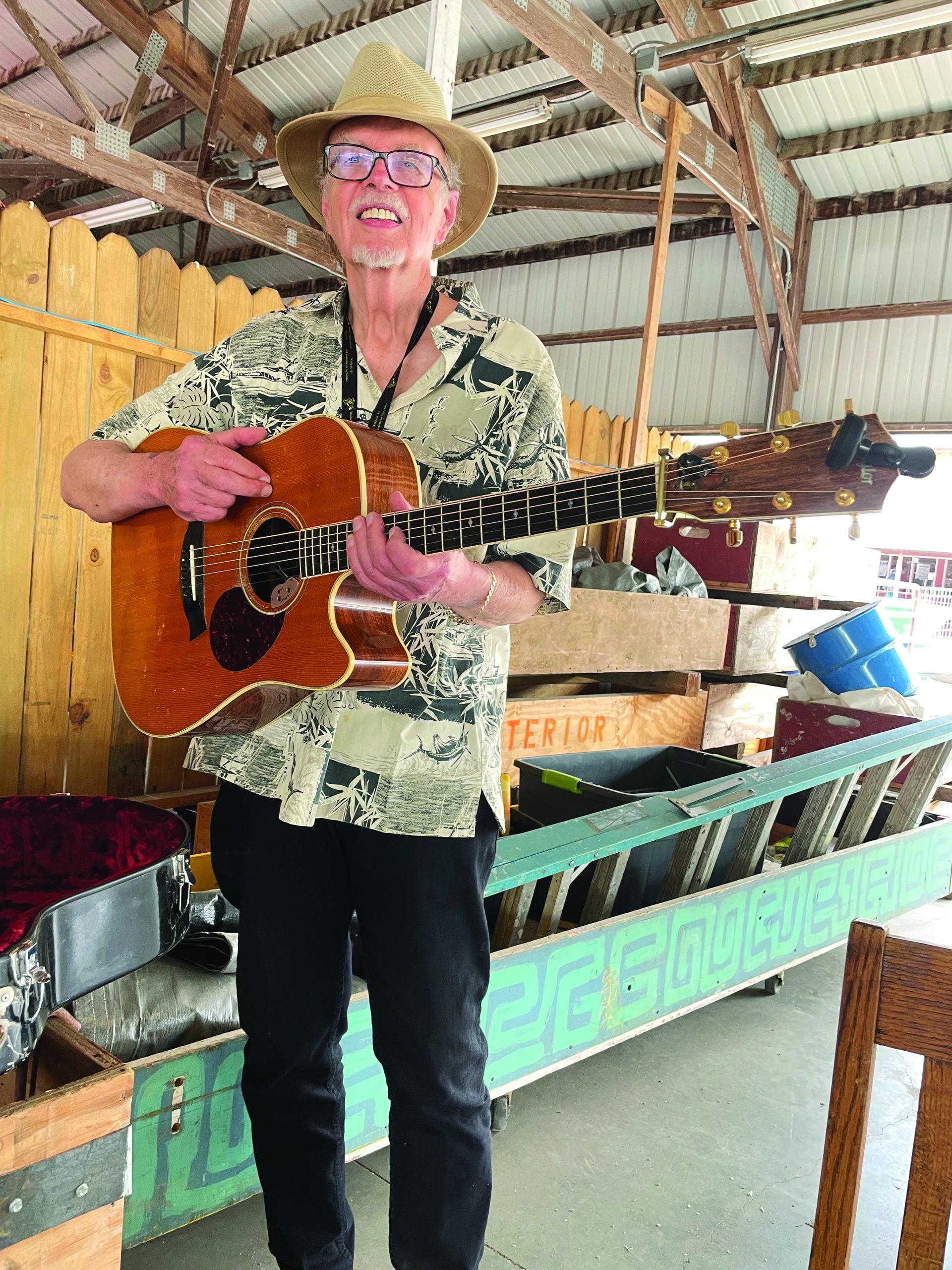
In the festival’s early days, one performer came to symbolize what Winfield is all about: ‘Deacon’ Dan Crary. A native Kansan, Crary not only helped popularize flatpicking with landmark albums like Lady’s Fancy, he embraced the new Mossman Guitar Company based on Winfield’s east side, and pickers flocked to buy one and attend the festival Stuart Mossman co-founded.
Returning to perform at the 50th anniversary festival, Crary, now in his 80s, played in fine form, joining fellow flatpack legends Pat Flynn, Beppe Gambetta and Tim May for a Stage One flatpicking showcase. He also was one of a select few who were honored by Redford for their half-century contributions to the festival.
“It’s deja vu in a really good way,” says Crary of coming back. “It’s great to be back on this sacred Kansas soil and playing on stage. I was here for some huge shows and jams featuring Doc Watson and Norman (Blake), and later with Tony Rice. So there have been some amazing moments of guitar interaction at this festival.”
Did Crary have any inkling in those days that Winfield would still be going strong at its 50th anniversary? “Well, I didn’t NOT think so, and if you’d asked me that 30 years ago I would have said that if any festival was going to make it 50 years it would be (Winfield),” he replies. What strikes him most today, however, is the power the festival’s music and community still hold.
“I look out over these grounds and I see thousands and thousands of people celebrating music, which to my mind is one of the best things you can do now. There are so many things that divide us, music is one of the few things that can bring us together despite our politics. But the music has brought all these different people together. I see little kids sitting out there zeroed in on the music. They have their eyeballs…glued to the banjo. And I see that and think that little girl is going to be a banjo player someday,” he says.
Pat Flynn
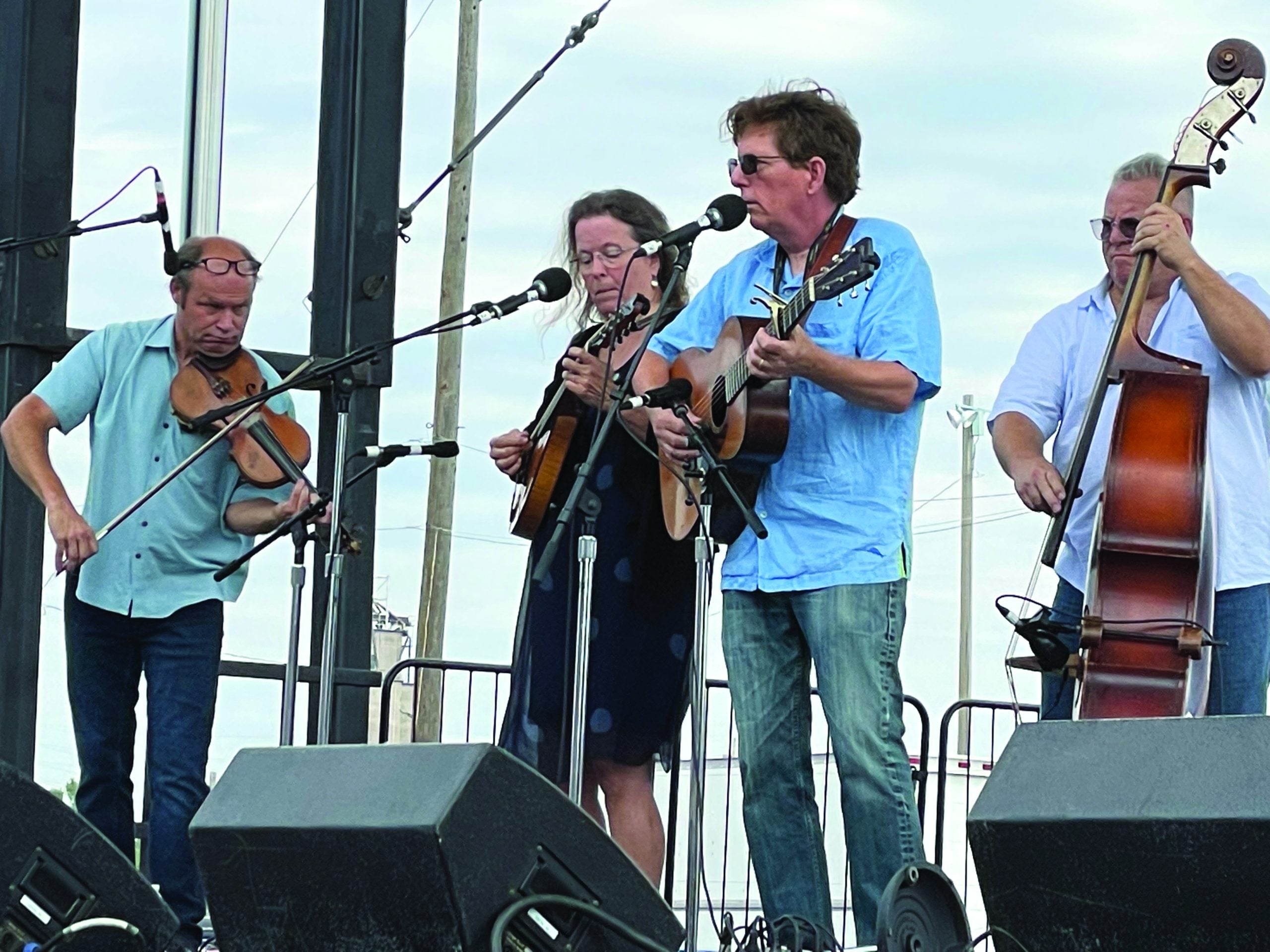
Winfield played a big part in the rise of New Grass Revival, and the festival gained thousands of new fans through NGR’s powerful, progressive bluegrass stage shows. How much of an impact did Winfield have on the band’s meteoric rise?
“It certainly was for me,” replies NGR guitarist Pat Flynn. “But of course, Sam and the guys were here earlier. But it’s forty years ago this weekend that I played my first Winfield with New Grass. I was nervous, this was my first festival with them, so it was very important for me. But Dan Crary invited me to his guitar jam, got me up on stage and played with me and told everybody about me. So yes, this festival was absolutely seminal.”
Four decades on, Flynn’s memories amplify Crary’s. To Pat, Winfield is a class reunion, a regrouping of the tribe, with time to reflect on the past, catch up with old friends, and make new connections. Looking over the festival’s history, Pat Flynn gets excited more about its future.
“I see these young kids playing today and I think, thank God I could pass the torch because these kids will blow your mind. I see guys like Billy (Strings), Molly Tuttle, Sierra Hull, and just so many people bring a high quality level and stepping up to such a high standard,” he answers. When I mention that he’s one of the players that set that standard, he demures. “That’s what they tell me, and I’m glad I could pay that forward, or (NGR) did. So it’s in good hands.”
Bart Redford
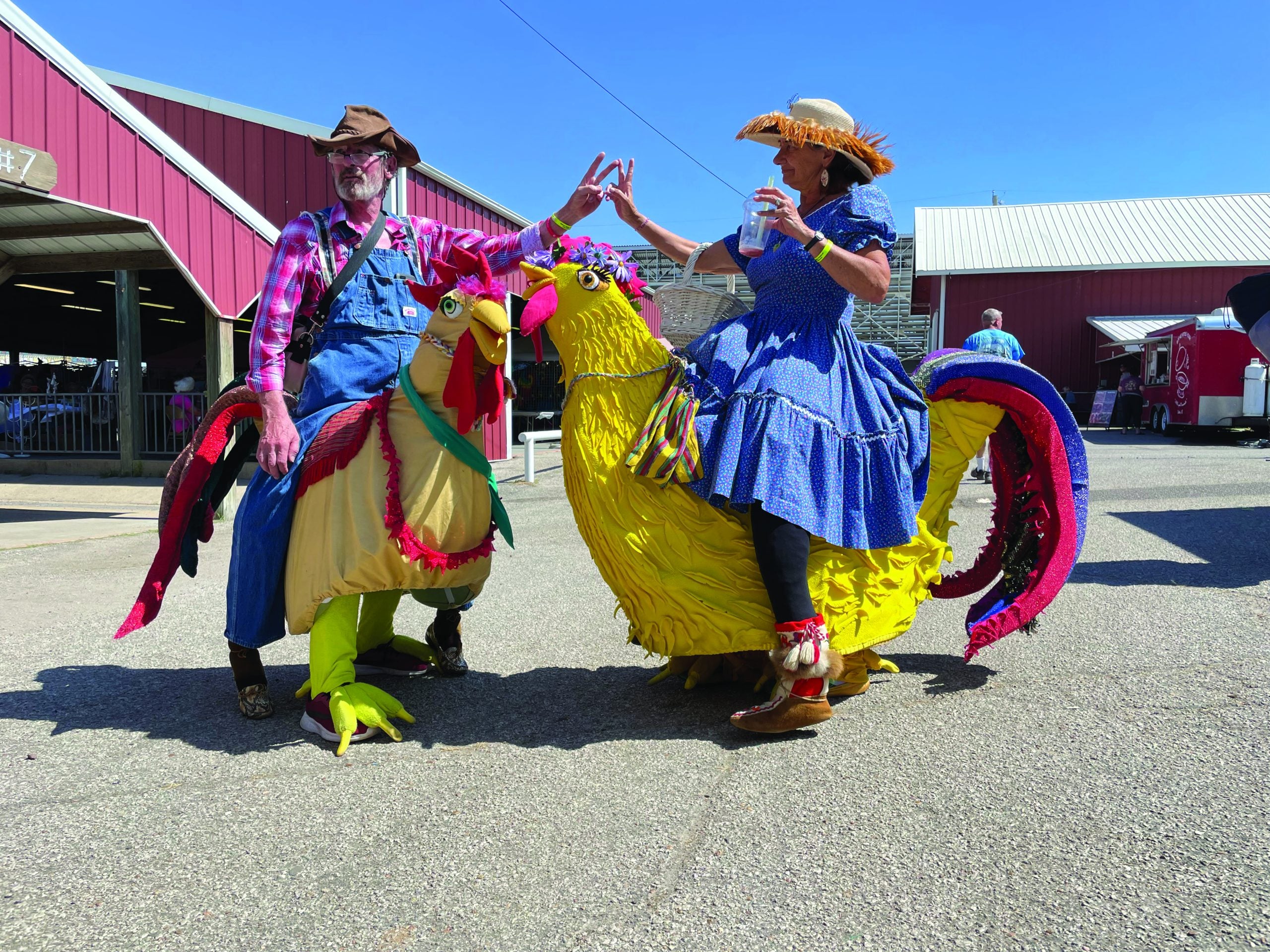
Through storms of family tragedy, meteorological disasters, and the pandemic-induced economic challenges that have derailed other long-running bluegrass festivals, the Redford family has found a way to keep Winfield alive. Following in the footsteps of his father Bob, who passed in 2016, and older brother Brian, the family’s youngest member has now stepped up to guide Winfield into its next 50 years.
Bart Redford serves as executive director, while his mother, Kendra, holds 100 percent ownership. Not only is he holding fast to the foundations laid before, Redford’s forging some new paths that should help bolster the festival’s ongoing operations. He says he’s less hands-on than his father, thanks in part to his well-organized, experienced staff. Redford troubleshoots during the festival, making sure ticket sales and the famous Land Rush, where pickers line up their RVs in advance to get a choice camping spot, run smoothly.
Redford says he saw many positive signs for the festival’s future in 2022. “The lineup was great. We spent more money for the anniversary and people understood that. I saw the grandstands more full than in recent years. I can’t tell you how happy I was to see so many in the stands, the way things were going,” he says. “We spent money to upgrade our website, got online (ticket) sales going. So, we had the fundamentals right, as it relates to putting in strong foundations: the contests; the stage acts; the campground picking.”
But not all was rosy for the Walnut Valley Festival’s grand return to (mostly) pandemic-free conditions. “We’re up from where we have been, but not even back to the point we were in in 2018, according to what we’re seeing,” Redford says. “That’s ok. It’s been a tough time getting back from covid. I honestly hopped for more, but it’s a good attendance and we’ll go on from here.”
Another challenge facing the Walnut Valley Festival’s future is climate change, with the area around Wichita, Kansas including Winfield becoming ground zero for some of the worst heat events in the Great Plains. In 1972, you took jackets and gloves, foul weather gear, as well as summer weight clothing. Festival crews had to put heating units on Stage One so Doc and Merle Watson could play an early morning set one year.
No longer. The last few years have seen temperatures reaching triple digits, with climate-change powered derechos raining down Biblical amounts of water inundating the campground, which borders the Walnut River.
“It’s definitely making a difference. We’re having more extreme weather events, and that’s not good for us. We’re talking to city about their plans for the campground,” he tells Bluegrass Unlimited.
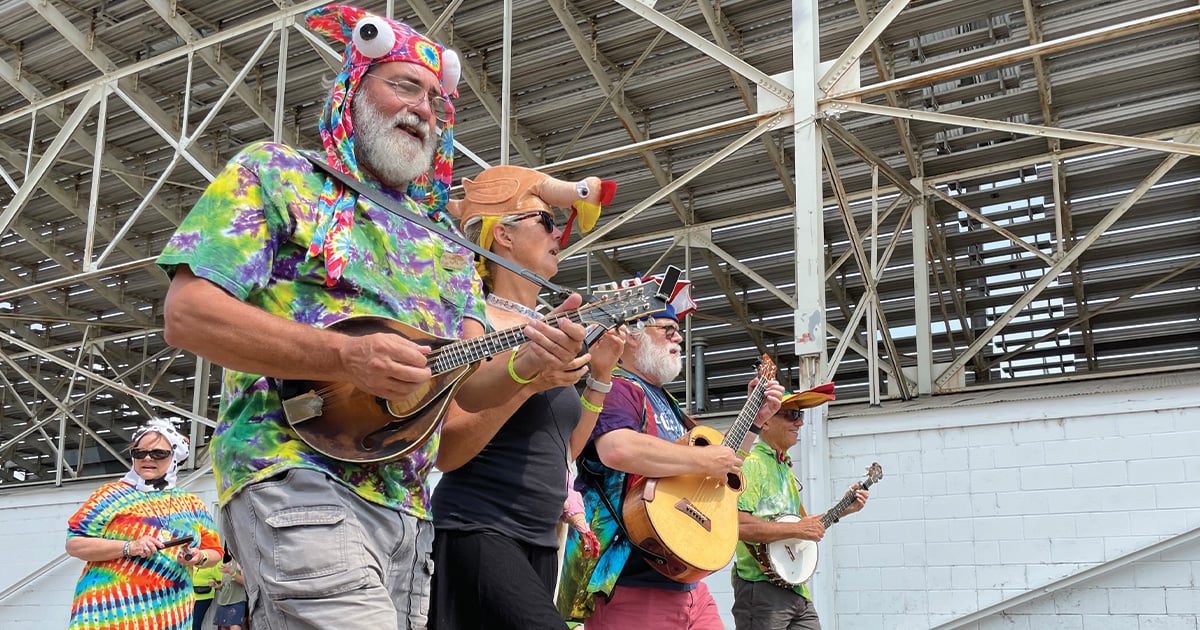
Ask these same questions of the average Winfield veteran and you get very similar responses. The picking. The hot stage shows. The contests. But it’s beyond that. It’s stumbling around the hippie-themed Pecan Grove camp area at 2:07 a.m. It’s the raucous impromptu parades. It’s getting up on Stage 5 and playing pretty much anything you want, while the audience drinks it in.
Most of all, it’s the memories and friendships and deep musical bonds made there. It’s family, and it’s the key reason why if you ask any festival veteran to do something the third weekend of September, there’s only one answer: “I can’t. I’m going to Winfield.”