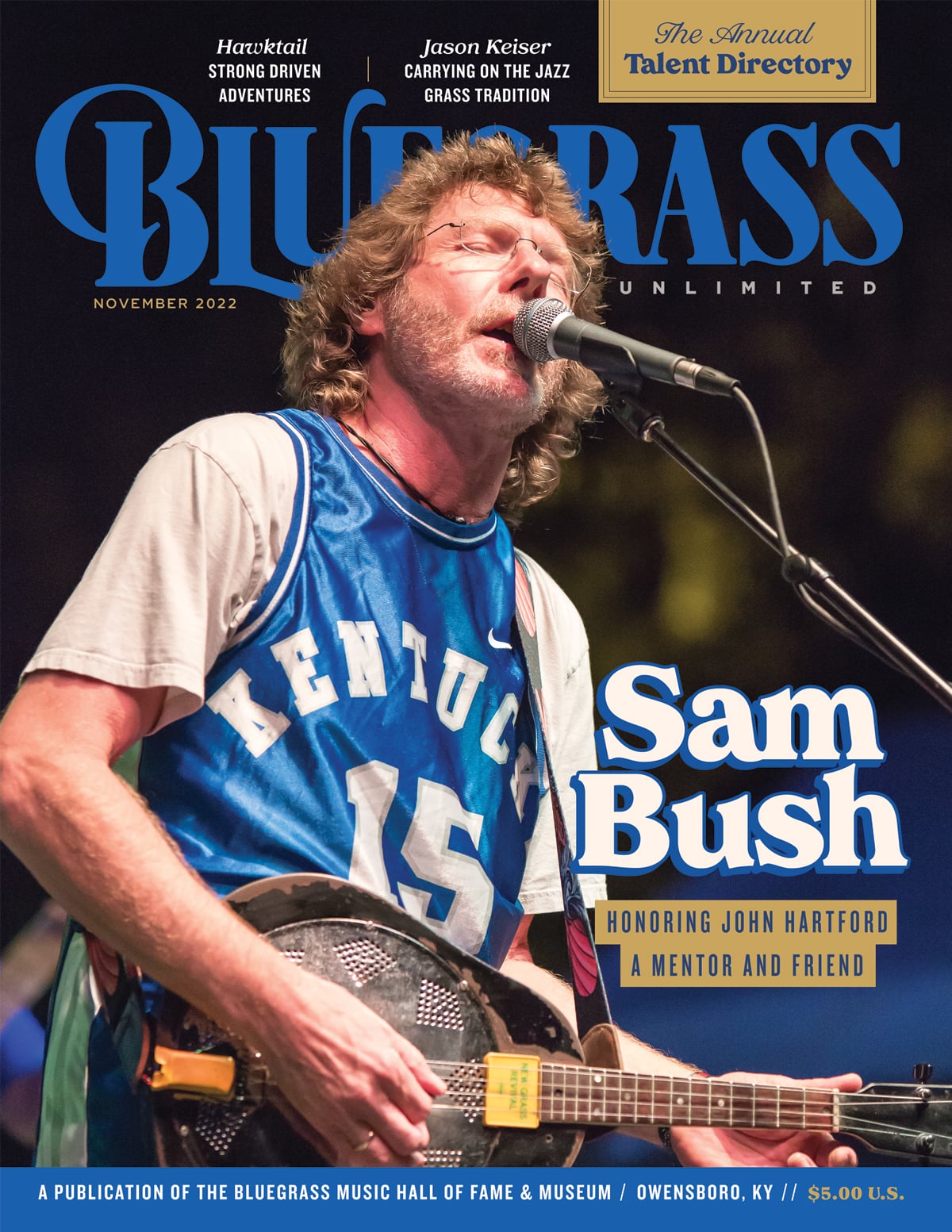

Sam Bush
Life at 70 Means Honoring a Mentor and Friend From the Past
Photo by Shelly Swanger
When you reach your 70th birthday, as Sam Bush did in April of 2022, many of your best memories happened ‘half a century ago.’ About 50 years ago, Sam Bush was experiencing those heady times of the early 1970s, with the Bluegrass Alliance morphing into the even more innovative New Grass Revival, who did what they wanted to do, played what they wanted to play and did so reflecting one of the most diverse and fertile eras in the history of American music.
During that period, Bush met the late and great John Hartford, and that rendezvous led to a long-time friendship and musical collaborations. Now, 21 years after Hartford’s death, Bush is paying tribute to the IBMA Hall of Famer with a new album called Radio John- Songs of John Hartford.
Back in the day, a half century ago, the emerging New Grass Revival band caught all kinds of guff from the so-called bluegrass purists who were out to tell the younger generation how to make their art. I remember seeing the New Grass Revival get booed hard in the 1970s while performing at the long-ago defunct Stone Valley Bluegrass Festival held on the banks of the Whitewater River in southeastern Indiana. The band eventually won the crowd back that afternoon, with Bush’s even-then right-on-time mandolin picking leading the way.
I never viewed the Sam Bush’s, Tony Rice’s and Jerry Douglass’ of the world as heroes back in the 1970s. Instead, I was glad they were stepping up to represent our generation during that tumultuous time period, doing so with an open mind, with a nod to other forms of music that slipped into their sonic mix, and still holding onto their love for the first generation of bluegrass music in their heart.
Newgrass music didn’t happen in a vacuum, however, as bluegrass began to slowly change with the times. After 20 years of playing a strict genre that he helped to invent and music that others expected him to play, Earl Scruggs opened up his sound with the Earl Scruggs Review, letting his hippie sons influence his musical direction. A few years earlier, Jim and Jesse caught all kinds of flak for playing a black man’s rock and roll songs on their 1965 Chuck Berry tribute album.
Fortunately, the Nitty Gritty Dirt Band’s 1972 guest-laden Will The Circle Be Unbroken album helped to bridge the very real generational divide of the times and thankfully revived the career of Doc Watson, whose ‘traditional plus’ view of music kept the IBMA Hall of Fame guitarist from being ensnared by the bluegrass purists.
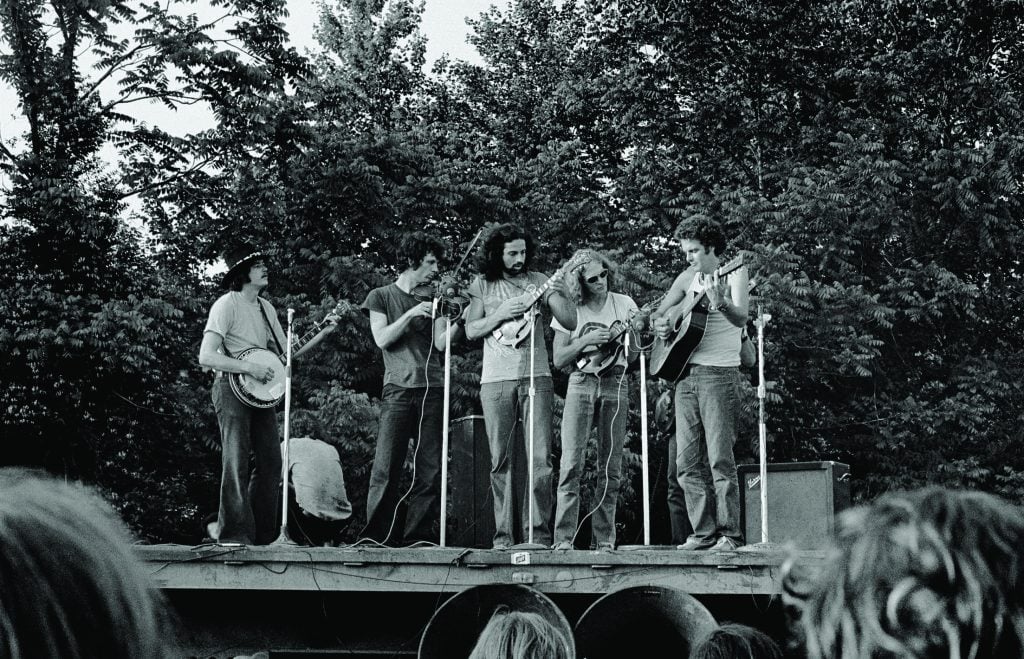
Soon, by 1975, J.D. Crowe—backed by his young and legendary New South band—recorded the landmark ‘Rounder 0044’ album featuring music written by Fats Domino, Gordon Lightfoot, Ian Tyson, Utah Phillips, Mitch Jayne and Dean Webb of The Dillards, Rodney Crowell and more. The Old and In The Way album, also released in 1975 and featuring Jerry Garcia, David Grisman, Vassar Clements, John Kahn and the newest member of the IBMA Hall of Fame Peter Rowan, also opened up bluegrass music to a wider audience.
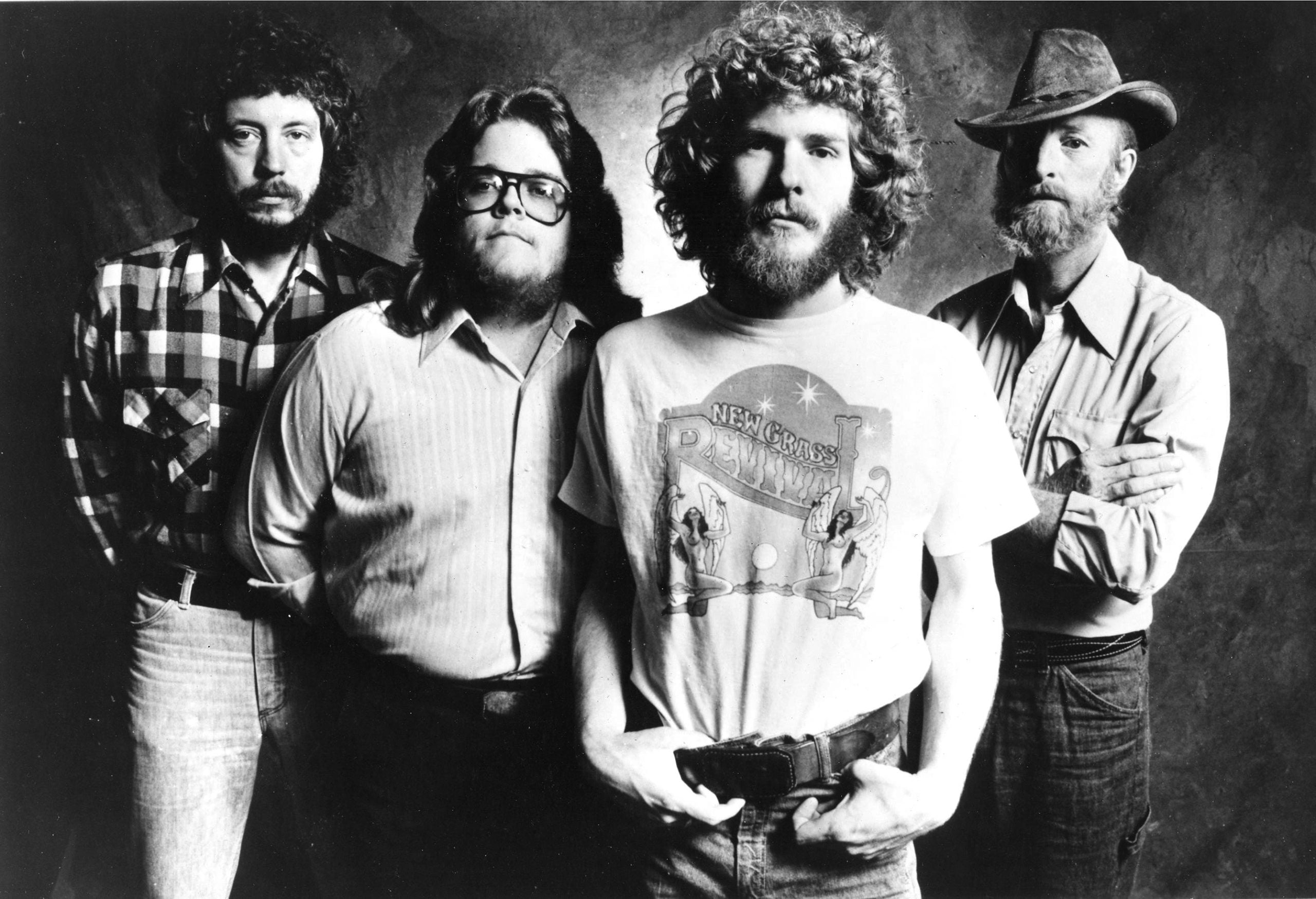
As for Sam Bush and his New Grass Revival band mates, they released their first album in 1972. The band managed to stay together until the late 1980s, mostly due to the now-famous different lineups, with personnel that included Courtney Johnson, Curtis Burch, Ebo Walker, Butch Robins, John Cowan, Béla Fleck, and Pat Flynn.
The one constant throughout the history of New Grass Revival was Sam Bush, and one of Bush’s main musical influences was John Hartford. Two decades after his passing, Hartford is still an influence on many modern-day musicians. Back in the early 1970s, however, Hartford helped to break the ground for the newgrass music by being fearless. That came in the form of his 1971 album Aereo-Plain, which featured the ‘Dobrolic Plectoral Society’ band that included Hartford on multiple instruments, Norman Blake on mandolin and guitar, Tut Taylor on resonator guitar and Vassar Clements on fiddle and viola. Randy Scruggs added the bass parts to the project.
There was plenty of traditional music on the Aereo-Plain album, albeit found in the form of the unusually-tweaked sounds that flowed out of the fertile imagination found in Hartford’s mind. Produced by David Bromberg, there was not a chance in the world that any of the first generation of bluegrass music was ever going to record a song with guttural utterances and pseudo-flatulence noises that is found in the song “Boogie.”
The music on the Aereo-Plain album, Hartford’s long list of recordings leading up to his death in 2001, and the memory of their friendship has stayed with Bush for all these years and the end result of that is his new project called Radio John—Songs of John Hartford. On this album, Bush plays all the instruments on every cut but one, and that includes showcasing his wonderful talents on the banjo.
Putting together this recording, including the daunting task of choosing the Hartford songs he would recreate in his distinctive way reminds Bush of those heady days when he met Hartford for the first time.
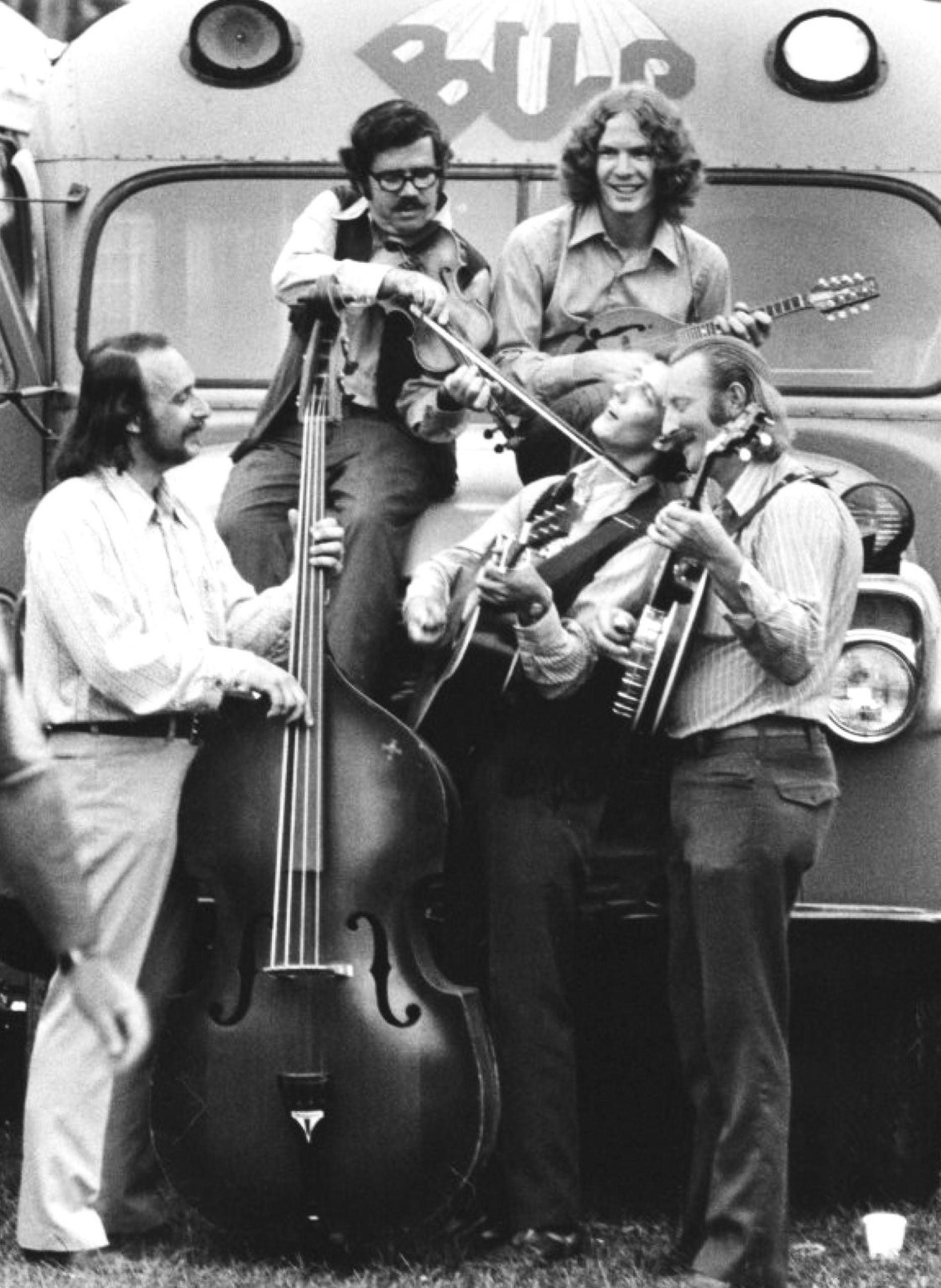
“It was June of 1971 at Bill Monroe’s Bean Blossom Music Festival and Bill had hired the Bluegrass Alliance, which was what we were known as at the time, which was Ebo Walker on bass, Lonnie Pearce on fiddle, Courtney Johnson on banjo, me on the mandolin and Tony Rice on guitar,” said Bush. “And, we played at Bean Blossom that year and it went over really well. But, one of the highlights of playing at Bean Blossom, other than meeting Tex Logan that weekend and becoming friends with him for the rest of his life, was the appearance on the bill of the John Hartford Aereo-Plain Band with Norman, Vassar and Tut. So, they played and, my God, they blew the roof off the place. The played ‘Goodle Days’ and Vassar played a solo on the fiddle for about three minutes. It was just amazing. We got to meet John and got to meet Norman for the first time there as well.”
Luckily for Bush and friends, they got to play with Hartford and crew on the same weekend they met, and the friendship grew from that point on. “We were the Bluegrass Alliance, he had heard us onstage and we happened to be walking by when they were warming up to play and John said to us, ‘Come on in here. Let’s jam some,’” said Bush. “I had met Vassar when I was a kid, but I had never met John, Norman or Tut until that Bean Blossom. And, it was quickly obvious that this Hartford guy would jam as long as anybody wanted to jam.”
When one becomes a bluegrass star, it gets hard to walk around and jam around the campfire at a festival because it can get crowded quick after the word gets out. In 1971, however, the two bands spent a summer’s evening jamming under the stars in southern Indiana. “I remember us having a campfire jam session there at Bean Blossom,” said Bush. “Somebody knew which campsite they were hanging at and we got to play with them. After that, Ebo had stayed in touch with them, and then the next winter, in December of 1971, they came to play at this gigantic show in Louisville that was a rock and roll concert. Somehow, they were on the lineup. It was a Toys For Tots show and the Barkays were on the bill, and bands like Chase, who were led by trumpet player Bill Chase, and they had that hit song ‘Get It On.’ The Aereo-Plain Band followed Chase and Hartford was on some kind of trip at the time where he only wanted to use one microphone. You couldn’t hear them at all. It was hilarious. It was great. But after that show, John and everybody came over to Ebo’s house and we jammed to the wee hours of the morning. It was obvious by then that whenever they were around, we were going to jam with them.”
While the Aereo-Plain album was breaking during the time that Bush had met Hartford, it was the latter’s earlier work that drew Bush in during his teenage years. People may forget these days just how big Hartford’s song “Gentle On My Mind” was after Glen Campbell released his hit version of it in 1967. After that, for years the song was re-recorded by many artists becoming the third most recorded song ever in history, a title it held for many years. By the 1980s, over 400 artists had released their own version of the cut, from Frank Sinatra to Elvis Presley to musicians living in various countries around the world. The song won multiple Grammy Awards and has been played on the radio millions of times.
As Glen Campbell became a bigger pop star, partly based on his other hit songs “By The Time I get To Phoenix,” “Wichita Lineman” and “Galveston,” he was given a prime-time TV variety show called The Glen Campbell Good Time Hour. Appearing as a regular on the hit TV program was John Hartford, who infamously stood up while playing the banjo in the middle of the audience to kick off the show’s theme song. Hartford also appeared on the Smothers Brothers Comedy Hour TV program and occasionally on The Johnny Cash Show.
Considering that there were only three TV networks to choose from at that point in history, much of the U.S. viewing audience was well-aware of Hartford and his hit song.
“I started loving John’s music as far back as high school,” said Bush. “Fortunately, living in Bowling Green, Kentucky, we could get Nashville television and on Saturday afternoons the syndicated half-hour TV shows would come on. The Wilburn Brothers had their own show and I saw John Hartford on there one day, not knowing who he was, and I saw a guy singing with a banjo who was able to do the Earl Scruggs-style of picking while he was singing at the same time. I had never seen anybody do that before. I remember thinking, ‘Why doesn’t he use a guitar?’ Well, later I would learn that John is a great guitar player. It wasn’t too long after that when my Dad and I were down in Nashville at the Ernest Tubb Record Shop and I found the record. I said, ‘That’s the guy I saw on TV. His name is John Hartford.’ It was the Earthwords & Music LP, which has ‘Gentle On My Mind’ on it. So, I actually heard the song before Glen Campbell had released his version. So, I knew I liked Hartford’s music. It was intriguing songwriting, I loved his voice, and I loved the banjo picking along with the Nashville-style rhythm section found on those RCA label records. As I watched TV over the years after that, I thought, ‘Looky there. There is John Hartford.’”
As Bush conveys to us now, an important part of the story that few people know is that Bush almost became a member of the Aereo-Plain Band. Looking back, Bush had a decision to make that could have altered the course of progressive roots music.
“It is a little-known story that when Tut became the first one to leave the Aereo-Plain Band, he asked me to replace him in the group,” said Bush. “Tut became John’s manager for a short while. But it wasn’t the right time for me because we hadn’t formed the New Grass Revival for very long and we were all really in love with that band and each other, so it just wasn’t the right time. John understood that, of course, and I went on to record with him over the years, jammed many times with him and we played a lot of gigs together.”
Bush famously appeared on Hartford’s landmark album Nobody Knows What You Do, which was released by the Flying Fish record label in 1976. On this new album, Radio John—Songs of John Hartford, Bush gets to show his love by playing his own versions of Hartford songs, many of which come from that Nobody Knows What You Do recording.
So, without further ado, here are the John Hartford cuts that Bush chose for this brand-new project; “California Earthquake,” “Down,” “Tall Buildings,” “A Simple Thing As Love,” “John McLaughlin,” “No End of Love,” “Morning Bugle,” “Granny Won’t You Smoke Some,” and “I’m Still Here.” The last song on the project is an original tune called “Radio John.”
“A lot of people have done John Hartford tribute albums, but this was a little more personal for me,” said Bush. “The thought of it all kind of got started because, over the years, my wife Lynn and I like to go down to the beach for weeks at a time in the Santa Rosa area of Florida and for years I would go down there and take little recording machines and my instruments. Occasionally, with the hand-held multi-track recorders they have out now, I would make some tune recordings that I would play for my band to show them my song ideas. Well, over a certain number of years, I would be at the beach and would find myself thinking about certain Hartford songs that I really loved.”
Unfortunately, the portable recorder gave Bush some trouble one day, so he called in a professional. “I ended up spending more time on the recording machine than I was playing my instruments,” said Bush. “So, I ended up running into a good friend of mine at the beach one night, a great musician named Donnie Sundal. I was playing some R&B with Donnie, who is an incredible keyboard player, and he owns the Neptone recording studio in Destin, Florida. So, I told him that I was trying to record these demos but I couldn’t work the machine and says, ‘What? I’ll stop by tomorrow and help you out.’ So, he kindly stopped by the next day with an entire Pro Tools rig along with microphones, pre-amps, speakers, and he even brought an extra bass for me. At that point, I started out recording the first track with the guitar and then I began to build up tracks with Donnie engineering the recording. We were sitting in a little carriage house at the place Lynn and I were renting at the beach. Before I knew it, I had nine tracks recorded in the digital format. I started adding more instruments on there and I soon realized, ‘Maybe this could be an album.’ Plus, these John Hartford songs really meant a lot to me and they were very personal to me. But, recording by myself is very time-consuming and meticulous and not as fun as playing with others.”
The one song on the new project that Bush did record with his band, featuring banjo player Wes Corbett’s first appearance on a Sam Bush album, is “Radio John.” It is an original number that Bush wrote about the time that Hartford was asked to write the liner notes on one of the early New Grass Revival albums. Oddly enough, because of some contractual limitations, Hartford was forbidden to use his real name in the liner notes, so he signed them off with the moniker ‘Radio John.’
The news about these just-released recordings is the appearance of Bush playing the banjo. While not known as a banjo player, he is very good at it, having learned how to play the instrument many years ago. “When I was a kid, growing up in our house, we had my granddad’s old Blue Comet banjo lying around,” said Bush. “So, I started learning some stuff on that banjo, but I didn’t understand the Scruggs-style forward roll. The first instructional book that I ever saw at the music store in Bowling Green was the Pete Seeger book and the second one was a Mel Bay book written by Sonny Osborne. When I got Sonny’s book, that is when I first learned ‘Cumberland Gap’ and tunes like that. Then, it wasn’t too long before the Earl Scruggs book came out.”
As Bush’s banjo playing progressed, he sought out a couple of five-string mentors who helped him get better on the instrument. “Along the way, I met Alan Munde and Courtney Johnson,” said Bush. “With Alan, he always impressed upon me the importance of Earl Scruggs, even though the more-fancy banjo playing was what everyone was noticing at that time. But Alan always said that Earl Scruggs was the real deal. I always picked around on the banjo here and there, but when Courtney Johnson was in the New Grass Revival, he drove his own camper when we were on the road. It was real common for me to get up in the morning and go over to Courtney’s camper and we’d have coffee together and we would sit and one of us would play the banjo and the other one would play guitar, and then we’d swap. We really did learn things together, sometimes, by figuring out certain fiddle tunes. Courtney and I were both learning from Alan Munde. Courtney was the first guy to ever tell me, ‘I saw a guy in Arkansas that is the best banjo picker I’m ever going to see and his name is Alan Munde from Oklahoma.’”
As history shows, Bush did play the banjo on one album recorded years ago, marking his only previous appearance with the instrument before this new Radio John—Songs of John Hartford recording.
“Béla Fleck and I would play together sometimes with me on the banjo,” said Bush. “In fact, Béla hired me to play the banjo on a record he produced for Blaine Sprouse. So, me pickin’ the ‘five’ did make an appearance on a Blaine Sprouse album. I remember asking Béla, ‘Why do you have me playing the banjo?’ He said, ‘Because you play more like J.D. Crowe than I do.’”
As for life at 70, Bush became aware of the fragility of life when he fought cancer years ago as a young man. The song that he co-wrote with Jeff Black called “Circles Around Me” from the 2009 album of the same name deals with this very subject, and he still performs it regularly in concert.
By turning 70, it means that Bush has outlived his friend John Hartford by seven years and counting, one of many people he has known and loved that have been lost along the way. “Turning 70 does mean a lot to me,” said Bush. “At 30, when I had my first cancer diagnosis, I didn’t know what was going to happen after that. I’ve always felt like every day is a blessing when I get to wake up. Although I planned on making it this far, of course we didn’t know if I would or not; I’m doing really well and I appreciate every day. If anything, turning 70 makes me find myself incredibly thankful for all the good things that have come my way. I especially think of all the different groups I have played with and the fortunate situation of getting to not only meet some of my music heroes, but later on, I got to play music with them. I did that with John Hartford and Doc Watson and Leon Russell. I even got to play a tune or two with Bill Monroe during my lifetime and that was an incredible thrill.”
Bush had another health scare about three years ago, but he has bounced back and he is touring and making great music all over the country again. “Yeah, I had a little health slip in 2019, which means I had yet another wake up call to let me know to appreciate things,” said Bush. “I mean, sometimes you get tired on the road and maybe sometimes you don’t appreciate your lot in life. But then I missed a couple of months in 2019 with that health scare, but everything turned out great. Then, in 2020, of course, we all missed a year (because of the pandemic) and now we’re all thankful to get back on the road. If any of us ever did take the privilege of playing music for granted, I don’t think we do now.”
And so, both life and music roll on for Sam Bush as he shares perhaps his most gracious album yet with Radio John—Songs of John Hartford, which will be released on the Smithsonian Folkways label on November 11, 2022. More information can be found at sambush.com.
“I am very fortunate because I feel that I have friends all around the world, including those who play different kinds of music,” said Bush. “And, I guess you could say that Lynn and I are at a very happy time in our lives, and I’ve got the Sam Bush Band. I love the guys that I play with and care deeply about them. I’m very thankful.”